This Week's Sponsor:

Copilot Money

Copilot Money, The Best Money Tracker, Launches on the Web – Limited-Time: Get 26% Off + 2 Months Free


Inspecting Yosemite’s Icons

Nick Keppol has published a great look at the icons from the developer beta of OS X Yosemite:

When 10.10 ships this fall, your users will expect your icons to feel at home in the new system. Rather than critique the icons, I’m going to dissect the icon system and focus on the small details that will help you make icons that look great in Yosemite.

When I saw this link in my Twitter feed, I thought the article would focus on colors, gradients, and comparisons with iOS 7. Instead, Nick has inspected the tiniest details of Apple’s icon design on Yosemite, such as reflections, materials, grids, and combination of shapes. If you’re a designer or just curious about Apple’s new dock icon language, I recommend reading this post.

Permalink

Ron Johnson Recalls The Early Years

Gary Allen has a summary of Ron Johnson’s talk at Stanford University:

Former Sr. VP Retail Ron Johnson told a Stanford University audience in May that store high-speed Internet connections—nearly unheard of at the time—were intended to attract visitors, allowing them to check their email or surf the Web. Johnson spoke as part of Stanford’s Graduate School of Business “From the Top” series that spotlights company executives. Johnson was an undergraduate at Stanford, and also attended Harvard Business School (HBS). Johnson recalled his close relationship with Steve Jobs, and the main lesson he learned from him—‟You have to be willing to start again.” He recounted the previously-told story of how the original Apple store design was re-done at almost the last minute in 2001, because Jobs’ trusted Johnson’s evaluation that it didn’t match up with the company’s “digital hub” philosophy.

There are a lot of lessons and details to take away from the talk, which you can watch on YouTube here.

Permalink

“Inclusion Inspires Innovation”

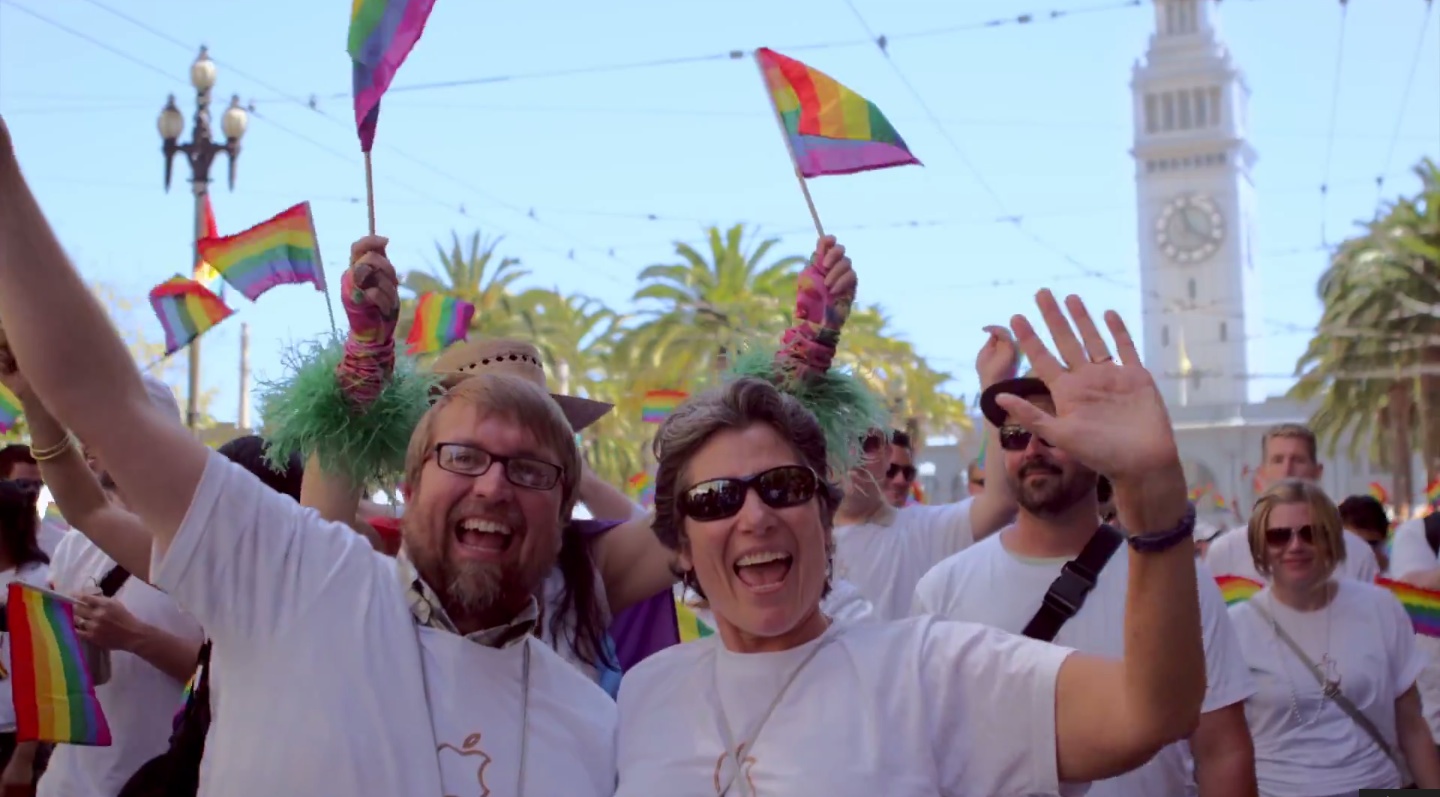
Following last month’s Pride Parade in San Francisco, Apple has posted a short video to YouTube that highlights their involvement in the day, in which thousands of Apple employees and their families marched in support of equality.

On June 29, thousands of Apple employees and their families marched in the San Francisco Pride Parade. They came from around the world — from cities as far as Munich, Paris, and Hong Kong — to celebrate Apple’s unwavering commitment to equality and diversity. Because we believe that inclusion inspires innovation.

Read more


iOS 8 Privacy Updates

Luis Abreu has published a fantastic roundup of the privacy changes in iOS 8 (via Dave Verwer):

The latest updates to iOS 8 and OS X Yosemite introduce some very welcomed changes to the way Security and Privacy is dealt with on these platforms and may serve as an inspiration for others.

I’ve gathered this information by watching over 17 hours of WWDC 2014 sessions and carefully reviewing, analyzing what was said, and writing a huge number of notes on Security, Privacy, UX and other areas which I will be publishing here in the coming weeks.

Even if you’re not an iOS developer, read through Luis’ post to understand the updates Apple introduced to make it easier to remain in control of your data and decide which apps can access your information. I had a lot of doubts about the Health app and HealthKit data, and Luis’ explanation helped.

Permalink

unSherlocked

Great follow-up by Dr. Drang on our episode about Sherlocking:

In the fall of 2005, Apple added direct podcast support to iTunes. To normal people, this was what put podcasting on the map. Instead of fiddling around with RSS URLs, third-party apps, and special playlists, users could now find and subscribe to podcasts very easily from within iTunes itself. There’s been a lot of criticism of how Apple has allowed iTunes to grow into an unwieldy behemoth of an app, but I don’t think anyone complained about the addition of podcasts. It was both useful and well implemented.

The Apple ecosystem has changed a lot since 2005, but the essence of Sherlocking is the same: sometimes Apple’s solutions cover the basics, leaving room for third-party developers to thrive; other times, they really sherlock a third-party product with a much better integrated solution. As Drang notes, though, Apple’s podcast Sherlocking in 2005 didn’t have the same result with the Podcasts app in 2012, which has left plenty of opportunities for developers of third-party podcast clients.

Permalink

Albums Down, Stream Equivalents Nearly Double

Ed Christman, writing for Billboard:

While digital streaming revenue growth continues to offset the decline in digital album and track sales, the music industry still has the same problem it has wrestled with for over a decade: physical music’s decline is outpacing digital’s growth.

The numbers aren’t completely surprising considering the trend suggested in a report from January, but I find it interesting to think about the future of streaming services and consolidation.

Right now, the big independent players (Spotify, Rdio, and Deezer) tend to implement both on-demand and radio features; radio services like Pandora and iTunes Radio still exist, but they haven’t expanded outside the US (except for Australia and iTunes Radio); Google and Apple are still working on their own streaming solutions, with Google seemingly focusing on curation and Apple now in charge of Beats Music.

If this industry trend continues on a worldwide scale and big tech companies (including Amazon and Microsoft, too) iterate on their streaming products, it will be interesting to see how many of these names will stick around and which ones will be integrated with other products, get acquired, or shut down. Will music streaming become a feature of smartphones and computers?

Permalink