Sunrise Becomes Part of Outlook for iOS

Big news from Microsoft today: Sunrise, the calendar platform they acquired earlier this year, will merge with the Outlook mobile app, providing the calendar backend for the app.

From the Microsoft blog:

The Sunrise team is now officially a part of the broader Outlook product team, bringing a fresh approach to calendaring and combining it with Microsoft’s deep expertise in both email and calendar. Better Outlook calendaring gives you more ability to manage your personal and professional life from a single, powerful app. Over the coming months, you’ll see richer calendar experiences come to Outlook from Sunrise—including Interesting Calendars and connections to your favorite apps and services. You will also see improvements to Outlook’s ability to create meetings while on the go and handle meetings across time zones. All of this means Outlook will eventually replace the current Sunrise app.

And here’s from the Sunrise blog:

All the features you love in Sunrise are coming to Outlook soon
We are currently working on integrating all the extra features that made Sunrise so delightful to use in Outlook for iOS and Android. Expect features like Interesting Calendars, Connected Apps and our 3-day view to show up before the end of the year.

Until then, the Sunrise app will stay on the App Store, though it won’t likely receive any updates.

After the acquisition news in February, I wrote:

It seems fair to assume that Microsoft will add more cloud integrations from their own ecosystem (OneNote, Exchange, perhaps Skype?), but I’m curious to see if and how Sunrise will work with Outlook, which comes with an embedded Calendar view.

Microsoft’s answer eight months later is that they want to build an all-in-one email and calendar app that also supports connections to external apps and services. For context, Sunrise currently works with data from Todoist, Evernote, Songkick, Asana, and more. In theory, all these integrations could also be coming to Outlook, which would make it the most “open” calendar and email client on the App Store in terms of third-party (cloud) integrations.

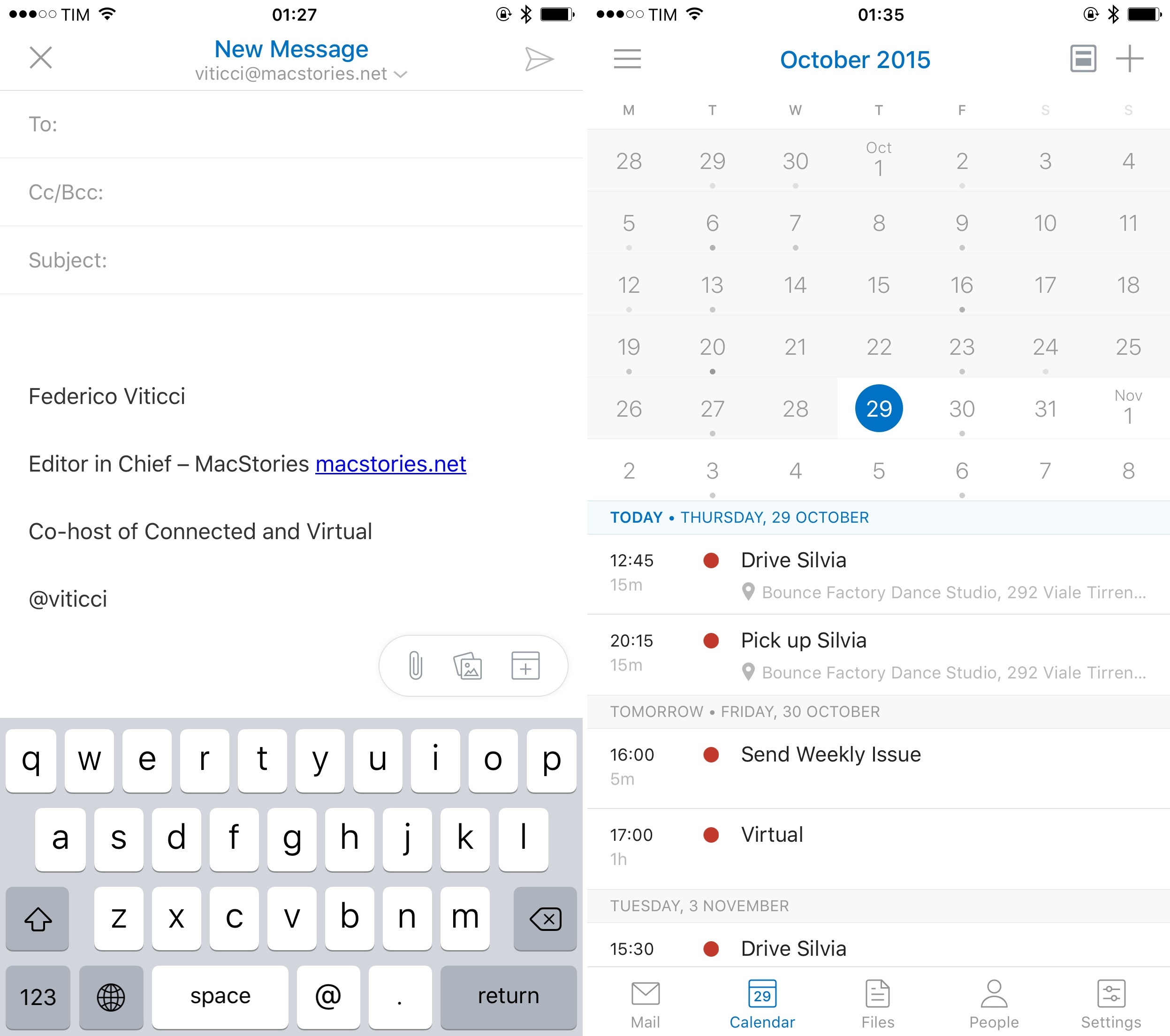
I have mixed feelings about the all-in-one approach, at least for now. Today’s update to Outlook for iOS (which I have been using as my go-to client for the past month) brings a cleaner look and native Watch app, but the Sunrise integration is half-baked and there’s a lot of work to do. The Calendar view of Outlook has been refreshed with a more polished UI and a new monthly view, but none of the features that made Sunrise great – event icons, integrations, the keyboard, and the fantastic date picker – are available yet. Basically, Microsoft has announced their intention to bring Sunrise to Outlook, without any deep Sunrise integration in the actual app yet.

When the transition from Sunrise to Outlook is complete, will it be too much for a single app? Are we really going to get the real Sunrise alongside our email, or a watered-down version lacking the many small touches which made Sunrise an elegant and powerful standalone calendar app? On the other hand, if anyone can make email smarter thanks to integrations and fresh ideas, that’s the Sunrise team. I want to be optimistic.

Also, don’t forget about Wunderlist, which Microsoft also acquired this year. Currently, support for “tasks” in Outlook is marked as planned in the app’s community section where users can vote and suggest new features. I wonder what’s going to happen there.

Apple Posts New iPhone 6s Ad Featuring Bill Hader

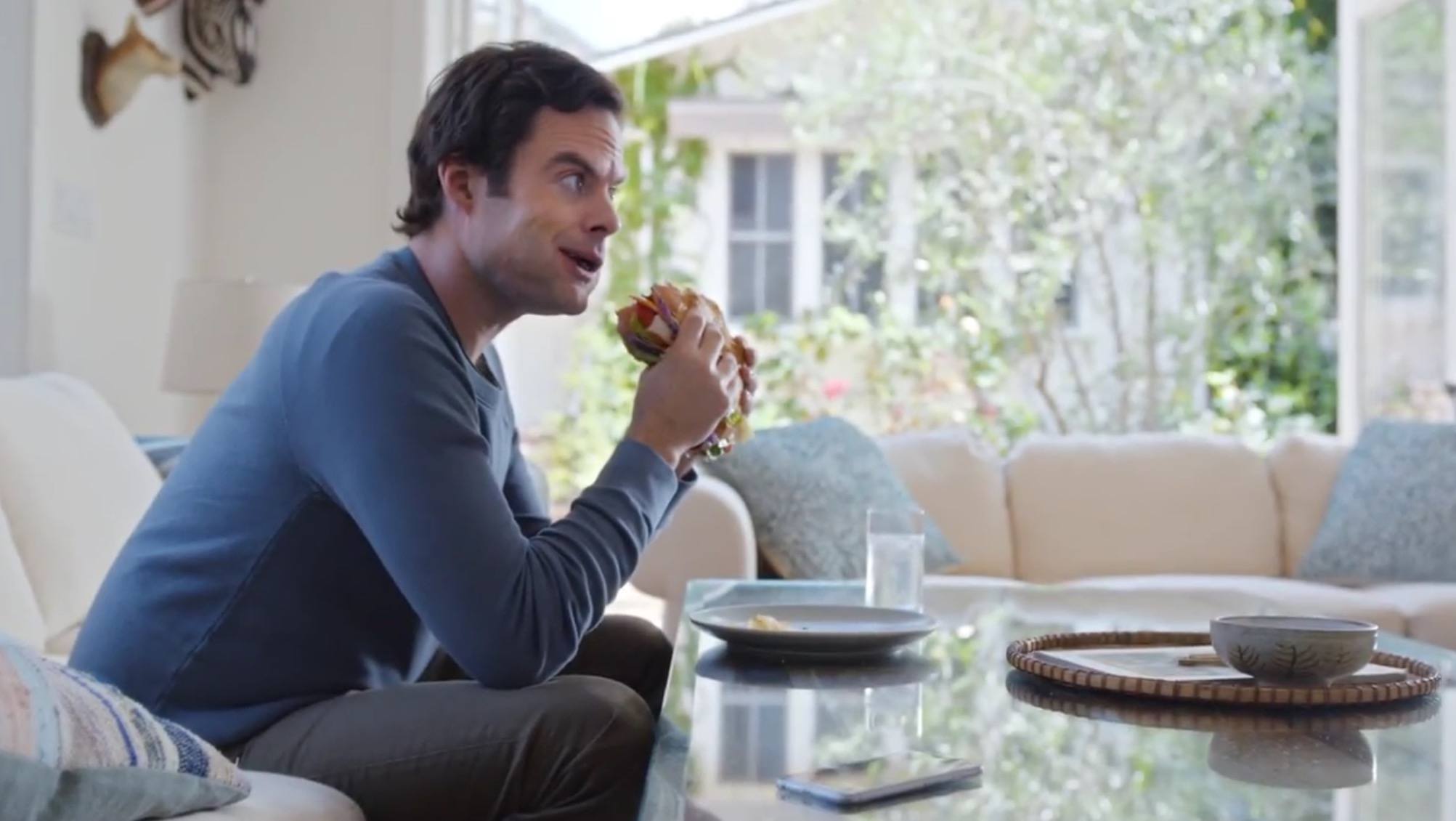
Apple aired a new iPhone 6s commercial last night, once again focused on Siri’s hands-free capabilities on the new devices running iOS 9.

Titled ‘Prince Oseph’, the ad shows Bill Hader activating Siri via the “Hey Siri’ command, asking the assistant to check his unread emails. One of the messages found by Siri is likely to be a spam message sent by the aforementioned Prince Oseph in relation to “life-changing opportunities” for the making of “many of millions of currency”. Hader asks Siri to reply with “Sign me up”.

The ad follows Apple’s latest campaign focused on highlighting Siri features on the iPhone 6s, which previously saw Jamie Foxx interacting with Apple’s virtual assistant in similar scenarios. Hader isn’t new to Apple ads, having previously contributed to the company’s WWDC video in June 2015. You can watch the video below.

Read more


Connected: The App Is Named App

This week, Stephen is questioned about his growing Apple collection, Myke wonders why he bought an Apple TV and Federico ponders his iPad future.

On this week’s Connected, the final segment is all about the iPad Pro. You can listen here.

Sponsored by:

  • Braintree: Code for easy, online payments. Get your first $50,000 in transactions fee-free.
  • Warby Parker: Glasses should not cost as much as an iPhone.
  • Igloo: An intranet you’ll actually like, free for up to 10 people.
Permalink

A Transcript of Apple’s Q4 2015 Earnings Call

Serenity Caldwell and Jason Snell, writing for iMore, have already put together a transcript of Apple’s Q4 2015 earnings call. This is where you want to go to get all the details shared by Tim Cook and CFO Luca Maestri earlier today, such as this tidbit on the iPhone Upgrade Program:

Rod: On the Upgrade Program, can you envision a time ever, maybe in the U.S. or elsewhere, where you would not have to come into an Apple Store to take advantage of the upgrade? You might be able to do that somewhere else?

Tim: That’s a really good question. We actually solved that problem back in 2007, but then quickly had to change it in order to scale in a major way. And so that is something that we is always in our mind, that one day from a customer experience point of view, we would like to make things as easy as possible for the customer. And to some degree, you can already do that with buying online. But there are many different plans and so forth that people buy that they have to come in for. Yes, over time we’d love to have that automated, working with our partners with service providers.

Permalink

Apple Q4 2015 Results: $51.5 Billion Revenue, 48 Million iPhones, 9.8 Million iPads Sold

Apple has just published their financial results for Q4 2015, which covered the three months from July to September 2015. The company posted revenue of $51.5 billion. The company sold 9.8 million iPads, 48 million iPhones, and 5.7 million Macs, earning a quarterly net profit of $11.1 billion.

“Fiscal 2015 was Apple’s most successful year ever, with revenue growing 28% to nearly $234 billion. This continued success is the result of our commitment to making the best, most innovative products on earth, and it’s a testament to the tremendous execution by our teams,” said Tim Cook, Apple’s CEO. “We are heading into the holidays with our strongest product lineup yet, including iPhone 6s and iPhone 6s Plus, Apple Watch with an expanded lineup of cases and bands, the new iPad Pro and the all-new Apple TV which begins shipping this week.”

Read more


Igloo: An Intranet You’ll Actually Like [Sponsor]

We all struggle with productivity. We are constantly pressured to accomplish more, and to do it quicker. There is no one definitive way to accomplish that, and we have all devised our own little method to make things work. At Igloo, they think your way is the best way, they just want to support you, and make your way better.

With Igloo, you don’t have to be stuck at your desk to do your work. And just like your favourite Apple devices, Igloo helps you do your best work. You can manage your task list from your laptop during a meeting, quickly update your team on the progress of the most recent project from your phone, and access the latest version of a file from home – all within a secure environment. Everything is now mobile – work should be too.

Never email yourself a file again. Bring your company into the 21st century - send your IT guy to try Igloo Software for free. Igloo is an intranet you’ll actually like.

Our thanks to Igloo for sponsoring MacStories this week.


The New Apple TV, On-Demand Resources, and tvOS Games

Writing for Polygon, Dave Tach has an in-depth overview of how games will be installed and work on the new Apple TV:

Before app slicing, Apple treated apps as all-or-nothing bundles. That meant that you couldn’t start playing Barbie: War until the multi-gigabyte file that included levels one to 10 (and all of the resources created for other devices, resources you didn’t need and would never use) finished downloading. But with a combination of App Thinning, slicing and on-demand resources, users can get the essential components of a game — things like the executable code, the splash screen that loads when you launch the app, the title screen artwork — in the initial download and reserve downloading for, say, levels eight to 10 until players approach them by completing the prerequisite levels. Levels four to 10 live in the cloud, tagged, and Barbie: War’s developers can say when the game should start downloading the assets tagged for specific levels.

This is possible because Apple provides developers with cloud-based storage accessible at any time — or on demand.

Tach goes on to explain how tvOS will manage app installations, and he also interviewed some game developers on their thoughts on the new Apple TV. I’m really curious to see how all this will work in practice.

Permalink


How the 6s Plus Is Reshaping My iPhone Experience

In April, I settled an argument with myself. After years of assuming that a small and compact phone was what I wanted, I realized that the iPhone 6 Plus was the pocket computer for me. The size, harder one-handed operations, software slowdowns caused by memory constraints and resolution downsampling – ultimately, none of those potential 6 Plus issues pushed me to reconsider my decision. I had adjusted to the hybrid nature of the iPhone 6 Plus, and I couldn’t go back.

My physical traits and lifestyle habits meet the prerequisites necessary to use a 6 Plus on a daily basis. My hands are big enough for size not to be a deal breaker; I’m no longer constrained by obligatory one-handed operations; and generally, when I need to use my iPhone, I can use two hands for a better grip or faster interactions, and I don’t mind it.

I say “hybrid” as a callback to how many refer to the 6 Plus, but I don’t mean it in a pejorative light for the iPad. Since I switched to the 6 Plus in February, my use cases for the iPhone and iPad Air 2 have continued to be distinct and well-suited for the nature of each platform.

The iPad Air 2 is my primary computer, which I use to write and publish articles, manage MacStories, play games, read, and every other activity I used to perform on a Mac. The Air 2 has the unique advantage of being a truly portable computer, and it’s my most used iOS device to date.

The iPhone is the pocket computer for everyday life. It’s my camera. It’s my home remote. It’s Twitter and Slack. It’s my health companion. I value my iPad immensely (I wouldn’t be able to write this article without it), but the iPhone holds the key to my mobile lifestyle.

The iPhone is the hub around which everything revolves. Even the iPad – my computer – orbits the iPhone.

Based on lessons from the past few months, I knew getting an iPhone 6s Plus would be the best option for me. As I’ve witnessed, the Plus-sized iPhone and the iPad Air 2 don’t compete with each other in my life: they complement each other’s strengths. While I have sometimes traded one device for the capabilities of the other (such as reading on my iPhone instead of the iPad), I use each device for what it’s best at, and I’ve never once doubted the role of the iPad in my daily workflow. I’m fine with a big iPhone, and I’m doing well with a big iPad. I like big screens. They’re comfy.

As I outlined in my review, the most evident drawback of the iPhone 6 Plus was the inability to keep up with iOS 8. Whatever the reason – and no matter the performance improvements that Apple promised throughout the OS’ update cycle – the iPhone 6 Plus always felt behind iOS 8, exhibiting stuttering animations, constantly purging recent apps from memory, and, generally, being sluggish.

It was reasonable, then, to wait for an S-class upgrade that would iron out the kinks and offer a more complete vision of the 5.5-inch iPhone. More RAM, an updated processor, an improved camera; faster multitasking, faster apps, faster everything. That’s what I wanted. And knowing Apple – or, at least, knowing their penchant for a regular dose of small surprises – I assumed they’d throw in some seemingly minor but welcome new features for good measure as well.

The iPhone 6s Plus delivers on all these fronts, going beyond the “S stands for Speed” philosophy that is inexorably repeated every two years with changes I didn’t expect.

Read more