This Week's Sponsor:

BetterTouchTool

Now with a Powerful Launcher for Your Mac


Spect: Simple Image Management on the Mac

Spect from Steven Frank is based on a single, straightforward idea: separating image navigation from the Mac’s folder hierarchy. Point the app at a folder and tell it how deep to peer into subfolders and the app quickly generates thumbnails of the images to that depth of the folder structure. If you’ve ever found yourself drilling down into folders and subfolders only to have to back out and follow another path, you’ll understand the power of Spect immediately. The app saves users from a tremendous amount of clicking around.

Just like the Finder, your image thumbnails can be resized with a slider in the lower righthand corner of the window. In the bottom lefthand corner is where you specify how deep Spect should look into your folders.

Highlight an image and hit the space bar to toggle preview mode, which fills the window with the selected image. In preview mode, there are navigation arrows in the lower lefthand corner of the window so you can advance through your images one at a time.

Previewing an image in Spect.

Previewing an image in Spect.

Spect can display a wide variety of image formats including JPG, PNG, HEIC, RAW, GIF, and PDF. It’s worth noting, however, that Spect is not a replacement for a PDF document viewer. The app is designed for images and can only display the first page of a document-based PDF.

The toolbar at the top of the window has buttons for moving images to the Trash and revealing them in the Finder that are excellent for basic organization. There are also Slideshow and Shuffle buttons in the toolbar, which are a handy way to create a quick slideshow of images from several folders at once. By default, images change every four seconds, but that can be adjusted in the app’s Preferences.

One preference I’d like to see added to Spect is a way to limit which types of image files are displayed in the app. For example, I’d like the option to exclude PDF files, which in my case, are usually documents that I don’t want to see when I’m browsing photos and screenshots. Spect includes drag and drop support for moving images from Spect to different Finder folders, but it would also be handy to be able to create new folders from inside Spect and move photos into them without switching to the Finder at all.

Spect isn’t designed to replace a photo management tool like Adobe Lightroom. Instead, its power lies in its simplicity and the speed with which you can triage a collection of images without getting lost in a complex folder structure. In the two days I’ve been using it, Spect has already helped me understand what images I have and organize them better. For example, I located Apple press photos scattered throughout multiple folders and consolidated them into one folder. I also quickly scanned and retrieved images I wanted to save from my Downloads folder and deleted the rest. If you work with images on a Mac, Spect is a utility you should definitely check out.

Spect is available on the Mac App Store for $4.99.


Logitech Purchases Blue Microphones to Better Serve Gamers, Podcasters, and More

Logitech is expanding its lineup of tools for content creators by acquiring the popular microphone company Blue. From Blue’s announcement post:

Logitech has announced plans to acquire Blue Microphones—and we are super excited about it! Blue’s mission is to help our users find and amplify their voice by making the coolest microphones on the planet, and we’re going to keep doing exactly that. With Logitech’s vast resources behind us, we can be supercharged. We can be better, stronger, faster…

The union of the companies makes a lot of sense, as each creates gear in overlapping domains like gaming, YouTube, and podcasting.

We both have strong brands in the gaming market. We make the most popular streaming mic, they make the most popular streaming cam. And we both want to put excellent, high-performance gear on every desktop.

Blue also makes professional-level microphones for musicians, but to most consumers the company may be best known for its Yeti and Snowball mics, which are favorite choices among podcasters. It will be interesting to see how Blue’s additional resources enable it to better serve the needs of its existing customer base.

Permalink


AppStories, Episode 72 – What Makes an App a Pro App?

On this week’s episode of AppStories, we consider the elements that make an app a pro app.

Sponsored by:

  • Linode – High performance SSD Linux servers for all of your infrastructure needs. Get a $20 credit with promo code ‘appstories2018’
  • Daylite – The Mac CRM that makes your business run smoother.
AppStories+ Deeper into the world of apps

AppStories Episode 72 - What Makes an App a Pro App?

0:00
34:40

AppStories+ Deeper into the world of apps

Permalink

Soulver: A Notepad Calculator for Doing Calculations and Figuring Stuff Out [Sponsor]

If you’ve ever sat down with a pen and piece of paper to work out calculations, you’ll understand the power of Soulver immediately. The Mac and the iOS apps are part text editor, part calculator and work the way you think by letting you combine text and numbers on the same page.

For anyone who spends more time in a text editor than a spreadsheet app, Soulver is perfect. By mixing text and figures, a Soulver document becomes a roadmap making it easy to retrace your steps when you revisit your work later. Instead of guessing what all the numbers on a page mean, you can give each a descriptive label and add other text providing context. Writing calculations in plain English is faster than using a spreadsheet too because you don’t have to stop to consider what formulas to apply to which cells.

Best of all, Soulver approximates how you’d solve the same problems with a pen and paper, making it intuitive, but also better because the calculator is built right into the page. As you type on the left side of a document, Soulver keeps track of the math on the right-hand side with syntax highlighting that makes the calculations simple to follow.

Soulver is smart too. It keeps a running total of all lines in a document, and it can look up currency conversion rates, stock prices, and commodity values for things like gold and oil. The app handles all sorts of conversion rates too from weights to cooking units and much more. Students and programmers will appreciate features like the built-in trigonometry functions as well as the ability to calculate values in binary and hex.

To learn more, check out Soulver’s website or download both versions today from the Mac App Store and iOS App Store.

Our thanks to Soulver for sponsoring MacStories this week.


Kano Announces Harry Potter Magic Wand Coding Kit

With three children, I’ve looked at many products over the years that are designed to make learning to code fun and engaging for kids. Of all the things I’ve tried, one of my favorites is a build-your-own computer kit from Kano. The kit is a kid-friendly Raspberry Pi with tiny, bright orange wireless keyboard.

The Pi runs a Kano-skinned version of Linux with a bunch of activities for kids ranging from Minecraft mods to simple building block-style JavaScript programs that abstract away the language’s syntax but makes it available just under the surface as kids become more comfortable with coding. It’s an excellent kit that strikes a good balance between learning and fun.

This week, Kano announced a new Harry Potter-themed magic wand. Kids build the wand, which contains an accelerometer, gyroscope, and magnetometer, and then use an iPad, Mac, PC, or Android tablet to program magic spells straight from the Harry Potter book series using JavaScript. Kano says the wand, which can be pre-ordered for $99 and will be delivered on October 1st, comes with a book of over 70 projects and can be ordered from Kano directly, Amazon, and other retailers.

My kids are a little old for the Kano wand now, but I know that if it were available back when they were tearing through the Harry Potter series, the wand would have probably turned up at my house over the holidays.


Apple Releases New App Design Resources for the Mac and Apple Watch

As tweeted by Mike Stern, Apple’s Platform Experience and Design Evangelism Manager, Apple has updated its AppKit design resources with a comprehensive set of UI elements for making Mac apps. The UI elements come in both Aqua and the Dark Aqua variants for designing Dark Mode Mac apps.

https://twitter.com/themikestern/status/1022502042852454401

The update, also announced on Apple’s developer news website, includes new watchOS UI elements too, including ‘dozens of new UI elements for watchOS apps, watch face templates for designing complications, a color guide, and new text styles.’

The design assets are available to download in both Photoshop and Sketch formats from the Resources section of Apple’s Human Interface Guidelines website. A full list of all the changes is available here.


Steve Jobs Interview Covering the First Month of the App Store Released by The Wall Street Journal

One month after the App Store debuted, Nick Wingfield of The Wall Street Journal sat down with Steve Jobs to see how it was going. Today, The Wall Street Journal released a full transcript and audio of the interview on their site. The interview is behind the Journal’s paywall, but it’s worth a read or listen if you have access to it.

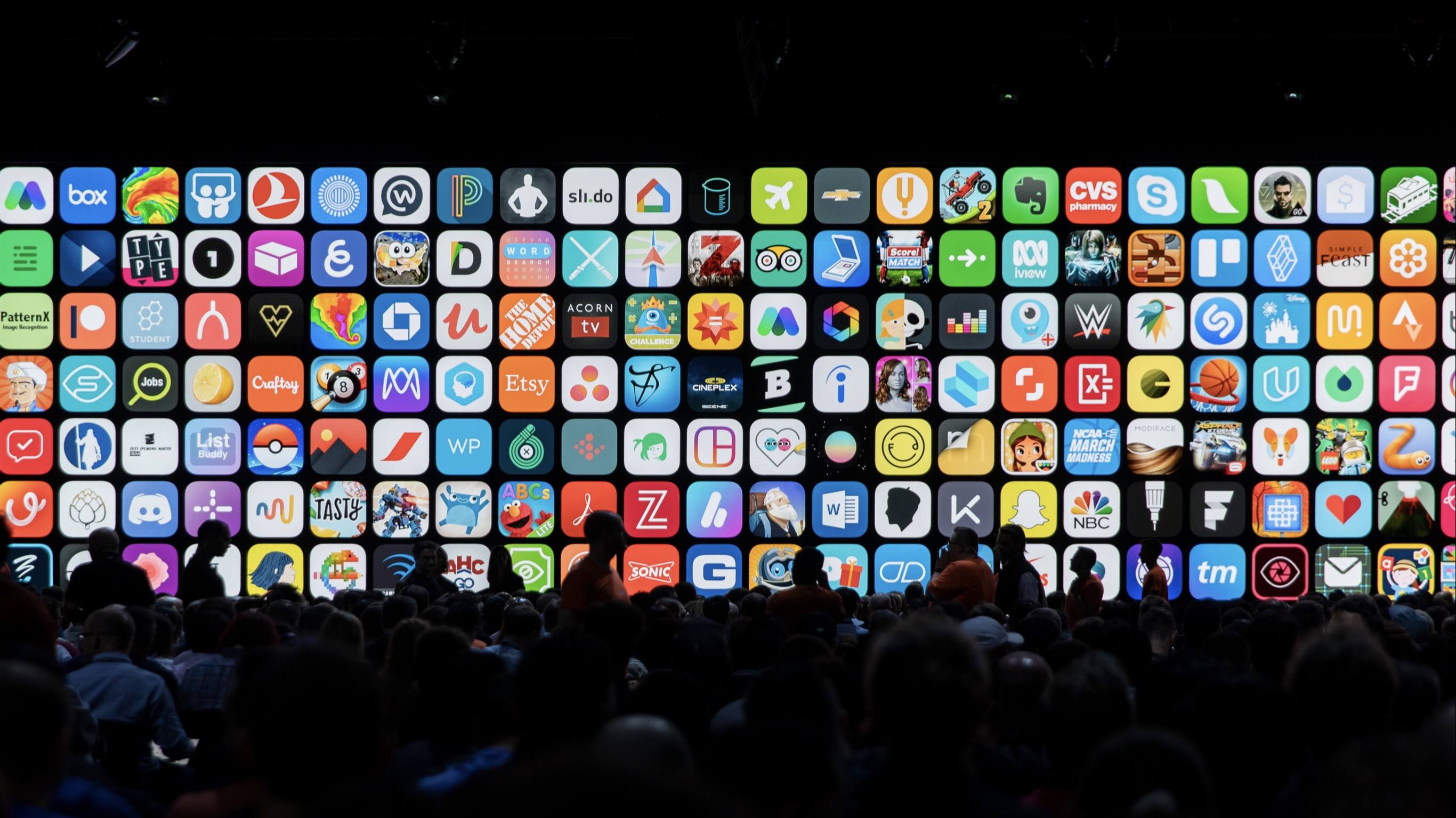
At the time of Jobs’ conversation with Wingfield, there were over 1500 apps on the Store, and Jobs estimated around 50 were being added each day. According to Jobs, of the 1500+ apps on the App Store:

27% of them are free, leaving 73% paid. Of the paid apps, over 90% are under $10.

Jobs put the numbers in perspective by comparing them to iTunes downloads:

Users have downloaded over 60 million apps from the App Store in the first 30 days…. That is 30% as big as iTunes for music downloads.

Jobs went on to explain what that meant to developers:

The total revenue has been $30 million in the first 30 days. Developers get 70% of that. Developers get $21 million. Nine of that $21 million is going to the top 10 developers. A lot of small developers are making a lot of money.

What can only be captured by the audio of the interview, is Jobs’ apparently sincere astonishment at the success of the App Store. In retrospect, it’s amusing to hear Jobs speculate that the App Store might someday reach $1 billion in revenue when we know now that it’s paid out a net to developers of $100 billion:

We’re already at a $360 million a year run rate. This thing is going to crest to half a billion soon.

Who knows? Maybe it’ll be a billion dollar marketplace at some point in time. This doesn’t happen very often. A whole new billion dollar market opens up. 360 million in the first 30 days, I’ve never seen anything like this in my career for software.

Although I’m surprised that The Wall Street Journal waited more than two weeks after the 10th anniversary of the App Store to release the interview, I’m glad they did. The interview is full of interesting facts about the early App Store and a unique insight into Steve Jobs’ reaction to the Store’s runaway success. I highly recommend you listen if you can.

Permalink