Tumult Hype Professional 4.0: Create Stunning Web Animations Without the Code [Sponsor]

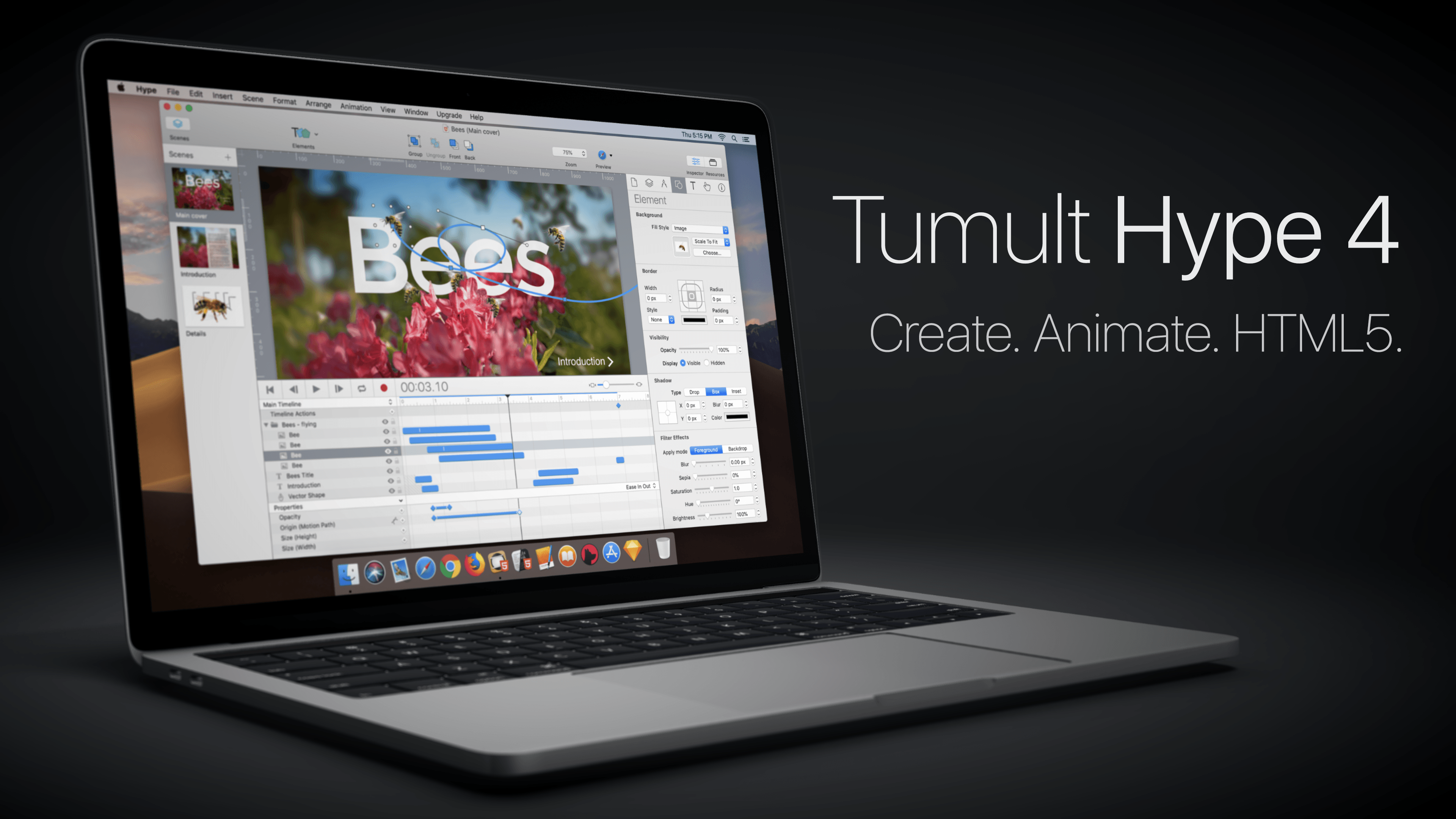
The web is a visual medium, so it pays to make the most of what it has to offer with beautiful, interactive animations. With Tumult Hype Professional 4.0 for the Mac, you can create stunning animations without writing a single line of code.

The app uses a powerful key-based animation system combined with an easy-to-use record button that couldn’t be simpler. That’s because under the hood of Tumult Hype’s elegant UI is a sophisticated interactivity system that can trigger symbols and multiple timelines.

With the recent release of version 4.0, Tumult Hype introduced vector shapes with shape morphing for more advanced animations. You can also incorporate physics into animations, ease into and out of animations, bring line drawings to life, create snapshots to use with browsers where JavaScript is disabled, and use Hype with external editors and tools like BBEdit, Photoshop, Affinity Photo, and Astropad.

Tumult Hype’s visual environment the perfect way to create animations because it eliminates the guesswork letting you see exactly what the visitors to your site will see. Whether you’re building ads, which require a small export footprint, infographics, banners, animated lessons, interactive experiences, or books, Tumult Hype has you covered. Then when you’re finished, the app outputs state-of-the-art HTML5 and CSS3 driven by JavaScript, which is compatible with everything from IE 6 to the latest Chrome, iOS, and Android browsers.

To get started making responsive, flexible documents that accommodate all device layouts, download and try Tumult Hype today. For a limited time, MacStories readers can buy Tumult Hype Professional for 20% off on the Tumult store by using this link or the coupon code ‘MACSTORIES’ at checkout.

Our thanks to Tumult Hype Professional for supporting MacStories this week.

CNBC Reports New Details About Apple’s App Review Team

App Review has been a black box for over a decade now, with virtually no details leaking out of Apple. That’s begun to change in 2019. Earlier this year, Mark Gurman interviewed Phillip Shoemaker, a former head of App Review, on Bloomberg’s Decrypted podcast where Shoemaker described what app review was like before he left the company around 2016.

Now, CNBC has additional and more recent details about App Review from unnamed sources within the organization. Many of the tidbits in CNBC’s report were previously shared by Shoemaker, but there are new details sprinkled throughout the piece about the organization and how apps are reviewed. For instance, CNBC reveals that:

Apple recently opened new App Review offices in Cork, Ireland, and Shanghai, China, according to a person familiar with the matter. The department has added significant headcount in recent years, they added.

CNBC also learned that:

The department has more than 300 reviewers and is based out of a pair of offices in Sunnyvale, California….

The report contains new details about the review process too:

Reviewers have daily quotas of between 50 and 100 apps, and the number of apps any individual reviewer gets through in an hour is tracked by software called Watchtower, according to screenshots seen by CNBC. Reviewers are also judged on whether their decisions are later overturned and other quality-oriented stats.

App Review is part of Apple’s developer relations organization run by Phil Schiller, the company’s Senior Vice President of Worldwide Marketing. Like other developer problems raised with front-line developer relations personnel, App Review decisions are escalated through the organization when an appeal is made:

Developers who disagree with a decision made by App Review can appeal to a board called the App Review Board, which can change the decision from a lower-level reviewer and is partially composed of reviewers with good track records, people who worked as reviewers said. Sustained appeals can bring an app in front of the Executive Review Board.

CNBC reports that the Executive Review Board, of which Schiller is a member, also handles sensitive app decisions like the decision to reject the Infowars app in 2018.

It’s curious that after years of almost no information about the App Review, details are beginning to emerge now. However, other than the size of the organization, which is smaller than I would have guessed, and revelation that App Review now operates in Ireland and China, the review process is about what I thought it was given that Apple has said in the past that each app is reviewed manually.

Permalink


Harry Potter: Wizards Unite AR Game Launches on iOS

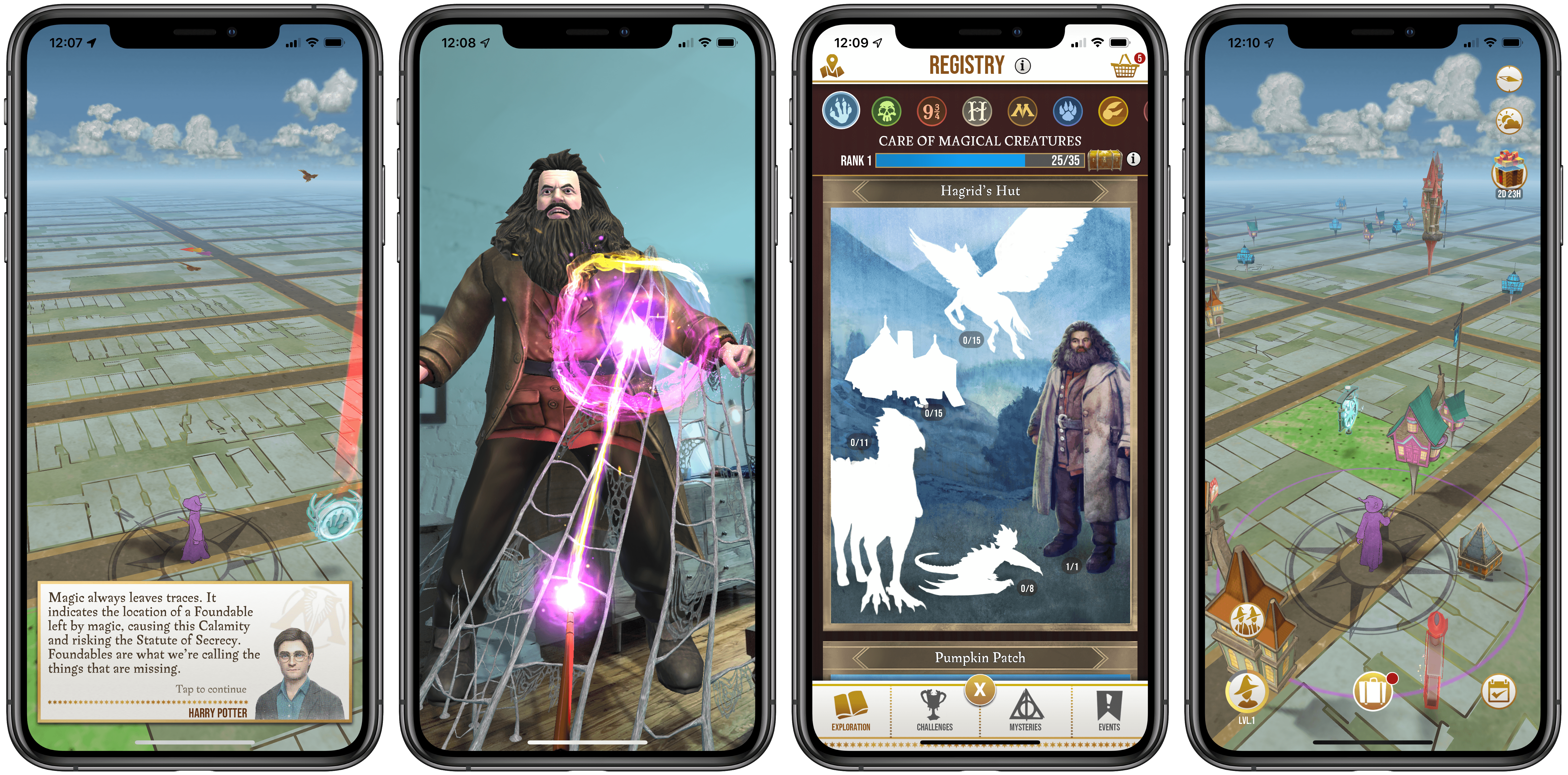
It was the summer of 2016 when Pokémon GO took the world by storm, and now, almost exactly three years to the day later, there’s a new AR game trying to capture the same magic. Harry Potter: Wizards Unite launched today in the US, UK, and select other countries from the same studio behind Pokémon GO, Niantic.

At the core of Wizards Unite is the same AR-based system employed in Pokémon GO, whereby you can explore a digital world that’s mapped to the real world around you, where different real-life locations are mapped to in-game hot spots for engaging with certain game elements. Special locations in the game, such as fortresses, are designed for teams of players to conquer together; combined with the AR world exploration mechanic, this encourages strong community engagement in the game. If Wizards Unite takes off in any way like Pokémon GO, expect to see bands of players roaming the streets with their phones at the ready.

Chronologically, Wizards Unite takes place following the original seven book Harry Potter series but still includes many of those original characters. In the game’s tutorial, for example, a slightly aged Harry Potter, now working as an auror, instructs you regarding a crisis the Ministry of Magic is currently facing that needs your assistance. This sort of tight integration with the world and characters Harry Potter fans know and love, combined with the community-centric element found in games like Pokémon GO, could make Wizards Unite a really special experience for anyone who loves J.K. Rowling’s wizarding world. As one of those people myself, even though I never got into Pokémon GO, I’m excited to spend some quality time trying out Wizards Unite.

You can download Harry Potter: Wizards Unite on the App Store now.


Connected, Episode 248: There Will Be Consequences

Federico and Stephen are joined by David Sparks to talk about the state of Apple’s current betas, the updated Files and Shortcuts apps and the ever-growing system of rules that form Connected’s drafts.

On this week’s episode of Connected, we had a great conversation with David Sparks about some of the key improvements coming to iOS and iPadOS later this year. You can listen below (and find the show notes here).

AppStories+ Deeper into the world of apps
0:00
01:21:16

Connected, Episode 248

AppStories+ Deeper into the world of apps

Permalink

Apple to Revise Mojave’s Catalyst Apps in macOS Catalina

When Apple launched macOS Mojave last year, it included four built-in apps that had been ported from the iPad using what we now know as Project Catalyst. Home, Voice Memos, News, and Stocks have been regularly criticized for not being very Mac-like, and some users assumed they would be updated in the forthcoming macOS Catalina, since it includes a newer, more feature-rich version of Catalyst that’s powering new apps like Podcasts, which does feel more Mac-like.

However, until now there’s been no sign of Apple giving its first wave of Catalyst apps a second pass. They haven’t changed in the first two developer betas of Catalina, and Apple’s software chief Craig Federighi, in our interview with him on AppStories, diverted blame for those apps from the Catalyst technology on to intentional design decisions Apple’s team had made.

While Federighi still stands by that message, he also, in a new interview with Jason Hiner at CNET, has shared that Home, Voice Memos, News, and Stocks will in fact be getting updated in Catalina.

Craig Federighi confirmed that the four iOS apps for Mac released last year will get major updates based on the new technology in Project Catalyst. But he also revealed that the apps will get new designs to make them more Mac-like.
[…]
“We’ve looked at the design and features of some of those apps and said we can make this a bit more of a Mac experience through changes that are independent of the use of Catalyst, but are just design team decisions,” Federighi said. “When I read some of the initial reviews of those apps, people were saying, ‘Obviously this technology is causing them to do things that don’t feel Mac-like.’ Honestly, 90% of those were just decisions that designers made … People took that as ‘this feels iOS-y’ and therefore they thought it was a technology thing. Actually, it was a designer preference. So part of the upgrade is we said we’ve got to co-evolve with our user base around the aesthetics of the Mac experience. And so we made some adjustments to the apps.”

It’s unclear how extensive changes will be, or if they will bring new functionality where it’s currently missing – such as the ability to open News articles in separate windows – but Federighi told CNET these upgraded Mojave apps will be available in the public beta of Catalina. If that means the first public beta, we should expect to see them next month.

WWDC this year clearly demonstrated that Apple listens to feedback from the broader community of users, so it makes sense that the company would give its Mojave apps a second pass. As long as they exist in their current form, they’ll be used as a punching bag to denigrate the merits of Catalyst. But if the updated apps truly do offer a better Mac experience, then combined with the new Podcasts app they’ll make a strong case for developers to get on board bringing their own iPad apps to the Mac.

Permalink

Apple Stores Showing Signs of Change Under Deirdre O’Brien’s Leadership

Michael Steeber reports for 9to5Mac on some interesting developments he’s observed in certain Apple Stores recently:

Apple is evolving its in-store shopping experience with signage and display fixtures that remove ambiguity and encourage increased hands-on interaction with products. New designs that have been spotted in multiple locations reflect the changing requirements of busy stores and appear to address common customer needs.

He mentions things like signs indicating checkout zones, a new table guide spelling out differences between iPhone XR, XS, and XS Max, and more customer-friendly Watch displays.

The new retail design language Apple began rolling out in 2015 brought visual simplicity by deemphasizing signage, logos, and extraneous store fixtures. While more aesthetically pleasing, some customers have found contemporary stores challenging to navigate. These new fixtures and signs show that Apple is willing to fine-tune the balance between appearance and function.

Normally these changes might go overlooked, particularly since they’re currently only in a handful of stores, but they’re noteworthy for reasons of timing. Apple’s former head of retail, Angela Ahrendts, was recently succeeded by Deirdre O’Brien, and while all signs point to Ahrendts’ departure being amicable, one common complaint regarding her tenure is that Apple Stores became less functional shopping places despite growing unquestionably more beautiful and lavish in design. These few scattered signs of change spotted by Steeber indicate an early priority shift coming from Apple’s new SVP of Retail.

Permalink

Nintendo Announces Dr. Mario World Coming to iOS July 10

Today Nintendo announced its latest mobile venture coming to iPhone and iPad: Dr. Mario World, which is available to pre-order now and will launch July 10th.

Dr. Mario World is a match 3-style game in the vein of Candy Crush, whereby you try to match your limited quantity of colored capsules with the various virus creatures on-screen to clear the game board. Fitting the Mario theme, the board in each stage will feature not just viruses, but also fan favorite power-ups such as a red shell or bomb that can knock out more viruses at once when activated. Based on early details, the game appears to stray very little from the classic match 3 formula, complete with hearts that determine whether you can start a stage, and diamonds that enable things like extending your turns. Match 3 games are a guilty pleasure for me, and I love Nintendo, so while some may prefer more originality, I’m excited to try a Mario-themed spin on a classic game mechanic.

When Dr. Mario World launches, it will be a free download with optional In-App Purchases for things like diamonds – a common business model for this type of game. There will be five worlds at launch, consisting of a variety of stages, and more worlds will be added over time. And following the tradition of other Nintendo titles such as Super Mario Run, gameplay will require a persistent Internet connection.

You can pre-order Dr. Mario World now.


I Won’t Sit Down: Songwriting with Frank Turner (Part 1)

In the fall of 2013, I sat in the first row balcony of The Vic theater on Chicago’s north side. I was there to see Frank Turner and the Sleeping Souls for the first time. Can you see me stage left in the baseball cap?

Today, we published the latest interview of Dialog Season 1 featuring musician and songwriter Frank Turner.

You can find the episode here or listen through the Dialog web player below.

There’s something about Turner’s songs that grabbed hold of me in 2013 and has brought me back to several live shows since. Aside from Turner’s music, which I love, part of the draw was his abrupt break with his musical past. I found Turner’s jump from post-hardcore band Million Dead to a folk-inspired, acoustic guitar-based solo career inspiring as I contemplated a career departure myself.

There’s also something in Turner’s autobiographical, personal style of songwriting that connects with listeners and transcends differences in their experiences, which I find intriguing. It reminds me of the discussion Federico and I had in episode 1 about writing personal stories. Those are often the hardest stories to write, but they can also be the most rewarding when, despite different backgrounds, others draw something useful from them. In today’s episode, we explore that aspect of Turner’s music, his relationship with fans, and the interpretation of his lyrics.

We also trace Turner’s early years of constant touring and how he’s managed to find the time to write new songs and books while on tour. We talk about social media’s dual nature as a useful tool and destructive force in society too; a topic that has become a common theme among Dialog guests. Finally, we touch on the evolving music industry and how it’s affected Turner’s career as a musician.

Photo Credit: Nicole C. Kibert

Photo Credit: Nicole C. Kibert

The title of the episode is drawn from Turner’s song Photosynthesis:

I won’t sit down,
And I won’t shut up,
And most of all I will not grow up.

The lyrics reflect a stubborn defiance of authority and expectations combined with a restless energy that I think captures Turner’s musical career and the mindset of many of the other writers we have already interviewed and will interview soon.

I hope you enjoy the interview. When we sat down to plan Dialog, Frank Turner was precisely the sort of guest I had in mind: someone working in a creative field affected by many of the same technological issues other writers face, but with a unique perspective on them. Be sure to check out the show notes for the episode to learn more about Turner and his music, and stay tuned for the conclusion of our interview next Tuesday.

Also, we’d appreciate it if you would rate Dialog in Apple Podcasts, recommend it in Overcast, or simply tell a friend about it.