GoodTask: A Powerful Task Manager Based on Apple’s Reminders App [Sponsor]

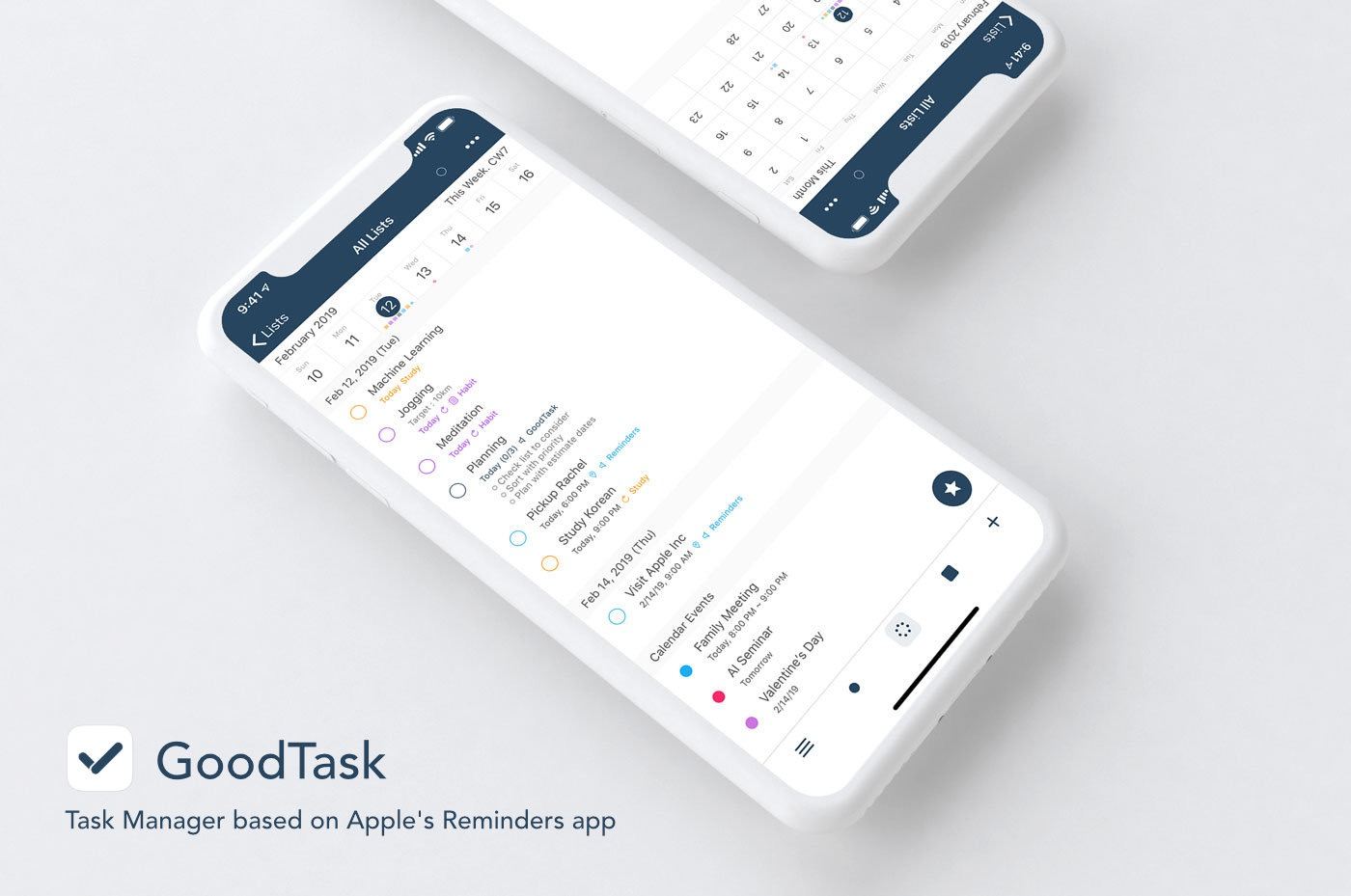
GoodTask is a powerful task manager for iOS and the Mac that’s built on top of Apple’s Reminders app. By leveraging Reminders, GoodTask syncs to all your iOS devices and Macs, supports Exchange, and works seamlessly with Siri shortcuts. But that’s just the start.

Tasks can be filtered using GoodTask’s Smart List feature. Smart Lists act like saved searches allowing you to view subsets of your tasks. For example, maybe you want to find all of your un-dated tasks with a certain tag. With Smart Lists, that’s incredibly simple to set up.

Another powerful feature of GoodTask is Quick Actions. You define a grid of information to add to tasks with a single tap from the Quick Actions view. Maybe you have a project, tag, day of the week, time, or other bits of data you add to tasks over an over. With Quick Actions, the repetition of typing that information over and over is eliminated. The app also includes a Smart Button on iOS to quickly move between frequently-used lists.

Interactive notifications with Quick Actions allow users to do things like auto-snooze tasks right from a notification without opening the app. There’s also a feature-rich Apple Watch app from which you can manage existing tasks and add new ones. Add to that a handy Today widget and GoodTask excels at being available no matter the device or context. The app’s iOS icons are customizable and you can switch between a variety of themes or make them yourself to set GoodTask up exactly the way you want too.

Take charge of task management today by visiting GoodTask’s website to learn more about its Mac, iOS, and Watch apps and discover the power of the premier task manager based on Apple’s Reminders app.

Our thanks to GoodTask for sponsoring MacStories this week.


Apple Music Introduces ‘New Music Daily’ Playlist

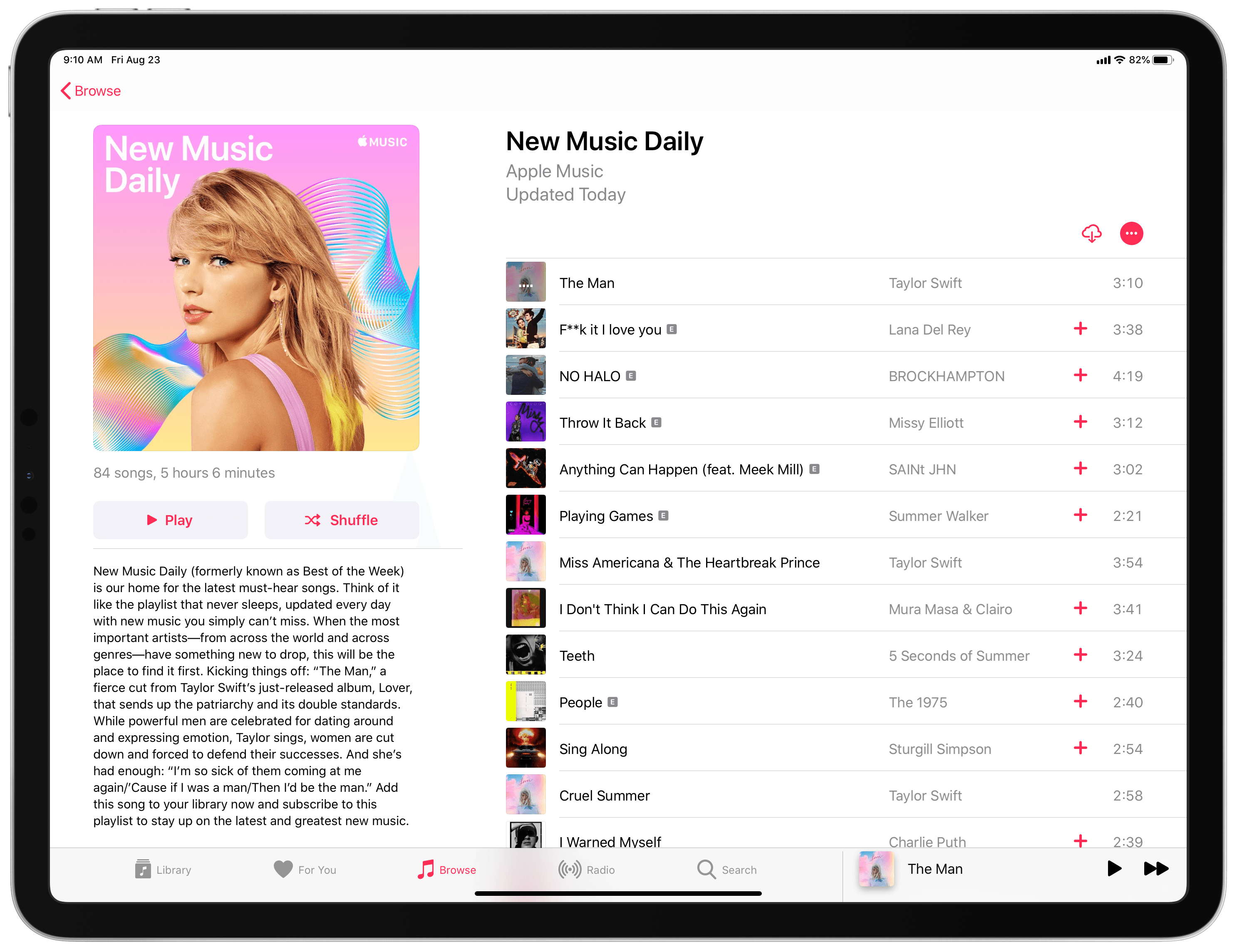
Recently Apple Music has been in the process of rebranding many of its longstanding editorial playlists, such as turning The A-List: Alternative into ALT CTRL and The A-List: Hip-Hop into Rap Life. These changes have reflected a shift in brand tone, but not a fundamental difference in the content of the playlists. The latest playlist change, however, is bit more substantial. What was formerly known as Best of the Week has been changed to New Music Daily, which as its name implies, makes this a daily-updated playlist rather than weekly.

New Music Daily aims to collect the most noteworthy new songs across a variety of genres around the world. Today on its launch, it’s filled with lots of Taylor Swift to coincide with her new album’s release, but it will be interesting to see what shape the playlist takes from day to day.

The most newsworthy detail about New Music Daily is simply its update schedule, which is fairly unique for Apple Music. Historically Apple’s editorial team has focused on providing weekly updates for its big playlists, or even rarer updates for less popular playlists, so the transition to daily is a big shift. I don’t expect we’ll see many other playlists follow suit, due to the sheer amount of labor required in editorially selecting songs each day, but it’s nice to see Apple’s team enter new territory.


Apple Launches iCloud for Web Redesign in Beta

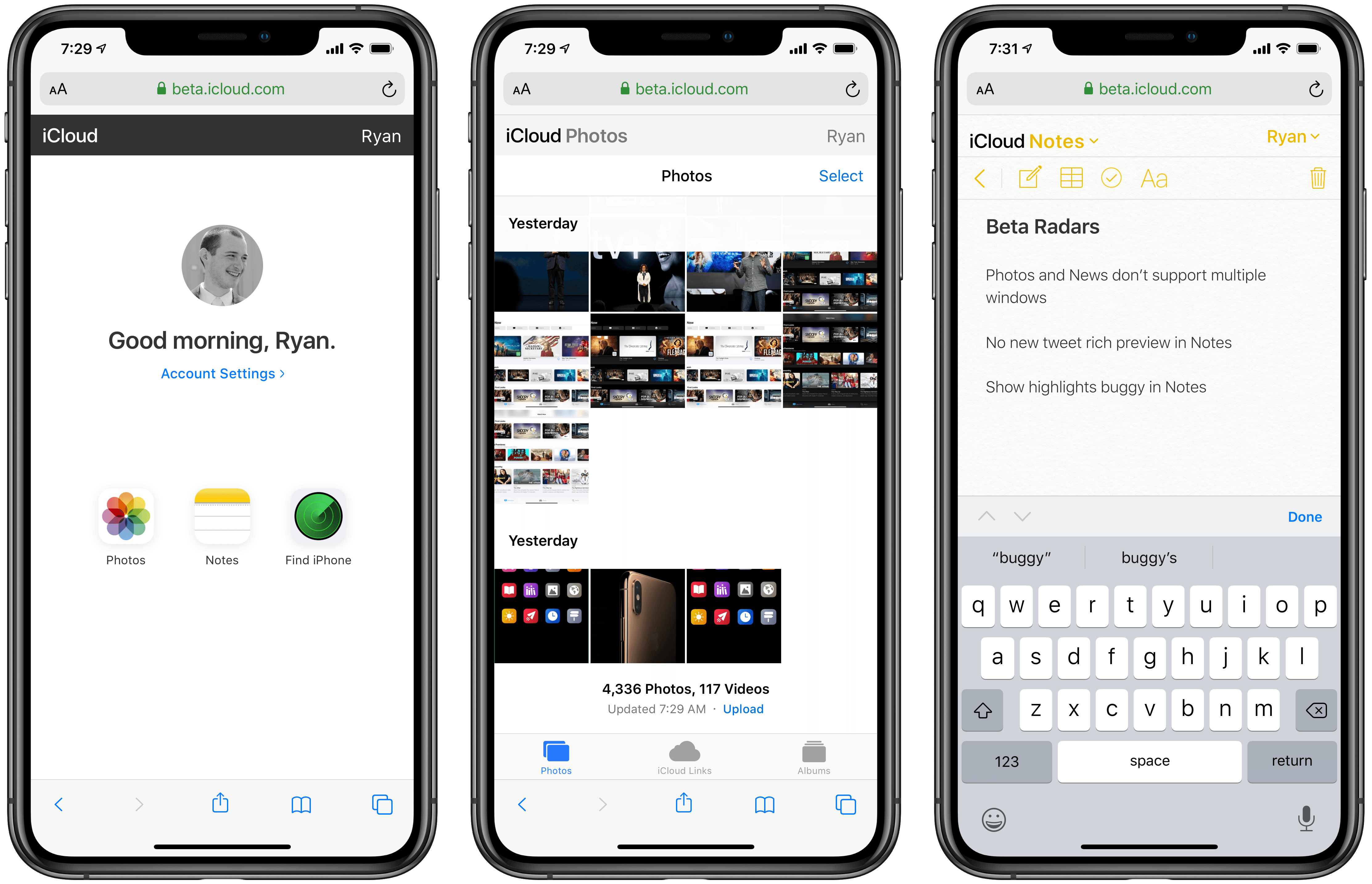
Last night our own Federico Viticci shared a discovery on Twitter, first noticed by Kyle Seth Gray, which is that Apple has quietly launched a beta version of a redesigned iCloud.com interface.

The old look for iCloud.com reflected the iOS 7 design era, while this new version, which is accessible by visiting beta.icloud.com, fits better with Apple’s modern design conventions. It also brings new functionality to the iPhone. While you can’t access the full slate of web apps on the iPhone like you can the iPad or Mac, Photos and Notes join Find iPhone in being available on the iPhone. Also of note: on devices that support the full range of iCloud web apps, the Reminders app has been redesigned to reflect its forthcoming iOS 13 version.

The web version of iCloud has long felt overlooked by Apple, so it’s nice to see it finally receive some attention. Though native apps still offer the best experience for users, it’s great to have the option of web access for important tools when needed.


Apple’s New TV Strategy Might Just Work

It’s been a very significant week for Apple’s TV efforts. On Monday the company debuted its first full-length trailer for an Apple TV+ original; that trailer was for The Morning Show, which has long been destined as a tentpole title for Apple. From what I’ve seen online, the trailer has been well-received, aided by an aggressive marketing push on YouTube and Twitter.

While The Morning Show’s first full trailer is a big occasion, and we’ll likely start seeing promos for other Apple TV+ shows soon with its fall launch fast approaching, the most important TV news in Apple’s week came from Disney.

Disney announced that its Disney+ streaming service would launch with native iOS and tvOS apps, which will use Apple’s In-App Purchase system for subscriptions, and the service will be “fully integrated with the Apple TV app.” Depending on your interpretation of that quote, Disney didn’t technically announce that Disney+ would be a channel in the TV app, but “fully integrated” is a strong phrase, and since Disney’s adopting Apple’s In-App Purchase system and integrating in some way with TV already, there’s virtually no reason to think it won’t be a full-fledged channel.

Following these two key events – the marketing push for Apple TV+ starting to gain steam, and Disney+ partnering with Apple in a key way – I’ve been reflecting on what Apple’s future in TV may hold.

We’ve known since March what the company’s TV strategy entailed: putting the TV app everywhere as an aggregator, bolstered by channels and Apple TV+. With the TV app Apple can do something that no one else seems to be trying: control the full stack of TV experience through integrating hardware, software, and services – the classic Apple playbook. But Apple needs partners to make this vision a reality. Without TV app commitments from big players like Netflix or Disney, it was unlikely that Apple’s strategy could ever find success. Signing Disney+, however, changes everything.

Absent Disney, failure seemed inevitable. The lack of both Netflix and Disney+ would have been a death blow to Apple’s plans. But with the home of Disney, Pixar, Marvel, and Star Wars now on board, I’m starting to think Apple’s TV strategy might just work. Here’s why.

Read more


Sign In with Apple: Goodbye Account Management

I love trying new apps and services. It may be part of my job at MacStories, but even if it weren’t, I would still constantly be on the lookout for interesting, creative products that can benefit either my work or leisure. In recent years it seems like there’s always a fresh stream of apps and services to check out. Often when I try something new, however, I’m immediately confronted with the obstacle of a login screen. At which point there’s a choice to make: do I go through the hassle of creating an account for this service, or – if the option is available – do I simply authenticate via a third party like Google or Facebook? Sadly, neither option is ideal.

Creating a new account for every service you try is a major pain. It’s made easier with the aid of iCloud Keychain and 1Password, but while those tools eliminate lots of friction, they can be a little clunky, and in the end you’re still trusting your data to the (usually unknown) privacy policies of the service you sign up for.

Third-party login buttons solve the convenience problem, mostly. They may require entering your credentials for that third-party service, but at least you don’t have to create and remember new credentials for multiple services. The data privacy issue can be a question mark with these buttons though; when you authenticate through, let’s say Facebook, do you really know exactly what data you’re sharing with the new service? Or how the service will use that data? As consumers continue losing trust in Facebook itself to secure their data, why would they trust a service that taps into their Facebook data?

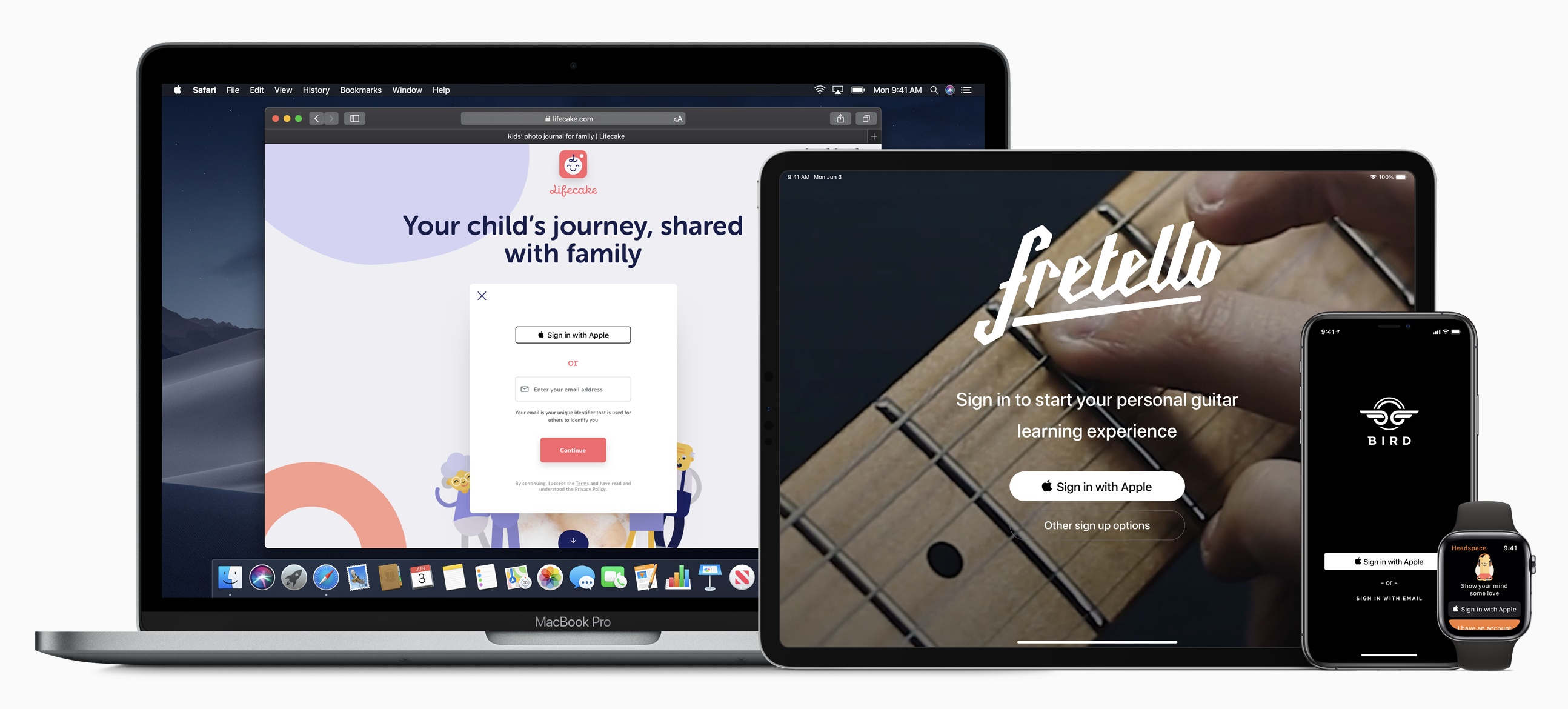
Sign In with Apple is a modern alternative to the current mess of login methods, offering Apple users a solution that addresses the current options’ shortfalls. It makes account creation and sign-in trivially simple – even more so than buttons from Google or Facebook – while also keeping your data in the hands of a company with a decent privacy track record.

When apps update to adopt Sign In with Apple, I suspect many users’ initial thoughts will be some variation of what immediately popped into my mind after trying it for the first time: “Where has this been all my life?”

Read more


Apple Card Now Available for All US Customers, Adds New 3% Daily Cash Partners

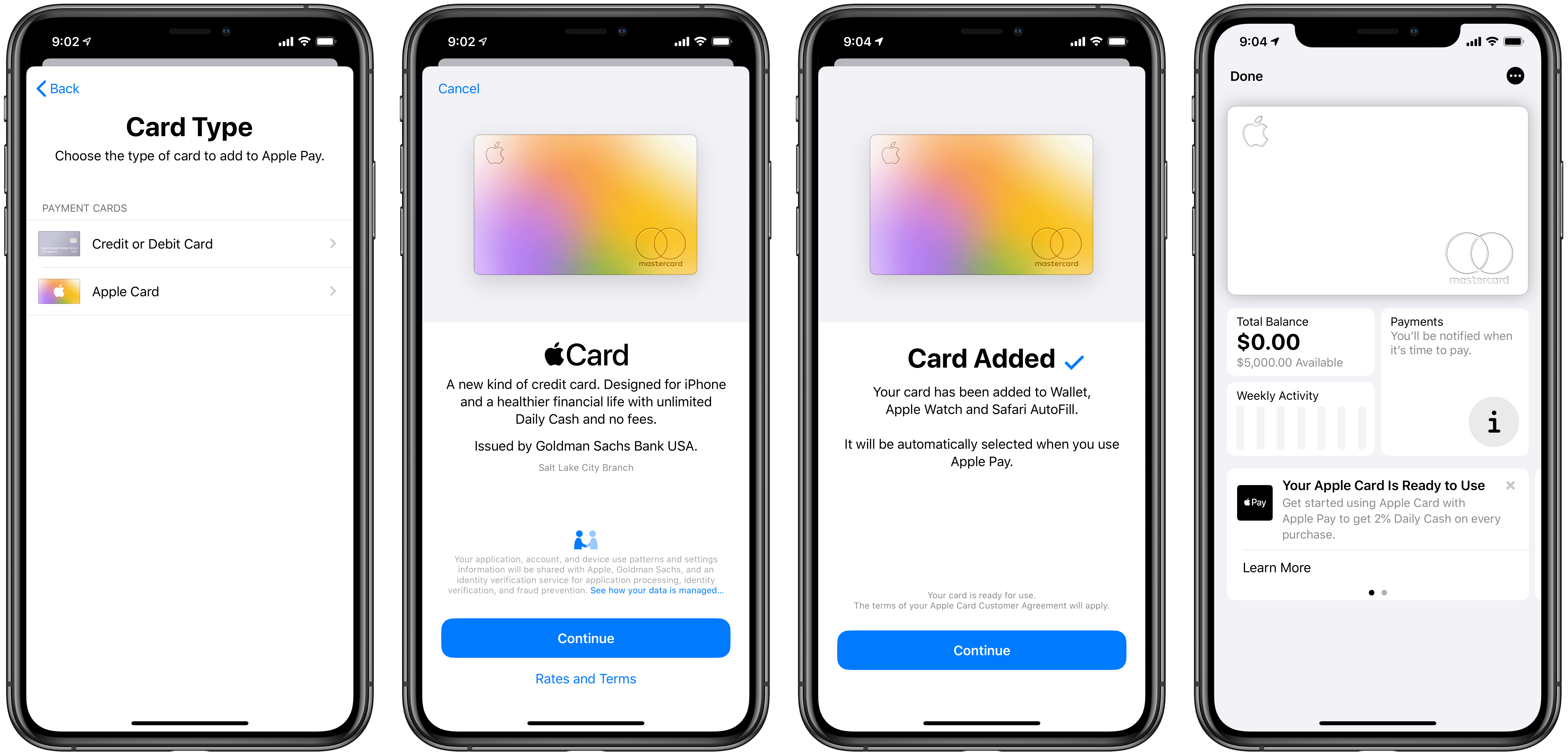
Following a limited preview earlier this month, Apple has today opened up applications for Apple Card to all US customers. Users can apply through the Wallet app on an iPhone running iOS 12.4 or later, and in most cases receive instant access to Apple Card if approved. Opening the Wallet app then tapping the plus button in the top-right leads to the option to add Apple Card.

Alongside Apple Card’s wide release, Apple is announcing that its Daily Cash program is getting better thanks to a new partner that supports the highest 3% Daily Cash rate which was previously exclusive to Apple purchases.

Apple Card is extending 3 percent Daily Cash to more merchants and apps. Starting today, customers will receive 3 percent Daily Cash when they use Apple Card with Apple Pay for Uber and Uber Eats. Customers can request a ride through Uber in more than 700 cities across the globe and order a meal through Uber Eats in more than 500 cities around the world. Apple Card will continue to add more popular merchants and apps in the coming months.

Apple has never before mentioned that it would be seeking additional partners to support the 3% Daily Cash rate. Initially that rate was limited to purchases from the Apple Store, Apple.com, the App Store, and other Apple services; 2% is the standard Daily Cash rate available for Apple Pay transactions, and 1% for everything else. Adding Uber and Uber Eats to the 3% pool, with “more popular merchants and apps” in the pipeline for future partnerships, makes Apple Card’s Daily Cash program more attractive than before – a welcome surprise for the card’s wide release.


Porsche to Include Apple Music App in Its Electric Taycan Electric Sports Car

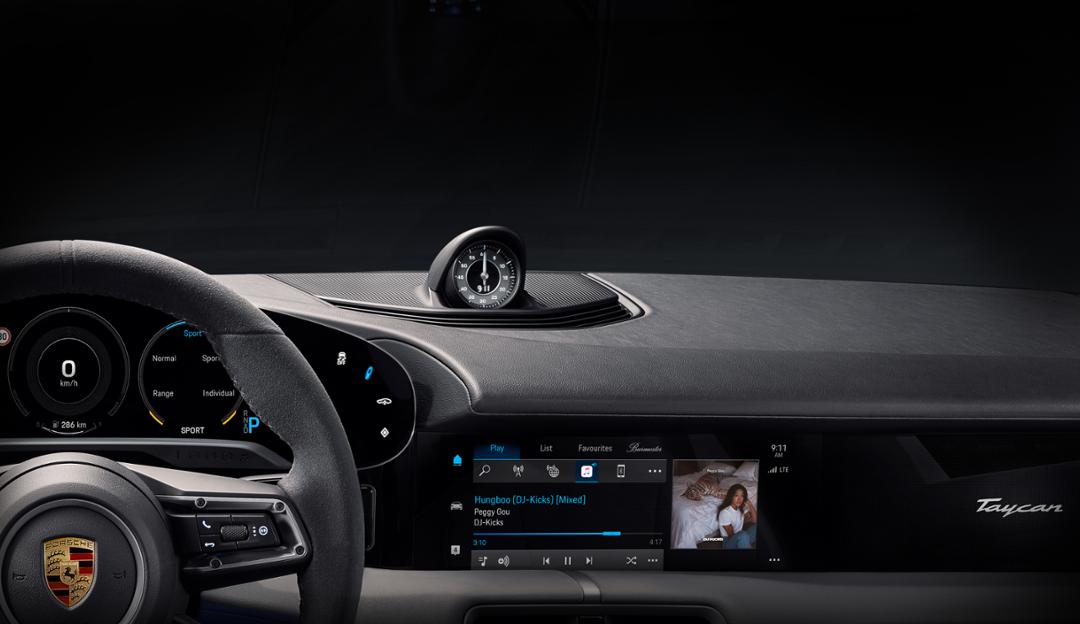
Yesterday, Porsche announced that it’s partnering with Apple to integrate Apple Music directly with the in-car entertainment system of the Taycan, which is debuting in September.

The streaming service will be available in Porsche’s fully-electric Taycan first and later, in other models. According to TechCrunch’s Kirsten Korosec who spoke to Porsche’s North American CEO Claus Zellmer:

The integration means more than an Apple Music app icon popping up on the Taycan’s digital touchscreen. The company wanted the experience to be seamless, meaning no wonky sign-ins, phone pairing or separate accounts. Instead, Porsche is linking an owner’s Apple ID with their Porsche Taycan ID. Apple Music content in the Taycan will be identical to what’s on the user’s iPhone app.

System-level integration with Apple Music will allow Taycan owners to enjoy the service regardless of whether they have an iPhone with them because the Taycan comes with in-car Internet service. The car company announced that it will offer a six-month free trial of Apple Music with the Taycan and incorporate CarPlay support into its in-car entertainment system too.

Direct integration of Apple Music with Porsche’s in-car system, plus six months of free service sounds an awful lot like what satellite radio company SiriusXM offers with many new cars. The move has the advantage of ensuring that Apple’s service will always be available onscreen where it can compete directly with other services. Of course, the downside is that because Apple doesn’t control the hardware its app runs on, it will undoubtedly be subject to the whims of Porsche if it wants to update it, which is part of why CarPlay exists in the first place. Fortunately, regardless of how Porsche handles updates, CarPlay will be available to Taycan owners too. It will be interesting to see whether Apple Music and perhaps other Apple apps make their way into additional manufacturers’ automobiles in the future or if this is a one-off deal.


AppStories, Episode 125 – Apple Maps in iOS 13 with Ryan Christoffel

On this week’s episode of AppStories, John is joined by MacStories colleague Ryan Christoffel to talk about the big changes coming to Apple Maps this fall with iOS 13.

Sponsored by:


AppStories+ Deeper into the world of apps

AppStories Episode 125 - Apple Maps in iOS 13 with Ryan Christoffel

0:00
40:31

AppStories+ Deeper into the world of apps

Permalink