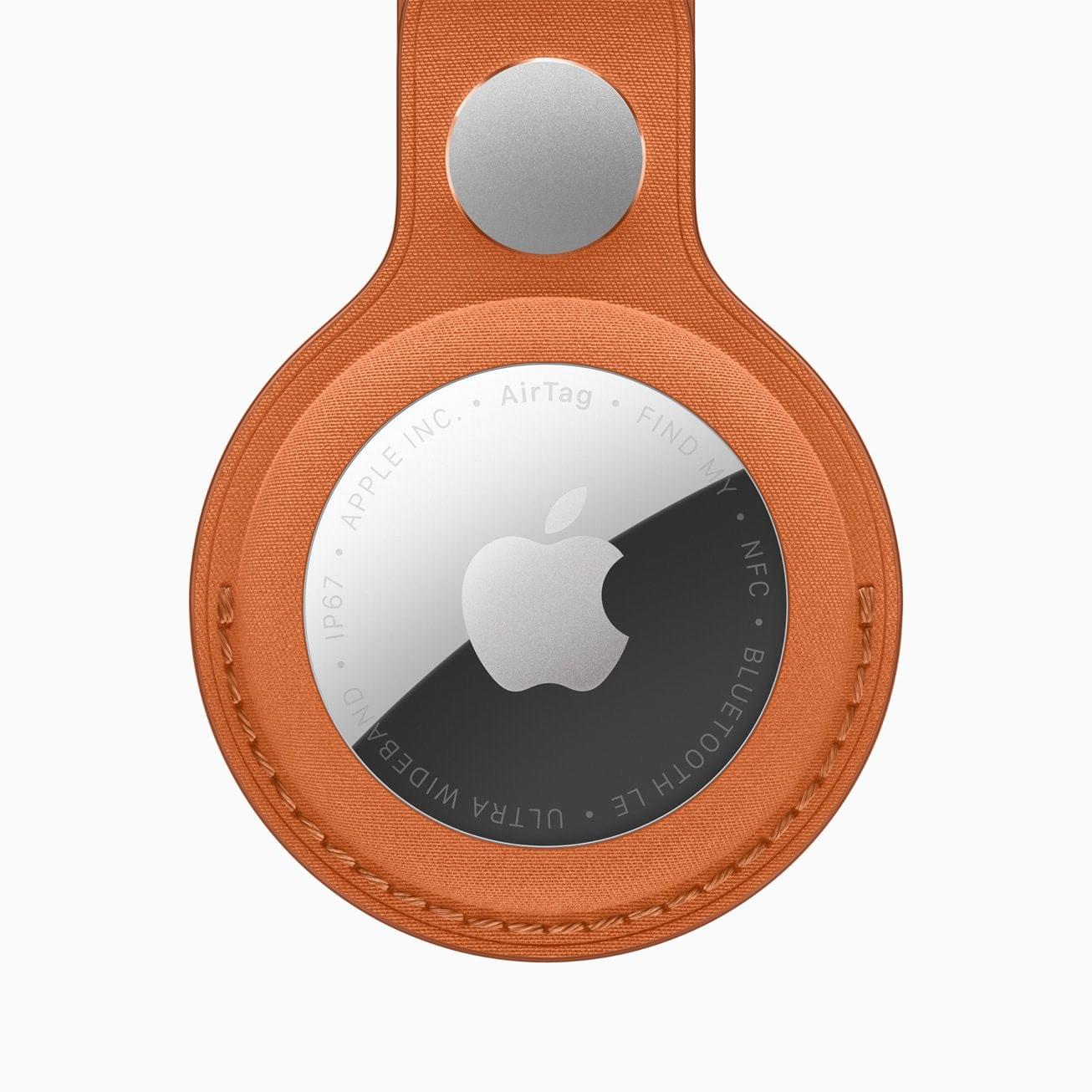
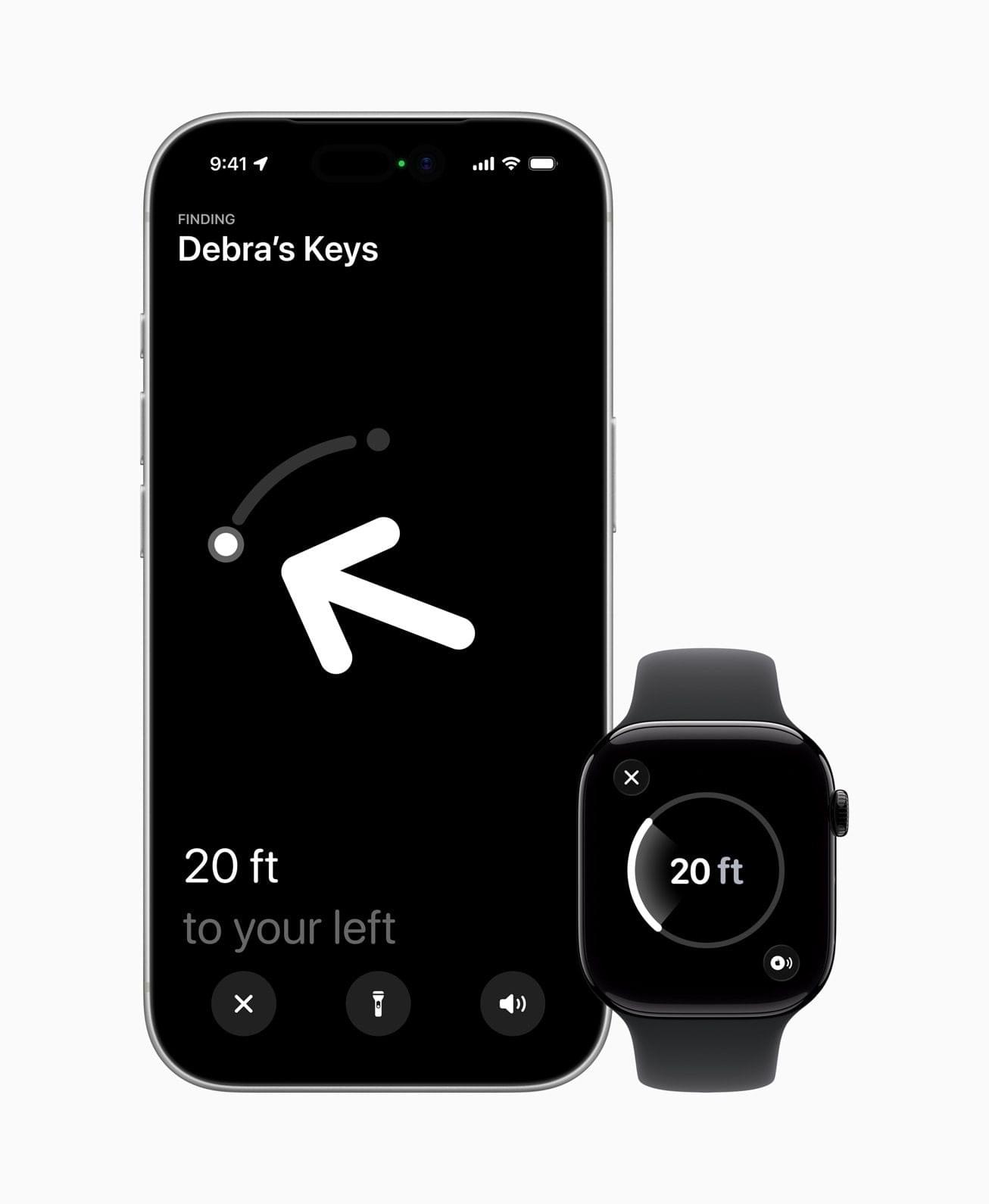
In a press release today, Apple launched a second-generation AirTag that features an upgraded components, making it easier to locate than the original 2021 AirTag.
The new AirTag features a bunch of new hardware packed into the same design as the original version, including:
the same second-generation Ultra Wideband chip found in the iPhone 17, iPhone Air, and Apple Watch Ultra 3,
a better Bluetooth chip that can be detected over longer distances, and
a 50% louder speaker.
According to Apple, that allows the tiny device to be detected from 50% farther away and heard from twice as far away. Apple has changed the AirTag’s chime that it says will make it easier to find, too. Precision finding is also available for the first time from an Apple Watch Series 9 and later and Apple Watch Ultra 2 and later. To track the device from an iPhone or iPad, you’ll need to be running iOS or iPadOS 26. Apple Watch precision tracking requires watchOS 26.2.1.
Source: Apple.
The press release also reveals more than 50 airlines now accept location links to help find missing luggage. According to a report from an airline industry IT provider, AirTags have helped reduce baggage delays by 26% and reduce lost luggage by 90%.
Like the exterior design, the price of the AirTag hasn’t changed. It still costs $29 for one or $99 for a four-pack of AirTags. Apple is also offering a FineWoven keychain for $35 that comes in five colors. The new AirTag can be ordered now and will be available in retail stores later this week.
This week, Federico and John complete their tour of holiday projects with a look at the tools both of them built with the help of Claude Code, Codex, and other tools.
On AppStories+, John pushes Claude Code by building a Safari web extension that integrates with Notion.
This week, rumors swirl about the Steam Machine’s pricing, AYANEO pauses to collect itself, and GameSir’s Pocket Taco goes live – plus, the lack of foldable phone controllers and our first videogames.
On NPC XL, Federico, John, and Brendon share what they do when they’re not obsessing over handheld consoles.
Matt’s on his own for this one, as Chris and Niléane managed to both get sick at the same time. Fear not; we get to rant and rave about the latest “Xbox”!
On Cozy Zone, we roast each other’s backpacks. One’s all black, one’s full of color, and the other is just a mess.
Ollie’s Arcade was launched in 2023 by The Iconfactory with three mini-games reminiscent of beloved classic videogames. Today, the company launched a Kickstarter campaign with the goal of raising $20,000. If reached, The Iconfactory will make Ollie’s Arcade free and bring its game Frenzic to the bundle. Frenzic was one of the earliest iOS game and a fan favorite that was later adapted for Apple Arcade, but has since left Apple’s subscription gaming service.
From a bigger perspective the Kickstarter is yet another way we’re trying to sustain ourselves and keep the Iconfactory up and running. We all know times are tough, especially for small, non-investor driven businesses like ours. We’ve struggled to pay our salaries, keep up with the rising cost of health care and to compete against the onslaught of AI driven design solutions. The new KS won’t be enough to solve all our revenue problems, but it will help give us runway to keep the lights on while we find new ways to stick around and serve you. The more we raise now, the longer and safer that runway gets.
The Iconfactory has a long and stories history since it was founding in 1996. Since then they’ve produced some of the most thoughtfully designed apps and icons around. The Iconfactory isn’t the only company whose business has been hurt by generative AI, but I sincerely hope it isn’t one of the fatalities too. Check out the Kickstarter campaign and chip in to help them and make some great games free for everyone. And while you’re at it, don’t miss all the other great apps they have on the App Store like Tapestry, Tot, Triode, xScope, and many other.
Update, February 6: I’ve published an in-depth guide with advanced tips for secure credentials, memory management, automations, and proactive work with OpenClaw for our Club members here.
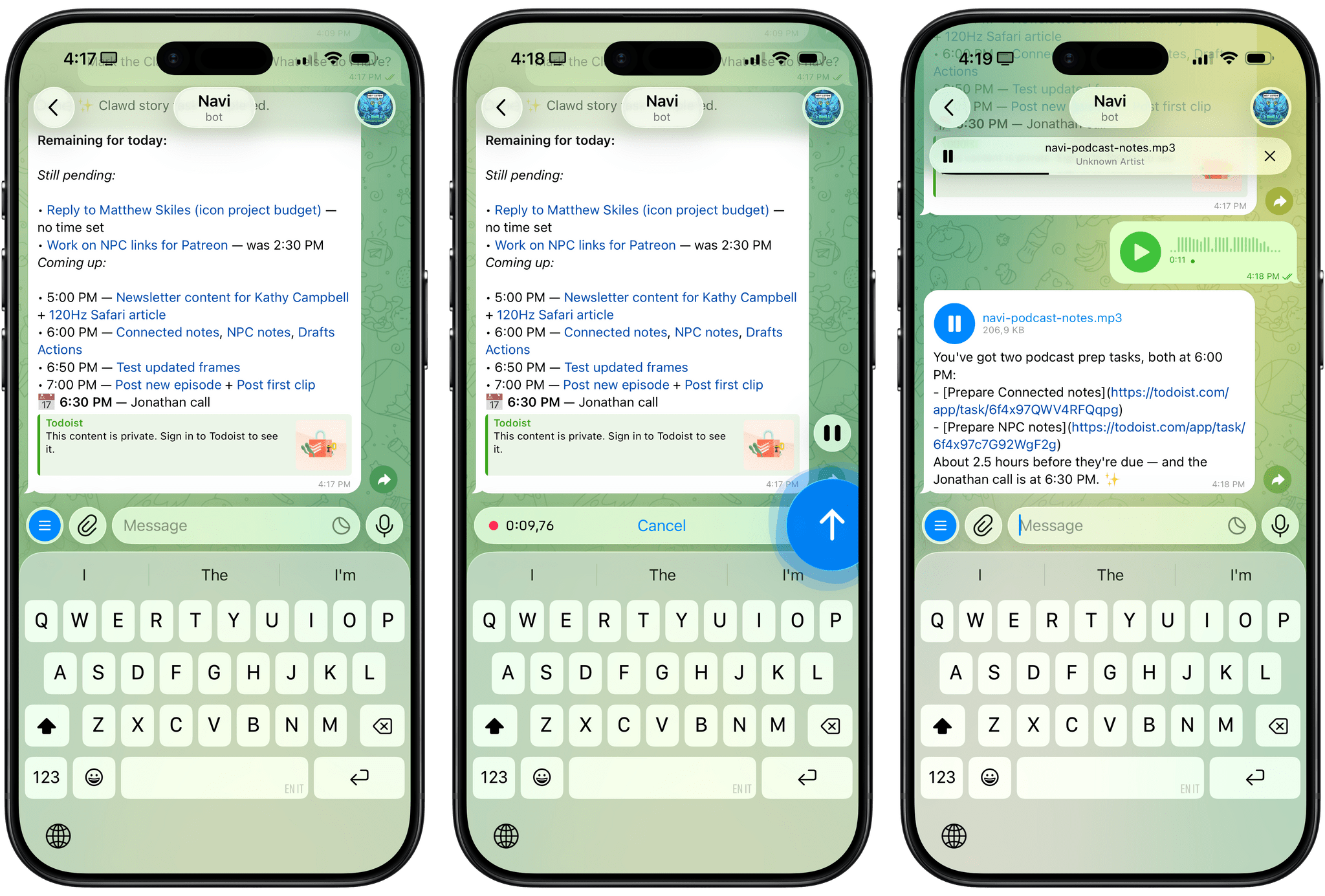
For the past week or so, I’ve been working with a digital assistant that knows my name, my preferences for my morning routine, how I like to use Notion and Todoist, but which also knows how to control Spotify and my Sonos speaker, my Philips Hue lights, as well as my Gmail. It runs on Anthropic’s Claude Opus 4.5 model, but I chat with it using Telegram. I called the assistant Navi (inspired by the fairy companion of Ocarina of Time, not the besieged alien race in James Cameron’s sci-fi film saga), and Navi can even receive audio messages from me and respond with other audio messages generated with the latest ElevenLabs text-to-speech model. Oh, and did I mention that Navi can improve itself with new features and that it’s running on my own M4 Mac mini server?
If this intro just gave you whiplash, imagine my reaction when I first started playing around with OpenClaw, the incredible open-source project by Peter Steinberger (a name that should be familiar to longtime MacStories readers) that’s become very popular in certain AI communities over the past few weeks. I kept seeing OpenClaw being mentioned by people I follow; eventually, I gave in to peer pressure, followed the instructions provided by the funny crustacean mascot on the app’s website, installed OpenClaw on my new M4 Mac mini (which is not my main production machine), and connected it to Telegram.
To say that OpenClaw has fundamentally altered my perspective of what it means to have an intelligent, personal AI assistant in 2026 would be an understatement. I’ve been playing around with OpenClaw so much, I’ve burned through 180 million tokens on the Anthropic API (yikes), and I’ve had fewer and fewer conversations with the “regular” Claude and ChatGPT apps in the process. Don’t get me wrong: OpenClaw is a nerdy project, a tinkerer’s laboratory that is not poised to overtake the popularity of consumer LLMs any time soon. Still, OpenClaw points at a fascinating future for digital assistants, and it’s exactly the kind of bleeding-edge project that MacStories readers will appreciate.
Today I learned something amazing: Safari supports higher than 60Hz refresh. It’s the only mainstream web browser that doesn’t, and I have never understood why, but apparently as of the end of 2025 in Safari version 26.3 (and maybe earlier) you can enable it. Here’s how to do it.
I won’t paste the steps here, so you’ll have to click through and visit Matt’s website (I keep recommending his work, and he’s doing some reallyinteresting work with “micro apps” lately). I can’t believe this feature is disabled by default on iOS and iPadOS; I turned it on several days ago, and it made browsing with Safari significantly nicer.
Also new to me: I discovered this outstandingly weird website that lets you test your browser’s refresh and frame rates. Just trust me and click through that as well – what a great way to show people who “don’t see” refresh rates what they actually feel like in practice.
This week, Federico and John are back from their holiday break, which included so many hardware and automation projects that this is part one of a two-part episode regarding Federico’s networked music automation setup and John’s new research tool.
On AppStories+, Federico shares his foldable phone experiments.
Niléane battles the modern era of smart mice, Chris has a new way of keeping up with everything everywhere all at once, and the whole gang battles it out with the best dang MagSafe accessories you’ve ever seen.
On this week’s Cozy Zone, we roast listeners’ home screens again! This one has, bar none, the weirdest home screen we’ve ever seen, and we might be cursed now.
This week, Federico unpacks Clawdbot, a Claude-based personal assistant, and recommends an Apple TV movie, while John revisits an old favorite on the Nintendo Switch.
I was out for a run today and I had an idea for an app. I busted out my own app, Quick Notes, and dictated what I wanted this app to do in detail. When I got home, I created a new project in Xcode, I committed it to GitHub, and then I gave Claude Code on the web those dictated notes and asked it to build that app.
About two minutes later, it was done…and it had a build error.
And:
As a simple example, it’s possible the app that I thought of could already be achieved in some piece of software someone’s released on the App Store. Truth be told, I didn’t even look, I just knew exactly what I wanted, and I made it happen. This is a quite niche thing to do in 2026, but what if Apple builds something that replicates this workflow and ships it on the iPhone in a couple of years? What if instead of going to the App Store, they tell you to just ask Siri to make you the app that you need?
John and I are going to discuss this on the next episode of AppStories about the second part of the experiments we did over our holiday break. As I’ll mention in the episode, I ended up building 12 web apps for things I have to do every day, such as appending text to Notion just how I like it or controlling my TV and Hue sync box. I didn’t even think to search the App Store to see if new utilities existed: I “built” (or, rather, steered the building of) my own progressive web apps, and I’m using them every day. As Matt argues, this is a very niche thing to do right now, which requires a terminal, lots of scaffolding around each project, and deeper technical knowledge than the average person who would just prompt “make me a beautiful todo app.” But the direction seems clear, and the timeline is accelerating.