
 MacStories Weekly: Issue 333
MacStories Unwind: City Building and Parenthood






This week on MacStories Unwind, I recommend two building sims: Townscaper and Dorfromantik, and special guest Alex Guyot revisits the TV show Parenthood.
Links and Show Notes
John’s Pick:
Alex’s Pick:
Follow us on Twitter
Follow us on Instagram
Apple Schedules Media Event for September 7, 2022
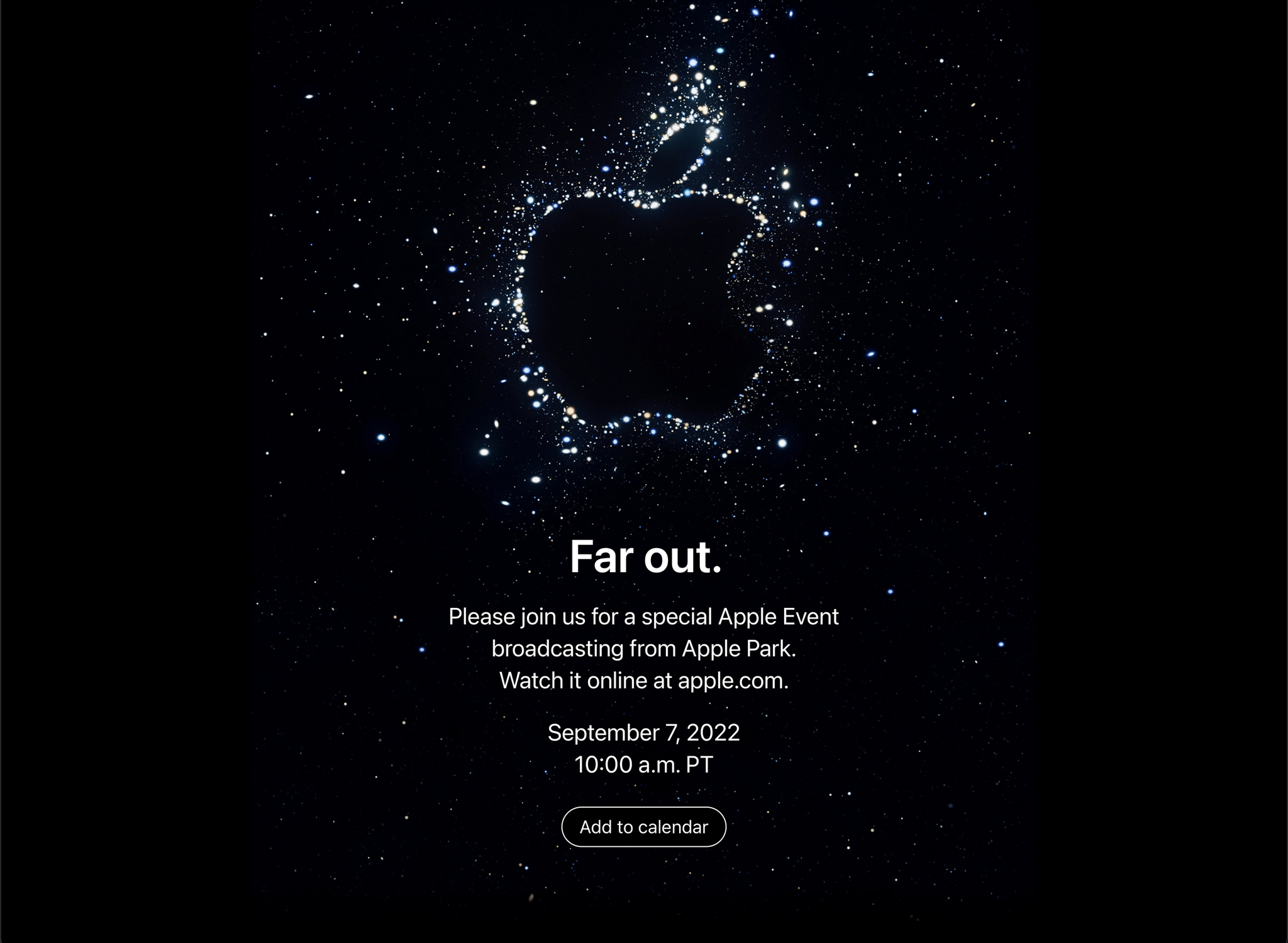
Apple has confirmed that its first fall event will be held on September 7th at 10:00 am Pacific US time. For the first time since the beginning of the pandemic, this fall’s event will include an in-person component.
Invitations to other members of the press invite them to tune into the video stream of the event.
It’s expected that Apple will unveil the latest crop of iPhone and Apple Watches on September 7th, and perhaps announce updates to products like the AirPods Pro.
Club MacStories+ Town Halls: Celebrating the First Anniversary of Club MacStories+
Apple Confirms iPadOS Update Will Be Released After iOS 16
On the heels of a report earlier this month by Bloomberg’s Mark Gurman that Apple would delay the release of iPadOS until October, the company has confirmed that the OS will follow the release of iOS, although it hasn’t said exactly when. In a statement to TechCrunch today, Apple said:
This is an especially big year for iPadOS. As its own platform with features specifically designed for iPad, we have the flexibility to deliver iPadOS on its own schedule. This Fall, iPadOS will ship after iOS, as version 16.1 in a free software update.
That means version 16.1 will be the first public release of iPadOS, skipping version 16.0 entirely.
The issues with the iPadOS 16 betas, in particular Stage Manager, are well documented. The feature has a lot of promise, but as Federico covered in his iPadOS preview and as we’ve discussed on AppStories, there are still significant bugs and design inconsistencies. Hopefully, the extra development time will allow Apple to ship a more refined version of Stage Manager that delivers on the vision that the company clearly has for the feature.
Everything New Coming to the Home App in iOS 16 and macOS Ventura
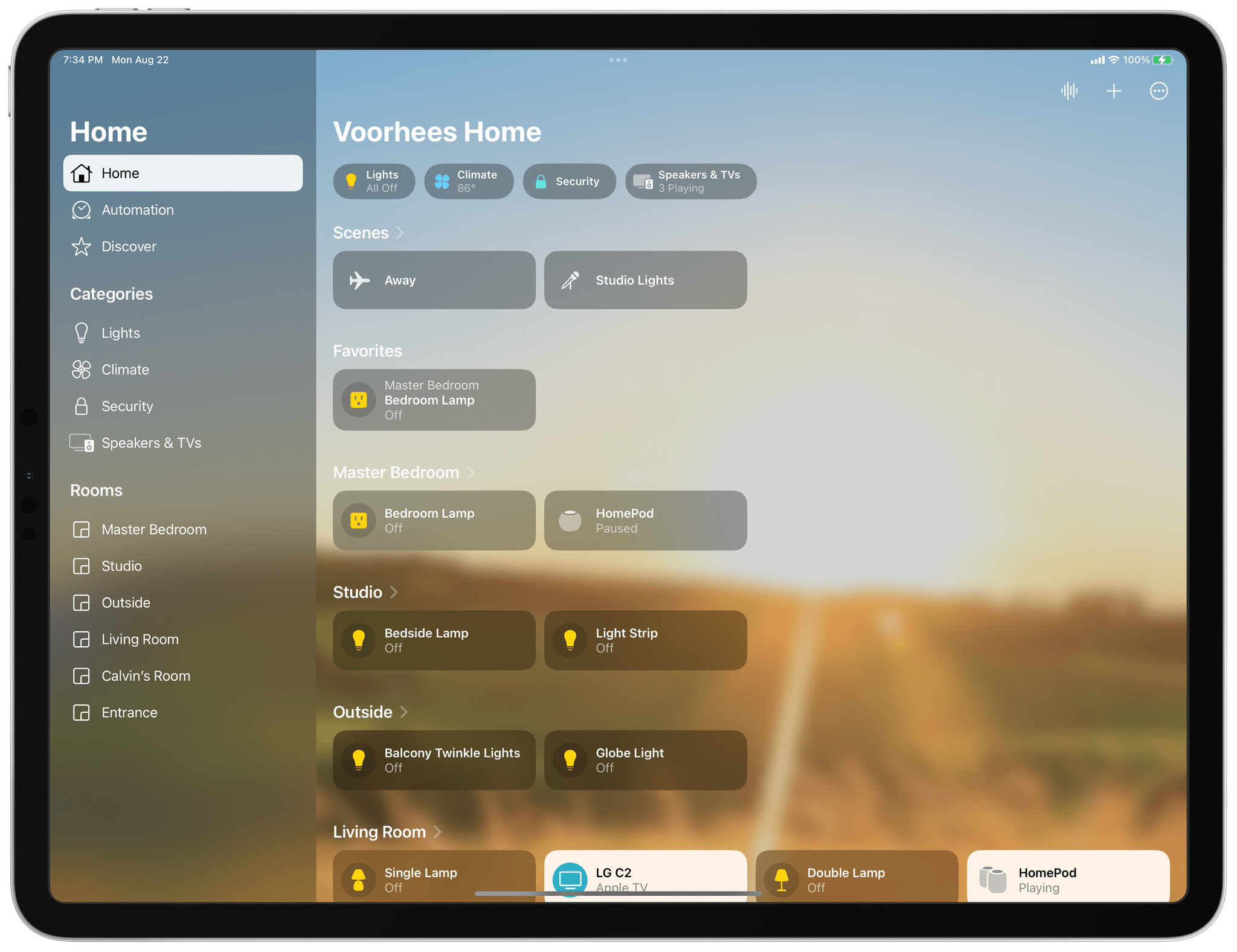
I’ve spent a lot of time in the Home app since moving to North Carolina. I moved right after WWDC, so I’ve disassembled, reassembled, and reconfigured my home automation setup, all in the midst of testing the latest iOS, iPadOS, macOS, and watchOS betas. What I’ve learned is that the Home app’s new design is much better for navigating a large collection of smart devices than before, but the app’s changes don’t go far enough. The app’s automation options are still too rudimentary, which limits what you can accomplish with them. Still, the update is an important one worth exploring because it promises to relieve a lot of the past frustration with the Home app.
One question that’s fair to ask about Home’s redesign is: Why now? The app’s big, chunky square tiles have been a feature of the app since the start and criticized just as long. The issues that I suspect have spurred the change are two-fold. First, the square tiles of the app’s previous design were too uniform, making it hard to distinguish one device from another. Second, they wasted space. That was less of a concern on a Mac or bigger iPad, but no matter which iPhone you used, Home could never display more than a handful of devices. Both issues have been problematic for a while, but with the Matter standard poised to bring more devices into the Home app, the issues were bound to get even worse without a redesign.
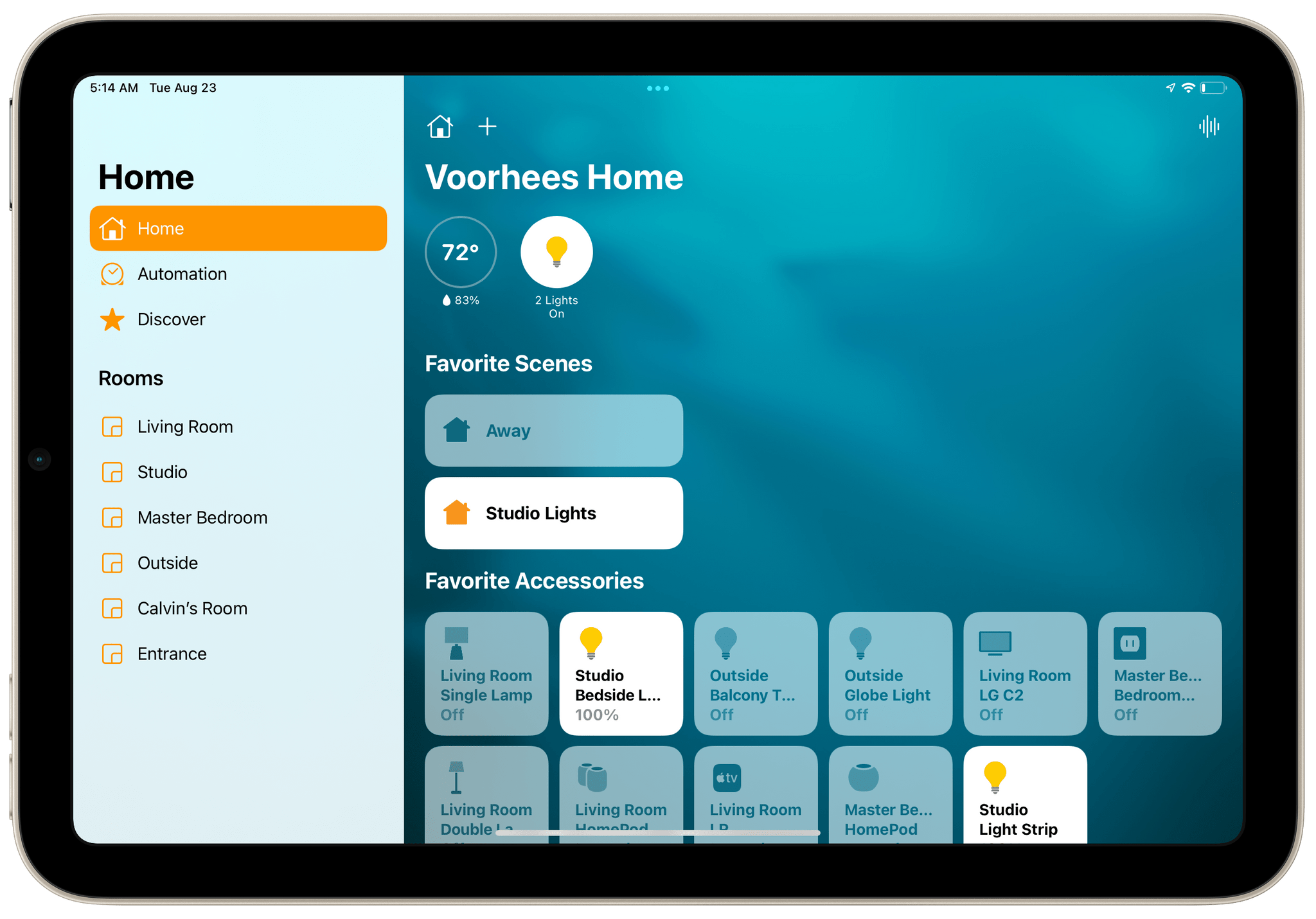
Since Home was first released, Apple has tweaked the iconography available in Home and added a row of status buttons along the top of the app, but the big space-wasting tiles endured. That led me to control my HomeKit devices with Siri most of the time. That’s not a bad way to control devices, but it’s not as reliable as tapping a button. Plus, the app is just more convenient than Siri in many situations, like when I’m already using my iPhone for something else or when it’s early in the morning, and my family is still asleep. That’s why I was so glad to see Apple rethink how Home uses valuable screen space and the way devices are organized.
AppStories, Episode 292 – What Makes a Great Modern Shortcuts Action?→
This week on AppStories, we consider what it takes to create a great set of modern Shortcuts actions using examples of what Apple is doing in its own apps and what some of our favorite third-party apps are already doing to make Shortcuts accessible to a wider audience and more useful to power users.
Sponsored by:
- RevenueCat – Subscription management built for mobile apps.
- Setapp – More than 240 powerful apps. Try it free for a month.
- Sourcegraph – Universal Code Search. Move fast, even in big codebases. Try it now.
- Kolide – It helps you nail third party audits and internal compliance goals with endpoint security for your entire fleet. Learn more here.
](https://cdn.macstories.net/banneras-1629219199428.png)
On AppStories+, we look back at one year of AppStories+ and the expansion of Club MacStories and consider the ways that Apple’s new Shortcuts actions for Safari on iOS and iPadOS can be used to get more out of your web browsing.
We deliver AppStories+ to subscribers with bonus content, ad-free, and at a high bitrate early every week.
To learn more about the benefits included with an AppStories+ subscription, visit our Plans page, or read the AppStories+ FAQ.
The Club MacStories and AppStories Expansion: One Year Later
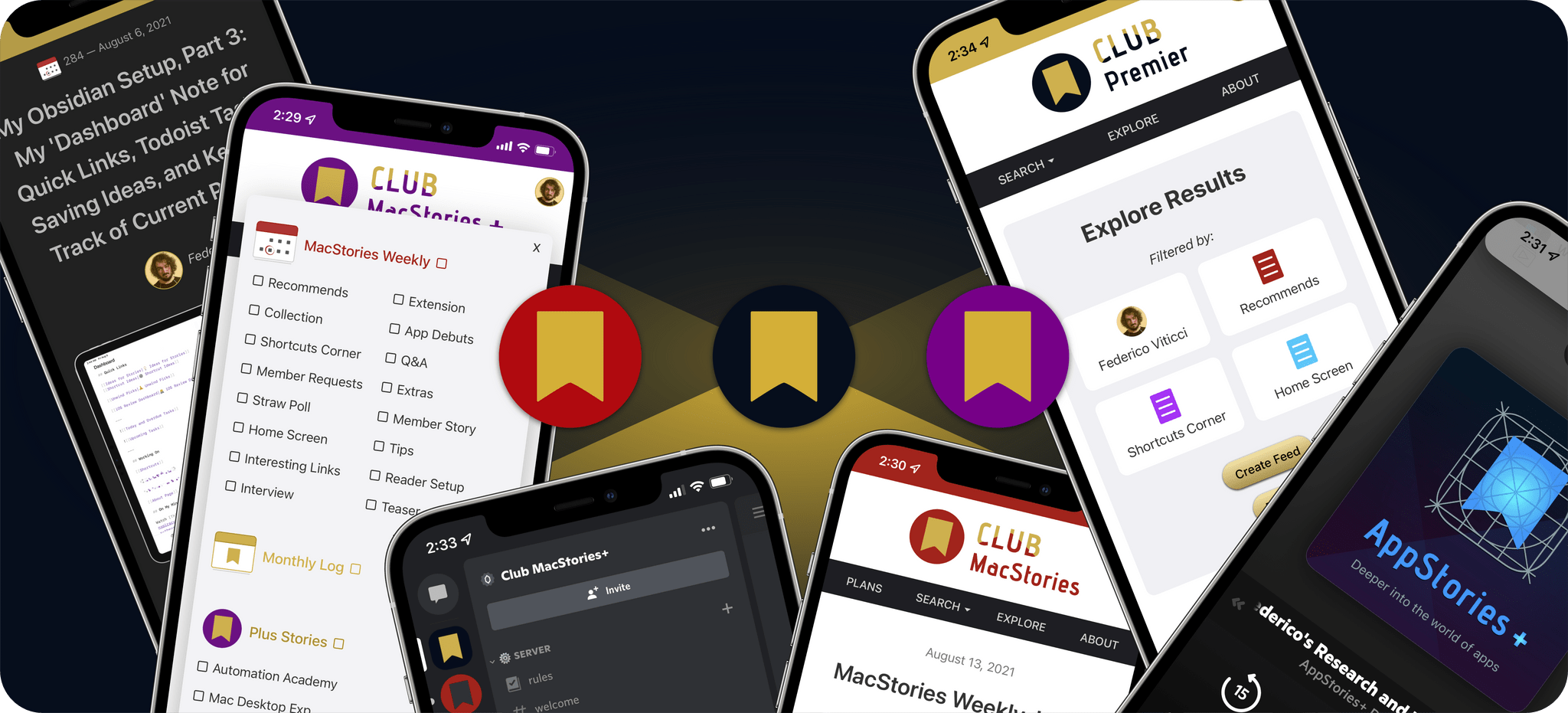
One year ago tomorrow, we introduced the MacStories audience to all-new versions of Club MacStories and AppStories. Club MacStories+, Club Premier, and AppStories+, were the culmination of months of work on ideas that we’d been considering for years and represent the first step in offering MacStories readers and listeners a tightly integrated experience across everything we do. There’s more to come, but to mark the first year on this journey, we wanted to take a quick look at how the Club and AppStories have evolved in that time and announce what we’re doing to celebrate this week.
Our Discord Community
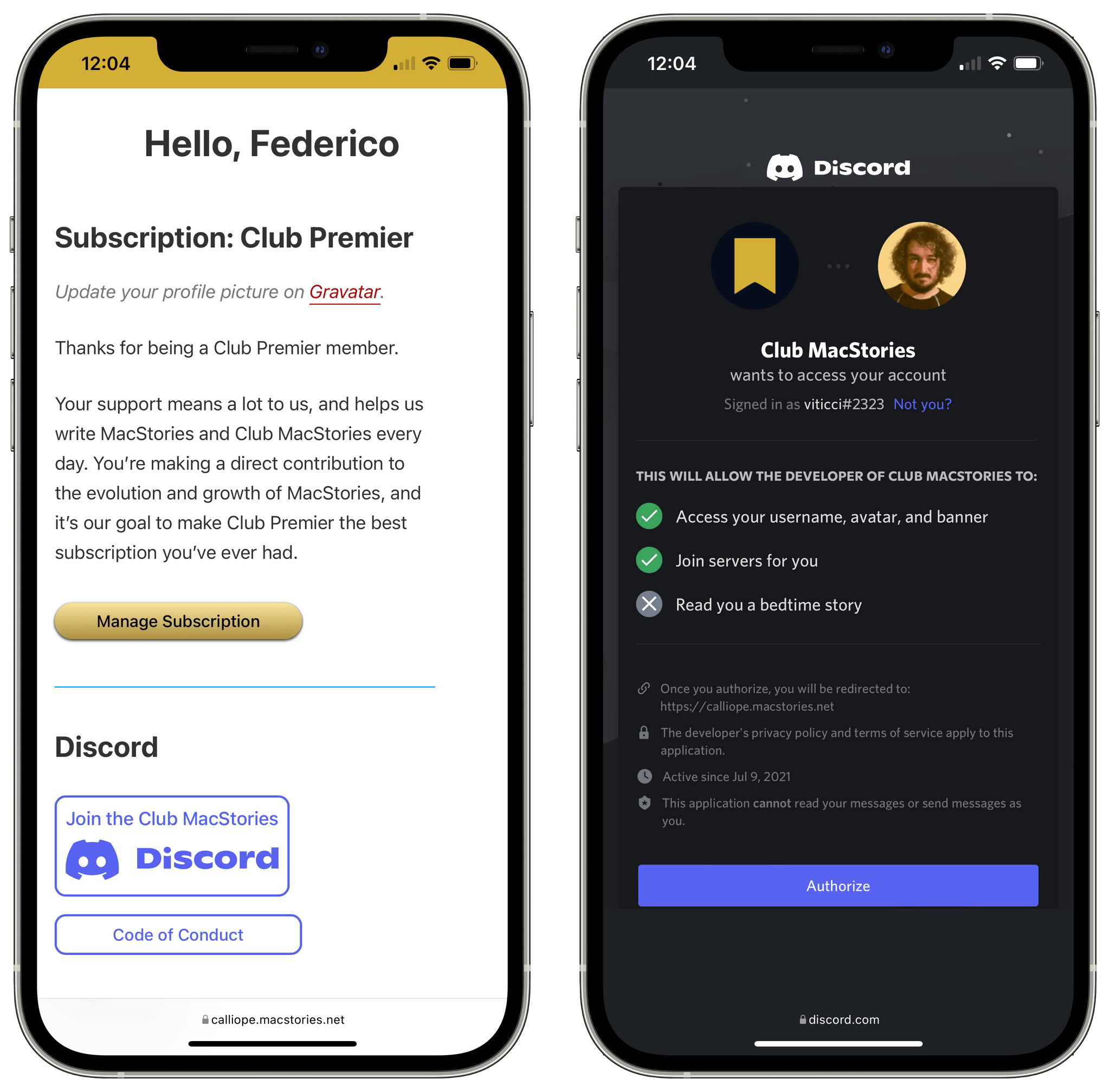
Our Discord community, which is part of both a Club MacStories+ and Club Premier membership, has become a pillar of the Club. It’s a dynamic community rich with terrific recommendations for apps, hardware, automations, and more.
However, the Club Discord community is more than a resource for tips and tricks. It’s where members share their passion for all sorts of media, photography, development, their pets, and more. The Discord server is also where we regularly gather for community Town Halls, which are live audio events hosted by the MacStories team, often with special guests from the community, covering Apple events, WWDC, Automation April, and other events.
Discord is the home of Beta Beat, a series of channels where we invite developers to share their upcoming apps with members who provide feedback. So far, Beta Beat has included apps like LookUp, Play, Timery, MusicBox, and Runestone.

Our periodic bookclub-style AV Club events happen on the Discord server too. We collectively pick and enjoy a book, TV show, movie, or other media and then discuss it during a special Town Hall. We’ve even got a special Discord bot for giveaways that we’ve done for events like Automation April.
Speaking of which, Discord played a big role during Automation April, one of two new special events we debuted in 2022. Participants shared their shortcuts in discord, traded tips, and attended Town Halls dedicated to the event. Participants and winners received special Discord roles too. The community played a big role in the success of the event, which is something we plan to expand to our other MacStories events.
Most important of all, though, are the people who make up the Discord community. We have heard repeatedly from members who join our Discord server about how much they enjoy the civil, respectful conversations with other members. We’re very fortunate to have such a great group of people along for the ride. Of course, we’re also incredibly grateful to our moderators, who have provided valuable feedback to us along the way.
Automation Academy and The Macintosh Desktop Experience
The expansion of the Club marked the debut of two Club MacStories+ and Club Premier-exclusive columns. Automation Academy is Federico’s column where he breaks down Shortcuts actions and techniques to help Club members get more from Apple’s automation system. So far, he’s covered topics from Reminders and Files actions to ways to optimize your shortcuts for the Mac. The column is where Federico debuted his shortcut that creates a podcast feed from articles stored in Matter too.
The Macintosh Desktop Experience is my modern spin on Apple’s oldest OS. In the past year, I’ve written about ways to combine AppleScript, Shortcuts, and third-party automation tools to create advanced automations, covered hardware like the Loupedeck Live, explored modern app launchers such as Raycast, and explained how I’m using Universal Control to incorporate the iPad Pro into my Mac setup.
MacStories Weekly, the Monthly Log, and Discounts

Of course, we’ve also continued to publish our MacStories Weekly and Monthly Log newsletters, which have been greatly enhanced by Calliope, the web app and technologies assembled by Alex Guyot that underly everything we do with the Club and AppStories. Calliope allows all Club members to read the newsletters on the web in a format that’s far better than Mailchimp’s web versions of newsletters and manage their Club account.
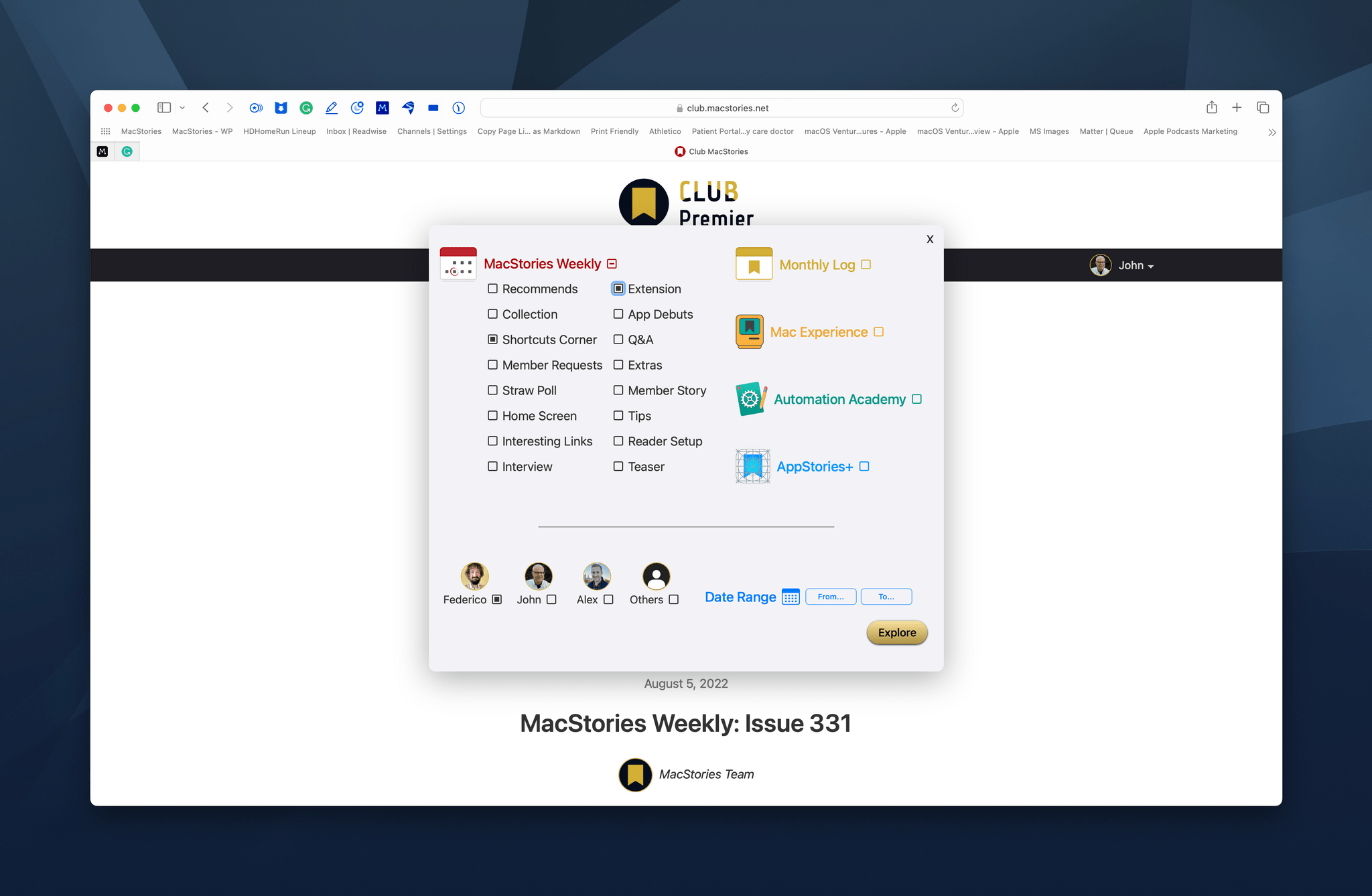
Explore allows Club MacStories+ and Club Premier members to filter Club stories based on a long list of metadata.
Plus, Club MacStories+ and Club Premier members can search and filter seven years of newsletter content by keyword and an extensive set of predefined parameters. Better yet, Explore’s filtered results can be turned into individualized RSS feeds, allowing members to build a personalized Club MacStories experience.
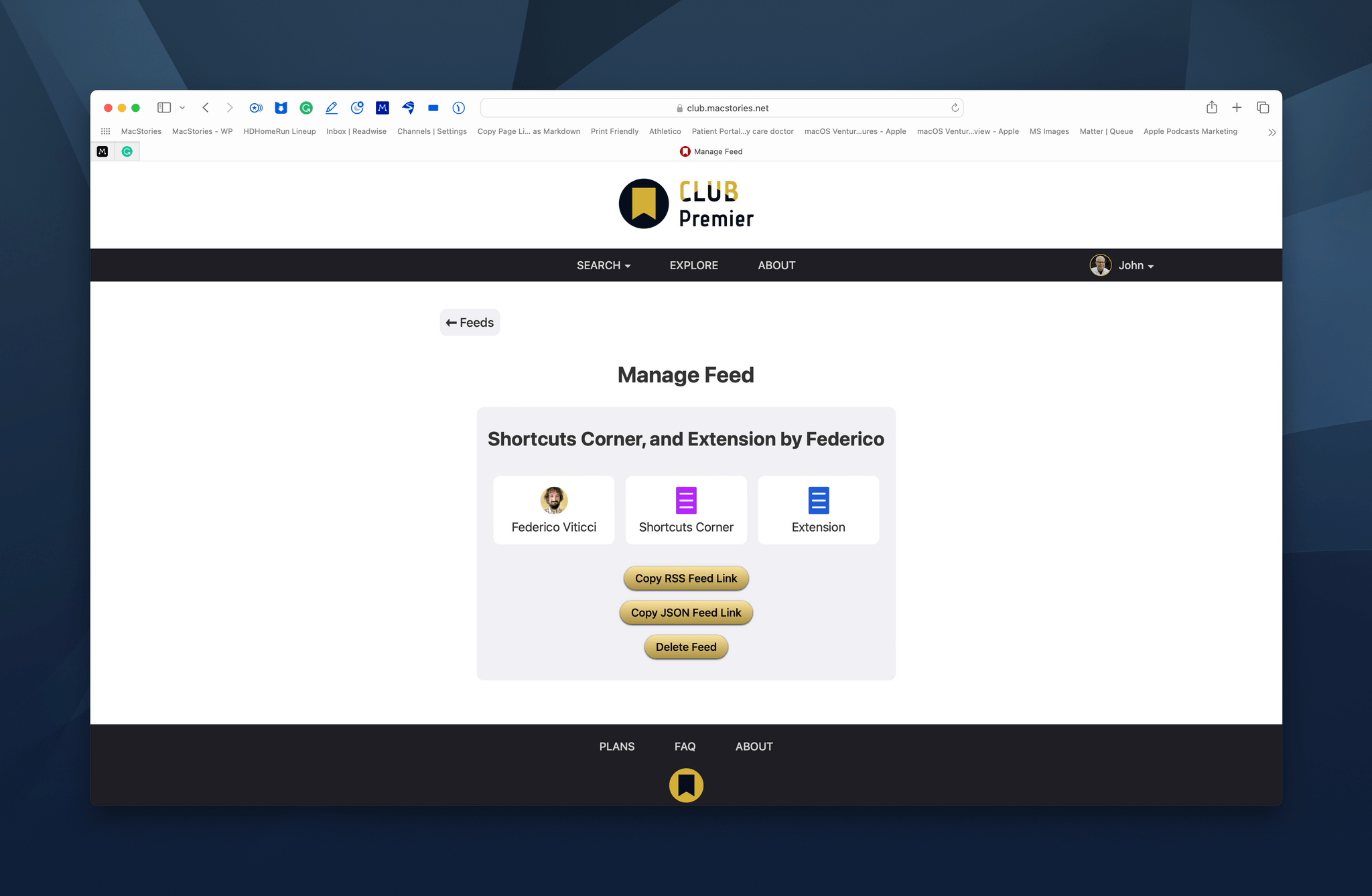
The new Club website is also where Club MacStories+ and Club Premier members will find a rotating list of deeply discounted apps and services, including CleanShot X, Keyboard Maestro, Typefully, and Hook.
AppStories+
Last but not least, we launched AppStories+ one year ago, which is our extended, ad-free version of the show that is published a day early for subscribers in high bitrate audio. AppStories+ is available as a standalone subscription from us or via Apple Podcasts, but the show is best experienced as part of a Club Premier plan. Not only is that the most economical way to enjoy everything we offer at MacStories at just $2/month more than the standalone Club MacStories+ membership that’s included as part of Club Premier, but the show is also recorded live in the Club MacStories+ Discord community for special events like Apple events and WWDC as an added perk for Club members.
After over a year of recording AppStories+, there’s a big back catalog of bonus content, too, with over 70 extended episodes published since May 2021. In total AppStories+ subscribers and Club Premier members have access to more than 14 hours of bonus content on a wide range of topics.
What’s Next
To kick off year two of our expanded offerings, we have a few special things in store for Club members this week. The first is a special Town Hall in the Club MacStories+ Discord. Federico, Alex, and I will be on hand to talk about the Club and AppStories+ and will answer member questions. Mark your calendars to listen in live at 4:30 PM Eastern on August 23rd. We’ll release the audio of the Town Hall later in the Town Hall podcast feed too.
We’re also welcoming Vidit Bhargava’s app LookUp back to Beta Beat, so users can test what Vidit is doing with Lock Screen widgets.
Finally, we’ve got a special digital download gift for all Club members, which will be announced in Friday’s issue of MacStories Weekly.
Thank You
Thanks to all of you who subscribe to Club MacStories and AppStories+ and who read MacStories. The direct support of readers and listeners has been critical to MacStories’ growth for years now, and the expansion we launched last year is the fuel that will drive the next generation of MacStories forward.
We have lots of new ideas in the pipeline for the Club and AppStories for the coming year that we can’t wait to share with you, but that’s just the tip of the iceberg. It’s too early to announce anything, but we’ve been clear from the start that last summer’s expansion of the Club and AppStories was part of a much longer-term project. We’ve spent the past year testing and fine-tuning the technical underpinnings of what we built last year, and it’s ready to take on more. So, stay tuned for the next chapter of MacStories.
Last Week, on Club MacStories: Quick Note as an Obsidian Launcher, AppleScript’s Role in Shortcuts, and MacStories Unplugged
Because Club MacStories now encompasses more than just newsletters, we’ve created a guide to the past week’s happenings along with a look at what’s coming up next:
MacStories Weekly: Issue 322
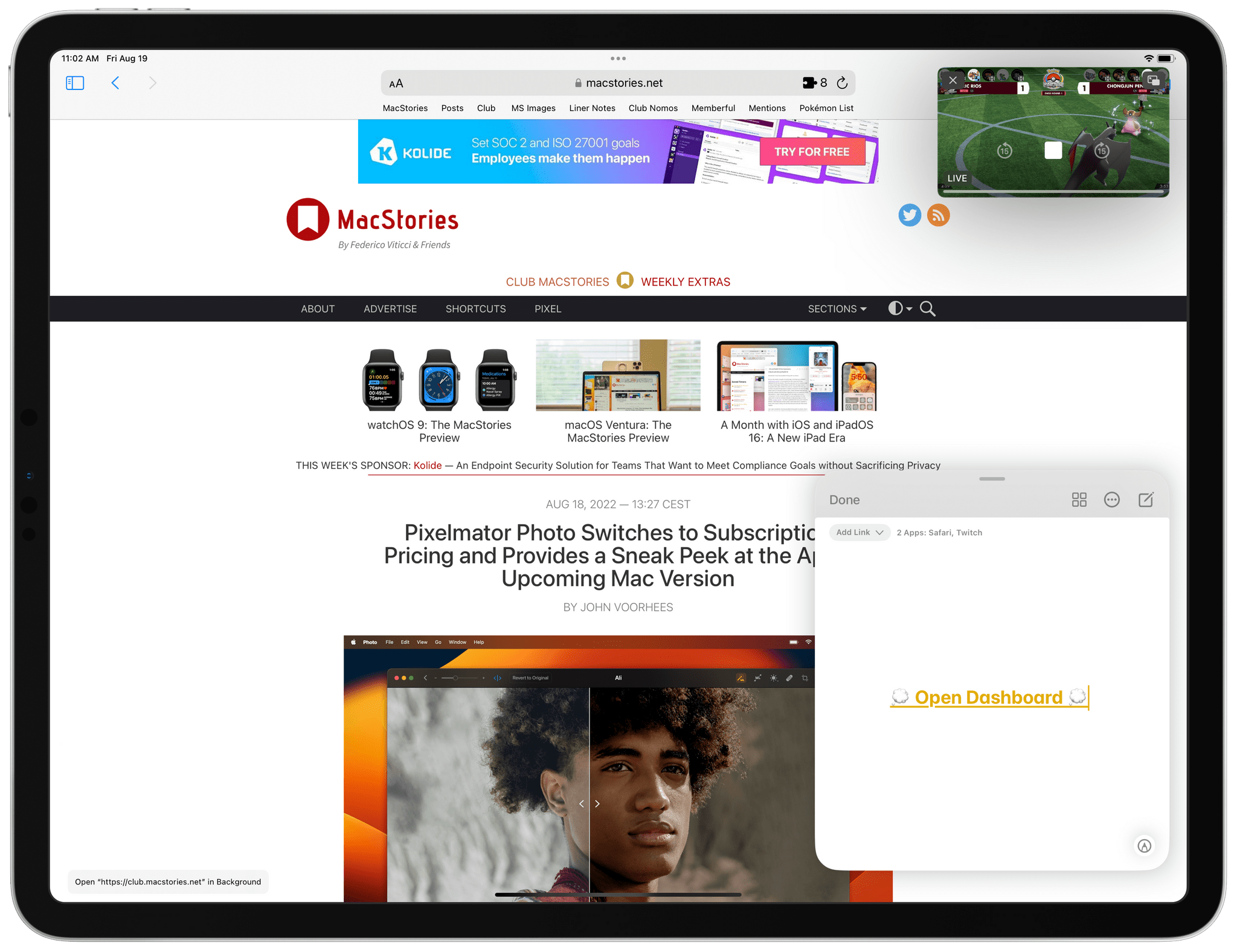
- Federico shares a tip on how to use Quick Note as an Obsidian launcher
- I consider whether AppleScript support in Shortcuts is a bridge to the future of Mac automation or a crutch that masks problems with Shortcuts
- A brand new episode of MacStories Unplugged
- Plus:
- App Debuts
- Highlights from the Club MacStories+ Discord
- Interesting links from around the web
- A sneak peek at what’s next on MacStories’ podcasts
- and more
Up Next
On Tuesday, August 23, at 4:30 pm Eastern US time, Federico, Alex, and I will mark the first year of Club MacStories’ expansion with a special live audio Town Hall in the Club MacStories+ Discord community.