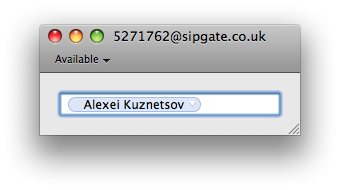
An interesting app I’ve just found on Google Code, Telephone is an open source project that lets you make phone calls over the internet with many SIP providers including Google Voice.
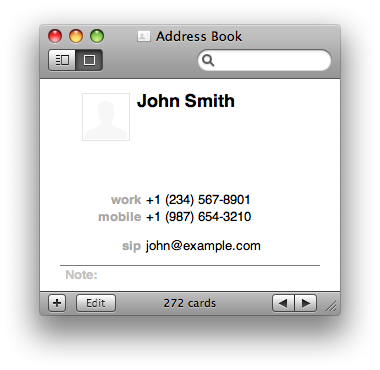
Telephone seems very simple and easy to use, it integrates with Address Book and has support for Growl notifications as well. You can head over the official project page here or read some frequently asked questions.
Axure, the populad wireframing and prototyping tool for Windows, is being ported to Mac OS X, but you probably already know that. What’s new is that the developers have announced a full featured beta available for download here, which will expire on April 15, 2010 and that should give you a complete overview of what Axure for Mac will look like.
“The beta has all of the features from Axure RP 5.6 for Windows including shared projects. It also has a number of UI enhancements like a new properties pane and redesigned interactions dialog.”
The devs have also announced a final release by the end of March. We’ll keep you posted about it.
Business communication is incredibly important whether you’re working with clients or you’re discussing the latest coffee spill from your board meeting. While some may rely on e-mail to keep up to tabs, let’s not forget that this is a relatively archaic way of chatting.
The folks over at HipChat have presented to us a wonderful new chat application built on Adobe Air that is designed for teams, groups, business, collaborators, and people who want to have a focused medium for tracking and recording their conversations. While the words “Adobe Air” might scare you, we wouldn’t be reviewing this if it wasn’t seriously cool, and as it takes two people to chat, I present to you today another DoubleStory feature.
Is there still room for another GTD app on Mac OS X? Probably. I think there’s still a huge room for creative and well developed apps, not for yet another clone of Things.app.
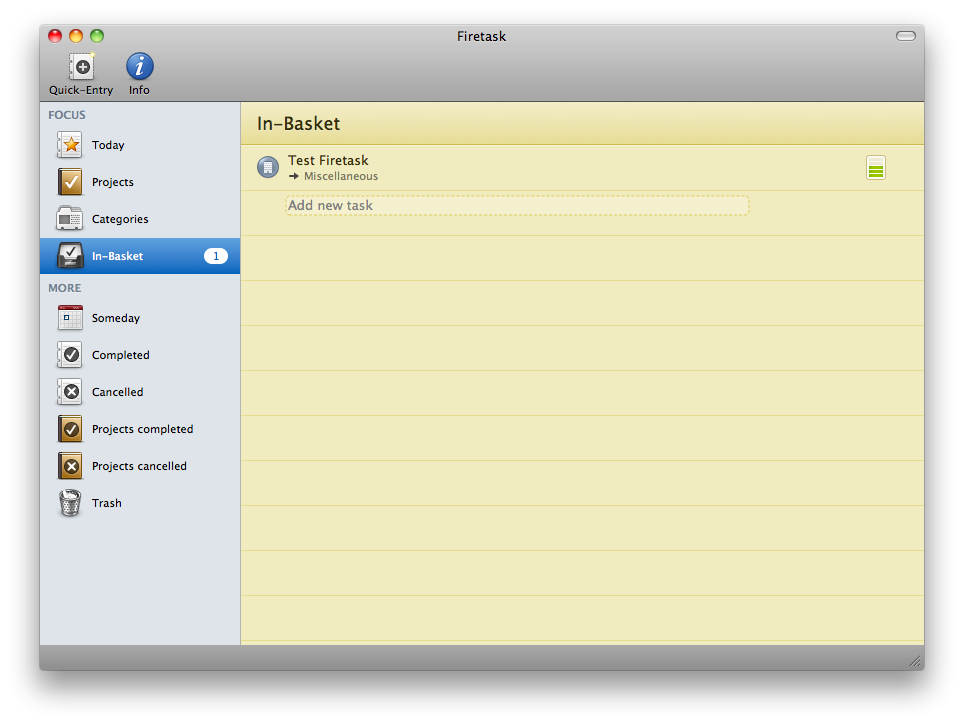
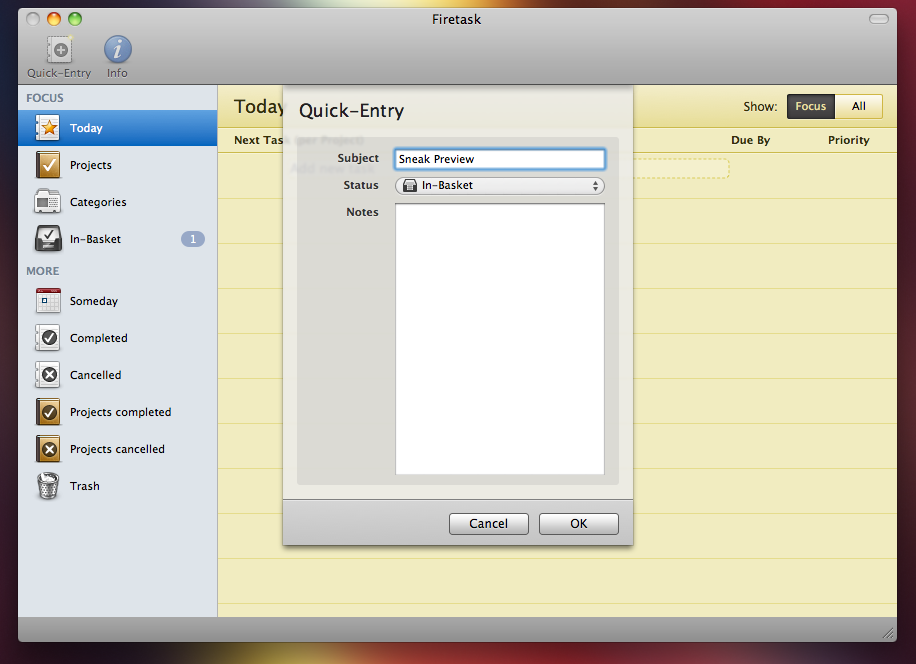
Thanks to Gerald Aquila and Wolfgang Bartelme I’m very proud to give you an exclusive sneak preview of a much anticipated application for Mac, Firetask. The app is currently in the early beta stage, so I’m attaching a very few screenshots as many things are likely to change before the official release.
Firetask will take a different approach from all the other GTD apps for Mac: it will be focused on simplicity, providing a clean and slick interface to not overhaul the user with tons of menus and tabs. In Firetask for Mac (and remember, there’s an iPhone app too which we reviewed here. The Mac version will sync with the iPhone one) you’ll be able to create tasks and give them a specific status, priority, category and assign them to a project.
The interface will be a mix of notebook-like pages and dark elements, plus some nice icons in the sidebar to quickly navigate.
Firetask Mac Preview
Firetask Mac Preview
I’m really looking forward Firetask for Mac, because it’s going to be different. I’m sorry I can’t tell more about it, but I’ll be sure to write another preview or review it as soon as it will be available. Can’t wait.
The iPhone is more than just a phone to me. It’s an assistant, a device that I use to keep track of multiple things in my life (money, stats, followers, weight, smoked cigarettes) - each thing with a dedicated application. In the age of database driven applications, this is no doubt the best situation Jeff Raskin could ever imagine: a device that transforms in a new one everytime, according to the application that’s running on it.
But wouldn’t it be great to track all of this data in a single software? You know, at the end of the day they’re just numbers. I’ve slept 5 hours, I’ve spent 10 Euros in beer, I ate 3 eggs two days ago. They’re different situations, but they’re just numbers. And that’s why Sahil Lavingia (developer of Twizzle and Color Stream) started developing Dayta, the already popular One Week App: a single app that could keep track of data, no matter the context. Just data, and days.
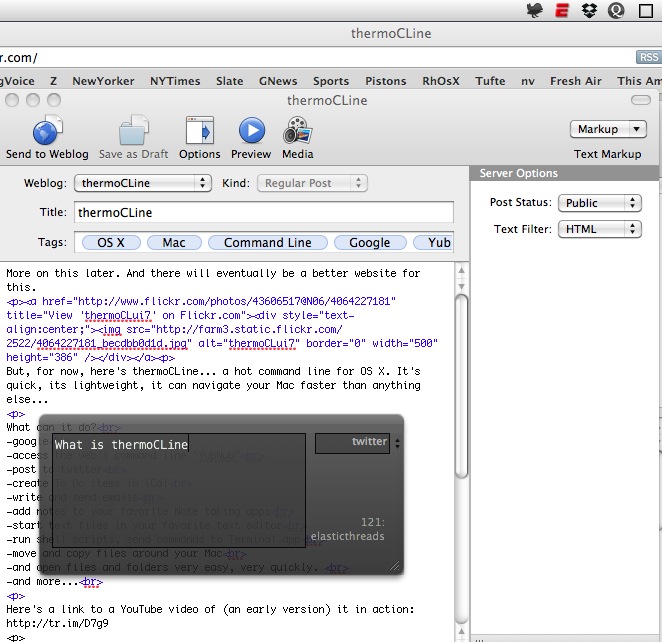
ThermoCLine is an interesting utility developed by my friend @elasticthread which allows you to perform a lot of action from a command line interface anywhere on your Mac. You can go to folders, start Google searches, do some math, shorten URLs and even tweet.
It requires a little bit of setup (you have to copy some files, assign a keyboard shortcut with Fastscripts to the required Applescript) but after that, it’s pure awesomeness. The .zip files comes with a huge explanation of how the app works and with a list of commands as well, so you won’t miss anything TCL offers.
ThermoCLine
You can download the app here. Don’t forget to follow @elasticthreads on Twitter and give him some suggestions for new features.
Bitspace, the cloud powered music application we reviewed here, is finally out of the closed beta stage. In case you missed you missed our post about it, Bitspace enables you to upload your music files and listen to them from any browser that supports HTML5 (Safari and Chrome, I’d recommend).
You can create a new account and enjoy the free trial for 30 days, or head over the Pricing page and choose the plan that fits your needs. Here’s the official announcement blog post.
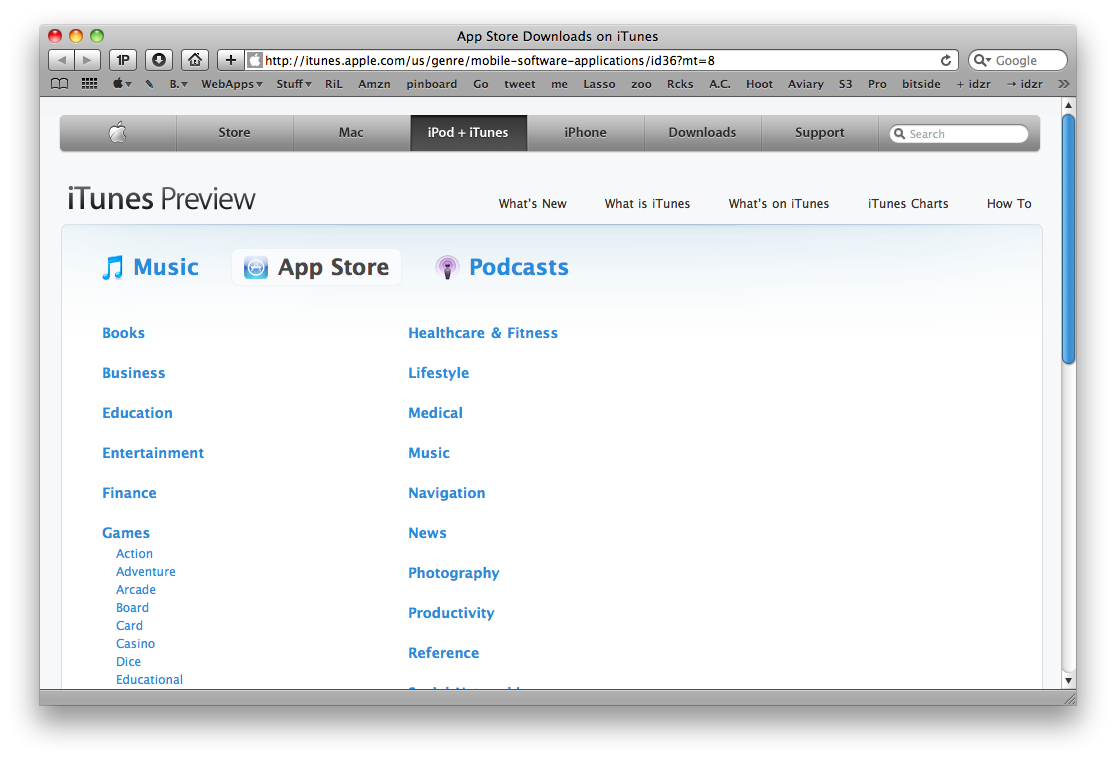
A few weeks ago Apple implemented the “iTunes preview” feature for single apps pages in the App Store. From today on you’ll be able to browse the whole App Store, including categories, from your browser.
MacStories has covered a few window management apps, including Cinch, MercuryMover, and SizeUp. Today, we’re going to bring you yet another window manager, this time for those who can’t keep their hands off their clickers.
Zooom/2, despite its name, is a handy window manager that makes moving and resizing windows just a tad easier. It isn’t revolutionary, but it’s definitely worth taking a look at.
Instead of grabbing the corner of a window, you are given the option to move, resize, and maximize/minimize by holding a couple of modifier keys from anywhere in your target window. The demo is a little confusing though, since the default settings conflict with the instructions (just something to be aware of), and you’ll want to enable “Require mouse click to activate” to follow along. Other than this minor caveat, learning the app only takes 30 seconds to learn - and you’ll be happy you went through the demo.
Otherwise, I think this is a pretty cool app, but it’s a bit buggy. Magnetics didn’t always work like I wanted them too, so I left it off. The ignore list initially confused me, because I thought checking an item disabled that particular feature, rather than enabling it. Overall I think it’s pretty solid, it’s 64-bit compatible for Snow Leopard, and it features what the developer describes as “clean code” (although I thought hiding the dock icon required some kind of hack). Anyway, check out the video for a quick demonstration on it’s feature. Trust me, this one is short!