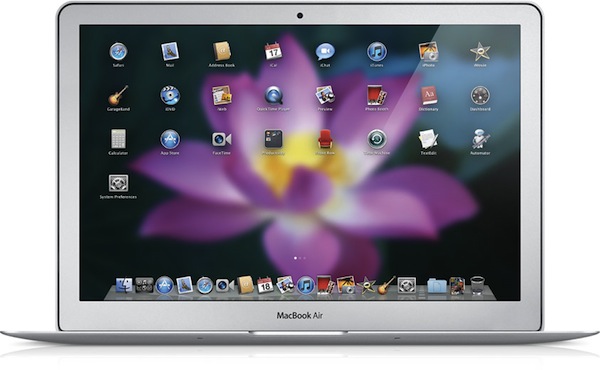
Mac App Store Actually Coming in January 2011

Mac App Store Actually Coming in 2011

At the Back to the Mac event in October, Steve Jobs said the Mac App Store would open in 90 days – thus giving it a January 2011 release date. According to rumors surfaced a few days ago, though, it seemed like there was the possibility of an early launch next week.

Well, Jim Darlymple over at The Loop reports:

Reports earlier this week claimed Apple would launch the Mac App Store on December 13, ahead of the holiday shopping season. However, according to my sources, Apple will launch the store in the new year.

While a specific date was not given for the official opening of the store by my sources, Apple will meet the 90-day deadline given during its October “Back to the Mac” media event.

Please note that Darlymple’s sources are usually spot-on and correct. Those rumors never really made sense to me either, considering Apple didn’t notify developers about an early launch.

So there you have it: the Mac App Store is indeed coming in January.
Permalink

iPhone Game Guru Leaves Apple

iPhone Game Guru Leaves Apple

Devine said he can’t comment on whether his position will be filled and Apple did not respond to request for comment. But Devine says that gamers into playing on the Apple devices shouldn’t worry.

“Apple has the smartest and most talented group of people I have ever worked with,” he said. “Every day I would walk in and feel I was working alongside geniuses and I the guy with crayons in the corner.

He’s back to developing his own games.

Permalink

iPhone Clock Icon, Animated With WebKit

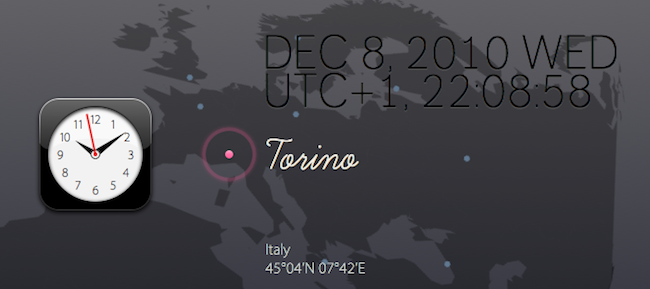
WebKit Clock is a neat experiment by Ono Takehiko aimed at recreating the original iPhone clock icon in CSS3 and animate it using the WebKit rendering engine. Actually, the whole website is based on modern web technologies such as HTML5 canvas, CSS3, JavaScript, Web Fonts, SVG. No image files are being used.

As you can see on the website, you can move an airplane between cities in the world based in different time zones, and see the icon update in real-time. It’s very cool.

In the past we have seen many other iOS-related experiments, such as the iPhone icons rendered entirely using CSS3.


Apple: No Promo Codes In The Mac App Store

The good news today is that promo codes for iOS apps are no longer limited to the U.S. App Store, but it looks like the upcoming Mac App Store (set to launch in January 2011, even though someone says it may open as early as next week) will be based on a different system. In fact, it appears that developers won’t have the possibility to generate promo codes for Mac apps sold through the Mac App Store.

In the iTunes Connect Developer Guide (version 6.2, last updated on November 1, 2010 - PDF) Apple mentions that promo codes are exclusive to iOS and won’t be available for Mac apps:

Promo Codes button (for iOS apps only). See the Requesting Promo Codes section to learn about promotional codes)

Promotional codes are not available for Mac OS X apps.

Read more


Apple Is Improving Security of Push Notifications

Seems like Apple is changing quite a few things for developers today. First they announced promo codes have gone international, now, as reported by iClarified, Apple apparently sent out a notification to some developers informing them that, starting December 22, Apple will improve the system behind the Push Notification Service to use more secure connections.

On December 22, 2010, the production Apple Push Notification service will begin to use a 2048-bit TLS/SSL certificate that provides a more secure connection between your provider server and the Apple Push Notification service.

To ensure you can continue to validate your server’s connection to the Apple Push Notification service, you will need to update your push notification server with a copy of the 2048-bit root certificate from Entrust’s website. This will not require a change to your iOS apps – this update only applies to provider servers.

Developers who have released apps that rely on push notifications will need to update their provider servers with the new certificate. More info available here.


Finally: App Store Promo Codes No Longer Limited To The U.S.

This is great news. With a brief note on iTunes Connect’s website, Apple informed developers that promo codes, the ones to redeem apps in the App Store, are now working worldwide:

Your promo code distribution is no longer limited to U.S. customers. Promo codes in iTunes Connect can now be redeemed by all App Store customers worldwide. Your Team Agent can request 50 codes per version of your app in iTunes Connect and your customers can redeem these codes in any App Store. To learn more about requesting promo codes in iTunes Connect, see the iTunes Connect Developer Guide.

Previously, promo codes only worked in the U.S. Store, forcing developers who were willing to gift apps to the press or users to make sure they had a U.S. iTunes account. Now promo codes are international. In the past we at MacStories indeed had a few headaches trying to explain you guys that, due to Apple’s limitations, promo codes were only available for US customers.

It took Apple two years, but it’s over. Really good news for users, developers and bloggers.

Finally! [9to5 via MacKinando]


iOS X

Like it or not, Apple is going back to the Mac. The regular Mac user, fan, fanboy – whatever you’d like to call someone who showed a deep affection to Apple’s desktop operating system for the past decade – should like the fact that Steve Jobs confirmed Apple is still committed to making the best personal computers, based on OS X. The same regular Mac user, though, is immensely scared by the concept underlying Jobs’ statements: Apple is going back to the Mac, taking the good things learned in 3 years of iOS development with them. OS X turned into iPhone OS. iPhone OS became iOS for iPhone and iPad. Now, everything’s going back to where it all started: the Mac.

We have heard this story before. In fact, we all commented on Apple’s October 20th event by saying that, with the right approach, the Mac App Store and some iOS elements coming to the Mac might be the best thing that ever happened to the platform in years. Read more


“iBand” Plays Christmas Songs With iPhones and iPads [Video]

Here we are again, featuring a band that doesn’t make music with actual instruments, but decided to go the iOS way instead. The “iBand” from the North Point Community Church (website), indeed, played 3 Christmas songs (Carol of the Bells, Rockin’ Around the Christmas Tree and Feliz Navidad) using only iPhone and iPad apps.

The result, as you can see in the video embedded below, is fantastic. The songs turned out great when played through the apps, and the members of the iBand actually had fun when performing on stage all together. Crowd was cheering, the video is going viral on Youtube – all thanks to the power of quality music making apps released in the App Store these past two years.

Reid Greven from North Point writes on his personal blog:

Jared arranged “Rockin’ Around the Christmas Tree” and “Feliz Navidad” using the apps, and creating a demo by multitracking them in Apple’s Logic software (though any Digital Audio Workstation would do the trick).

Jared, Eddie Kirkland and I arranged the first song, “Carol of the Bells“. It’s amazing what you come up with when you sit in a room, hook 3 iPhones up to some speakers, and get adventurous!

The apps used in the performance include SoundGrid, Guitarist, iGog, Pianist and Percussions. Back in October we featured New York-based band Atomic Tom, performing a song using only iPhone apps.

Once again, I’m amazed by the results some people can accomplish by solely relying on modern Apple devices and applications. Check out the video below, then tweet it. It has to go viral.

Read more


Jobs: Rockstar and CEO Of The Decade

Jobs: Rockstar and CEO Of The Decade

Jobs’s legacy stretches back several decades and includes the development of a few more groundbreaking innovations from his first go-round at Apple in the 1970s and ’80s: the Apple II, the Mac and elaborate computer graphics, to name a few. Along with being likened to Edison and Bell, comparisons with such captains of industry as Walt Disney — of whose namesake company Jobs would later become the biggest individual shareholder — spring to mind for many.

“You can’t connect the dots looking forward. You can only connect them looking backwards.”

Permalink