This Week's Sponsor:

Dropzone 5

Improve your Drag-and-Drop Workflow


Posts in news

Apple Q2 2020 Results - $58.3 Billion Revenue 

Apple has just published its financial results for Q2 2020. The company posted revenue of $58.3 billion. Apple CEO Tim Cook said:

“Despite COVID-19’s unprecedented global impact, we’re proud to report that Apple grew for the quarter, driven by an all-time record in Services and a quarterly record for Wearables,” said Tim Cook, Apple’s CEO. “In this difficult environment, our users are depending on Apple products in renewed ways to stay connected, informed, creative, and productive. We feel motivated and inspired to not only keep meeting these needs in innovative ways, but to continue giving back to support the global response, from the tens of millions of face masks and custom-built face shields we’ve sent to medical professionals around the world, to the millions we’ve donated to organizations like Global Citizen and America’s Food Fund.”

Estimates and Expectations for Q2 2020 and the Year-Ago Quarter (Q2 2019)

Apple’s revenue guidance for Q2 2020 originally fell between $63.0 billion and $67.0 billion, with gross margin estimated to be between 38.0% and 39.0%, but in a press release issued on February 17, 2020, the company said it expected to miss that guidance due to iPhone supply constraints and lower demand in China resulting from the COVID-19 pandemic.

Going into today’s earnings call, Barron’s said:

The current Wall Street analyst consensus revenue forecast is $54.6 billion, but the estimates vary dramatically, with the low end of the Street range at $45.6 billion. The consensus profit forecast is $2.27 a share, but again, the range is wide, with estimates running from $1.73 to $2.73 a share.

In the year-ago quarter (Q2 2019), Apple earned $58 billion in revenue.

Graphical Visualization

After the break, we’ve compiled a graphical visualization of Apple’s Q1 2020 financial results.
Read more


iOS and iPadOS 13.5 Betas Released with COVID-19 Exposure Notification Tools and Face ID Skipping Feature

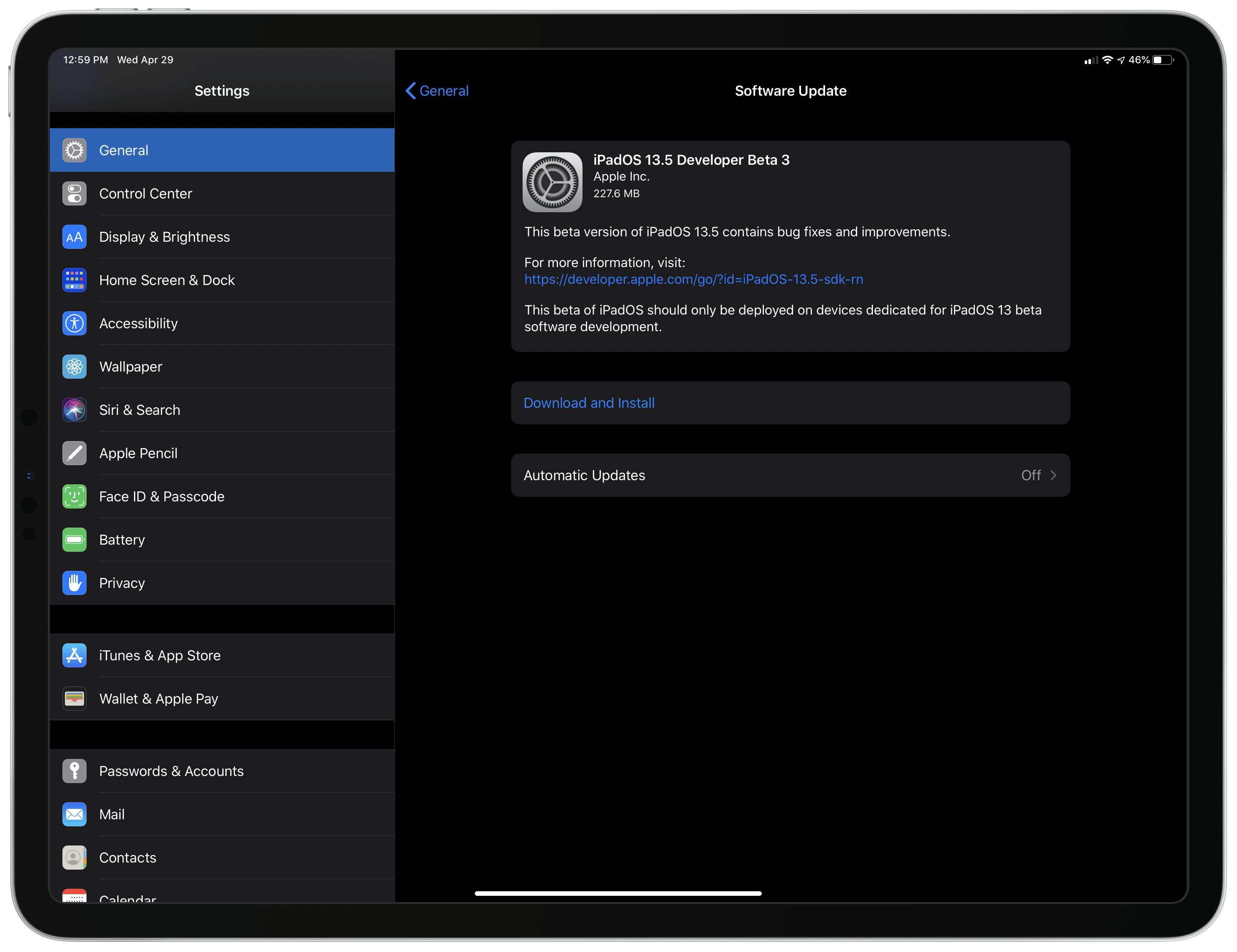
Apple has released version 13.5 Developer Beta 3 for iOS and iPadOS, which includes the COVID-19 exposure notification API that it is developing with Google. A beta of Xcode 11.5 was released alongside the OSes too.

According to a story published by Mark Gurman of Bloomberg:

The tool set is a combination of software updates for iOS and Android, and software development kits to help developers build and test their apps. Apple released an early beta version of its software update that incorporates the technology, iOS 13.5, while Google is rolling out an update via its Google Play app store.

The first phase of the system will let health agencies build apps that allow a person who tests positive for Covid-19 to input their diagnosis. The system will then use Bluetooth technology to learn who the person has come into contact with and then notify those people of a possible exposure.

Additional details and sample code are set to be released by Apple and Google on Friday.

As reported by 9to5Mac, the update to iOS and iPadOS also adds a change to Face ID that detects if you are wearing a face mask, skipping directly to the screen for entering your passcode. It’s a small but useful change that will hopefully help prevent iPhone owners from pulling down face masks in public to unlock their devices.


Todoist Introduces New Upcoming View Across All Platforms

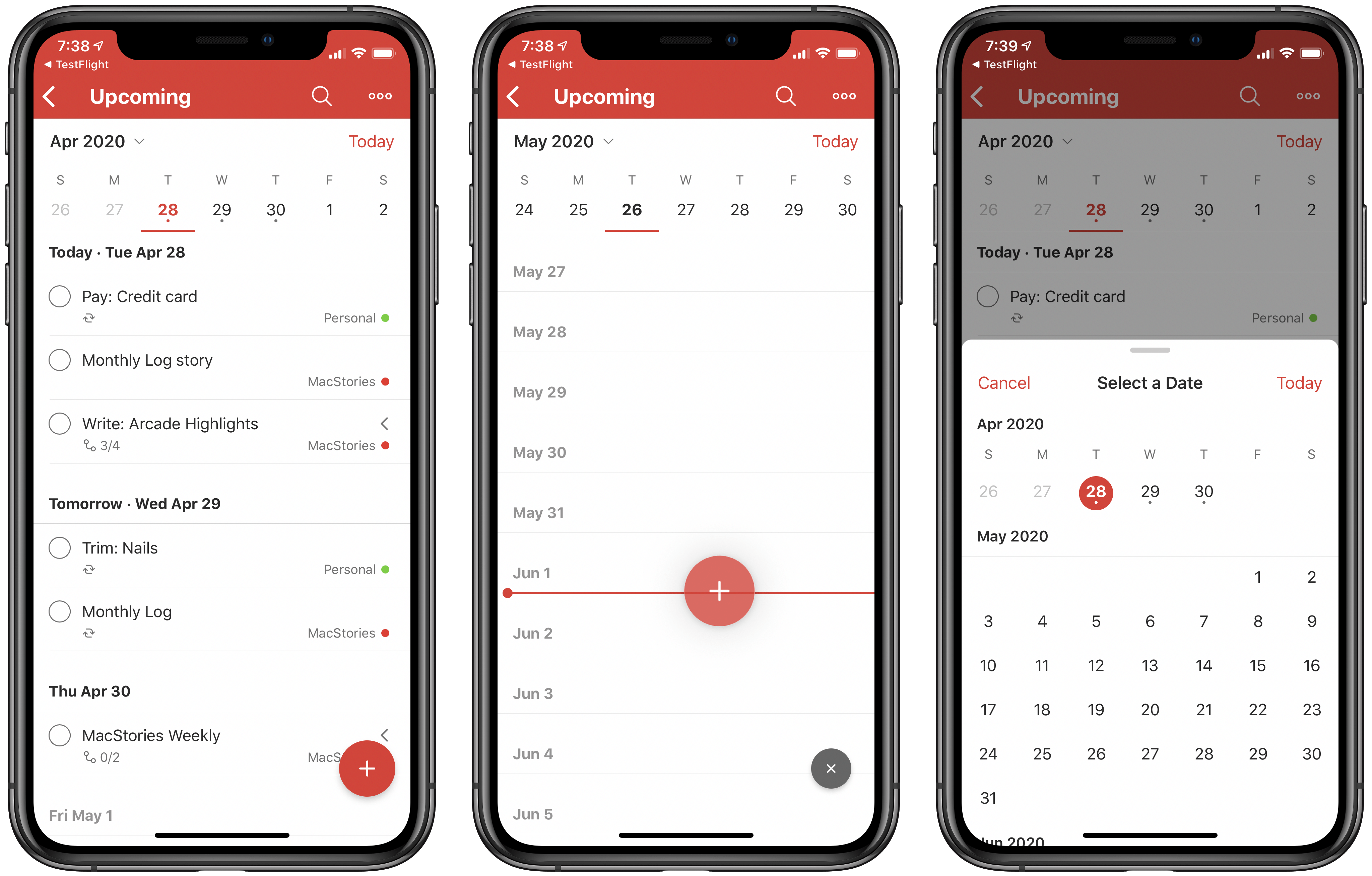
Popular cross-platform task manager Todoist is introducing a new Upcoming view today that serves as a replacement for the previous Next 7 Days view and adds greater functionality to it with a new calendar element and by offering access to all future tasks.

If you’ve used Next 7 Days in the past, or even the Scheduled view in Apple’s Reminders app or Upcoming in Things, you’ll feel right at home in Todoist’s Upcoming view. It’s essentially an endless list of all tasks with due dates, divided by day. One detail I appreciate is that even days containing no assigned tasks remain visible in the view, whereas in Reminders, for example, Scheduled only shows days with assignments. I could see this bothering some users, but for my needs it’s great because it allows easily rescheduling tasks by dragging and dropping them on to any day I’d like; if only the days with existing tasks were visible, that wouldn’t be possible. It’s just as well-suited for creating new tasks, since you can drag the add task button on to any day you’d like.

Besides providing access to all scheduled tasks, rather than just the next week’s worth, the main change with Todoist’s Upcoming view is the new calendar element. Similar to the Forecast view found in OmniFocus, this takes the form of a row lining the top of the screen that displays the next week’s worth of dates. A small dot indicates whether a day has assigned tasks or not, and you can swipe left to page through future sets of days. You can also tap the month/year button in the top-left corner of the calendar row to bring up a scrolling month view for the sake of quickly navigating further into the future.

The Upcoming view isn’t exactly world-changing, but it is markedly better than what it replaces, and if Todoist were my primary task manager it would absolutely be the view I spent all of my time in. I love the ease of seeing all my tasks in one place, rescheduling them via drag and drop, and the added utility of the new calendar row. Everyone’s task management needs and preferences are different, but if it were up to me, every task manager would have a view that works like this.

Todoist is available on the App Store.


Apple to Host Interactive Accessibility Event Online as Possible Warm-Up for WWDC

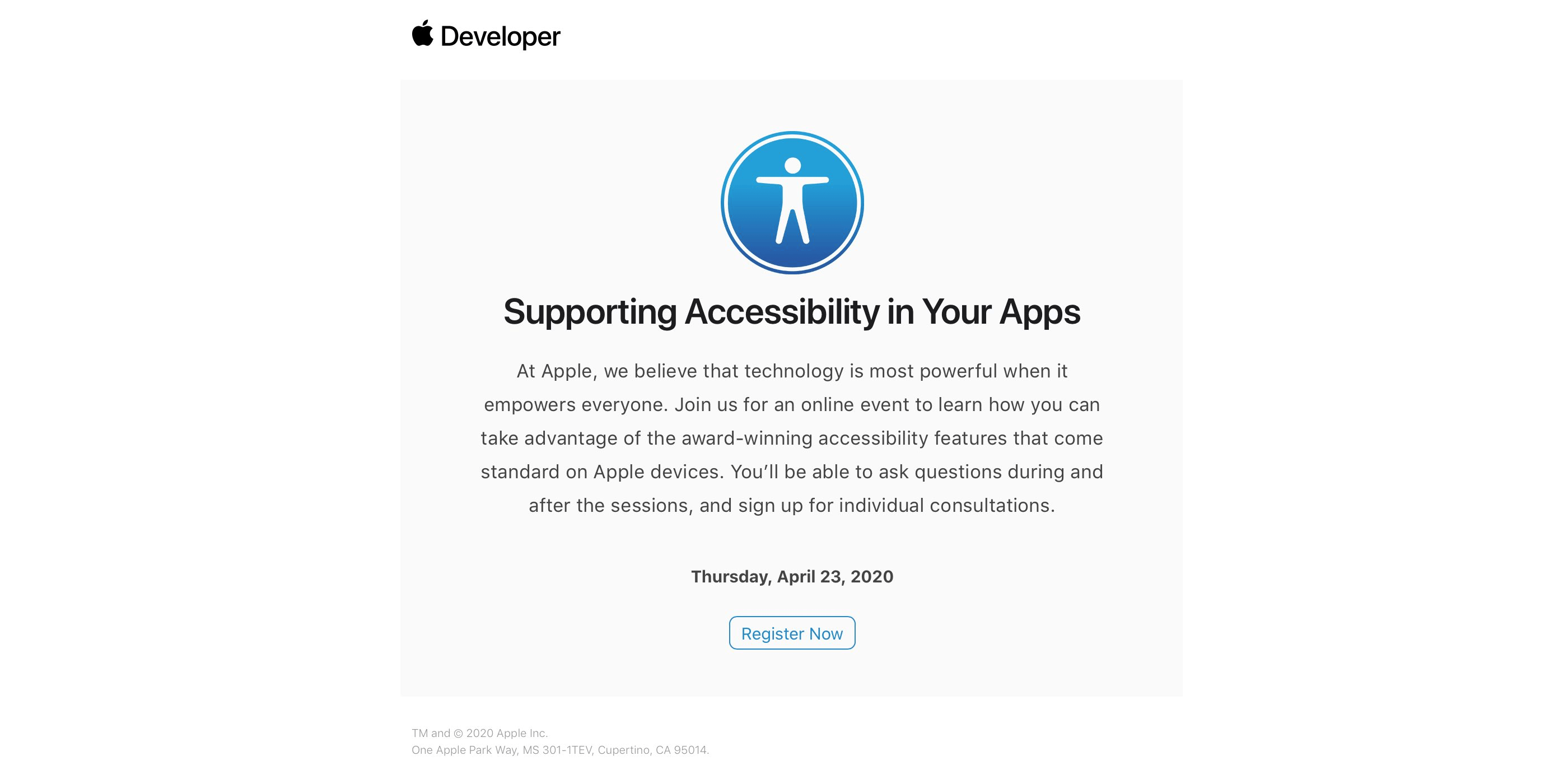
As noted by Steve Troughton-Smith on Twitter and reported by 9to5Mac, Apple has invited developers to attend an online event to learn about the accessibility features of its devices. According to an email message sent to developers, the event will include opportunities to ask questions during and after the presentation and schedule individual consultations.

https://twitter.com/stroughtonsmith/status/1252397243421716481

Last month, Apple announced that WWDC will be online-only this June for the first time. As Troughton-Smith suggested in his tweet, it’s not hard to imagine that Apple is using this week’s accessibility event to test systems that it will use to move WWDC online.

Apple periodically holds events for developers outside the annual WWDC cycle, but this event is a little different, especially the interactive component. I’m curious to see how the accessibility event goes and the mechanics Apple uses to implement developer participation.


Apple Launches New 4.7-inch iPhone SE at $399

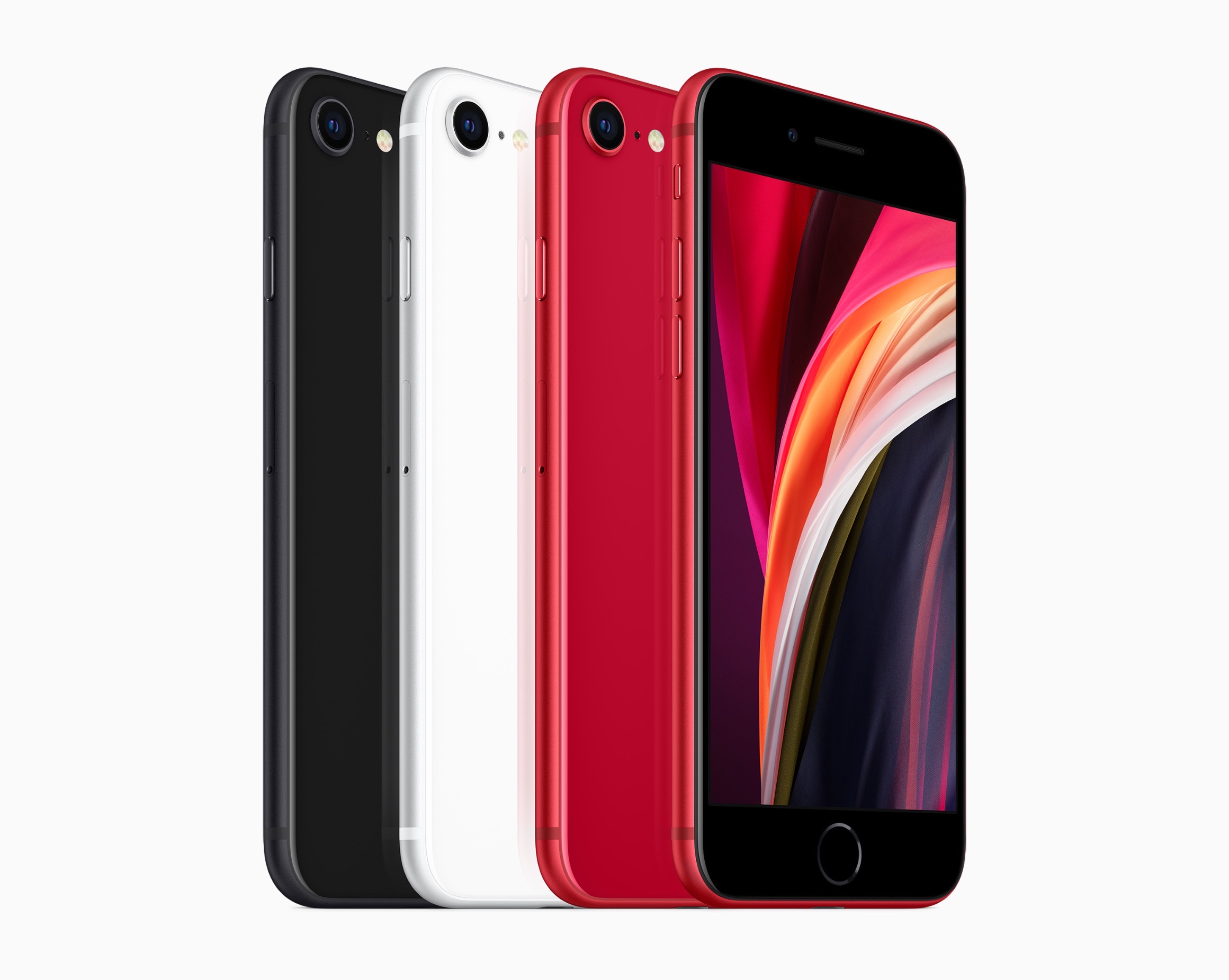
Today Apple announced the successor to 2016’s iPhone SE, a new model that retains the same name and goal of being the budget option for customers. The new iPhone SE will be available for pre-order this Friday, April 17, it ships one week later on April 24, and starts at $399, the same price the original SE had when it launched. Unlike that original model, though, the new SE carries an altogether different form factor. While the original SE was based on the iPhone 5’s 4-inch design, the new SE resembles the iPhone 6/7/8’s 4.7-inch design. This makes it notably larger than the previous iPhone SE, but still smaller than any of the flagship iPhone 11 line.

The 2020 iPhone SE, like its predecessor, contains modern specs but in a classic iPhone body. It has the same A13 Bionic processor found in the more costly iPhone 11 and 11 Pro models, but cuts costs in other ways such as by offering Touch ID rather than Face ID authentication, and a single 12MP rear-facing camera rather than the dual- or triple-lens arrays on Apple’s flagship models. The presence of Touch ID in particular makes the device an attractive option not only for users on a tighter budget, but also those who really don’t want to lose the Home button the next time they upgrade devices.

Read more


Apple Creates Tool for Spotting Trends in Mobility Data for Feedback on COVID-19 Policies

Apple has shared a new web-based tool that provides insights from Apple Maps on mobility trends. According to Apple’s press release:

This mobility data may provide helpful insights to local governments and health authorities and may also be used as a foundation for new public policies by showing the change in volume of people driving, walking or taking public transit in their communities.

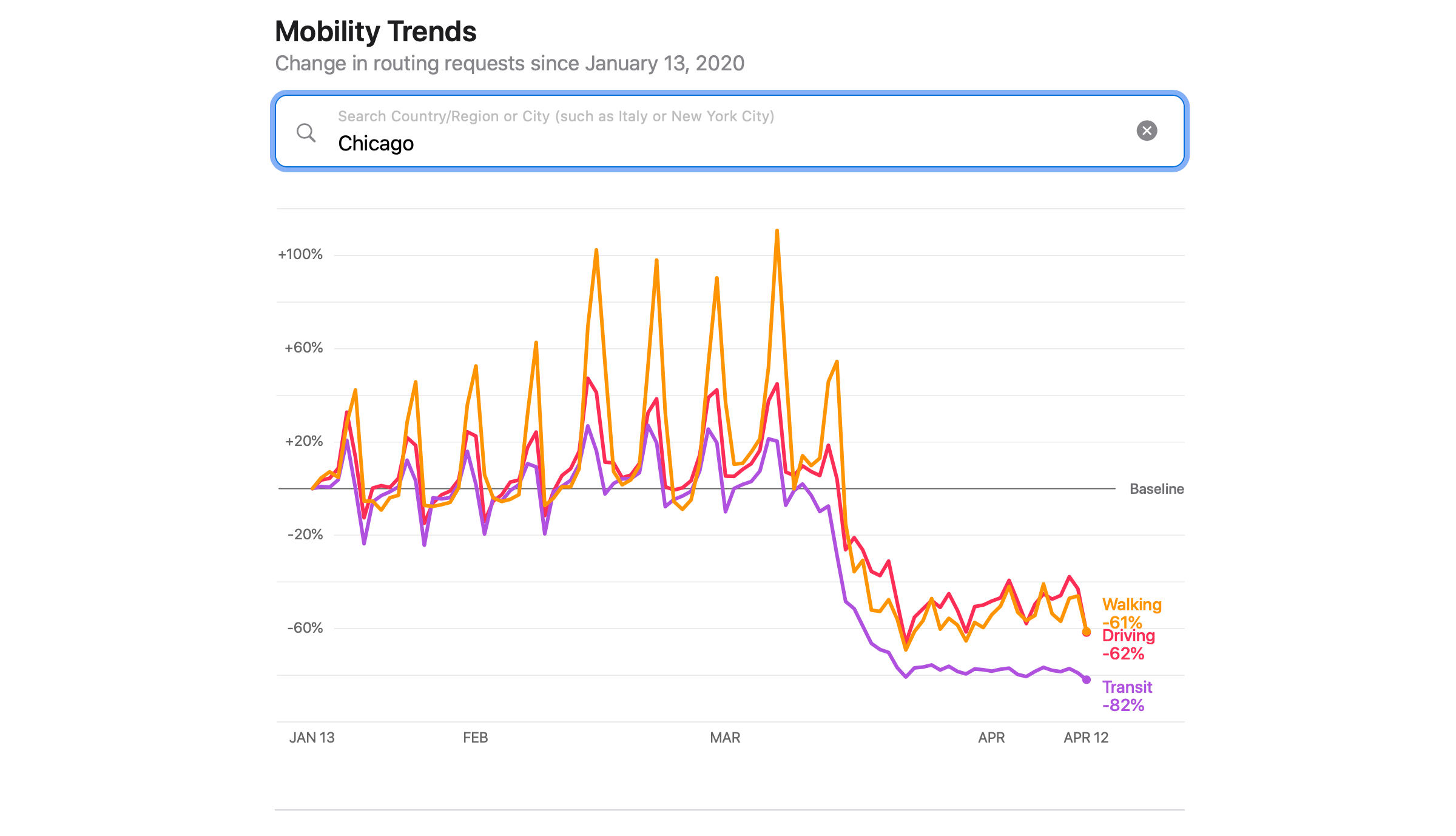
The tool can be found at apple.com/covid19/mobility, where you can view driving, walking, and transit trends for 63 countries as well as major cities around the world. Apple’s press release also explains how the data is collected and addresses privacy:

Maps does not associate mobility data with a user’s Apple ID, and Apple does not keep a history of where a user has been. Using aggregated data collected from Apple Maps, the new website indicates mobility trends for major cities and 63 countries or regions. The information is generated by counting the number of requests made to Apple Maps for directions. The data sets are then compared to reflect a change in volume of people driving, walking or taking public transit around the world. Data availability in a particular city, country, or region is subject to a number of factors, including minimum thresholds for direction requests made per day.

Having tried the tool, it’s fascinating to see the differences between the effect of mobility restrictions around the world. I’m glad to see Apple sharing this information on an aggregate, privacy-conscious way that hopefully can help governments and health organizations around the world assess the effectiveness of measures put in place to slow the spread of COVID-19.


Apple and Google Partner for COVID-19 Contact Tracing

Today Apple announced a special partnership with Google to develop contact tracing technology designed to reduce the spread of COVID-19 in the coming months. The plan involves two steps:

First, in May, both companies will release APIs that enable interoperability between Android and iOS devices using apps from public health authorities. These official apps will be available for users to download via their respective app stores.

Second, in the coming months, Apple and Google will work to enable a broader Bluetooth-based contact tracing platform by building this functionality into the underlying platforms. This is a more robust solution than an API and would allow more individuals to participate, if they choose to opt in, as well as enable interaction with a broader ecosystem of apps and government health authorities. Privacy, transparency, and consent are of utmost importance in this effort, and we look forward to building this functionality in consultation with interested stakeholders. We will openly publish information about our work for others to analyze.

Additionally, Apple has published draft technical documentation covering their joint work with Google.

This marks only the latest of several efforts Apple has developed to help fight the spread of COVID-19. The company developed an app and website, in partnership with the CDC, to help people with symptoms know what they should do. Additionally Tim Cook has been tweeting periodic updates about the masks and face shields the company has sourced and developed to send to first responders. Today’s partnership with Google, however, may be the most significant effort to date.

The World Health Organization explains how contact tracing – which involves keeping track of anyone who has been in contact with an infected person – can help limit the transmission of disease. Although current social distancing policies are a strict form of containment, well-implemented contact tracing could help prevent the need for such drastic measures in the future.

I’m glad that Apple and Google are collaborating on this effort, and that it will be privacy-first and opt-in. Anything that can be done to minimize the spread of COVID-19 is a good thing.


Dark Sky Has Been Acquired by Apple and Its API Will Be Discontinued at the End of 2021

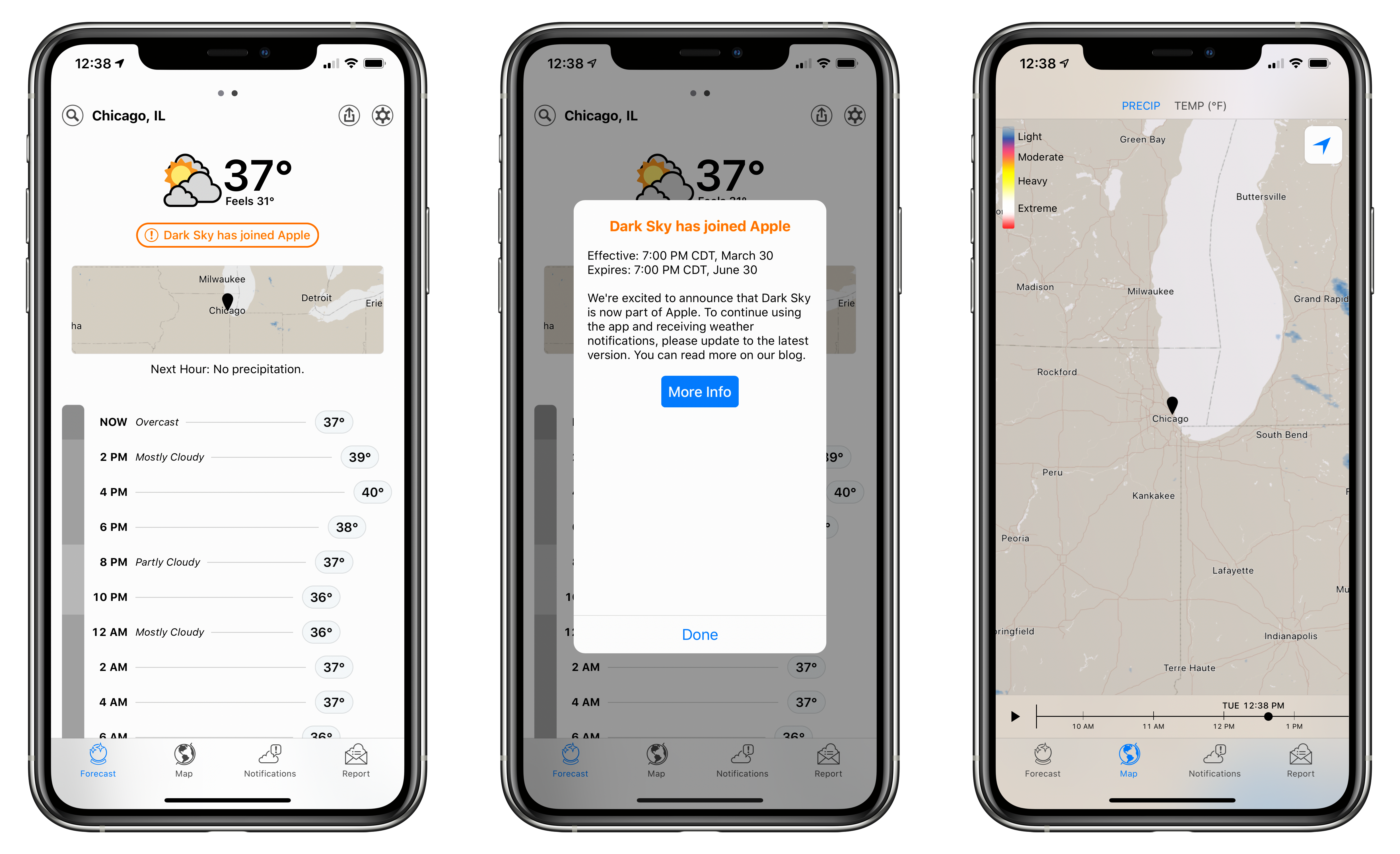
Dark Sky, the maker of the popular weather app by the same name, announced on its blog (and in its iOS app) that it has joined Apple.

In its post, the company said:

Our goal has always been to provide the world with the best weather information possible, to help as many people as we can stay dry and safe, and to do so in a way that respects your privacy.

There is no better place to accomplish these goals than at Apple. We’re thrilled to have the opportunity to reach far more people, with far more impact, than we ever could alone.

According to the company, its iOS app will continue to be made available on the App Store. However, the Android and Wear OS apps will be discontinued and the service will no longer work after July 1, 2020. Subscribers active at that time will receive a refund. Likewise, the weather forecast, maps, and embeds portions of the Dark Sky website will be discontinued after July 1, 2020.

Dark Sky is also the maker of an API that is used by many, many third-party weather apps. Dark Sky says it is no longer accepting sign-ups for the API and that it will be discontinued at the end of 2021. Although that’s a long way off, the change is going to impact many users’ favorite weather apps on iOS.

Dark Sky’s announcement comes as a surprise, but it certainly makes sense from Apple’s perspective. Weather data is notoriously expensive and Dark Sky has some of the most accurate forecast data for many parts of the world, which undoubtedly made it an attractive acquisition. It will be a shame to see their data disappear from third party apps.