John Voorhees

5812 posts on MacStories since November 2015

John is MacStories' Managing Editor, has been writing about Apple and apps since joining the team in 2015, and today, runs the site alongside Federico. John also co-hosts four MacStories podcasts: AppStories, which covers the world of apps, MacStories Unwind, which explores the fun differences between American and Italian culture and recommends media to listeners, Ruminate, a show about the weird web and unusual snacks, and NPC: Next Portable Console, a show about the games we take with us.

This Week's Sponsor:

Crickets

The first alarm app for families.


The State of Non-Native Apps

AppStories+ Deeper into the world of apps

AppStories Episode 12 - The State of Non-Native Apps

0:00
38:29

↓

AppStories+ Deeper into the world of apps

Ten years after Scott Forstall suggested web apps as a ‘sweet solution’ for would-be iPhone developers, Federico and John look at the state of non-native apps, the trade-offs inherent to them, and discuss examples of non-native apps they like, and a few they don’t.

Read more


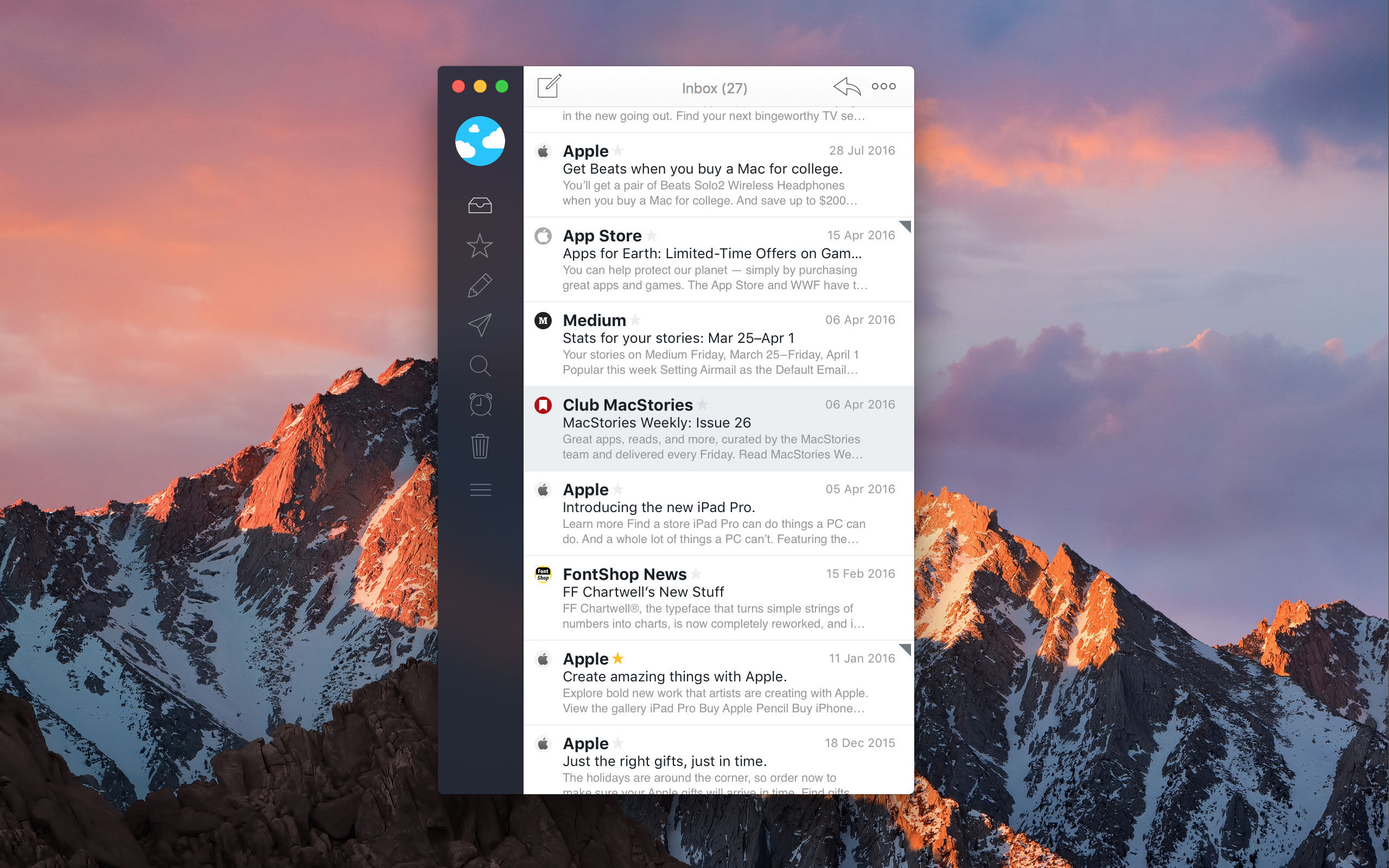
Airmail: An Elegant, Customizable Email Client for Mac and iOS [Sponsor]

Airmail is the 2017 Apple Design Award-winning email client from Bloop that marries elegant design with rich, customizable features that tame your inbox.

Everyone approaches email a little differently. For some people, their inbox is a sort of task manager. For others, keeping their inbox empty and messages neatly organized into folders is paramount. No matter how you manage your email accounts, Airmail from Bloop has you covered.

Airmail is highly customizable while maintaining a clean, intuitive interface that makes it a pleasure to use. The app supports all major email technologies, including Gmail, iCloud, Exchange, IMAP, and POP3. On macOS, Airmail also incorporates the latest operating system features like the Touch Bar.

With Airmail, you can manage one or several email accounts. With multiple accounts, it’s just as easy to review messages from every account in a unified inbox as it is to dive into just one account. Airmail also features rich customization like the ability to send messages later, snooze messages, and create smart folders and rules. Actions let you send messages to other apps you use like task managers and your calendar or create a PDF from a message. Best of all, you only need to set up Airmail once because your settings sync via iCloud to all your Macs and iOS devices.

Airmail is available on macOS from the Mac App Store and on the iPhone, iPad, and Apple Watch from the App Store.

Our thanks to Airmail for sponsoring MacStories this week.


Game Day: Missile Cards

Missile Cards, which originally debuted on Steam, combines so many of my favorite game elements - a strategy-based mashup of genres, retro graphics, and a fun chiptune soundtrack - that I knew I had to try it. My only hesitation was that it’s a mashup of a Missile Command-style arcade shooter with a card game, which isn’t one of my favorite genres. My reluctance disappeared the minute I began playing though. Missile Cards is a fantastically fun game that’s incredibly hard to put down.

Read more


Creating a Formatted Pull-Quote with Link in Messages

I discovered a Messages trick earlier this week that was new to me so I thought I’d share it. If you highlight a passage of text in Safari to send to someone as an iMessage and use the contextual Share button that pops up when you’re finished selecting the text, all that’s sent to...


Q&A

Question: Pre-iOS 11, I was always on the lookout for apps that, when sharing a file from iCloud Drive, would have an “Edit in” share sheet item instead of “Copy to”. In my experience, though, the only apps that I could find that did this were MindNode and Apple’s iWork apps (if you are aware...


Album

LINE Friends LINE has brought some of the characters from its social network to Messages with this assortment of black and white cartoony stickers. Build-A-Blob These stickers include pre-built blob monsters as well as facial features to build your very own colorful, custom blob. LOVEJI Loveji includes a variety of hand drawn hearts and...


The iPhone Unlocked Mobile Computing

The iPhone has had a profound impact on society and culture that’s built on a foundation of individual experiences. When I think about the iPhone’s effect on my own life, it’s hard to distill down because it’s had such a broad influence. What I appreciate the most though is the role the iPhone plays...


App Debuts

Twist Twist is a new team communication service and app from the team at Doist, maker of Todoist, the task manager used by many of us here at MacStories. Twist takes the idea of team chat apps like Slack and emphasizes topical threads as a way of keeping conversations focused and less chaotic. The...


iPhone 1.0: The 10th Anniversary MacStories Review

Author’s Note: When the iPhone was introduced in January 2007 at Macworld Expo, it was billed as a 3-in-1 device by Steve Jobs – a widescreen iPod with touch controls, a revolutionary mobile phone, and a breakthrough Internet communications device. The first two points were met with loud applause. Jobs was promising a better iPod and mobile phone – two things everyone understood and could get behind.

The third selling point - a breakthrough Internet communications device – was met with confused reactions. What did he mean? The answer was more broad and profound than the obvious candidates like email, SMS, or web browsing. The iPhone was a full-blown Internet-connected computer that you could put in your pocket and take with you wherever you went.

I don’t know of any product that’s had a bigger impact on so many people’s lives. Whether at work or play, the iPhone created opportunities big and small that were not possible before its launch. With a groundbreaking touch interface and intuitive design, the iPhone democratized technology and empowered people on a far greater scale than the desktop PC has managed by connecting people across the globe in a new and powerful way.

It’s hard to believe it’s been 10 years since the iPhone launched. I wasn’t there to review the iPhone when it debuted, and neither was anyone else at MacStories. Ten years ago, the founding of MacStories was still almost two years away, and I was in Adelaide, Australia visiting family.

I vividly remember staying up late in Australia to read the early reviews of the iPhone on the nearly useless WAP browser of my work-issued BlackBerry. I didn’t write about the iPhone then, so to mark the occasion of the 10th anniversary of its launch, I brushed off those old memories and wrote what I would have written in 2007.

Let’s go back in time.


The long wait is finally over. Just over six months ago, Steve Jobs took the stage at Macworld Expo to announce three products:

  • a widescreen iPod with touch controls;
  • a revolutionary mobile phone, and;
  • a breakthrough Internet communications device.

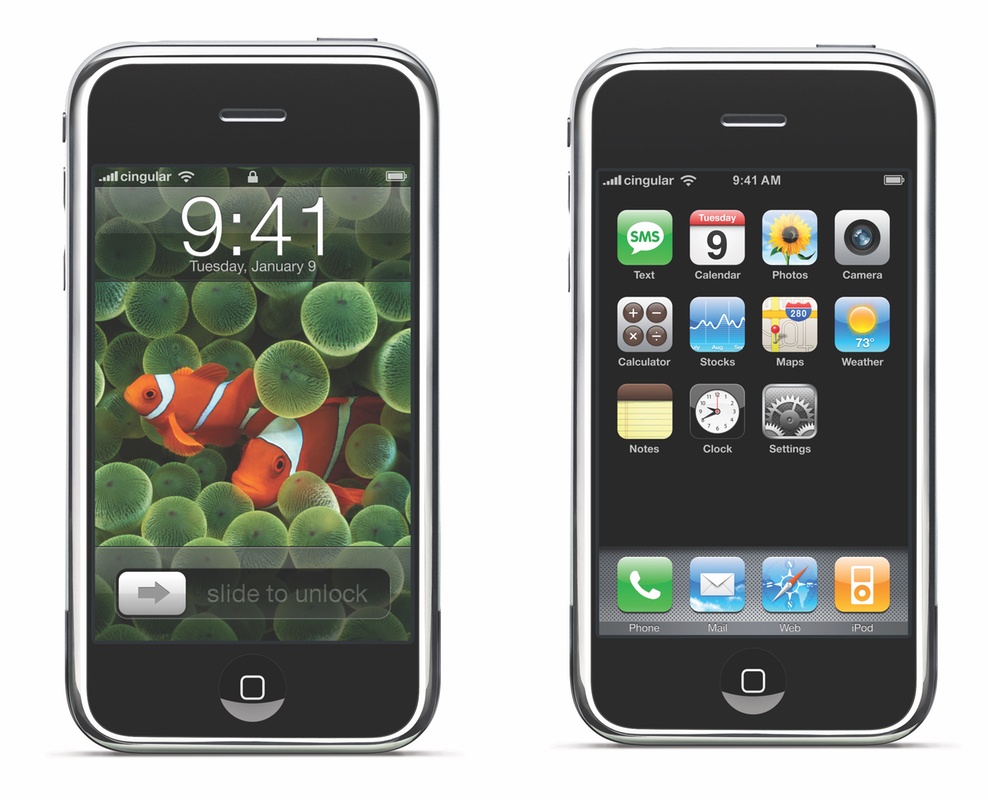
What? Three new products in one keynote? No, not three devices – one. On January 9, 2007, after years of rumors and speculation, Steve Jobs introduced the world to the iPhone.

Jobs took the iPhone through its paces at Macworld, thrilling the crowd with feature after feature. It seemed impossible. How could OS X fit into a phone? Was Safari on the iPhone as full-featured as on OS X? Macworld raised as many questions as it answered.

It didn’t help that the iPhone wouldn’t launch until June. There were no more demos, no hands-on time for the press, just the iPhone encased in a transparent tube on the show floor for visitors to gawk at.

In the past few months, some of the press took to calling the iPhone the ‘Jesus Phone’ for its promise of salvation from WAP browsers and the broken UIs of self-proclaimed smartphones. With the launch of the iPhone today at 6:00 pm Eastern, just one day before the end of the promised June delivery deadline, we can finally judge whether the iPhone is five years ahead of any other mobile phone as Jobs proclaimed in January.

Of course, it’s impossible to judge where the smartphone market will be in five years. However, measured against the hype at Macworld, the answer seems to be yes, the iPhone does deliver, though not without some caveats and many risks that could limit its adoption by consumers. For early adopters willing to pay the price and live with some rough edges, though, the iPhone is far ahead of every other available option.

Read more