John Voorhees

5806 posts on MacStories since November 2015

John is MacStories' Managing Editor, has been writing about Apple and apps since joining the team in 2015, and today, runs the site alongside Federico. John also co-hosts four MacStories podcasts: AppStories, which covers the world of apps, MacStories Unwind, which explores the fun differences between American and Italian culture and recommends media to listeners, Ruminate, a show about the weird web and unusual snacks, and NPC: Next Portable Console, a show about the games we take with us.

This Week's Sponsor:

Crickets

The first alarm app for families.


Logitech Crayon Availability Is Expanding on September 12th

The Logitech Crayon stylus that was announced at Apple’s spring education event was available originally to education customers only. Logitech has announced however, that beginning on September 12th the Crayon will be available to anyone who wants one.

The Crayon has many of the same features as Apple’s Pencil but lacks pressure sensitivity. The device is also designed with kids in mind. The rubberized cap that hides a Lightning charging port is tethered to the device, and the replaceable tips can only be removed with a special tool. The barrel of the Crayon is also squared off so it won’t roll off a table.

Logitech says the Crayon will be available initially at Apple retail stores, Apple.com, and Logitech.com. However, beginning in October, availability will expand to other retailers.

The Crayon will continue to be available to education customers for $49.99. Everyone else can purchase the Crayon for $69.99, which is $30 less than the Apple Pencil.

It’s interesting that the Crayon goes on sale to the general public the same day as Apple’s fall event. Perhaps this indicates that new iPads will debut during the event, despite the lack of iPad rumors and leaks compared to the iPhone and Apple Watch.
MacPaw Releases a Redesigned and Updated CleanMyMac X

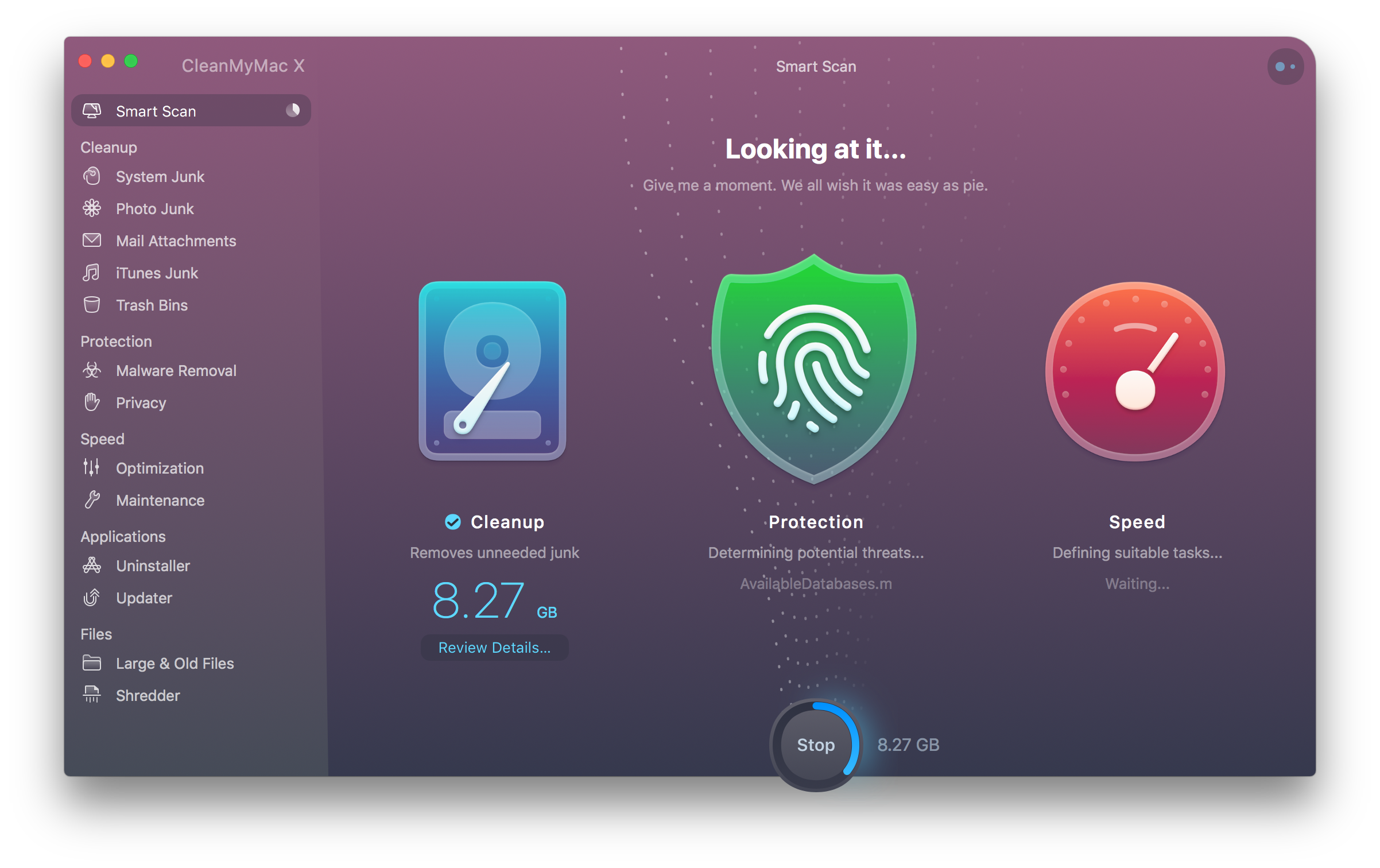
There’s a lot of junk that builds up on a Mac over time. The Trash fills up as do caches. There are also large language files, localizations, and other system files that most people don’t need. To eliminate the junk and keep as much space free as possible on my Mac, I’ve used CleanMyMac by MacPaw for several years. Today, MacPaw released an update to the app called CleanMyMac X in honor of the app’s ten-year anniversary.

The vast majority of the time I use CleanMyMac to free up space on my Mac. However, CleanMyMac does more than scan your Mac for junk and remove it. The app has grown over the years into a suite of utilities that also includes an uninstaller, system maintenance checks, privacy tools, large and old file removal, and a file shredder. That list has grown with CleanMyMac X, which has also been significantly redesigned.

Read more


Google Debuts Nice New Look, Password Management Improvements, and Other Enhancements With Chrome 69

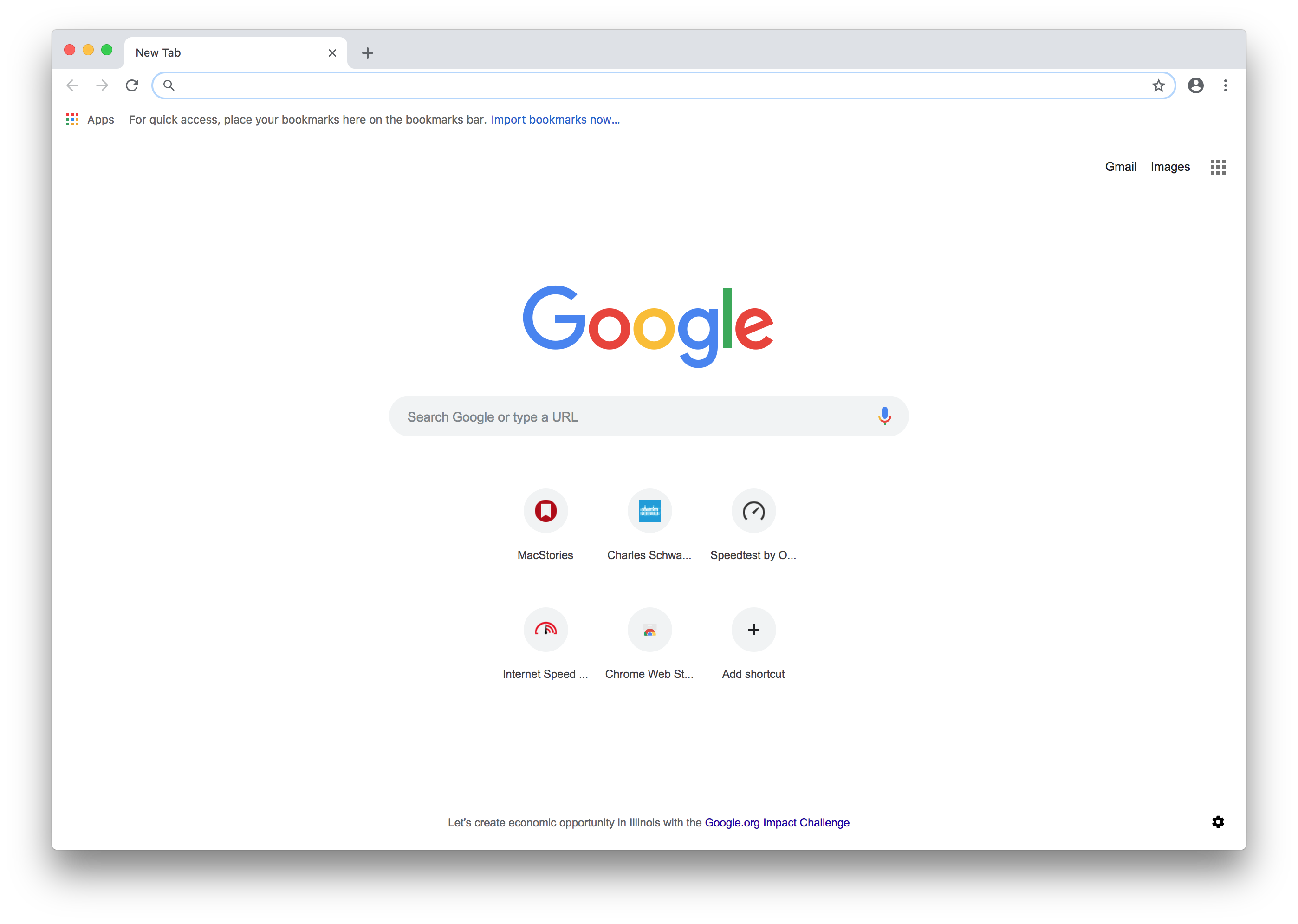
Chrome just turned 10 and Google is celebrating with a big update to its Chrome browser on iOS and the Mac. The update, which was announced on Google’s The Keyword blog, includes a redesign of the app’s UI, improvements to password management, answers to common queries directly from Google’s Omnibox, new personalization options, and under-the-hood enhancements.

Front and center is a redesign of Chrome’s UI. Iconography, text fields, and tabs all have more rounded corners than previously. Google has also adjusted the color palette used. The overall effect has a more lightweight feel, especially on the Mac where there is abundant white space.

Chrome’s password manager is improved too. Google says the app is better at filling in names, addresses, and credit card information in web forms. Chrome also generates, saves, and syncs your passwords across platforms.

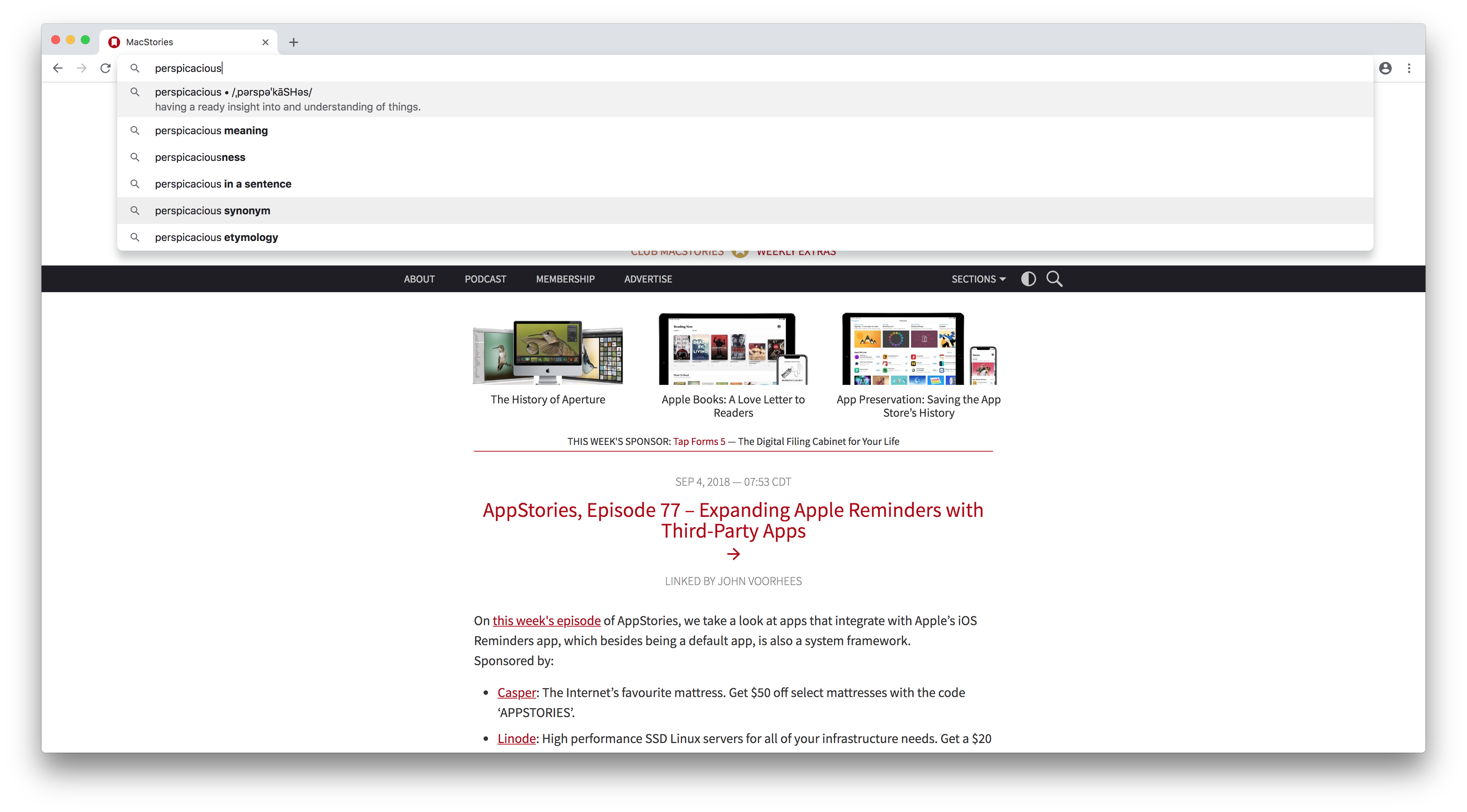
If all you need is a simple answer to a question, Google’s combination search bar/address bar, which it calls the Omnibox, will now display relevant information as you type on the Mac. Google says the Omnibox will return definitions in the drop-down results as you type as well as information about people and other subjects. In my limited testing, I was able to display definitions from the Omnibox, but I couldn’t recreate the other results demonstrated by Google in its announcement.

Definitions and other information is available from the Omnibox.

Definitions and other information is available from the Omnibox.

Google has also added shortcut management to newly opened tabs, which can also feature a photo of your choice in the background. Google also mentions that it is experimenting with under-the-hood changes to improve Chrome’s overall performance that are covered in detail on its developer blog.

The iOS update is available on the App Store and the Mac version directly from Google.


AppStories, Episode 77 – Expanding Apple Reminders with Third-Party Apps→

On this week’s episode of AppStories, we take a look at apps that integrate with Apple’s iOS Reminders app, which besides being a default app, is also a system framework.
Sponsored by:

  • Casper: The Internet’s favourite mattress. Get $50 off select mattresses with the code ‘APPSTORIES’.
  • Linode: High performance SSD Linux servers for all of your infrastructure needs. Get a $20 credit with promo code ‘appstories2018’
AppStories+ Deeper into the world of apps

AppStories Episode 77 - Expanding Apple’s Reminders with Third-Party Apps

0:00
32:13

↓

AppStories+ Deeper into the world of apps

Permalink

Creative Selection Delves into Apple Software Design with Stories about Safari, the iPhone, and the iPad

Today, former Apple engineer Ken Kocienda’s book Creative Selection, which covers his career at Apple and insights about the company’s software design process, was released. As an engineer at Apple, Kocienda worked on several high-profile projects including Safari on the Mac and the touch keyboards on the iPhone and iPad. Much of the publicity surrounding the book focuses on Kocienda’s work on the iPhone. However, there is a treasure trove of interesting anecdotes about other products and people that make Creative Selection an absorbing read for anyone interested in the creative process and Apple.

Read more


Expanding Apple’s Reminders with Third-Party Apps

AppStories+ Deeper into the world of apps

AppStories Episode 77 - Expanding Apple’s Reminders with Third-Party Apps

0:00
32:13

↓

AppStories+ Deeper into the world of apps

This week, Federico and John take a look at apps that integrate with Apple’s iOS Reminders app, which besides being a default app, is also a system framework.

Read more


Black Pixel Transfers NetNewsWire to Brent Simmons

Today, Brent Simmons and Black Pixel announced that NetNewsWire will be returning to Simmons, the original developer of the app.

NetNewsWire is a Mac RSS reader created by Simmons in 2002. Simmons sold the app to NewsGator in 2005, which subsequently sold it to Black Pixel, where it’s been developed for the past 7 years. During that time, Black Pixel released version 4 for Mac and iOS and created an Apple TV version. Black Pixel also implemented a sync system to keep users’ feeds up to date on each platform.

Separately, Simmons has been working on a free, open source RSS reader for the Mac called Evergreen. According to Simmons’ post on inessential.com, Evergreen will be renamed NetNewsWire 5.0. The project is available on GitHub, and a beta version for testing will be released soon. Black Pixel has removed NetNewsWire from sale and will shut down its sync server in 60 days. Simmons plans to support a variety of third-party RSS sync solutions in NetNewsWire 5.0 starting with Feedbin.

As I’ve noted on AppStories before, RSS readers have stagnated on the Mac in comparison to iOS in recent years, which is why I’m glad to see that Simmons is rebooting NetNewsWire based the work on Evergreen that he’s already done. RSS is still my first stop for most of the news I read every day. Although reading on iOS devices may be the most natural platform for RSS, I’m optimistic that we’ll see a revitalization of RSS on the Mac between projects like Simmons’ and the prospect of Marzipan versions of iOS RSS readers coming to the Mac in the future.


Privacy Policies Will Be Required for All Apps and Updates Beginning October 3rd

If you go to an app’s product page on any of Apple’s app stores, sometimes you’ll see a link to a privacy policy and sometimes you won’t. That’s because when iOS, macOS, or tvOS apps are submitted for beta testing or sale, developers have the option but aren’t required to link to a webpage with a privacy policy or, in the case of tvOS, include the policy directly in the app’s product page because the Apple TV doesn’t support web browsing. That will change soon.

As of October 3, 2018, any new app or update uploaded for beta testing or sale must include a privacy policy. Apple announced the change on its App Store Connect developer portal, which requires a developer account to access. Apple also noted in its announcement that a developer’s privacy policy link or text will only be editable when a developer submits a new version of their app for review.

Many app developers already provide privacy policies and are transparent about the information they collect from users and how they use it. I’m glad to see privacy policies become a requirement though because for some apps it’s not easy to track down how they use your data and there have been too many instances in the recent past where it’s been discovered that an app has used data in ways that users might not expect.


Q&A

Question: I’m looking for a three-paned desktop plain text editor that uses local storage and has standard Markdown support. It would be great if the app also supports multiple “databases”/”workspaces” and tag support. (Jay)

I’d suggest an app like iA Writer. Documents can be saved as plain text or Markdown file formats to any...