John Voorhees

5387 posts on MacStories since November 2015

John is MacStories' Managing Editor, has been writing about Apple and apps since joining the team in 2015, and today, runs the site alongside Federico. John also co-hosts four MacStories podcasts: AppStories, which covers the world of apps, MacStories Unwind, which explores the fun differences between American and Italian culture and recommends media to listeners, Ruminate, a show about the weird web and unusual snacks, and NPC: Next Portable Console, a show about the games we take with us.

Longplay for Mac Launches with Powerful AI and Shortcuts Integration

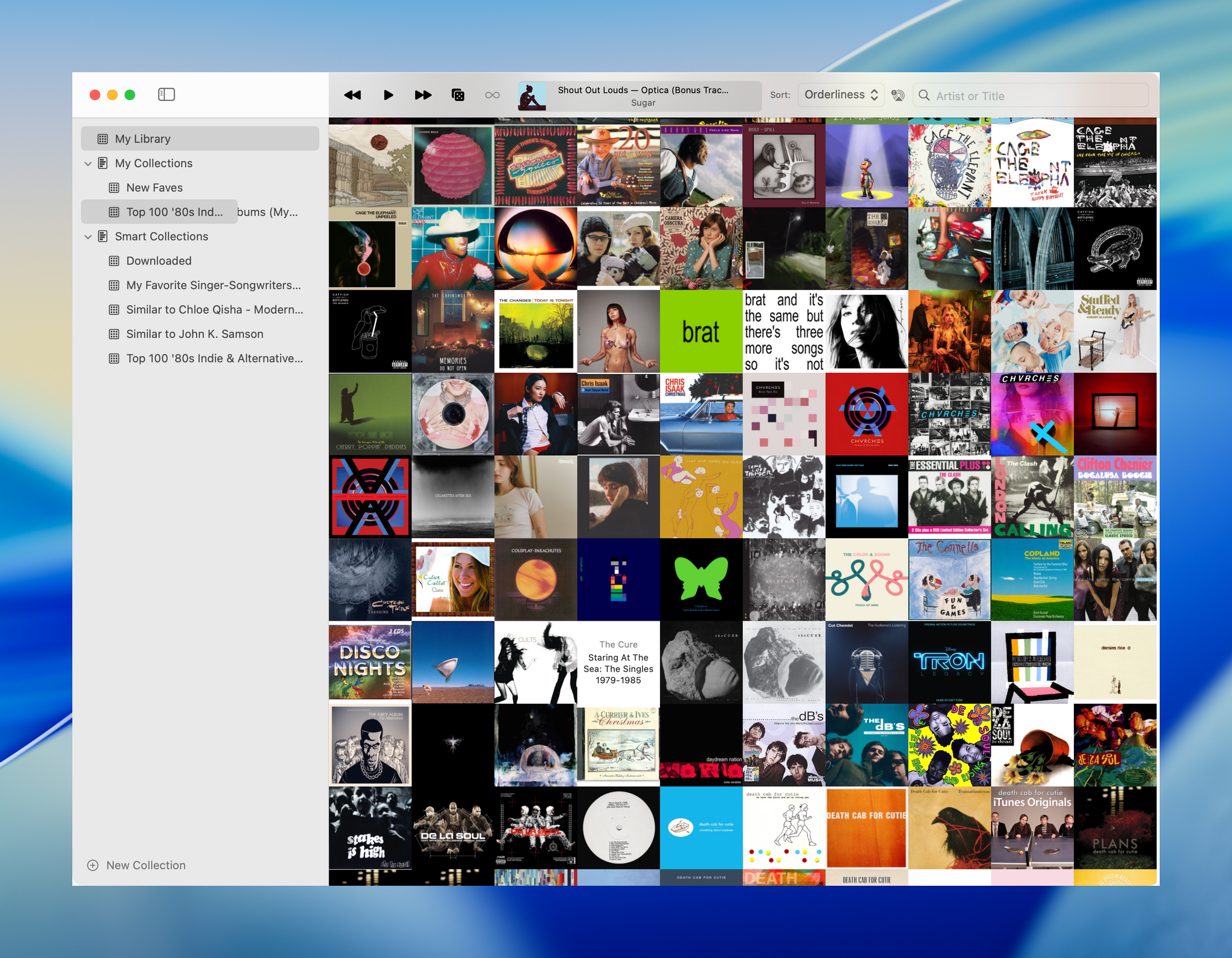
Longplay by Adrian Schönig is an excellent album-oriented music app that integrates with Apple Music. The app started on iOS and iPadOS, then later added support for visionOS. With today’s update, Longplay is available on macOS, too, where it adds unique automation features.

If you aren’t familiar with Longplay, be sure to check out my reviews of version 2.0 for iOS and iPadOS and the app’s debut on the Vision Pro. I love the app’s album art-forward design, collection and queuing systems for navigating and organizing large music libraries, and many other ways to sort, filter, and rediscover your favorite albums. Here’s how Adrian describes Longplay in a post introducing the Mac version:

It filters out the albums where you only have a handful of tracks, and focusses on those complete or nearly complete albums in your library instead. It analyses your album stats to help you rediscover forgotten favourites and explore your library in different ways. You can organise your albums into collections, including smart ones. And you can go deep with automation support.

With the introduction of Longplay for Mac, the app is now available everywhere, with feature parity across all versions. Plus, Longplay syncs across all devices, so your Collections and Smart Collections are available on every platform.

Read more

Access Extra Content and Perks

Founded in 2015, Club MacStories has delivered exclusive content every week for nearly a decade.

What started with weekly and monthly email newsletters has blossomed into a family of memberships designed for every MacStories fan.

Learn more here and from our Club FAQs.

Club MacStories: Weekly and monthly newsletters via email and the web that are brimming with apps, tips, automation workflows, longform writing, early access to the MacStories Unwind podcast, periodic giveaways, and more;

Club MacStories+: Everything that Club MacStories offers, plus an active Discord community, advanced search and custom RSS features for exploring the Club’s entire back catalog, bonus columns, and dozens of app discounts;

Club Premier: All of the above and AppStories+, an extended version of our flagship podcast that’s delivered early, ad-free, and in high-bitrate audio.

Learn more here and from our Club FAQs.


Cyberpunk 2077 for Mac Arrives Thursday

Source: CD PROJEKT RED.

Source: CD PROJEKT RED.

Last fall, alongside the announcement of the M4 MacBook Pro, Apple and CD PROJEKT RED said that Cyberpunk 2077 was coming to the Mac in early 2025. But when WWDC rolled around last month with no more news about when the game would come to the Mac, I thought it might slip to the fall when macOS Tahoe is expected to be released with Metal 4 and other game-friendly features.

So it was a pleasant surprise to find out that Cyberpunk 2077: Ultimate Edition, which includes the Phantom Liberty DLC, will be out this Thursday on the Mac App Store, as well as on GOG.com, Steam, and the Epic Games Store. Cyberpunk, a notoriously demanding game when it comes to system resources, will run on any Apple silicon Mac with 16GB of memory that is running macOS Sequoia (or the Tahoe developer beta).

Source: CD PROJEKT RED.

Source: CD PROJEKT RED.

To support every 16GB Apple silicon Mac since the M1 MacBook Air, Cyberpunk relies on the latest Metal technologies, including Tile-Based Deferred Rendering and tools like Metal’s C++ interface and the Metal Shader Converter, to optimize for Apple GPUs. The game also takes advantage of Apple’s MetalFX Upscaling.

CD PROJEKT RED has gone all out with other compatibility features to make its game feel at home on the Mac, too, including:

  • “For This Mac” graphics presets that are optimized for the Apple silicon hardware running the game, which promises to take the guess work out of configuring graphics settings;
  • AMD FSR upscaling and frame generation optimized for Apple silicon Macs;
  • Support for Spatial Audio and head tracking for those playing with AirPods;
  • HDR support that is dynamically optimized for Apple’s XDR displays and HDR output for calibrated external displays;
  • Magic Mouse, Magic Trackpad, and controller support; and
  • Cross-progression across all platforms.

In the fall, Apple says Cyberpunk will get a boost from the videogame technologies announced at WWDC 2025. Those include MetalFX Frame Interpolation to increase and stabilize frame rates, which Apple says will allow the game to hit 120 fps using the game’s Ultra settings when combined with MetalFX Upscaling. Cyberpunk will utilize MetalFX Frame Denoising to clean up the noise produced by its path-tracing renderer, too.

Source: CD PROJEKT RED.

Source: CD PROJEKT RED.

I’m looking forward to trying Cyberpunk on the Mac. I already own it on Steam and have played it on the Steam Deck and the Nintendo Switch 2, both of which should be excellent points of comparison to the wide range of Macs that Apple says will run Cyberpunk 2077.

The Mac version of Cyberpunk 2077 will debut this Thursday, July 17. There is no additional charge for the Mac version if you already purchased the game from one of the stores that offers it. Alternatively, you can purchase the game from the Mac App Store, where Cyberpunk 2077 is making its debut.

Access Extra Content and Perks

Founded in 2015, Club MacStories has delivered exclusive content every week for nearly a decade.

What started with weekly and monthly email newsletters has blossomed into a family of memberships designed for every MacStories fan.

Learn more here and from our Club FAQs.

Club MacStories: Weekly and monthly newsletters via email and the web that are brimming with apps, tips, automation workflows, longform writing, early access to the MacStories Unwind podcast, periodic giveaways, and more;

Club MacStories+: Everything that Club MacStories offers, plus an active Discord community, advanced search and custom RSS features for exploring the Club’s entire back catalog, bonus columns, and dozens of app discounts;

Club Premier: All of the above and AppStories+, an extended version of our flagship podcast that’s delivered early, ad-free, and in high-bitrate audio.

Learn more here and from our Club FAQs.


Two-Day Indie App Sales Event Begins Today with Over 250 Apps

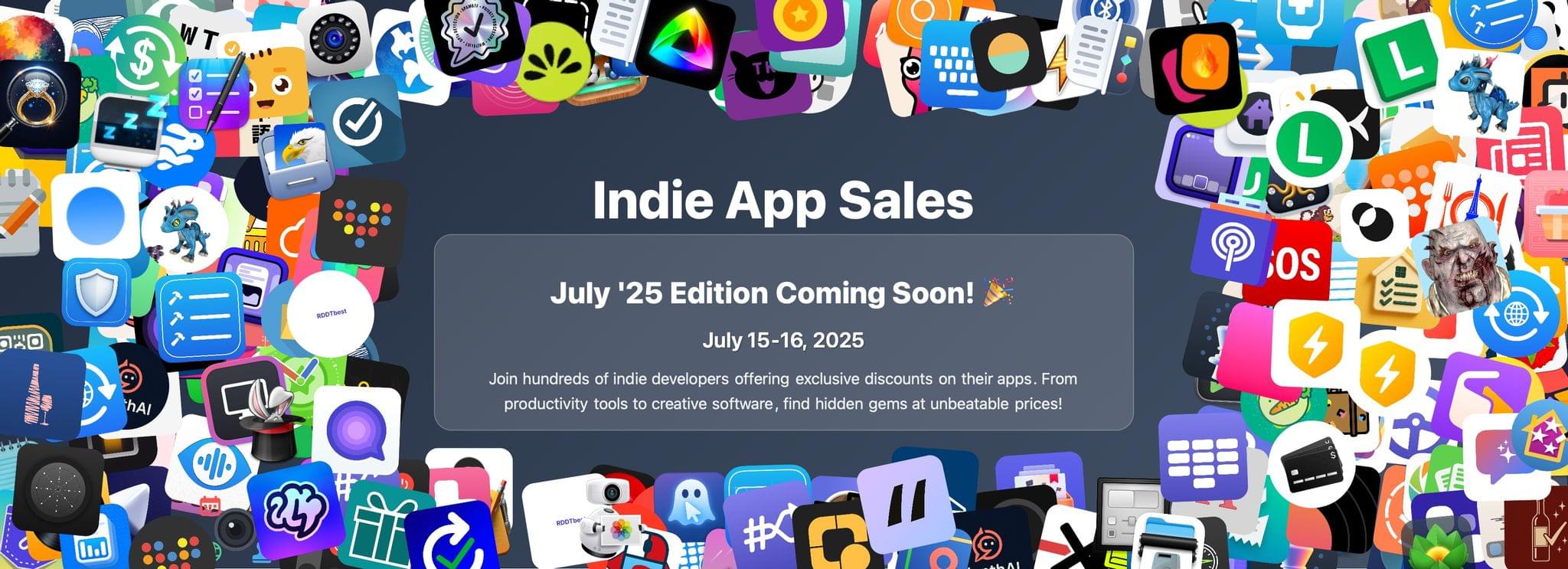
Matt Corey has once again gathered indie developers to organize a huge sale today and tomorrow. Corey, the maker of Bills to Budget and Signals, has organized a collection of over 250 apps that will be offered at a discount through Wednesday. The list is too long to publish here, but it includes many apps we’ve covered here on MacStories and on Club MacStories in the past, including:

There are a lot of great deals, with many apps discounted 50% or more. What’s listed above is a small fraction of the participating apps, so be sure to visit Indie App Sales and support these great indie apps.

Access Extra Content and Perks

Founded in 2015, Club MacStories has delivered exclusive content every week for nearly a decade.

What started with weekly and monthly email newsletters has blossomed into a family of memberships designed for every MacStories fan.

Learn more here and from our Club FAQs.

Club MacStories: Weekly and monthly newsletters via email and the web that are brimming with apps, tips, automation workflows, longform writing, early access to the MacStories Unwind podcast, periodic giveaways, and more;

Club MacStories+: Everything that Club MacStories offers, plus an active Discord community, advanced search and custom RSS features for exploring the Club’s entire back catalog, bonus columns, and dozens of app discounts;

Club Premier: All of the above and AppStories+, an extended version of our flagship podcast that’s delivered early, ad-free, and in high-bitrate audio.

Learn more here and from our Club FAQs.


Web Advocates Challenge Apple’s EU Browser Policies

The EU’s Digital Markets Act requires Apple to allow third parties to offer web browsers with their own browser engines. However, more than a year later, there are no browsers built with Chromium, Gecko, or any other engine in the EU.

At a recent EU workshop on Apple’s compliance with the DMA’s browser requirements, Apple representatives were asked some pointed questions by Open Web Advocacy (OWA), and others about its browser engine policies. OWA, a non-profit that advocates for the open web, raised multiple issues with Apple’s approach to browser engines in the EU that they believe are holding back third-party engines.

One issue is that versions of the same browser with different engines can’t be part of the same app bundle. According to OWA, that effectively means vendors like Google and Mozilla would need to release a new EU-only version of their browsers, starting the process of acquiring users from scratch, which I can’t imagine any browser company would sign up to do voluntarily.

Another issue OWA raised is that there is currently no way for web developers outside the EU who are not associated with the browser makers to obtain browsers with competing engines for testing purposes. That’s a problem that’s been solved with other apps by allowing test versions to be distributed outside the EU. However, as things stand today, OWA says that web developers couldn’t use EU-only browsers for testing even if there were any available.

Other issues were raised, too, but these two strike me as practical impediments to third-party browser engines that can and should be resolved. Apple’s responses to OWA’s challenges focused on privacy and security, which are legitimate factors to consider, but it’s disappointing that more than a year after the DMA took effect, the practical problems raised by OWA and others still haven’t been solved.

Permalink

Imagining Apple’s Next Big Thing

This week, Federico and John share a grab bag of projects we’d like to see Apple pursue from software, to hardware and corporate acquisitions.

On AppStories+, Federico and John take their wish list further with a bunch of gadgets they’d like to see Apple make.


We deliver AppStories+ to subscribers with bonus content, ad-free, and at a high bitrate early every week.

To learn more about an AppStories+ subscription, visit our Plans page, or read the AppStories+ FAQ.


AppStories+ Deeper into the world of apps

AppStories Episode 445 - Imagining Apple’s Next Big Thing

0:00
37:31

AppStories+ Deeper into the world of apps

This episode is sponsored by:

  • Notion – Try the powerful, easy-to-use Notion AI today.

Read more


App Debuts

Cascable Studio Cascable Studio 7.1 recently introduced powerful automation features for streamlining photographers’ iPhone, iPad, Apple Watch, and Mac workflows. The app, which lets you remotely control, tether, automate, and transfer photos and video from more than 200 supported cameras over USB, Wi-Fi, or Ethernet, now supports Elgato’s Stream Deck on the iPad and...


A New Approach to Computing

As I’ve played around more with AI tools, I’ve begun to realize that computing is going to increasingly become a lean-back experience, which I expect will change the input devices we use. Here’s where I think we’re heading. I learned touch typing in high school. I’m comfortable with a keyboard under my hands and can...


Interesting Links

It was a big week for Apple history posts: On 512 Pixels, Stephen Hackett linked to a post by Marcin Wichary that recounts the history of the Mac’s settings from 1984–2004. (Link) Stephen also did some testing to confirm that macOS Tahoe does not support FireWire 800. I’m surprised it lasted this long. (Link)...


The Search for Nintendo’s Elusive iMac G3-Inspired Game Boy Colors

Retro Dodo, linking to the website Console Variations, has a story about the time Nintendo produced variants of the Game Boy Color that matched the iMac G3. All that seemingly remains of these color-matched Game Boys is the low-resolution image above from a 1999 issue of 64 Dream Magazine because Retro Dodo’s Sebastian Santabarbara went looking for the handhelds and was unable to find them anywhere online.

Nintendo wasn’t alone in copying the vibrant translucency of the iMac G3. In the late ’90s it seemed like every consumer product maker did something similar. Most of those products have been lost to time and forgotten, but Nintendo fans are an intrepid bunch. I wouldn’t be surprised if these iMac-themed Game Boy Colors turn up in an auction online eventually.

Permalink