



John Voorhees

5439 posts on MacStories since November 2015

John is MacStories' Managing Editor, has been writing about Apple and apps since joining the team in 2015, and today, runs the site alongside Federico. John also co-hosts four MacStories podcasts: AppStories, which covers the world of apps, MacStories Unwind, which explores the fun differences between American and Italian culture and recommends media to listeners, Ruminate, a show about the weird web and unusual snacks, and NPC: Next Portable Console, a show about the games we take with us.

MacStories Unwind: A WWDC Preview, Timery and HomeRun Updates, ADAs, Swift Student Challenge Winners, and a Design Concept

AppStories+ Deeper into the world of apps
0:00
30:41

AppStories+ Deeper into the world of apps


Sponsored by: Genius Scan – A Scanner in Your Pocket

This week, Federico and John preview MacStories’ and AppStories’ upcoming WWDC coverage and recap updates to Timery and HomeRun, along with news of ADA finalists, Swift Student Challenge Winners, an iPadOS design concept, and link posts about the App Store and AirTags along with two music Unwind picks for the weekend.

MacStories

Club MacStories

  • MacStories Unplugged
    • John has an update on his cul-de-sac, we preview MacStories’ upcoming WWDC coverage, and Federico lifts the veil on Apple’s restoration of historic Palazzo Marignoli, home of the company’s latest flagship retail store.
  • MacStories Weekly
    • ReadKit
    • A collection of iOS apps for Readers
    • A tip for removing Home hubs
    • Lots of App Debuts
    • A Timery giveaway

AppStories

Unwind


Apple Captured in a Single Email Message

Matthew Panzarino writing at TechCrunch breaks down an email message between Steve Jobs, Bertrand Serlet, Scott Forstall, and others that documents the moment the App Store was born. Here’s the message:

The email captures an important moment in Apple’s history, but as Panzarino explains, it’s also an important lesson in effective leadership:

All in all, this exchange is a wildly important bit of ephemera that underpins the entire app ecosystem era and an explosive growth phase for Internet technology. And it’s also an encapsulation of the kind of environment that has made Apple an effective and brutally efficient company for so many years.

It’s also fascinating to learn how soon after the iPhone’s debut the call was made to let third-party apps onto the platform:

Though there has been plenty of established documentation of Steve being reluctant about allowing third-party apps on iPhone, this email establishes an official timeline for when the decision was not only made but essentially fully formed. And it’s much earlier than the apocryphal discussion about when the call was made. This is just weeks after the first hacky third-party attempts had made their way to iPhone and just under two months since the first iPhone jailbreak toolchain appeared. 

Apple is far larger today than it was in 2007, but it was by no means small then either. The sort of ruthlessly efficient decision-making on display in Serlet and Jobs’ interaction is a lot easier for startups with a handful of employees, which makes it notable for a company of Apple’s size in 2007.

Permalink

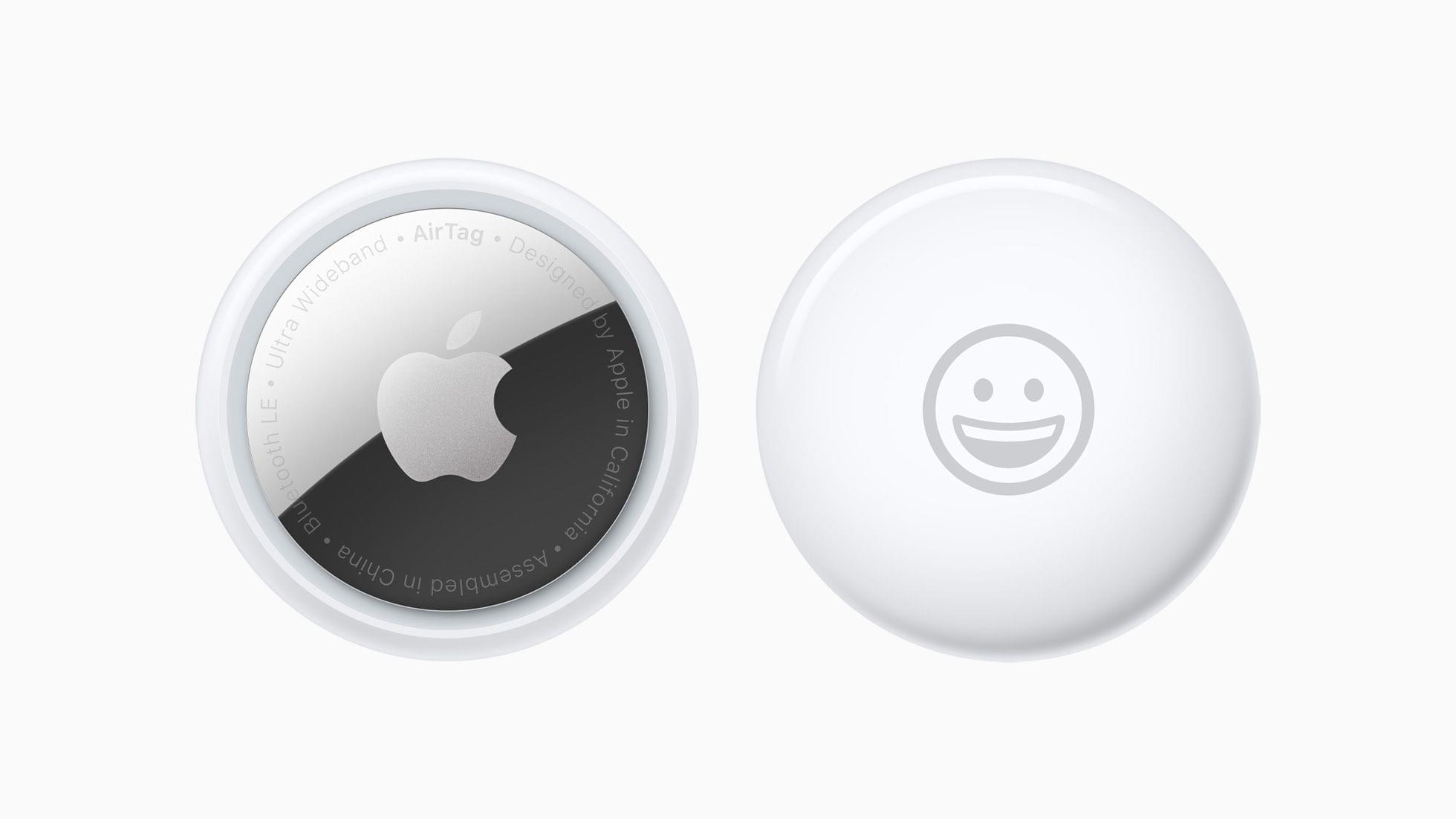
Apple Tells CNET It’s Making Privacy Changes to AirTags and Has an Android App Coming Later This Year

CNET reports that Apple is adjusting the time within which they sound an alert when separated from their owners and adding ways to alert people when AirTags and third-party Find My network-enabled items are nearby.

Initially, AirTags were set to play a sound three days after they were separated from their owners. Now, the device will play a warning beep somewhere between 8 and 24 hours. Apple is also creating an Android app to allow owners of Android phones and devices to know if an AirTag or Find My network device is planted on them.

AirTags launched last month with numerous privacy protections baked into the device and related software, noting at the time that they expected to make adjustments along the way. With a few weeks of real-world use by customers and investigations by The Washington Post and others, today’s changes are a positive step toward ensuring that AirTags can only be used for their intended purpose: tracking belongings, not people.

The latest changes are being rolled out now and will be applied to AirTags when they are near an iPhone. Apple told CNET that it will have more details on the planned Android app later this year.

Permalink

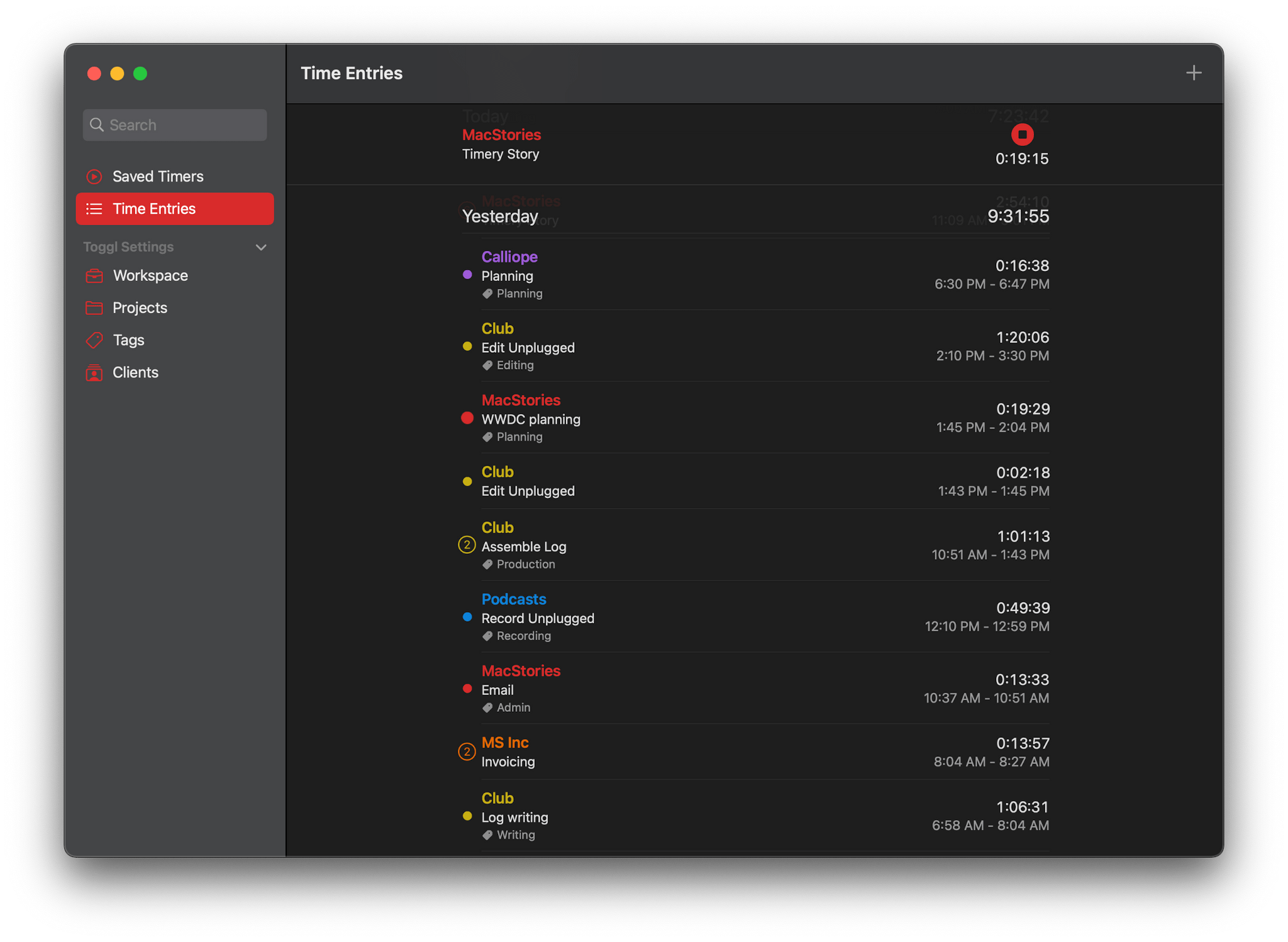
Timery Comes to the Mac and Makes Time Tracking With Toggl Easier Than Ever

I don’t track my time because I enjoy starting and stopping timers; I do it because, over the long haul, it provides valuable insight into how I’m spending my time. As useful as it is to have data on how much a project or task takes or how much time a task consumes relative to other things I do, the act of tracking itself can be tedious, which is why it can be so easy to fall out of the habit of doing it.

The reason I’ve used Timery, the time tracking app for Toggl, on my iPhone and iPad since it was released, is because of developer Joe Hribar’s attention to making it as easy as possible to track your time without a lot of fuss. Features like saved timers, widgets, keyboard shortcuts, and Shortcuts actions for automating timers have made the app a delight to use since version 1.0.

In fact, the Timery experience has been so good that I used it even though it had no Mac app, which is something I rarely do with apps I use every day. However, with the release of version 1.2 of Timery today, I no longer need to use a different time tracking app on my Mac because Timery has been released as a Mac Catalyst app, complete with all the features Timery users already know and love from iPhone and iPad versions. Today’s update to Timery isn’t just a treat for Mac users, though. Version 1.2 also packs in a long list of new keyboard shortcuts and settings for all users, making this one of the biggest updates since the app was launched.

Read more