

Earlier this week in the Club MacStories+ Discord, Club member Joshua suggested that we start a new Weekly segment called Peak Portability, which was a great idea. Federico spends a lot of time working in his car as he travels between Rome and Viterbo, and I’ve been working outside my house at a co-working space...
 A Mac Menu Bar App Gem, an Image Renaming Shortcut, and the Tradeoffs Between Customization and User Experience
Here are the highlights from the Club MacStories Discord this week:
Scribblenik discovered an excellent Mac app for searching for apps, folders, and files from the menu bar. Antonio shared an excellent shortcut for renaming images as a sequence. Fedorov kicked off a good conversation about the trade-offs between customization and user experience. Want...
Raindrop.io and Multi-Tab Selection in Safari for macOS Sonoma
One of the Safari features of macOS Sonoma that hasn’t been discussed much is the ability to select multiple browser tabs. The feature allows you to manage tabs in bulk, pinning, duplicating, or closing them, closing the unselected tabs, or moving the selected tabs to a new window or an existing or new Tab Group....
App Debuts
[[John]] Dictio Dictio is a simple dictionary app for the iPhone and iPad that includes word definitions, synonyms, and similar words. If you see a synonym or similar word that interests you, just tap it, and the app displays its definition, synonyms, and similar words. That’s all there is to Dictio, but as a fan...
Interesting Links
[[John]] According to 9to5Mac, Nomad has launched a revised version of its two models of ChargeKeys, a USB-C to USB-C or USB-C to Lightning cable, which folds up and fits on a keyring. (Link) Benjamin Mayo installed and reviewed the Philips Hue Wall Switch Module for 9to5Mac, which converts standard light switches into HomeKit-compatible switches....
MacStories Unwind: What If a Donut Was a Line?






This week on MacStories Unwind, I endure smokey summer days with the help of an app, Federico discovers churros, and we check in on our favorite media of the first half of 2023.
Churros
- Ticci’s Spanish churros from Xurreria Trebol
Our Mid-Year Media Picks
Federico’s Picks:
- Music
- the record by boygenius
- (So Much For) Stardust by Fall Out Boy
- TV Shows
- Videogames
John’s Picks:
- Music
- First Two Pages of Frankenstein by The National
- the record by boygenius
- Movies
- TV Shows
- Videogames
MacStories Unwind+

We deliver MacStories Unwind+ to Club MacStories subscribers ad-free and early with high bitrate audio every week.
To learn more about the benefits of a Club MacStories subscription, visit our Plans page.
Game On: Pokémon Sleep, Stardew Valley+, Dead Cells, Netflix Gaming, Unity’s PolySpatial Beta, and Epic Games’ Battle with Apple
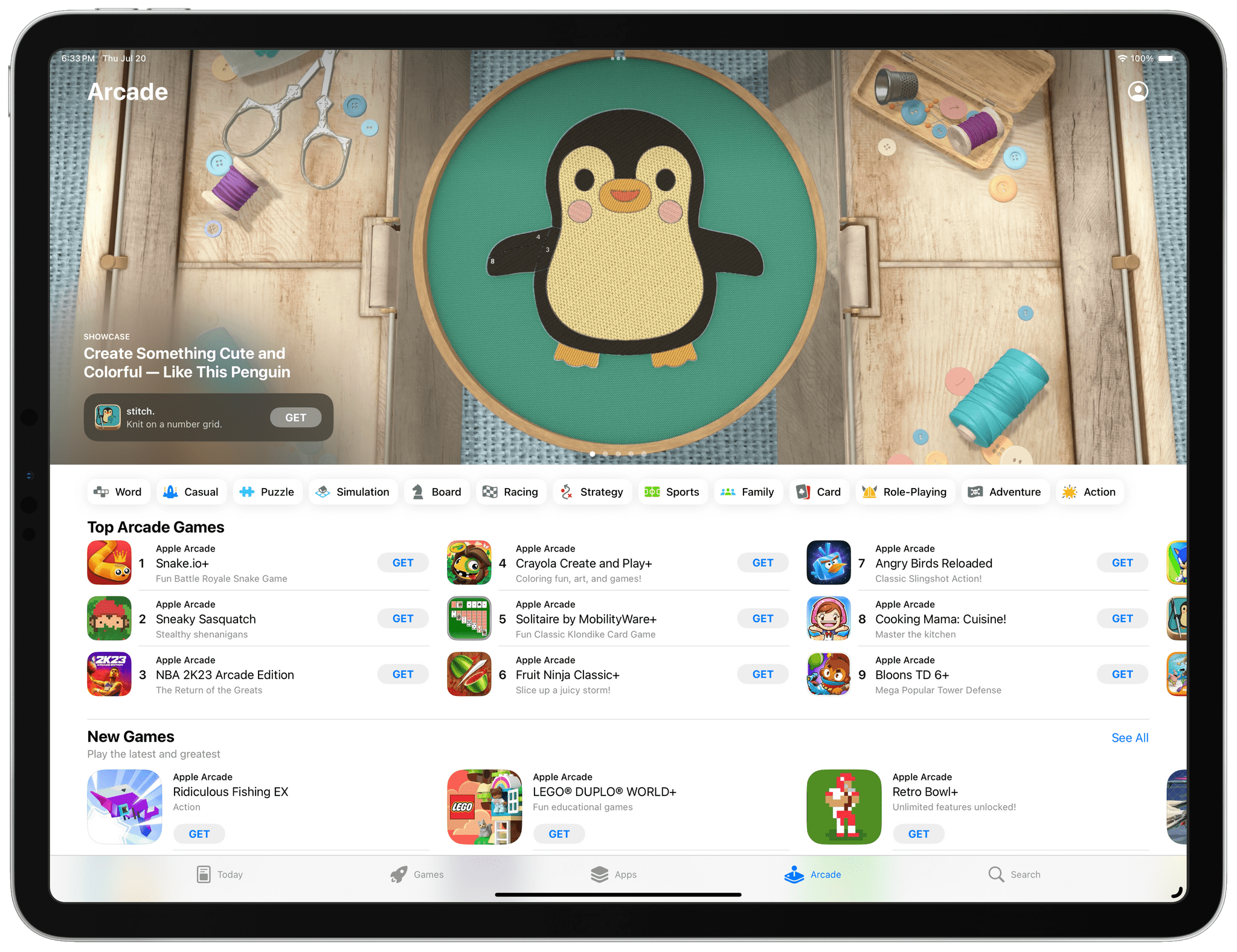
The videogame industry is huge, surpassing movies and music by wide margins. Apple has seen a lot of success with mobile games, but it’s history with desktop gaming leaves a lot to be desired. However, one thing is clear. Apple wants to expand its presence in the videogame industry and sees Apple silicon as the key to its success.
While the jury’s still out whether the company’s ambitions will succeed, beginning today, we’ll be publishing periodic roundups highlighting the biggest news in gaming on Apple’s platforms. From the iPhone and iPad to the Mac and Vision Pro, we’ll cover the big name games coming to Apple devices, along with notable industry and developer news.
.](https://cdn.macstories.net/screenshot-2023-07-17-at-3-18-42-pm-png-1689789571490.jpeg)
What the Golf? running on visionOS. Source: Unity.
This week, Unity announced a beta program for PolySpatial, a tool for visionOS developers that integrates with other Unity tools to help developers bring their Unity-based games to Apple Vision Pro. I wrote about the company’s announcement, which also revealed that Triband’s What the Golf? is being adapted for visionOS, earlier this week where you’ll find links to Unity’s blog post about PolySpatial and its beta program.
This week, I also covered a story by Lewis Gordon on The Ringer that takes an in-depth look at Netflix Games’ history and ambitions. It’s a fascinating look at a the video streaming company’s efforts to place a lot of small bets on mobile platforms like the iPhone and iPad, as well as console and PC gaming, in an effort to stay relevant to its subscribers.
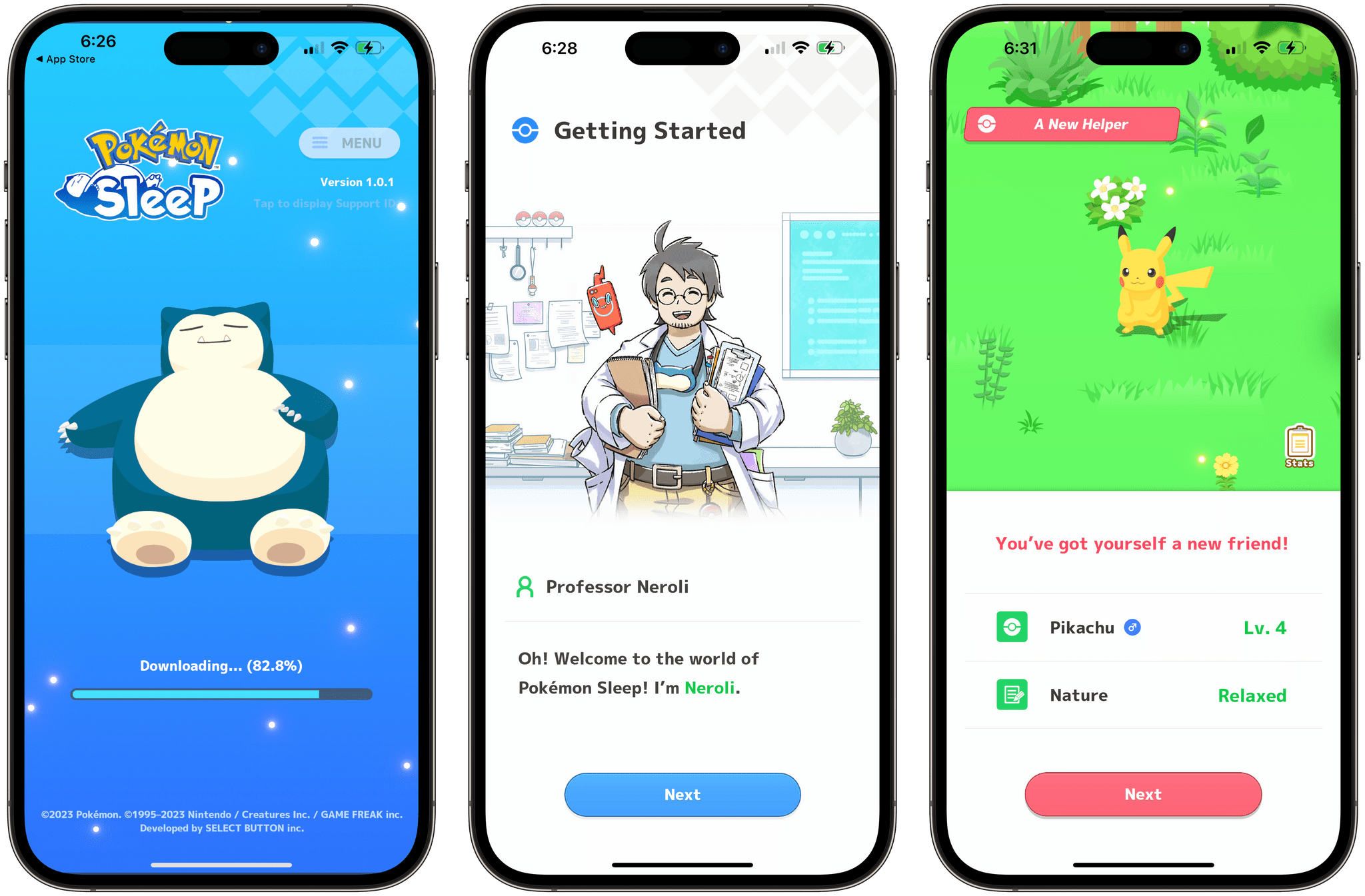
There was big game news this week too. Pokémon Sleep, a gamified sleep tracking app from The Pokémon Company that’s been in development since at least 2019 debuted on iOS and Android. According to Ash Parish at The Verge:
Sleep works by having you place your phone on your pillow after doing any of the fifty ‘leven million Pokémon-themed activities you can do nowadays. (Back in my day, all we could do was catch ‘em all — all 151 of them — and we liked it!) The app purports to track your sleeping habits via your phone, and when you wake up in the morning, the app will tell you how well you slept and compare your sleeping style to that of other ‘mon.
If you think Pikachu might help you get a good night’s sleep, you can download the game from the App Store here.
Netflix’s Slow and Steady Infiltration of the Videogame Industry→
Last week, The Ringer published an in-depth look at Netflix’s foray into videogame publishing, which, to this point, has primarily consisted of mobile games on iOS, iPadOS, and Android. The story goes back to 2017, when Netflix published a retro-style game tie-in with Stranger Things. Today, Netflix offers not only a sizeable and growing catalog of mobile games but has begun purchasing game studios like Night School, the makers of the critically acclaimed Oxenfree and the recently-released Oxenfree II. As Lewis Gordon, writing for The Ringer, explains:
Since acquiring Night School, Netflix has bought three additional existing studios outright; it has also established two, one in Helsinki and another in California. There are some 67 games in the Netflix library, playable through its iOS and Android apps; 86 more are in development, with 16 of those being made by in-house studios. Consequently, Netflix Games has swollen to 450 employees, headed up by VP of games Mike Verdu (a former Electronic Arts executive), VP of game studios Amir Rahimi (former president of mobile games company Scopely), and VP of external games Leanne Loombe (who joined from League of Legends developer Riot).
That’s a big catalog with an executive team in place that hints at Netflix’s long-term gaming ambitions. Gordon:
For the time being, Netflix is doggedly sticking to its mobile-first message: The company declined requests to interview Verdu and Rahimi, the two executives whose work will arguably bear fruit further down the line. Nor has it allowed access to anyone at its newly established studios in Helsinki or California, the latter of which is working on an all-new “AAA multiplatform game” led by game makers with considerable chops: Joseph Staten, a key creative on the Halo and Destiny franchises, and Chacko Sonny, former Overwatch executive producer.
However, it’s not clear where Netflix is heading. The company seems to be making a lot of smaller bets on multiple game categories, as Gordon explains:
Netflix’s mobile titles are a notably disparate bunch. Among others, they include a Hello Kitty rhythm game, a SpongeBob cooking game, and a handful of titles licensed from mobile juggernaut Gameloft, including arcade racer Asphalt Xtreme. There are mobile ports of prestige indies such as Kentucky Route Zero, Immortality, and Twelve Minutes, as well as a handful of similarly ambitious games that, if you were browsing for a TV show or movie, would be grouped under the “Only on Netflix” header: charming platformer Poinpy, open-world flying game Laya’s Horizon, and Ubisoft’s recent Valiant Hearts sequel. Finally, there are the adaptations of Netflix’s own IP: Too Hot to Handle, based on the salacious reality TV show; the aforementioned Stranger Things game; and Queen’s Gambit Chess, which will arrive on July 25.
Gordon contrasts this approach with Apple’s:
Apple Arcade, another mobile subscription service, initially cultivated a slate of titles that shared an elegant, refined aesthetic and innovative interactivity (from vaporwave rhythm game Sayonara Wild Hearts to mechanical tinkering simulation Assemble With Care) before pivoting to more casual titles in an effort to mitigate so-called “churn” (i.e., the loss of subscribers). Netflix, by contrast, has aimed for a broad audience from the get-go. After all, the company’s remit couldn’t be wider: “We want to entertain the world,” states the marketing spiel on its website, an ethos reflected in its TV shows and movies. For every Roma there is an Extraction; for every Mindhunter, a Love Is Blind. Now, for every Laya’s Horizon there is a match-3 Stranger Things game.
One aspect of Netflix’s approach that is very different from Apple Arcade that I find fascinating is that it’s purchasing videogame studios to complement its in-house studio. When you step back, it’s an approach that’s similar to Apple TV+, which is both funding third-party shows that it publishes on its TV+ service and Apple Originals, which are created in-house. Whether that’s a formula that Apple could replicate for videogames, I don’t know, but I’d sure like to see it try.
Another fascinating aspect of Netflix’s videogame business is its expansion beyond mobile games. The mobile games it publishes are free to play with a Netflix subscription, but others are being published and sold on consoles and PCs, too. A good example is the recent release of Oxenfree II, which can be played on Apple and Android hardware for free by Netflix subscribers, but it’s also being sold on consoles and PCs for $19.99. It’s an interesting approach that adds value to a Netflix subscription but also offers outlets to play for people who don’t subscribe or prefer console and PC gaming experiences.
There’s a lot in Gordon’s story to think about and digest. Today, the number of Netflix customers who are playing its mobile games is tiny compared to the total number of subscribers. At the same time, Netflix is still clearly experimenting and in the very early days of testing the videogame waters. As a result, it’s hard to judge where the experiments might lead, but in a rapidly changing industry, it will be interesting to see if Netflix’s approach is the one that sticks.
Unity Launches PolySpatial Beta Program for visionOS Developers
What the Golf? running on visionOS. Source: Unity.
Today, as promised at WWDC, Unity launched a beta technology for visionOS developers called PolySpatial, which is designed to help developers bring their apps and games to the Vision Pro, which Apple has said will debut in early 2024.
Mike Rockwell, Apple’s vice president of the Vision Products Group, was quoted in Unity’s press release as saying that:
We know there is a huge community of developers who have been building incredible 3D experiences using Unity’s robust authoring tools, and we’re so excited for them to build apps for Apple Vision Pro. Unity-based apps and games run natively on Apple Vision Pro, so they have access to groundbreaking visionOS features including low latency pass-through and high-resolution rendering. This enables Unity developers to take full advantage of the powerful and unique capabilities of Apple Vision Pro. We can’t wait to see what incredible experiences are created.
Unity’s press release also revealed that Triband is bringing the studio’s game WHAT THE GOLF? to visionOS.
Unity kicked off the application process for developers who want to try the beta version of PolySpatial, saying:
Unity is excited to collaborate with Apple to bring familiar and powerful authoring tools for creating immersive games and apps for this new spatial computing platform, Apple Vision Pro. Your apps will get access to benefits such as pass-through and Dynamic Foveated Rendering, in addition to popular Unity features like AR Foundation and XR Interaction Toolkit.
With a deep integration between Unity’s new PolySpatial technology and visionOS, your apps can sit alongside other apps in the Shared Space. By combining Unity’s authoring and simulation capabilities with RealityKit’s managed app rendering, content created with Unity will look and feel at home.
Developers who are interested in Unity PolySpatial can learn more in the company’s blog post, which links to additional Unity and Apple development resources, and can sign up for the PolySpatial beta here.