John Voorhees

5404 posts on MacStories since November 2015

John is MacStories' Managing Editor, has been writing about Apple and apps since joining the team in 2015, and today, runs the site alongside Federico. John also co-hosts four MacStories podcasts: AppStories, which covers the world of apps, MacStories Unwind, which explores the fun differences between American and Italian culture and recommends media to listeners, Ruminate, a show about the weird web and unusual snacks, and NPC: Next Portable Console, a show about the games we take with us.

This Week's Sponsor:

Dropzone 5

Improve your Drag-and-Drop Workflow


MacStories Unwind: It’s All Been Leading up to This

This week on MacStories Unwind, Federico has reached the pinnacle of handheld gaming with a setup that he’s been working toward for years.


This episode is sponsored by:

  • Kolide – It ensures that if a device isn’t secure it can’t access your apps.  It’s Device Trust for Okta. Watch the demo now.

Unplugged

A Federico Videogame Surprise


MacStories Unwind+

We deliver MacStories Unwind+ to Club MacStories subscribers ad-free and early with high bitrate audio every week.

To learn more about the benefits of a Club MacStories subscription, visit our Plans page.

Read more


Apple Announces Expansion of Support for Used iPhone Parts in Repairs

Source: Apple.

Source: Apple.

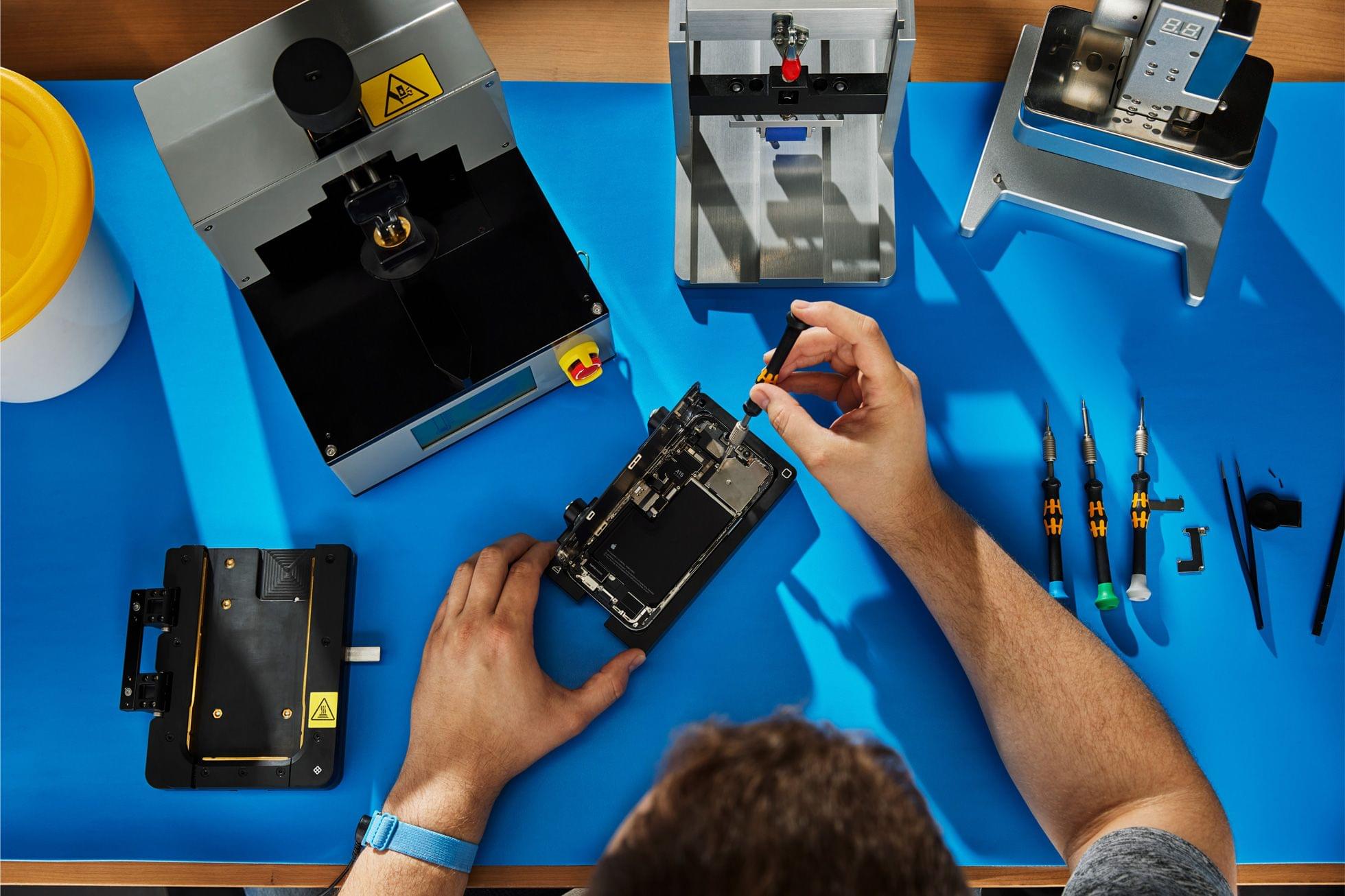
Today, Apple announced that it is extending its repair program to make it easier for repair shops to work with used parts while also limiting the use of lost or stolen devices.

A complaint leveled at Apple by right to repair advocates is that its use of parts pairing limits the use of used parts by repair shops. With its announcement today, Apple says that it has developed a system that satisfies customer privacy, security, and safety while broadening the use of used parts:

The process of confirming whether or not a repair part is genuine and gathering information about the part — often referred to as “pairing” — is critical to preserving the privacy, security, and safety of iPhone. Apple teams have been hard at work over the last two years to enable the reuse of parts such as biometric sensors used for Face ID or Touch ID, and beginning this fall, calibration for genuine Apple parts, new or used, will happen on device after the part is installed. In addition, future iPhone releases will have support for used biometric sensors. And in order to simplify the repair process, customers and service providers will no longer need to provide a device’s serial number when ordering parts from the Self Service Repair Store for repairs not involving replacement of the logic board.

The iPhone’s Activation Lock and Lost Mode are being extended to used parts as a deterrent to thieves pulling apart iPhones for their parts. If a lost or stolen part is detected, Apple says its calibration capabilities will be restricted. Also, Apple says it will expand the Parts and Service History section of its Settings app to include information about whether parts used in an iPhone are new or used.


Automattic Acquires Messaging Integrator Beeper

Mark Gurman, writing for Bloomberg, reports that Beeper, the messaging app that ultimately lost its fight to bring blue bubbles to Android, has been acquired by Automattic, for $125 million according to his sources.

You may recall that Automattic, the company behind WordPress, Tumblr, Day One, Pocket Casts, and other endeavors, acquired a company called Texts last fall. Roughly two months later, Beeper took advantage of a loophole in iMessage’s architecture to offer iMessage natively on Android. After some back and forth, Apple ultimately blocked the technique Beeper was using.

According to Gurman, Automattic is acquiring Beeper’s team of 27 employees, its app, which integrates services like Signal, Facebook Messenger, and Slack, and about 100,000 customers. Of those things, I suspect the people and the customers were most important to Automattic because, as I explained in my story about the company’s purchase of Texts, the two services run on different technology stacks. Regardless of Automattic’s underlying motivations, it’s more apparent than ever that the company is betting that consumer demand, government regulation, and antitrust lawsuits will open up messaging platforms for companies ready to integrate them.

Permalink

AppStories, Episode 378 – Are We Entering a Post-App World?

This week on AppStories, we explore whether we’re experiencing the beginning of the end of apps and consider what might replace them.


Sponsored by:

  • Genius Scan – A scanner in your pocket.
  • Jam – Developer friendly bug reports in 1 click.

Are We Entering a Post-App World?


On AppStories+, we explain why we’ve said goodbye to time tracking.

We deliver AppStories+ to subscribers with bonus content, ad-free, and at a high bitrate early every week.

To learn more about the benefits included with an AppStories+ subscription, visit our Plans page, or read the AppStories+ FAQ.

Read more


Are We Entering a Post-App World?

AppStories+ Deeper into the world of apps

AppStories Episode 378 - Are We Entering a Post-App World?

0:00
35:17

AppStories+ Deeper into the world of apps

This week, Federico and John explore whether we’re experiencing the beginning of the end of apps and consider what might replace them.

Read more


Monument Valley at 10: The Story of the Most Meticulous Puzzle Game Ever Created

Earlier this week, I linked to The Ringer’s profile of Monument Valley on its 10th anniversary, which focused on what’s become of mobile gaming since the game’s release. Today, I have another story about Monument Valley that focuses on the game’s origins and beautiful design.

Jonathan Bell’s article for Wallpaper explores the Monument Valley team’s approach and influences:

The end result had a pixel-perfect axonometric aesthetic that not only went hard on its references to Dutch master artist and printmaker Maurits Cornelis Escher, but also dug deep into classic video game design, going right back to early arcade machines and 8-bit titles. Each of the ten levels is like a piece of fine furniture, built with invisible dovetail joints and inlaid with marquetry, stuffed with secret compartments and little design flourishes. Gray cites the world of theatre and stage design, as well as graphics, as important keystones in the way the levels were constructed. ‘Ken would always talk about flower arranging, and how you frame a silhouette of a level on the screen,’ he says

I love this anecdote about the game’s last minute naming:

The small team was so laser-focused on delivering the best game they could that the name wasn’t even considered until the very end. ‘Right before launch we were going to be interviewed by Edge magazine – the morning of that day we hadn’t picked the name.’ Monument Valley was chosen as being familiar, yet unusual, implying a sense of mystery, grandeur and travel.

Monument Valley is one of the most important indie games ever published on the App Store, so it’s great to see its backstory told in detail by Bell. Be sure to check out the full story, which includes photos of early design sketches of the game’s interface and characters.

Permalink

Apple Amends App Review Guidelines to Permit Game Emulators and Make Other Changes

Yesterday, Apple announced an update to its App Review Guidelines in a brief post on its developer site. The changes to sections 3.1.1(a) and 4.7 of the guidelines, which apply globally to all apps distributed through Apple’s App Store, address three items:

  • game emulators,
  • super apps, and
  • linking to the web from inside music streaming apps to make purchases outside the App Store

Historically, game emulators were forbidden from the App Store. As a result, an emulator like Delta, which can play games released for Nintendo systems through the N64, could only be used on iPhones through a clever combination of developer tools and a Mail plug-in. In contrast, there are plenty of emulators on the Google Play store for Android users to download.

Revised section 4.7 of the App Review guidelines specifically allows retro gaming emulators:

Mini apps, mini games, streaming games, chatbots, plug-ins, and game emulators

Apps may offer certain software that is not embedded in the binary, specifically HTML5 mini apps and mini games, streaming games, chatbots, and plug-ins. Additionally, retro game console emulator apps can offer to download games.

Presumably, this will allow Delta and other emulators onto the App Store, so they can be used to play game files stored on iPhones.

The change to section 4.7 also says that “mini apps and mini games, streaming games, chatbots, and plug-ins” of the sort found in apps like WeChat must be created with HTML 5, a clarification of the language previously used.

Finally, section 3.1.1(a) of the App Review Guidelines allows music streaming services to link out to the web from their apps so customers can make purchases outside the App Store. The change addresses the anti-steering provisions for which Apple was fined $2 billion by the EU, and Apple has said it will appeal.


App Debuts

Riveo I haven’t used Riveo a lot, but it’s an app that I’ve kept my eye on for a long time because it’s part of a growing category of iPhone-first video editing apps that offers a more interesting set of filters and effects than its competitors. This week, version 3 was released with support...


A Pitch for an Apple Controller Pro

Apple’s relationship to gaming is as fascinating as it is frustrating. This week, The Ringer had an excellent piece by Lewis Gordon that traced the decline of premium gaming experiences on iOS over the past decade, declaring the release of Monument Valley in 2014 the high water mark for iPhone gaming. Every time I read...