Graham Spencer

968 posts on MacStories since January 2011

Former MacStories contributor.

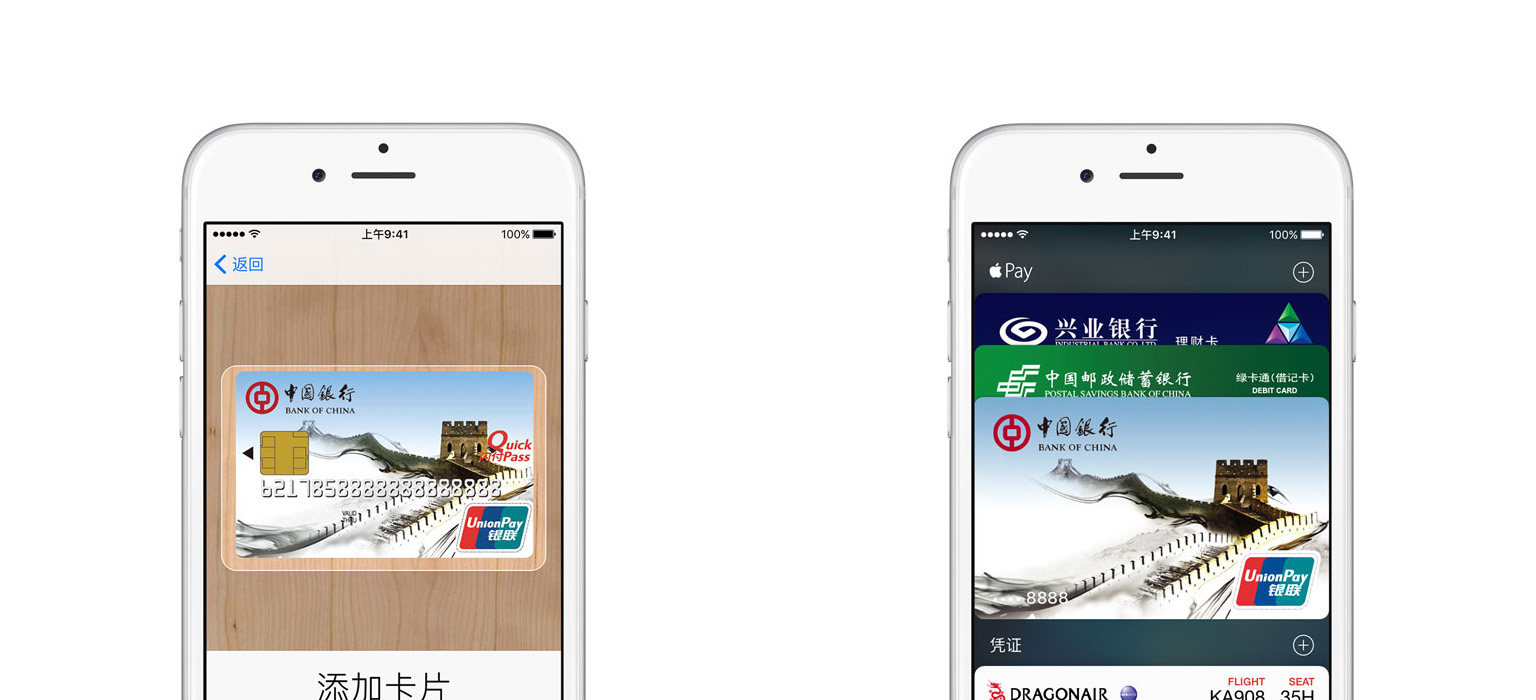
Apple Pay Launches in China

Apple Pay today launched in China, where Apple has partnered with China UnionPay which operates the Chinese inter-bank network (in a role analogous to that of Visa and Mastercard). Jennifer Bailey, vice president of Apple Pay, told Reuters that Apple Pay supports 19 of China’s biggest lenders, which means that 80 percent China’s credit and debit cards are eligible for Apple Pay at launch. Bailey also noted that Apple Pay is currently accepted at about one-third of all locations that accept the supported cards.

Unsurprisingly, Bailey thinks that “China could be our largest Apple Pay market”. That is no surprise, in the other Apple Pay markets there is either a shortage of locations which support Apple Pay (United States) or shortage of financial institutions which support Apple Pay (Australia, Canada). The UK is the only country that has a high level of retail location acceptance and financial institution support – but the population of China far exceeds that of the UK.

Apple’s approach is to not compete with banks and UnionPay, said Bailey.

“China UnionPay and our Apple Pay solution has a huge advantage, given the footprint of China UnionPay,” she said. “Its merchant acceptance network far exceeds what any of the other mobile platforms have today.”

For a full list of the supported financial institutions in China, view this page on Apple’s website. Apple Pay is available in China at retail locations, as well as in iOS apps.

[via MacRumors]
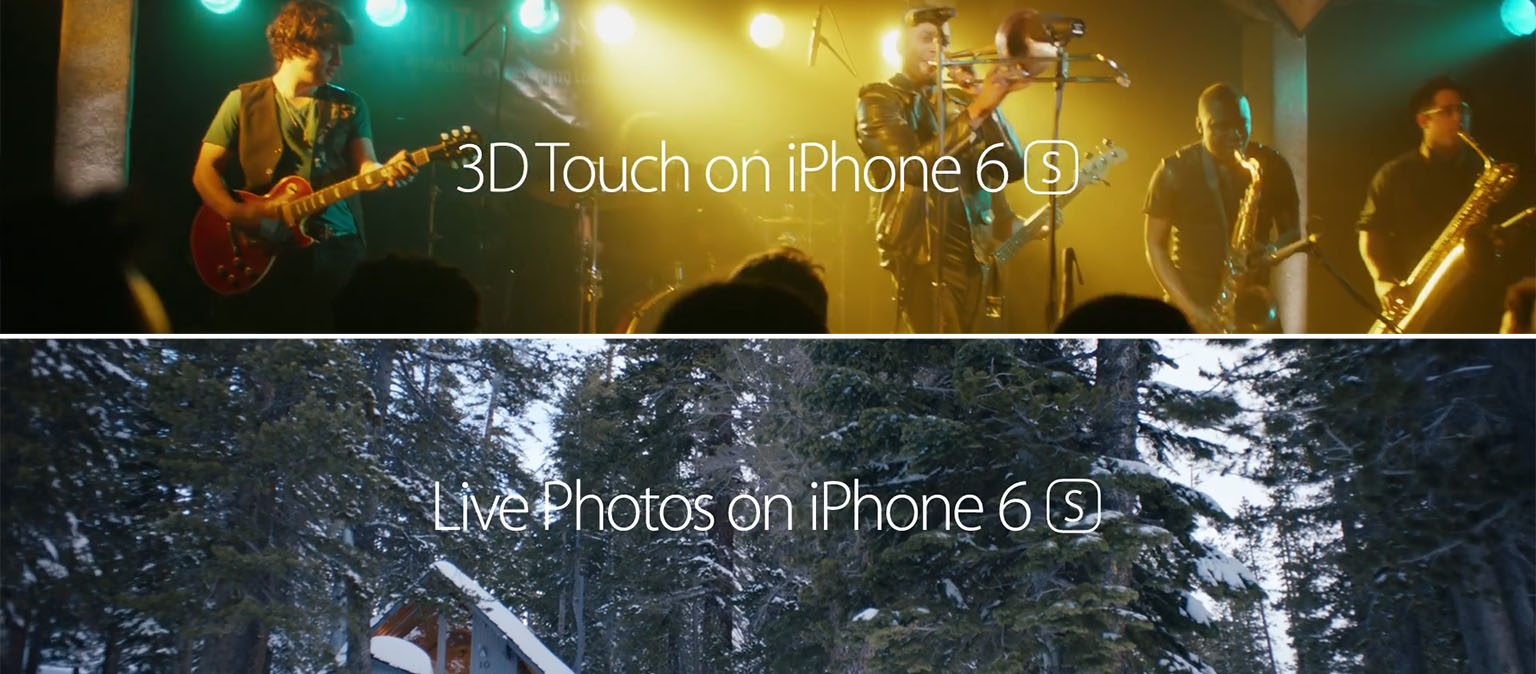

Apple Posts New iPhone 6s Ads Focusing on 3D Touch and Live Photos

Apple yesterday published two new iPhone 6s commercials, this time focusing on two features that are available exclusively on the new iPhone 6s; Live Photos and 3D Touch.

You can watch the videos below break, and we have also included a transcription of the two commercials.

Previous iPhone 6s adverts have included ‘Ridiculously Powerful’, ‘Prince Oseph’, ‘Hey Siri’, ‘Flip a Coin’, ‘Crush’, and ‘The Camera’.

Read more


Tim Cook: Apple Will Oppose Court Order to Circumvent iOS Security Features

A Californian court yesterday ordered Apple to provide the FBI with a custom version of iOS that would circumvent security measures and allow the FBI to unlock the iPhone of one of the San Bernardino shooters.

Just a short time ago, Apple CEO Tim Cook published an open letter on Apple’s website. In his letter to customers, Cook explains why Apple opposes the order and warns of the implications should Apple be forced to do what has been ordered. Cook calls for “public discussion” of the issue and notes that “we want our customers and people around the country to understand what is at stake”.

Specifically, the FBI wants us to make a new version of the iPhone operating system, circumventing several important security features, and install it on an iPhone recovered during the investigation. In the wrong hands, this software — which does not exist today — would have the potential to unlock any iPhone in someone’s physical possession.

The FBI may use different words to describe this tool, but make no mistake: Building a version of iOS that bypasses security in this way would undeniably create a backdoor. And while the government may argue that its use would be limited to this case, there is no way to guarantee such control.

This is Apple at its best. Using its stature to cogently make the case for better public policy – in this case the need for encryption and standing strong against any attempt to undermine it. I would highly encourage you to read Cook’s entire letter.

The government is asking Apple to hack our own users and undermine decades of security advancements that protect our customers — including tens of millions of American citizens — from sophisticated hackers and cybercriminals. The same engineers who built strong encryption into the iPhone to protect our users would, ironically, be ordered to weaken those protections and make our users less safe.

We can find no precedent for an American company being forced to expose its customers to a greater risk of attack. For years, cryptologists and national security experts have been warning against weakening encryption. Doing so would hurt only the well-meaning and law-abiding citizens who rely on companies like Apple to protect their data. Criminals and bad actors will still encrypt, using tools that are readily available to them.

Permalink

Q&A

Question: Hi, I am wondering if you know of any apps that can be used to consolidate food orders. I am a teacher in a school, and some days, we will order takeaway. Normally, what one colleague does is message everyone in a group with a link to the caterer’s menu, and we reply with...


Low Power Mode: Perfect for Vacations

I just returned from a two week vacation1 in which I used my iPhone 6s to take hundreds of photos and videos, find places to eat, and get public transit directions to and from various places in unfamiliar cities. It was also the first time I had no concerns about my iPhone battery running out of juice before I returned to my accommodation at night, and it is all thanks to Low Power Mode.

Read more


Barclays Confirms It Will Support Apple Pay by April

Update: Engadget accidentally miscalculated the expected launch dates, that has now been fixed.

Barclays customers in the United Kingdom finally have a date for when Apple Pay will be supported by their bank, reports Matt Brian at Engadget.

After first declining to comment at launch, the bank quickly changed its mind and voiced support for the service. It then made customers wait months before offering an “early 2016” launch date at the end of last year. Following another few months of silence and hundreds of irate customers tweets, Barclays CEO Ashok Vaswani has confirmed that Apple Pay support will roll out by April at the very latest.

In an emailed statement to Barclays customer Oli Foster-Burnell, Vaswani said the service will go live “within the next 60 to 75 days.” Depending on the company’s plans, card support could be enabled between March 12th and March 27th. That’s stretching the “early 2016” launch touted last year, but it may be enough to stop some disappointed Barclays customers from switching to another bank.

Barclays will be the last of the big four UK banks to support Apple Pay. By way of a quick update, Apple Pay is now supported by 966 financial institutions in the US and 15 in the UK (not including Barclays). Apple Pay also launched in Australia and Canada – but only for those (limited) few who have a credit or debit card issued by American Express. American Express customers in Spain, Singapore and Hong Kong will also get Apple Pay sometime this year. But in a more substantial rollout, Apple Pay is set to launch in China early this year as a result of a partnership with China UnionPay. Unlike the American Express only roll outs, Apple Pay will launch in China with the support of 15 of China’s leading banks.

Permalink

Q&A

Question: Federico have you experienced any issues using the Pencil after your iOS 9.3 upgrade on your Pro, as this was indicated on the recent iMore podcast? It appears some people are, and I would appreciate your experience please? (Barry)

It appears that the first beta of iOS 9.3 has changed the behavior of...


Google Forms

{ .icon } This week’s favorite is Google Forms – somewhat of an odd pick because unlike most of our other MacStories Favorites, it currently does not have an iOS or Mac app. But that doesn’t matter because it works fine in a web browser on your Mac or iOS device. Part of Google’s suite...


Google Paid Apple $1 Billion to Keep Search Bar on iPhone

Joel Rosenblatt, reporting for Bloomberg:

Google Inc. is paying Apple Inc. a hefty fee to keep its search bar on the iPhone.

Apple received $1 billion from its rival in 2014, according to a transcript of court proceedings from Oracle Corp.’s copyright lawsuit against Google. The search engine giant has an agreement with Apple that gives the iPhone maker a percentage of the revenue Google generates through the Apple device, an attorney for Oracle said at a Jan. 14 hearing in federal court.

It’s not surprising at all that Google is paying Apple for the benefit of being the default search engine on iOS, but this is the first time it has been confirmed, and a dollar figure provided. But it is also an awkward revelation for Apple, which has recently started to more aggressively position itself as the company that protects its user’s privacy. Remember Tim Cook’s note on “Apple’s commitment to your privacy”?

A few years ago, users of Internet services began to realize that when an online service is free, you’re not the customer. You’re the product. But at Apple, we believe a great customer experience shouldn’t come at the expense of your privacy.

Our business model is very straightforward: We sell great products. We don’t build a profile based on your email content or web browsing habits to sell to advertisers. We don’t “monetize” the information you store on your iPhone or in iCloud. And we don’t read your email or your messages to get information to market to you. Our software and services are designed to make our devices better. Plain and simple.

Apple’s subtle (or perhaps not so subtle) privacy dig at Google looks a bit absurd and hypocritical in light of this court transcript. Apple may not build a profile on its users to sell to advertisers, but it lets Google do that (by default) and then profits from Google’s actions.

Unsurprisingly, Google and Apple weren’t happy about the disclosure by an Oracle attorney and sought to seal and redact the transcript. As Bloomberg reports;

The specific financial terms of Google’s agreement with Apple are highly sensitive to both Google and Apple,” Google said in its Jan. 20 filing. “Both Apple and Google have always treated this information as extremely confidential.”

The transcript vanished without a trace from electronic court records at about 3 p.m. Pacific standard time with no indication that the court ruled on Google’s request to seal it.

Permalink