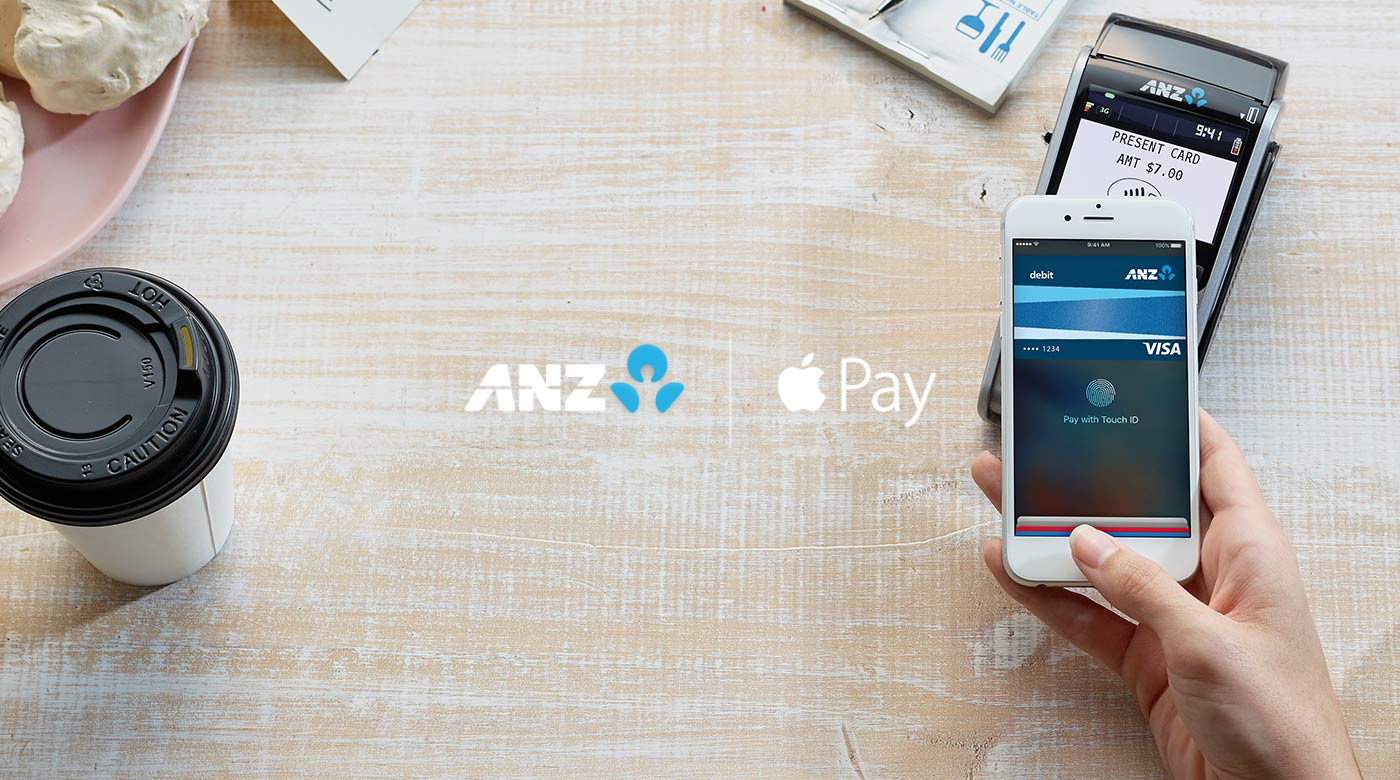
ANZ has become the first Australian bank to support Apple Pay, turning on support today for most customers with ANZ Visa credit or debit card and ANZ American Express cards. Although Apple Pay technically launched in Australia in November 2015, until today support was extremely limited to just those with an American Express issued card (a similar situation exists in Canada and Singapore).
ANZ is one of the “big four banks” in Australia, and as ANZ gleefully (I assume) point out in their Apple Pay terms and conditions, the other three do not support Apple Pay:
Apple Pay is not currently available at NAB, CommBank or Westpac.
The full list of supported ANZ cards are listed here.
It is interesting to note that most of ANZ Visa cards are supported, but no ANZ MasterCard cards are supported. Interestingly, last week’s launch of Apple Pay in Singapore revealed that Visa support for Apple Pay in Singapore is coming soon to three of their domestic banks.
However, Apple’s Australian website does note that MasterCard support is “coming soon”.
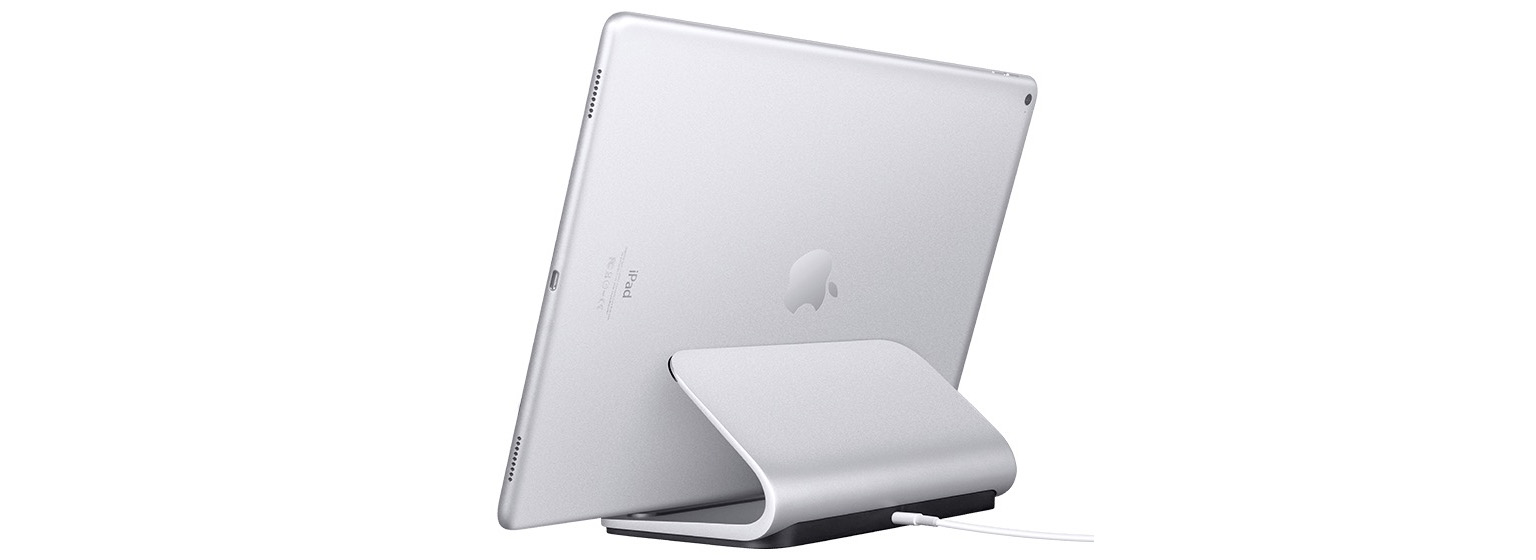
Logitech have today introduced a new charging dock for the iPad Pro. The Logi Base is rather unique in that it uses the iPad Pro’s Smart Connector to charge the device. To date, the Smart Connector has only been used by Apple’s Smart Keyboard and Logitech’s keyboard case.
The minimalist looking dock will work with both the 9.7” and 12.9” iPad Pro, with magnets on the Logi Base helping guide the iPad Pro into the correct position for charging via the Smart Connector. Using the 12W power adapter and no apps running, Logitech advises that it will take 7 hours to charge the iPad Pro. The stand places the iPad Pro at a 70-degree viewing angle, and it is compatible with the iPad Pro Silicone cases from Apple.
The Logi Base is available to order from today for $99 from Logitech’s website. If you’re looking for more information, Chance Miller at 9to5Mac has a review of the Logi Base.
I’ve just been using my iPad Pro Smart Keyboard as the “dock” for my iPad, but I’m really tempted by the Logi Base. It looks really elegant and just being able to drop the iPad down onto the dock, without fiddling with a lightning cable, would be great. But the lengthy charge time and hefty price are dampening my enthusiasm.
[via The Verge, 9to5Mac]
Question: I switched to iOS from Android last September but I feel like I still just don’t understand the App Store’s refund policy. I don’t feel incentivized to try out new apps because it doesn’t seem like Apple has any kind of standard protection for if you simply don’t like an app you just purchased....
[[graham]] I’ve been a big fan of the Quartz app, ever since it launched earlier this year. The Quartz app is very different to the traditional news app or website which likely has headlines and a brief summary of the news arranged in a list. Instead, the Quartz app interface quite literally looks like a...
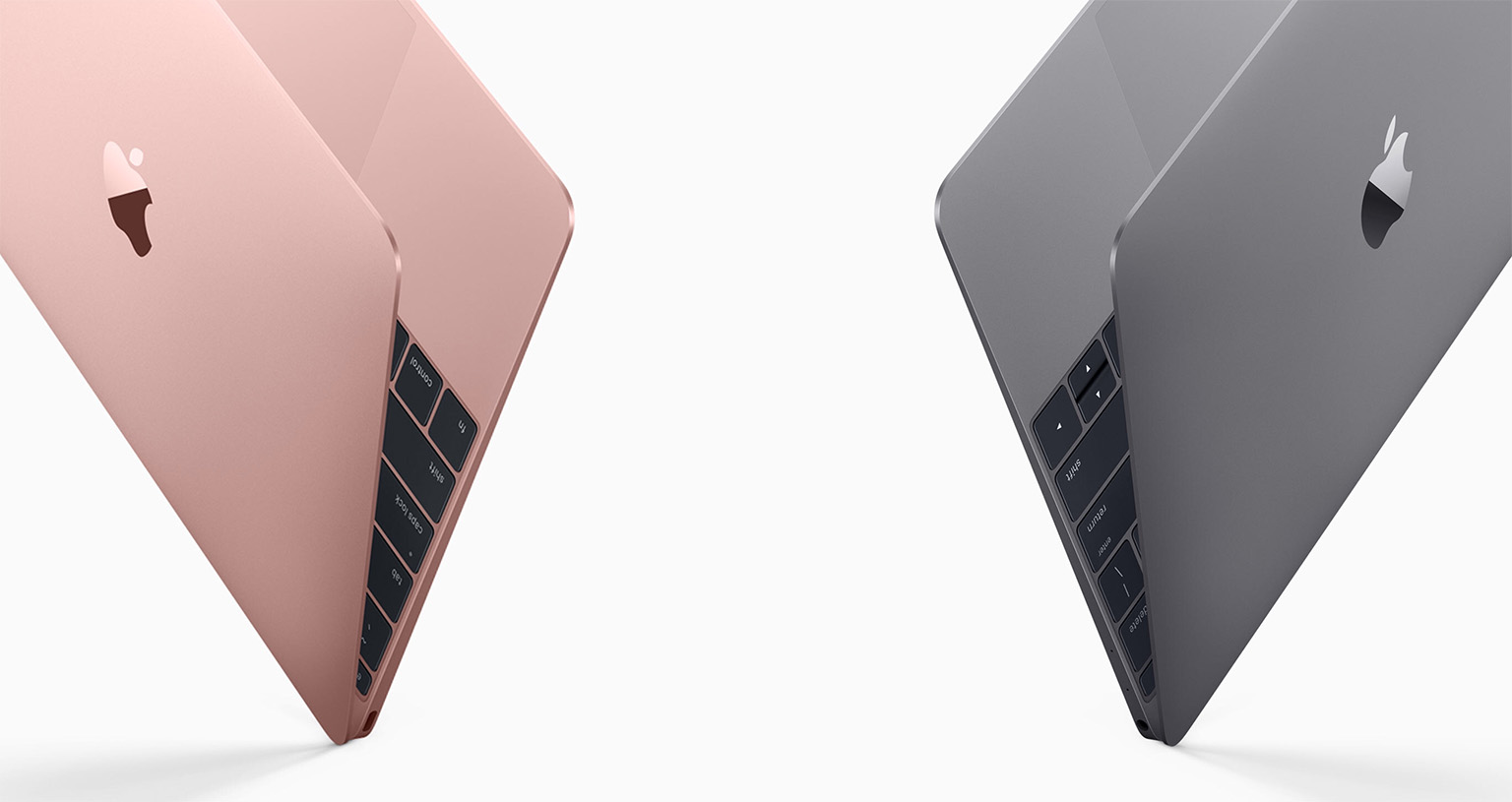
Apple has today updated its MacBook line with faster processors, an extra hour of battery life and the option to pick a Rose Gold finish. The MacBook now comes with the sixth-generation dual-core Intel Core M processors that go up to 1.3GHz, with Turbo Boost speeds up to 3.1GHz. It also now comes with faster PCIe-based flash storage and faster 1866MHz memory.
“MacBook is the thinnest and lightest Mac we have ever made and it’s our vision for the future of the notebook,” said Philip Schiller, Apple’s senior vice president of Worldwide Marketing. “Customers are going to love this update to MacBook, with the latest processors, faster graphics, faster flash storage, longer battery life and a beautiful rose gold finish.”
Graphics performance has also been improved by up to 25 percent on the refreshed MacBooks as a result of the inclusion of an Intel HD Graphics 515 card. With the improved battery life, the refreshed MacBook should last up to 10 hours for web browsing and up to 11 hours of movie playback.
US Prices for the MacBook are unchanged and start at $1,299 for a MacBook with a 1.1 GHz Intel Core m3 processor, 8GB of memory and 256GB of flash storage.
The MacBook Air has also received a minor refresh, with 8GB of memory now standard across all configurations of the 13-inch MacBook Air.
You can read Apple’s full press release here.
Juli Clover, writing for MacRumors, reports that Apple Pay has today launched in Singapore:
Apple today updated its website and its Apple Pay support document to note the expansion of the Apple Pay payment service to Singapore. With the addition of Singapore, Apple Pay is now available in six countries, including Canada, China, Australia, the United Kingdom, and the United States.
Apple Pay is available in Singapore through a partnership with American Express, first announced by Apple in October of 2015. By partnering with American Express, Apple has brought Apple Pay to Singapore, Canada, and Australia and will expand it to Hong Kong and Spain later this year.
Unfortunately, Apple’s partnership with American Express is once again limited to those who have a credit card issued by American Express for now. Those with an American Express card issued by their local bank will not be able to use Apple Pay – it is the same situation to Apple Pay in Australia and Canada. However, things may soon change, as Apple has listed on the Singaporean Apple Pay website that Visa support is “coming soon”, as well as support for DBS, UOB and Standard Chartered.
Alongside yesterday’s WWDC 2016 announcement, Apple also added a new webpage providing tips and insights from other developers.
The App Store makes it simple for users around the world to discover, download and enjoy your apps. Grow your business with resources designed to help you create great apps and reach more users.
The featured developers and topics are Seriously (focusing on building a brand), Grailr (bringing CARROT Weather to Apple Watch), Evernote (localising its app for Japan), and Smule (growing a thriving community of loyal users).
[[graham]] Here are some of the shortcuts and gestures for the Apple TV’s Siri Remote: Press the Home Button Twice: Activate the app switcher UI to quickly go back to a previously open app. Swipe up on an app to force quit it. Press Menu when on the Home Screen: This will instantly launch the...
[[graham]] If you missed the news last week, you can now download all 50 issues of what we’re calling the Classic MacStories Weekly – those email newsletters which we sent prior to the launch of Club MacStories. Simply go to your Memberful account page, go to Downloads and you’ll be able to download an archive...