This Week's Sponsor:

Goodnotes

It gives architects the freedom of a pencil and paper, with every project on one device


Posts tagged with "TestFlight"

TestFlight Fixes and Wishes

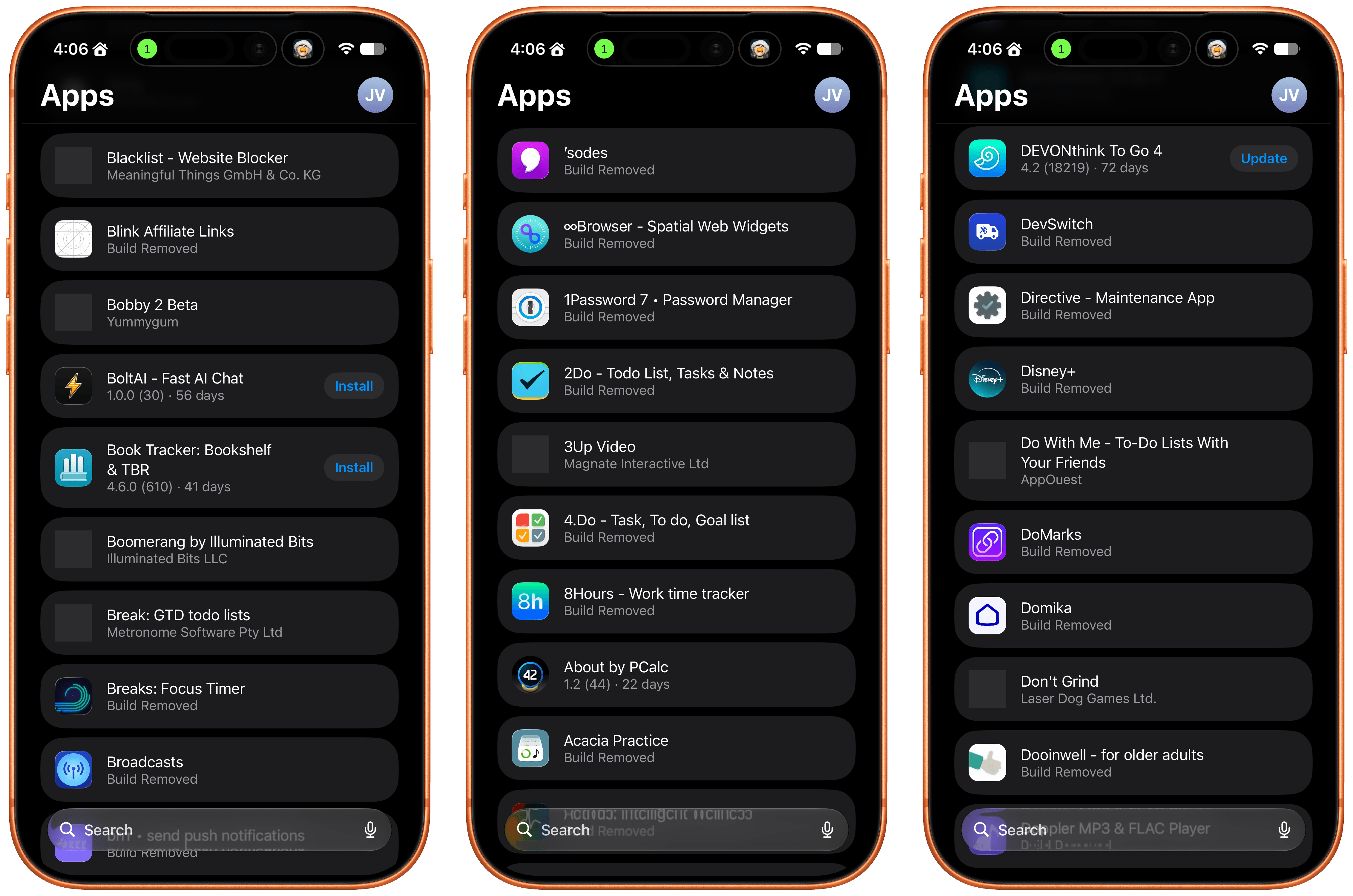
Just as I was heading into the final stretch of review season, TestFlight was updated to reverse an update I wrote about in July. That update added search, which was one of my longstanding wishes for TestFlight. However, for some users, the update also changed the sorting of betas from reverse chronological order to alphabetical, including active betas alongside expired ones. As someone who reviews a lot of apps, that made TestFlight barely usable.

With the latest update, I’m happy to report that the sorting order has been restored to reverse chronological order. The most recently updated betas appear at the top of the list, and when you want to find something older, search is a great option. Returning to reverse chronological order may seem like a small thing, but it’s made a world of difference in keeping up with the apps I test.

Search was near the top of my list of TestFlight wishes for years, and its addition made a meaningful difference to the app’s usability. But I’ve had a lot of TestFlight wishes over the years that are scattered across multiple articles, so I thought I’d share what else I’d like Apple to tackle with TestFlight:

  • Performance. I test a lot of apps, which slows TestFlight down on every Apple platform. The issue isn’t as severe today as it was when I wrote about it in 2023, but the slowness is still bad enough to make the app hard to use. Whatever the issue is, I’d love to see the list loading time reduced and scrolling through a list of apps become as smooth as it is in the App Store.
  • Add filtering, sorting, and folders. Search is a step in the right direction, but allow me to sort by date, developer, category, and other metadata. I’d also like to be able to filter by installation status, so I can just see the betas I’ve installed or haven’t installed yet. User-defined folders for organization would be a nice bonus too.
  • Hide inactive and expired betas. I’ve thought about TestFlight’s expired betas section a lot and can’t think of a single reason it exists from a tester’s perspective. Let me hide or exclude expired and withdrawn betas.
  • Fix TestFlight emails and automatic updates. TestFlight email notifications can only be turned on or off on a per-beta basis. Adding a global switch would help a lot with managing these messages. Also, automatic updates of betas have never worked on my iPhone, and I’ve talked to others who have the same problem.
  • Restore usable betas after a device migration. Apple’s migration from one device to another has gotten much better over the years, but it still does not migrate TestFlight betas, leaving me with a bunch of broken apps on my iPhone every fall.
  • Indicate when a beta has been released on the App Store. This strikes me as easy to request, though I’m sure is difficult to implement, but I’d love to know when a beta has been superseded by an App Store version, so I can grab the stable release if I want and know I can publish a review about an app without having to check the App Store repeatedly myself.

The bottom line is that while TestFlight is once again usable, it could be much better. I recognize that TestFlight isn’t an app used by most people, but like Apple’s own OS beta testing program, TestFlight betas are an important part of developers’ workflow. They provide QA feedback and a promotional channel that the friction encountered by TestFlight users undermines.

I’m glad TestFlight continues to get meaningful updates. I just hope it gets more attention going forward.

TestFlight: One Step Forward, Two Steps Back

I test a lot of apps, so I have strong opinions about TestFlight. However I usually keep those opinions to myself because despite the fact that it’s critical to my work, TestFlight wasn’t built for app reviewers. Most people haven’t accumulated hundreds of active and inactive betas in the app like I have, and for them, TestFlight is probably fine. However, for me, TestFlight is a constant source of frustration.

So, you can imagine my excitement when I read a post by Zac Hall at 9to5Mac that a search field had been added to TestFlight. “Finally,” I thought to myself. I stopped what I was doing and updated the app immediately. After all, search was my number one request for TestFlight back in 2024.

An apostrophe gets you the top spot in Apple's new alphabetical TestFlight list.

An apostrophe gets you the top spot in Apple’s new alphabetical TestFlight list.

That 2024 wishlist was published in the wake of a bad stretch the app had beginning in 2023. At the time, TestFlight was plagued by laggy performance if you were on a lot of betas. To Apple’s credit, they fixed the performance issues, though the issues have begun to creep back into recent releases. Still, the past couple of years as a TestFlight user have been fine despite all the ways the app could be made better for users.

When the TestFlight update finished installing, I eagerly opened it on my Mac and then my iPhone. Sure enough, there was the search field at long last. Lists practically beg for a search field, and finally someone at Apple added one, and to whoever built that feature, a huge thanks from me and the MacStories team.

Unfortunately, this story comes with one very big “but.” Previously, TestFlight betas were listed in reverse chronological order, which I liked. The newer beta releases were at the top of the list and the older ones that were on the verge of being replaced by an App Store release were at the bottom, along with expired betas, a list that I never really understood the purpose of.

Well, those expired betas are now scattered among the active TestFlight betas in an alphabetical list and it seems that the expired beta list has been expanded to include every single beta I’ve ever been a part of. I did a rough count and for me that’s nearly 800 app listings. As you can imagine, the active betas in that list are few and far between. Search helps, but scrolling is no longer an option.

The live betas are few and far between when mixed with betas gone by.

The live betas are few and far between when mixed with betas gone by.

I get that this is a very “me and a few of my friends” problem, and search does help, but it’s not enough. The active to inactive beta ratio is so bad that few iPhone screens include more than two or three active betas. So here’s my proposal:

  • Add a toggle in TestFlight’s settings that hides inactive betas.

That’s it, that would make all the difference in the world. I’d love to have the reverse chronological ordering back, a performance tune-up, and the other things I wished for back in 2024, but I’ll live with hiding all the noise from my beta list.


A TestFlight Update: Patched, But Still Broken

Just over a year ago, I wrote about the poor performance of TestFlight, the app that App Store developers rely on for beta testing their own apps. Today, thanks to a couple rounds of Feedback submissions, TestFlight is working better than before, but it’s not fixed. With WWDC around the corner, I thought I’d provide a quick update and share a few suggestions for fixes and features I’d like to see Apple implement.

One of the benefits of writing about TestFlight last year was that it became clear to me that, although my use of the app was unique, I wasn’t alone. Other writers who test a lot of apps and super fans who love trying the latest versions of their favorite apps got in touch sharing similar experiences, which convinced me that the issue was related to the number of betas I had in TestFlight. My experience was one of the worst, but with others in a similar boat, I took the time to file a Feedback report to see if there was anything that could be done to improve TestFlight.

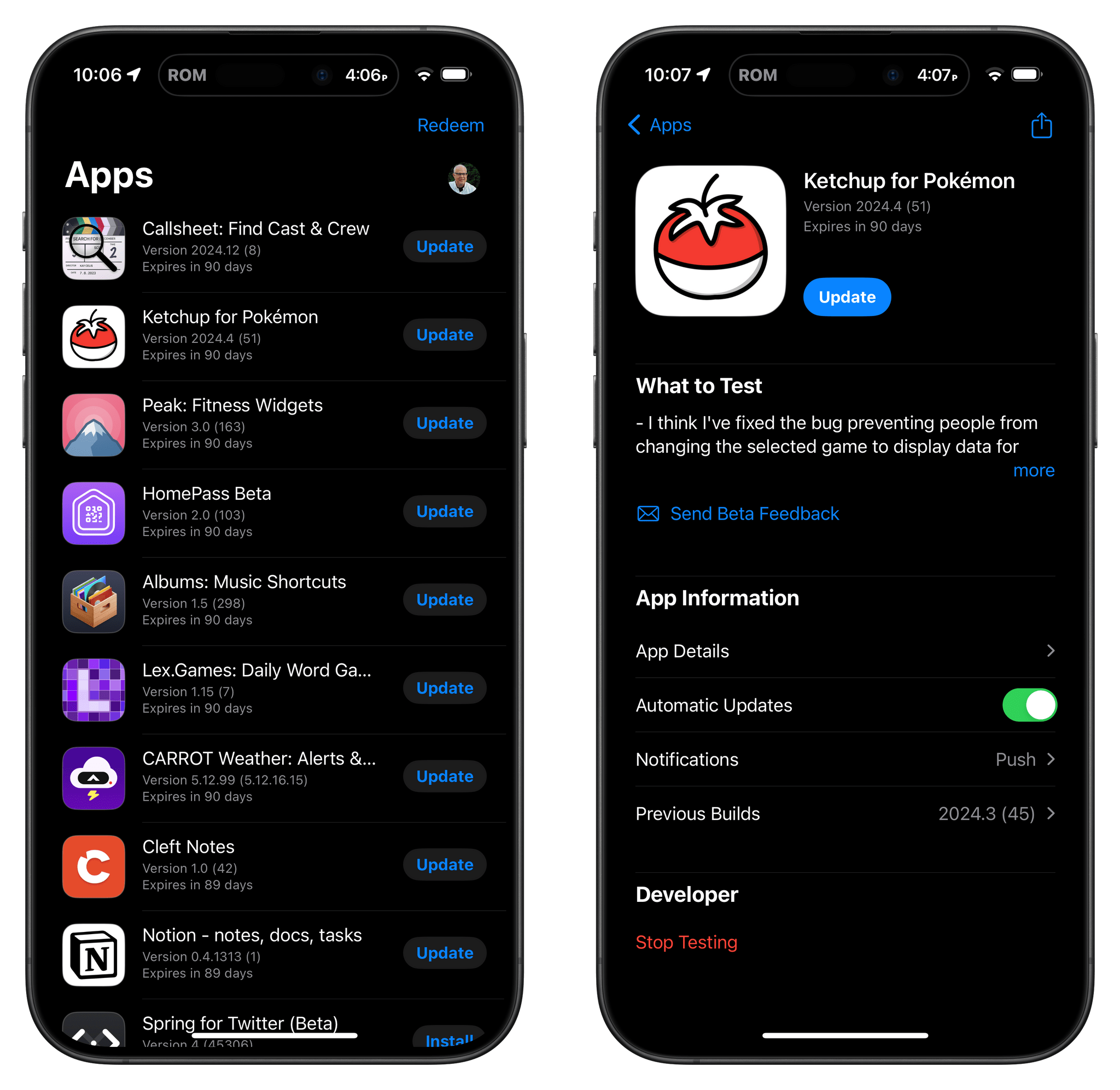
An example of a beta app set to automatically update. But at least on my iPhone, none do.

An example of a beta app set to automatically update. But at least on my iPhone, none do.

That initial Feedback attempt ultimately went nowhere. Then, I got busy and resigned myself to getting by as best I could. However, getting by was no longer an option as the Vision Pro’s release date approached. That added a significant number of new betas to my TestFlight collection. By March, the Mac version of TestFlight had stopped working entirely. With apps lined up in my review queue, that posed a problem I couldn’t work around.

I removed inactive betas using my iPhone and removed myself from testing as many active betas as I could bear. However, nothing worked, so I filed another report with the black box known as Feedback. Fortunately, this time, it worked. After some back-and-forth sharing logs and screen recordings of TestFlight failing to load any content, I received a message that something had been adjusted on Apple’s end to shake things loose. Just like that, TestFlight was working again, although sluggishly.

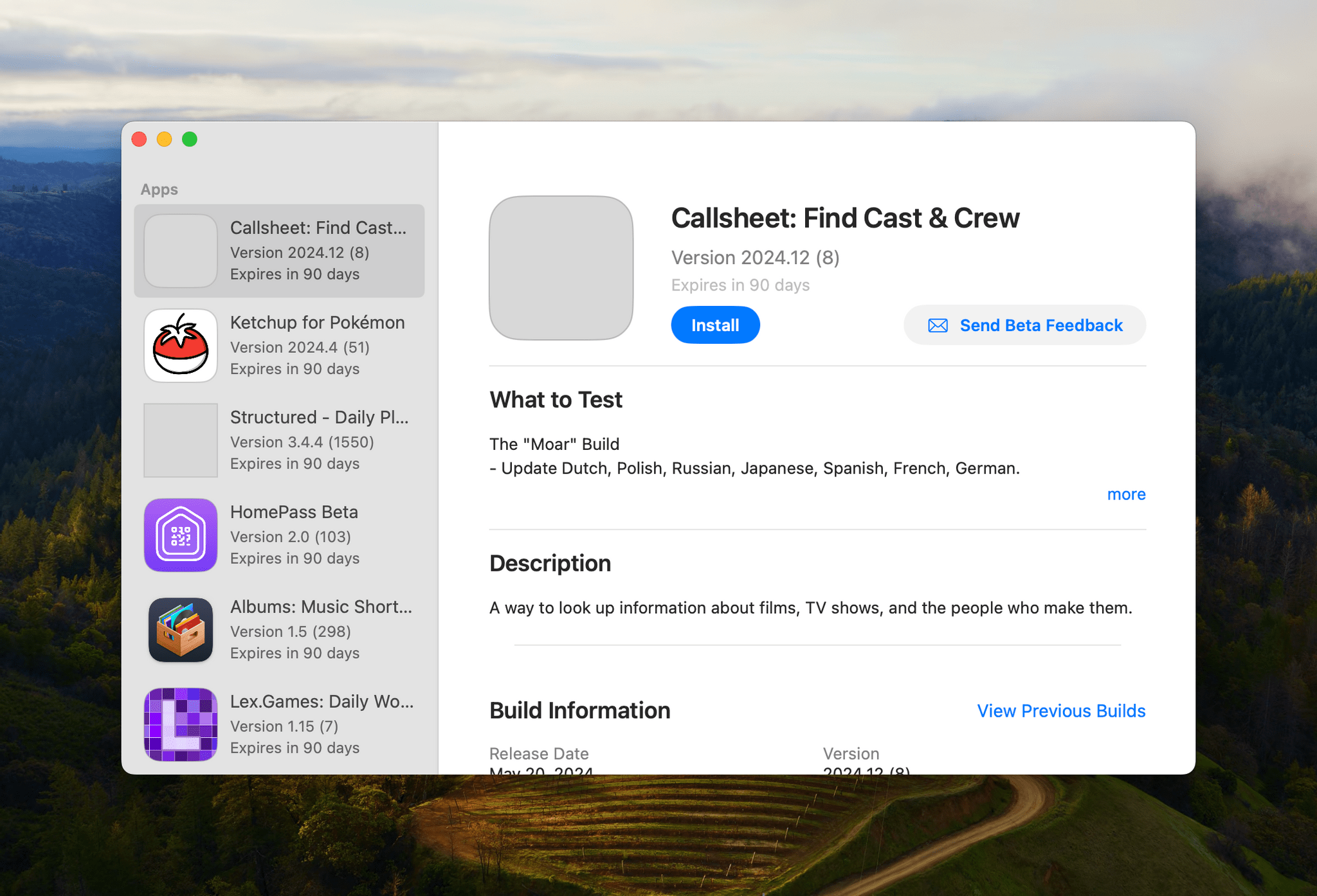
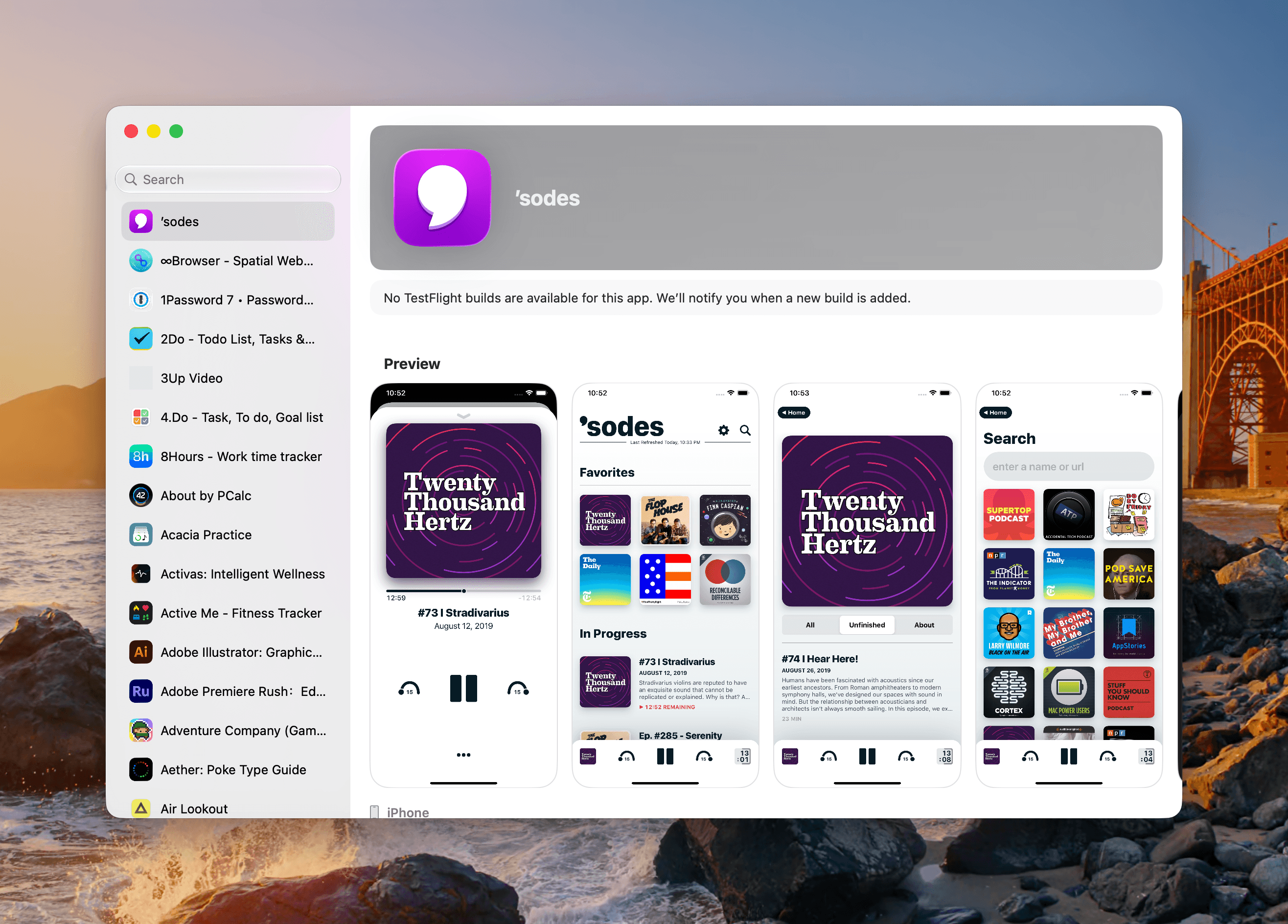
TestFlight once again loads betas on my Mac, but not always with icons.

TestFlight once again loads betas on my Mac, but not always with icons.

My immediate problem is fixed, and I’ve been managing old betas more carefully to avoid a repeat of what happened on the Mac before. However, it’s clear that TestFlight needs more than just the quick fix that solved the worst of my problems. First of all, although TestFlight works again on my Mac, it’s slow to load on all OSes and clearly in need of work to allow it to handle larger beta collections more gracefully. And there’s a lot of other low-hanging fruit that would make managing large beta collections better on every OS, including:

  • the addition of a search field to make it easier to quickly locate a particular app
  • sorting by multiple criteria like developer, app name, and app category
  • filtering to allow users to only display installed or uninstalled betas
  • a single toggle in the Settings app to turn off all existing and future email notifications of new beta releases
  • attention to the automatic installation of beta updates, which has never worked consistently for me
  • a versioning system that allows users to see whether the App Store version of an app has caught up to its beta releases
  • automatic installation of betas after an OS update or ‘factory restore’ because currently, those apps’ icons are installed, but they are not useable until they’re manually re-installed from TestFlight one-by-one

It’s time for Apple to spend some time updating TestFlight beyond the band-aid fix that got it working again for me. It’s been a full decade since Apple acquired TestFlight. Today, the app is crucial to iOS, iPadOS, watchOS, and visionOS development, and while it’s not as critical to macOS development, it’s used more often than not by Mac developers, too. Apple has gone to great lengths to explain the benefits of its developer program to justify its App Store commissions generally and the Core Technology Fee in the EU specifically. TestFlight is just one piece of that program, but it’s an important one that has been neglected for too long and no longer squares with the company’s professed commitment to developers.


TestFlight’s Inability to Handle Large Beta Collections Needs to Be Fixed

I’ve been thinking about app scalability a lot lately – most recently in the context of TestFlight, which I find is incredibly frustrating to use, at best, and, on the Mac, often unusable. This isn’t a new problem for me, but I haven’t mentioned it much in the past because I’ve suspected that my experience is colored by the fact that I’m an outlier. But, outlier or not, the app deserves more attention than it’s been given.

Read more


TestFlight for Mac Has Finally Arrived

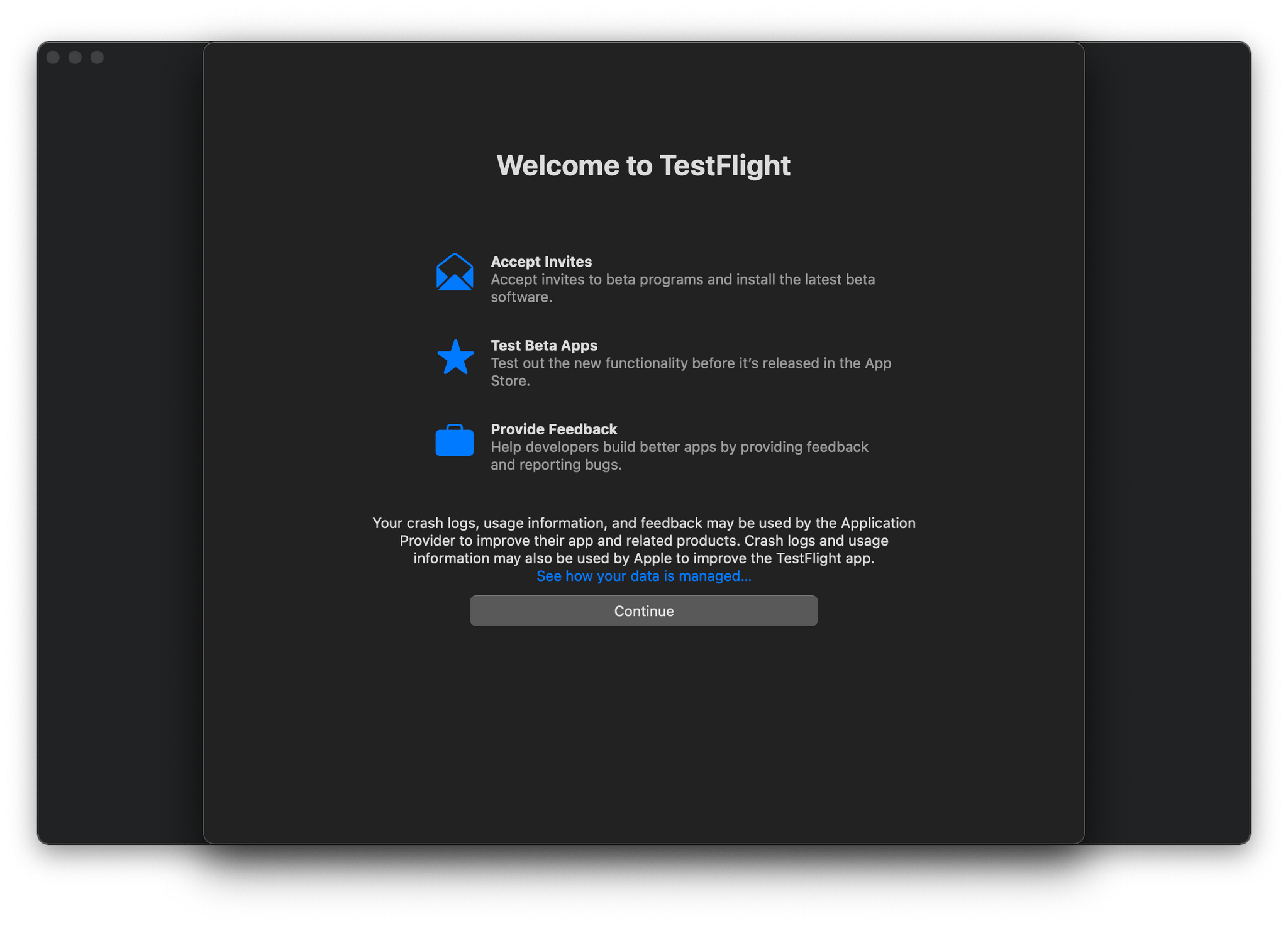
I’ve waited seemingly forever for TestFlight for Mac, so I’m pleased to report that a beta is finally available. The app was released late yesterday, so first thing this morning, I downloaded it and started testing.

Here’s what Apple’s developer news site has to say about its beta for testing betas:

Use the beta version of TestFlight for Mac to test your Mac apps. You can invite registered Apple developers to download this beta version and use it to test your apps on macOS Monterey beta 5. We’d also appreciate your feedback on TestFlight for Mac, which you can provide through Feedback Assistant.

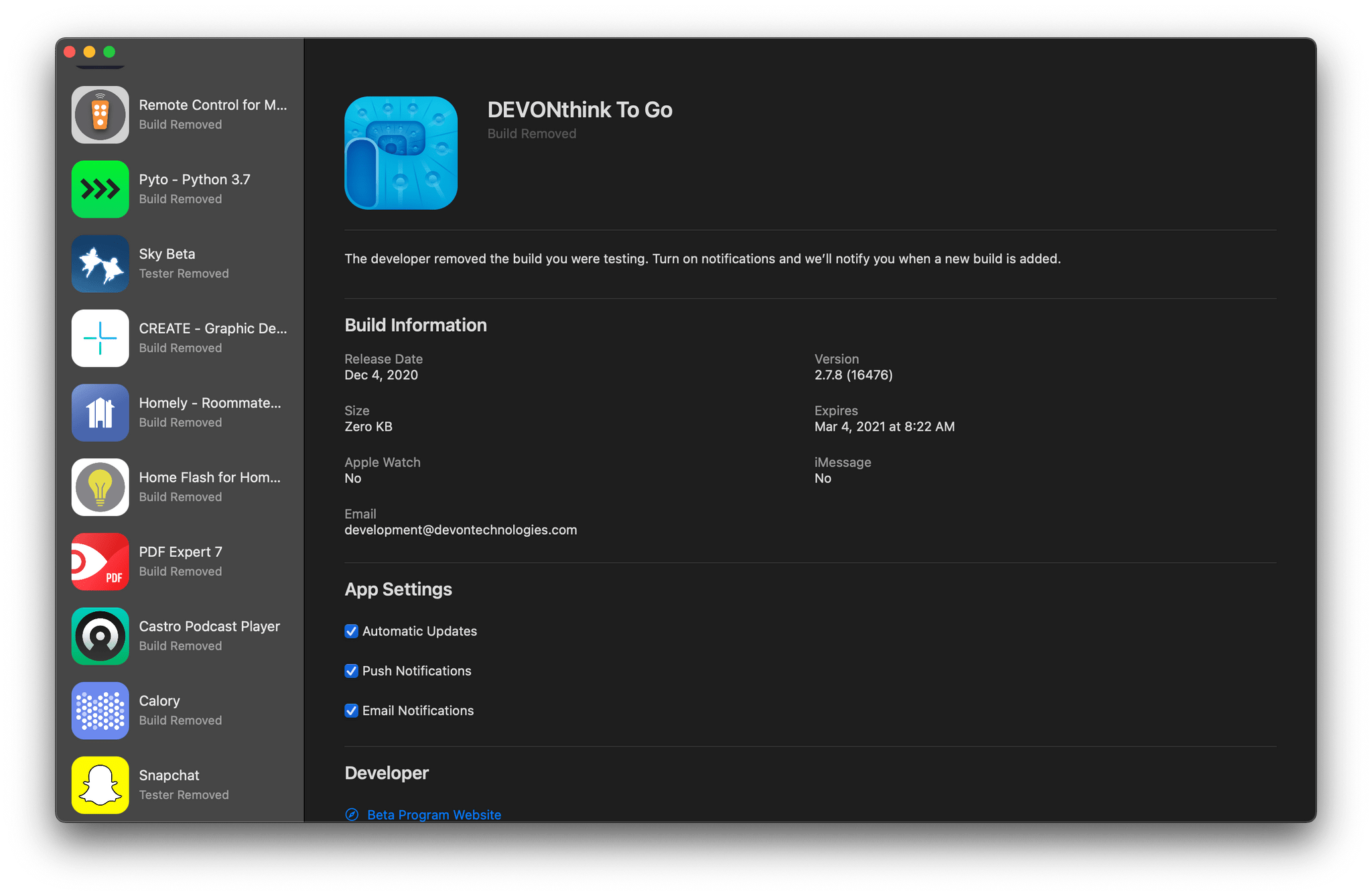
I haven’t had a lot of time to spend with TestFlight for Mac yet, but I was pleasantly surprised to find that it was already populated with a long list of betas. I downloaded a couple of iPhone and iPad apps that are compatible with Apple’s M1 Macs, and the process was as simple and straightforward as using TestFlight on iOS or iPadOS. That said, this is still clearly a beta. The sidebar lists every single TestFlight beta in which I’ve ever been enrolled regardless of whether it has expired or is compatible with my Mac. Also, there’s no way to sort or search through betas. Instead, the order of the sidebar list appears to be random.

Still, this is an excellent beta 1. The app works for installing betas and provides a quick and easy way to send feedback to developers. I expect TestFlight for Mac to be adopted quickly because it’s a much better way to manage a large group of testers and to distribute builds to reviewers.

If you have a developer account, you can download TestFlight for Mac from the Applications section of the Beta Software Downloads page.


Apple Add Automatic Updates in TestFlight 3.0→

Chance Miller at 9to5Mac:

The addition of automatic updates in TestFlight is a notable improvement. This means that when you’re beta testing an application, the app will automatically update whenever a new version is released by the developer. Previously, you’d have to go to the TestFlight app and manually install updates.

For developers, this also means that it will be easier to ensure that all beta users are using the most up to date version of the app.

If you’ve ever been on a TestFlight beta, you know how great this feature addition is. Personally I fell out of the habit of checking for app updates once I enabled automatic updates in the App Store, so I’m quite excited that this change will help me stay up to date on the TestFlight betas that I’m running.

TestFlight is an App Store app, so make sure your version has been updated to 3.0 from there. Once it has been, launch the app and accept or decline the automatic updates dialog that should pop up on launch.

Permalink