

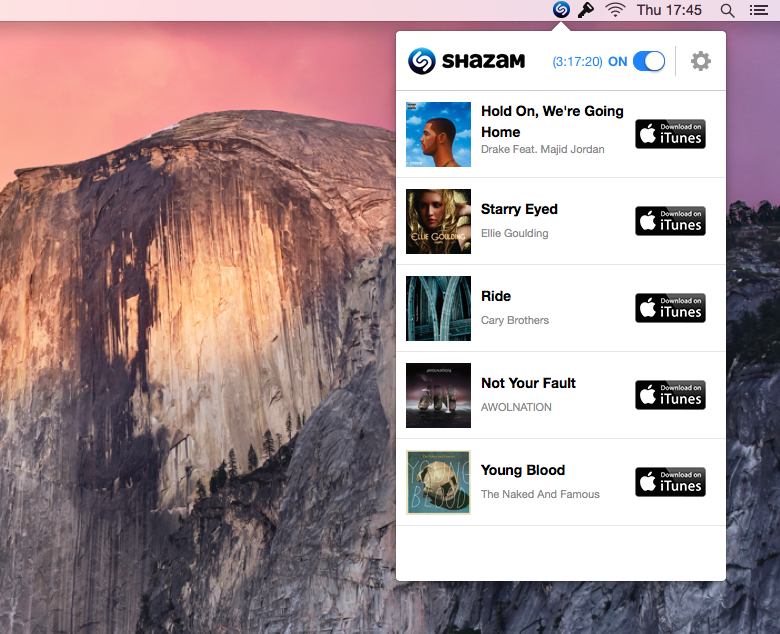
I was surprised to hear last week that Shazam, makers of the popular music recognition app that’s going to be integrated with Siri in iOS 8, had launched a desktop app for OS X, available for free on the Mac App Store. I always associated Shazam with the portability and instant-on nature of the iPhone: you hear a song playing, you want to know what it is, you pull out Shazam and let it work its magic. That’s why I’ve never managed to get used to Shazam on the iPad and why I seldom use all the features that the company has tacked onto the app over the years: fundamentally, I see Shazam as the music recognition app for iPhone, and that’s it.
Shazam for Mac: Background Song Recognition in the Menu Bar
Core Intuition on Indie Development→
I particularly enjoyed this episode of Core Intuition about the App Store, being an indie developer, and building customer expectations over time.
Manton and Daniel have been building software, iterating, and experimenting for years, and they understand that, like any other business, instant success is welcome but rare, while stable growth takes time, constant effort, and hard work.
Highly recommended episode.
Apple Claims to Support 629,000 European Jobs, European Developers Take 32.5% of App Store Revenues
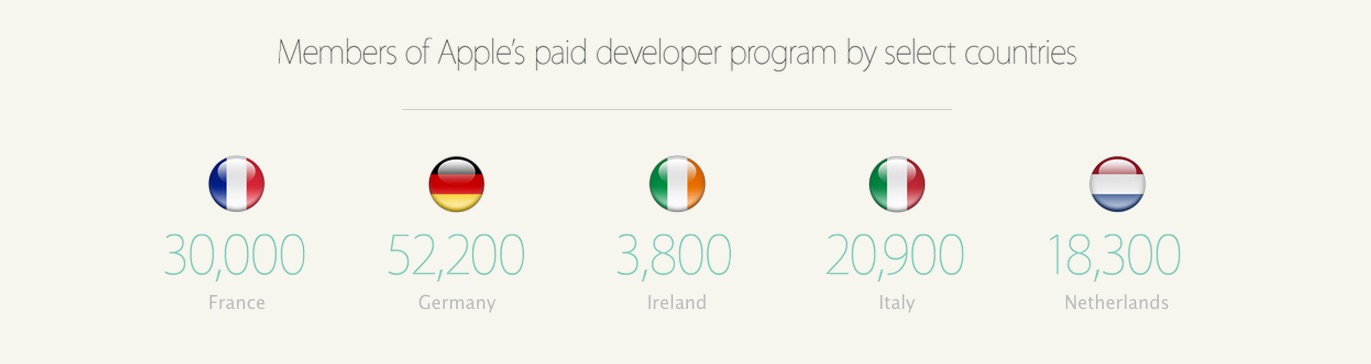
As first noticed by 9to5 Mac, Apple has published a webpage dedicated to promoting the impact that they have had in creating or supporting 629,000 jobs in Europe (defined as EU member countries plus Norway and Switzerland). They break the numbers down a bit more, attributing 497,000 to the App Store, 132,000 to jobs directly or indirectly supported by Apple, 116,000 jobs created at other companies as a result of Apple’s growth, and 16,000 Apple employees.
Throughout our history, we have created entirely new products - and entirely new industries - by focusing on innovation. This has resulted in nearly 630,000 European jobs at Apple and at developers and businesses supported by Apple. In addition, the App Store has created hundreds of thousands of jobs that previously did not exist in the European economy, enabling developers to launch new companies and earn $6.5 billion from App Store sales worldwide.
Interestingly, they reveal that $6.5 billion in App Store revenues has been paid to European developers, given that $20 billion has been paid to developers in total, this means the share of App Store revenue taken by European developers is 32.5%. Apple has previously revealed US developers have received $9 billion, but that figure hasn’t been updated since late last year, so can’t be used to calculate an accurate share of revenues taken by US developers.
Share of App Store Revenues
Europe (32.5%) - Rest of World (67.5%)
The 1986 Apple Collection→
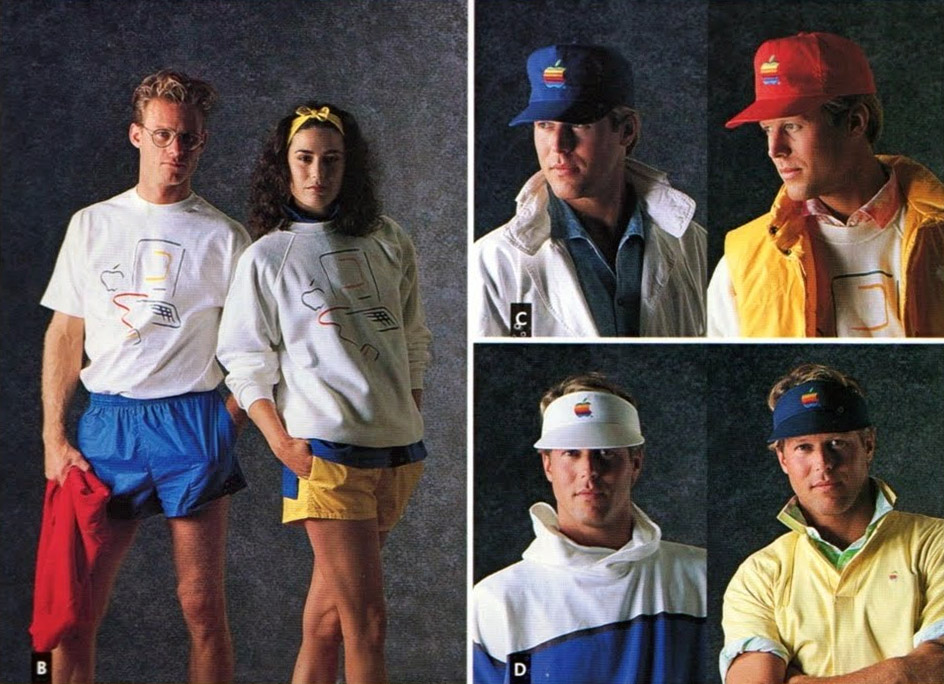
Update: Reader Rick Henson got in contact and let me know that he uploaded scanned copies of the entire collection, which you can view here. The other pages feature everything from Apple-branded paperclips, lapel-pins, Swiss knife, and of course, an Apple watch.
Dug up by The Trad, The Apple Collection is an amazing look at what Apple—a company often hailed for its tasteful, minimalist design—thought was awesome back in the ’80s. Namely, gaudy belts, logo-covered baseball caps, and the word “Apple” written in as many different variants of ugly lettering as the company could find. Sadly, no black turtlenecks or jeans are on display; Steve Jobs had been ousted from the company the year previous by former PepsiCo CEO John Sculley, and wouldn’t return for another 11 years. [The A.V. Club]
The Trad originally posted this back in 2011, but I only just saw it today when The A.V. Club linked to it. Suffice to say, the above image is just a taste of what you’ll get see if you view the full collection - which you’re going to do, right?
[via The A.V. Club]
#MacStoriesDeals: August 6th, 2014

We’ve collected the best #MacStoriesDeals for August 6th, 2014, so be quick and get them! If new deals become available, updates for each category will be listed at the top.
You can find us as @MacStoriesDeals on Twitter.
Apple, Samsung Agree to End Patent Suits Outside U.S.→
The agreement shows Apple and Samsung may be nearing a conclusion to what has been a drawn-out and occasionally nasty worldwide patent fight, which has sprouted alongside the booming market for touch-screen smartphones. Apple has accused Samsung of copying its iPhone designs, while Samsung has countered that Apple is using pieces of its wireless-transmission technology without permission. Neither has won a decisive decision and judges have repeatedly urged the two companies to reach a settlement rather than play out their dispute in court.
Today’s announcement, sent to Bloomberg and other media organizations, means that all disputes between Apple and Samsung outside the United States are being abandoned. The international disputes had been fought for years in Australia, Japan, South Korea, Germany, Netherlands, the U.K., France and Italy.
“Apple and Samsung have agreed to drop all litigation between the two companies outside the United States,” the companies said in the statement. “This agreement does not involve any licensing arrangements, and the companies are continuing to pursue the existing cases in U.S. courts.”
“Buy All The Things”→
Much has been written about being an indie developer on the App Store recently, with not much of it positive.
I think this experiment has shown us a few really important things.
Since last year, I’ve continued to follow Stuart’s experiment with great interest. While not indicative of the indie app market as a whole, his experience can be useful to understand the impact of In-App Purchases, pricing experimentation, and cutting down on non-development or design costs, such as customer support, through the built-in AppbotX service (our coverage). Stuart’s app has reached almost 2 million downloads and $60,000 in revenue.
Simogo’s Next Game: The Sailor’s Dream→
Simogo, makers of some of my favorite games for iOS (Year Walk and DEVICE 6), have announced their next game, The Sailor’s Dream, launching later this year. The Sailor’s Dream will be a “challenge-free experience in which you explore a non-linear story through words, music, sounds and illustrations”, and, based on the trailer and screenshots seen so far, it looks like Simogo is once again trying to redefine the scope of innovation in mobile gaming.
Don’t miss Leigh Alexander’s interview with Simogo at Gamasutra, which provides background and context on the studio’s latest creation:
“We want it to feel both relaxing, like diving into a tiny little world in which you can enjoy just interacting with, looking at and listening to things,” Flesser continues. “But then there’s also this element of exploring a quiet story, and tying it together in your head. So in that way it is like a dream, exploring a strange world, with tiny bits of reality breaking through in different ways.”
You can watch the trailer below, and check out the game’s first screenshots at the official website. You can read my review of Year Walk, Simogo’s hit from 2013, here.
Fileup Simplifies Dropbox Sharing with Drag & Drop and File Filters
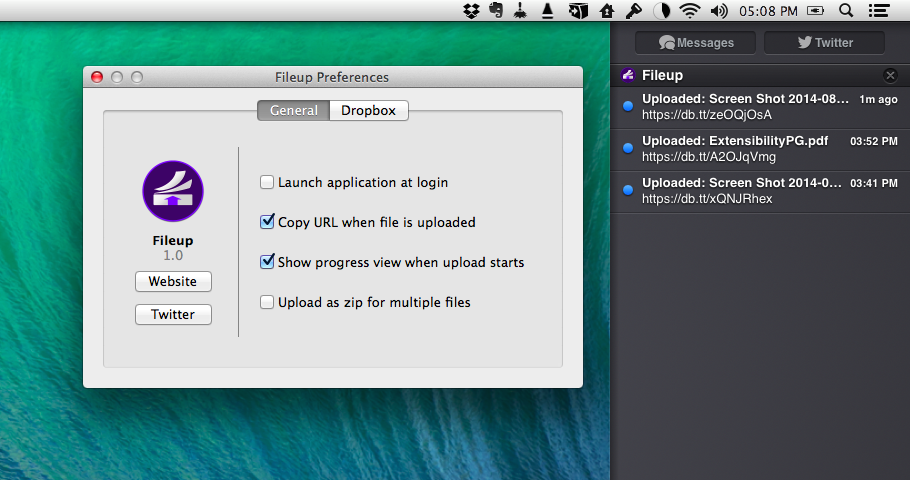
Developed by Francisco Cantu, Fileup is a new OS X utility that lets you quickly share files through Dropbox by dragging them onto a menu bar icon. Unlike other apps that have implemented the same sharing mechanism and user interaction (which Dropbox surprisingly doesn’t support with their own menu bar app), Fileup adds filters for file types, integrates with Notification Center, and lets you set up templates for naming files through a simple syntax. The idea is reminiscent of Vemedio’s shortlived Sharebox experiment, but, as required by Dropbox, Fileup is a separate menu bar utility that doesn’t interact with the official Dropbox client.