
 MacStories Weekly: Issue 8
iPad Pro Accessories Review: Apple Pencil, Smart Keyboard, Logitech CREATE Keyboard
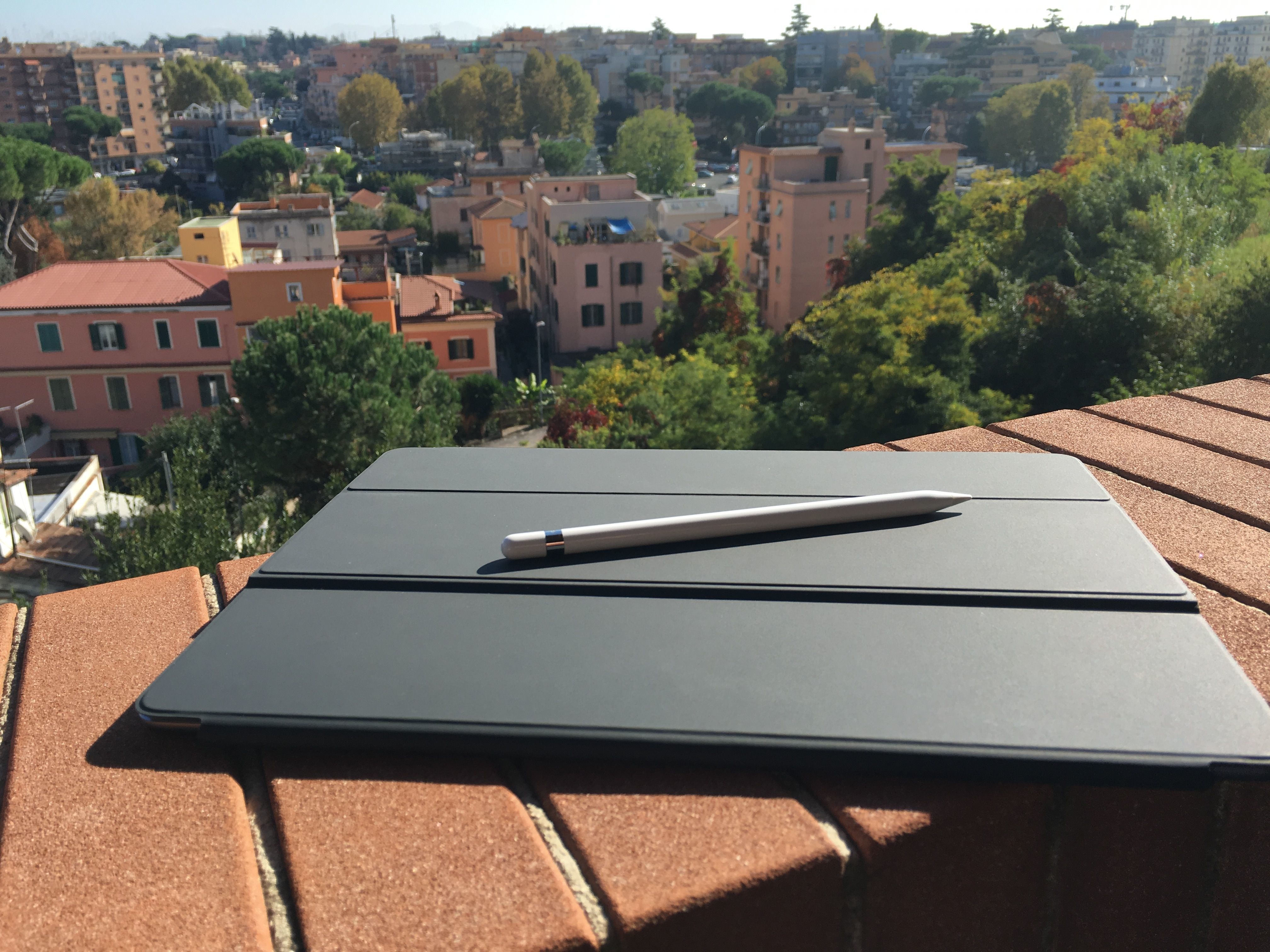
A fundamental part of the iPad Pro experience is the new range of accessories created by Apple and the framework the company has opened up to third-party manufacturers with the Smart Connector.
While Apple has been making iPad accessories since the very first iPad, the new Smart Connector has allowed the company to rethink how an external keyboard should connect to the device and interact with iOS, and they’re giving third-parties the ability to do the same with new types of accessories. Meanwhile, the Pencil marks Apple’s debut in the field of pens and styli for iPad, with several unique twists.
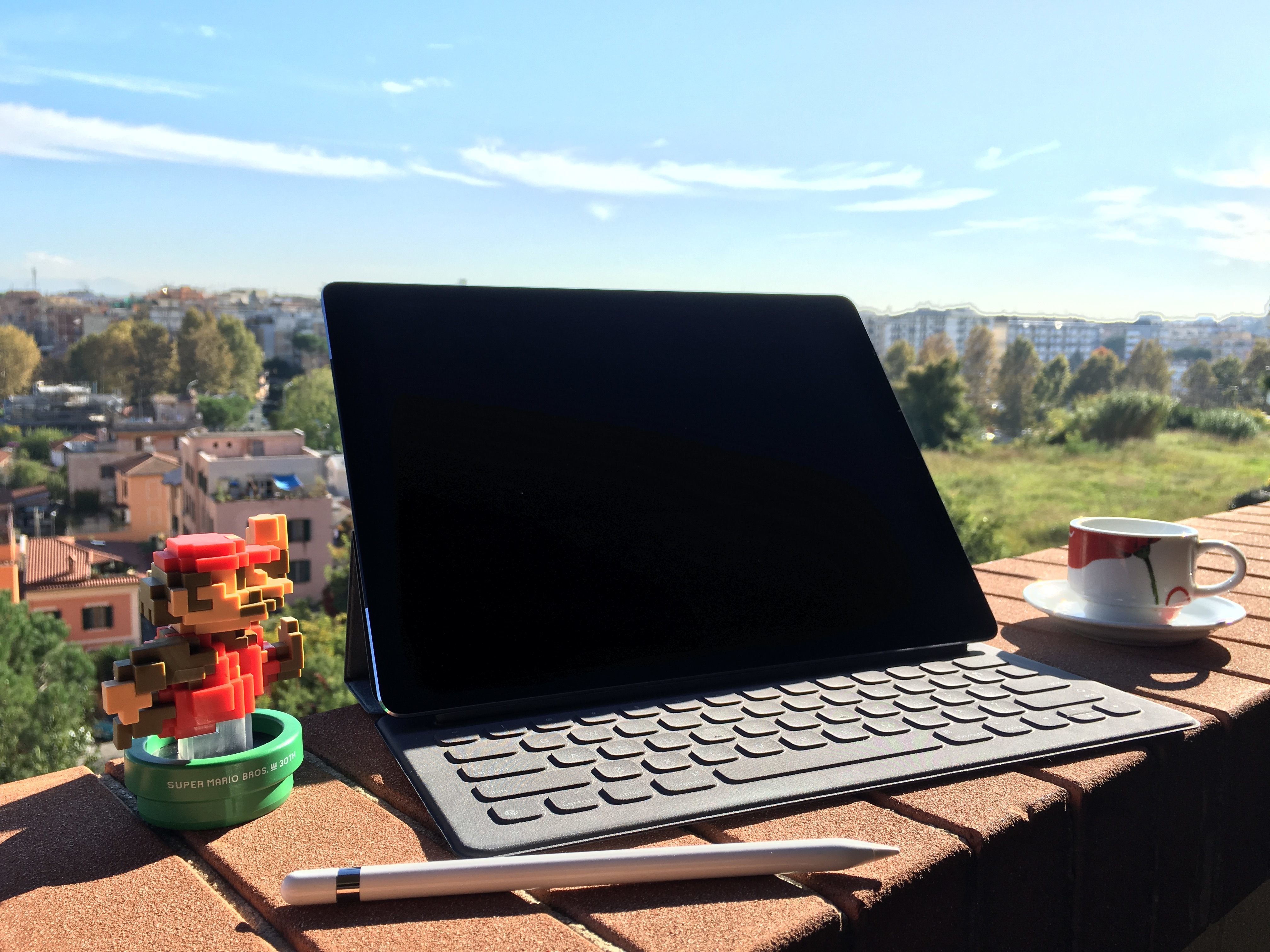
Alongside an iPad Pro review unit, Apple also provided me with an Apple Pencil, a Smart Keyboard, and, to my surprise, a Logitech CREATE keyboard case that connects to the device with the new Smart Connector. Because I don’t plan to use these accessories on a daily basis (I’m not an artist, I rarely have to sketch and annotate documents, and I mostly use the software keyboard when writing articles), I have collected a few thoughts in this standalone article.
You can find my impressions below.
iPad Pro Review: A New Canvas
For the past two years, I’ve been reconsidering my preconceptions on large screens.
Back in 2013, I thought the iPad mini would always be the perfect iPad for me. After the technologically outdated debut of the first iPad mini, the second-generation model iterated on almost every aspect of the device, offering a masterful blend of portability and strengths of the iOS platform. I couldn’t see myself switching to a full-size iPad again.
And then iOS 9 happened. Or rather, it started becoming clear – from multiple angles and sources – what would eventually happen to iOS for iPad, which had long stagnated in a state of close resemblance to the iPhone’s interface. In hindsight, looking back at my iPad’s history through a mere technological lens, upgrading to the iPad Air 2 in 2014 was a safe bet: a year later, the device that seemed even too powerful for iOS 8 would be the only one to fully support iOS 9’s new multitasking features on day one.
I was uncertain about switching from the iPad mini to the Air 2 as a future-proofing tactic for my iOS experience, but the decision paid off. I didn’t know I’d be able to get work done faster and more comfortably on the bigger iPad Air 2 until I got one. The iPad Air 2 became my primary computer.
On both the iPhone and iPad, I’ve discovered that I like big screens and I’m not affected by portability concerns. Moving to the iPad Air 2 and upgrading to the iPhone 6 Plus has been instrumental to assemble a setup that makes me more efficient on a daily basis.
It’s with this mindset that I approached the iPad Pro, which I’ve been using for the last eight days since getting a review unit from Apple last week. Announced in September alongside the iPhone 6s, the iPad Pro has been presented by the company as the future of computing, promising to deliver desktop-class performance in a tablet form factor and expanding the range of input sources beyond multitouch with new accessories.
More practical questions have been making me ponder my taste in iPads again for the past two months. Is the iPad Pro too big for me? Can it really take another leap and outclass the iPad Air 2 in my daily usage of iOS 9? And with an iPad this big, are the portability perks of the 9.7-inch tablet inevitably lost?
I’ve spent the past week trying to find out. I set up a clean installation of iOS 9.1 on the iPad Pro with the apps I use every day (Editorial, Tweetbot, 2Do, Slack, Newsify, Outlook, and Notes – just to name a few), tested several third-party apps with iPad Pro-specific optimizations, and used accessories Apple gave me alongside the review unit – a Pencil, a Smart Keyboard, and the new Logitech CREATE keyboard case. I’ve used the iPad Pro as my only computer in lieu of the iPad Air 2, and I’ve observed how its hardware and software changes altered my workflow and physical interactions.
There’s a lot to discuss about the iPad Pro, and I’ll have to continue unwrapping the nature of this device for weeks to come. But I want to make one thing clear from the outset:
This is less of a “just for media consumption” device than any iPad before it. The iPad Pro is, primarily, about getting work done on iOS. And with such a focus on productivity, the iPad Pro has made me rethink what I expect from an iPad.
Apple Raises TestFlight Betas to 2,000 Testers, 60 Days of Testing→
Last night and earlier today, Apple rolled out two changes to TestFlight they first announced at WWDC: developers can now invite up to 2,000 testers to their betas, which now expire after 60 days instead of 30.
From Apple’s developer blog:
Now you can invite up to 2,000 users to beta test your iOS and tvOS apps before you release them on the App Store. TestFlight makes it simple to invite testers using just their email address and lets testers easily provide valuable feedback within the TestFlight app.
As someone who’s been affected by expired TestFlight betas too many times in the past, the expiration date change is especially welcome.
Igloo: An Intranet You’ll Actually Like [Sponsor]

We all struggle with productivity. We are constantly pressured to accomplish more, and to do it quicker. There is no one definitive way to accomplish that, and we have all devised our own little method to make things work.
At Igloo, they think your way is the best way, they just want to support you, and make your way better.
Work has evolved and your tools should too. Never email yourself a file again. Bring your company into the 21st century - send your IT guy to try Igloo Software for free.
Igloo is an intranet you’ll actually like.
Our thanks to Igloo for sponsoring MacStories this week.
Apple Announces Apple TV Tech Talks→
Apple:
The new Apple TV is here, bringing incredible and immersive apps and games to the big screen. Get in-depth technical information on building and designing for tvOS, learn refined coding techniques, and obtain valuable development instruction from Apple experts. Register by November 13, 10:00 a.m. PST for an opportunity to attend a Tech Talk in a city near you.
This year, Tech Talks will be focused on tvOS and will take place in the US, Canada, UK, Germany, Japan, and Australia. Sessions will cover best practices on “designing apps for tvOS, implementing focus-driven user interfaces, integrating the Siri Remote and game controllers, leveraging TVML for media apps, and enabling On-Demand Resources”, plus gaming and graphics, video streaming, and more.
Developers can register here.
Tim Cook on the iPad Pro and PCs→
Tim Cook, speaking to The Telegraph about the iPad Pro:
“Yes, the iPad Pro is a replacement for a notebook or a desktop for many, many people. They will start using it and conclude they no longer need to use anything else, other than their phones,” Cook argues in his distinctly Southern accent (he was born in Alabama). He highlights two other markets for his 12.9 inch devices, which go on sale online on Wednesday. The first are creatives: “if you sketch then it’s unbelievable..you don’t want to use a pad anymore,” Cook says.
The second is music and movie consumers: the sound system and speakers are so powerful that the iPad appears to pulsate in one’s hands when one plays a video.
In a separate interview with The Independent, he noted that he’s only travelling with his iPhone and iPad Pro for his European tour that will see him deliver a keynote speech at the Bocconi university in Milan tomorrow:
Along with the Pencil, there’s a keyboard cover. Cook says it’s different from rival keyboards because with none of those would you say it “came from the same parent” as the tablet itself. “Now all of a sudden you have a keyboard that has been perfectly designed for the iPad, it’s integrated and then you’ve got the software with split view and it’s inherently very productive. I’m travelling with the iPad Pro and other than the iPhone it’s the only product I’ve got.”
Apple Airs New iPad Pro Commercial, ‘A Great Big Universe’
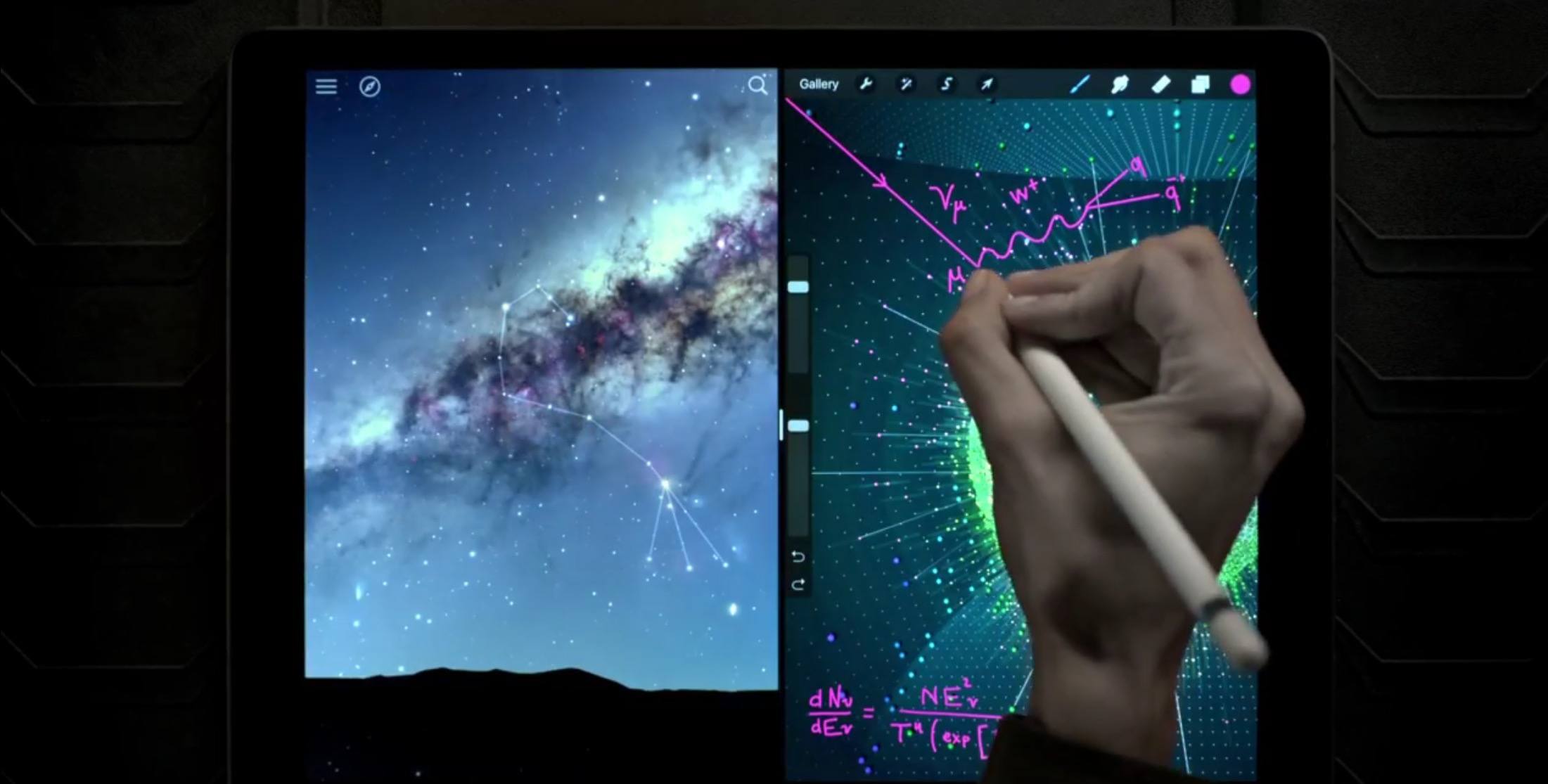
Earlier today, Apple aired a new commercial for the iPad Pro, with a focus on the Retina display, iOS 9 Split View multitasking, and drawing with Apple Pencil on the new device.
There’s a great big universe in the new iPad Pro. It’s the largest iPad ever and takes your creativity and productivity to an epic scale.
In the ad, featuring Alabama Shakes’ Sound & Color as the background song, Apple starts by showcasing the space-themed imagery that’s been on marketing materials for the iPad Pro since its introduction in September. Then, the video zooms out to reveal Sky Guide and Procreate, working simultaneously in multitasking on the iPad Pro. Apple Pencil, the iPad Pro’s stylus accessory to draw and annotate, is also showcased in the commercial with annotations in Procreate – one of the apps that has been updated with early iPad Pro support.
Today, Apple confirmed that the iPad Pro is launching this Wednesday, November 11, for online orders, with retail availability to follow later in the week. You can watch the ad below.
Apple Confirms iPad Pro Is Launching This Week
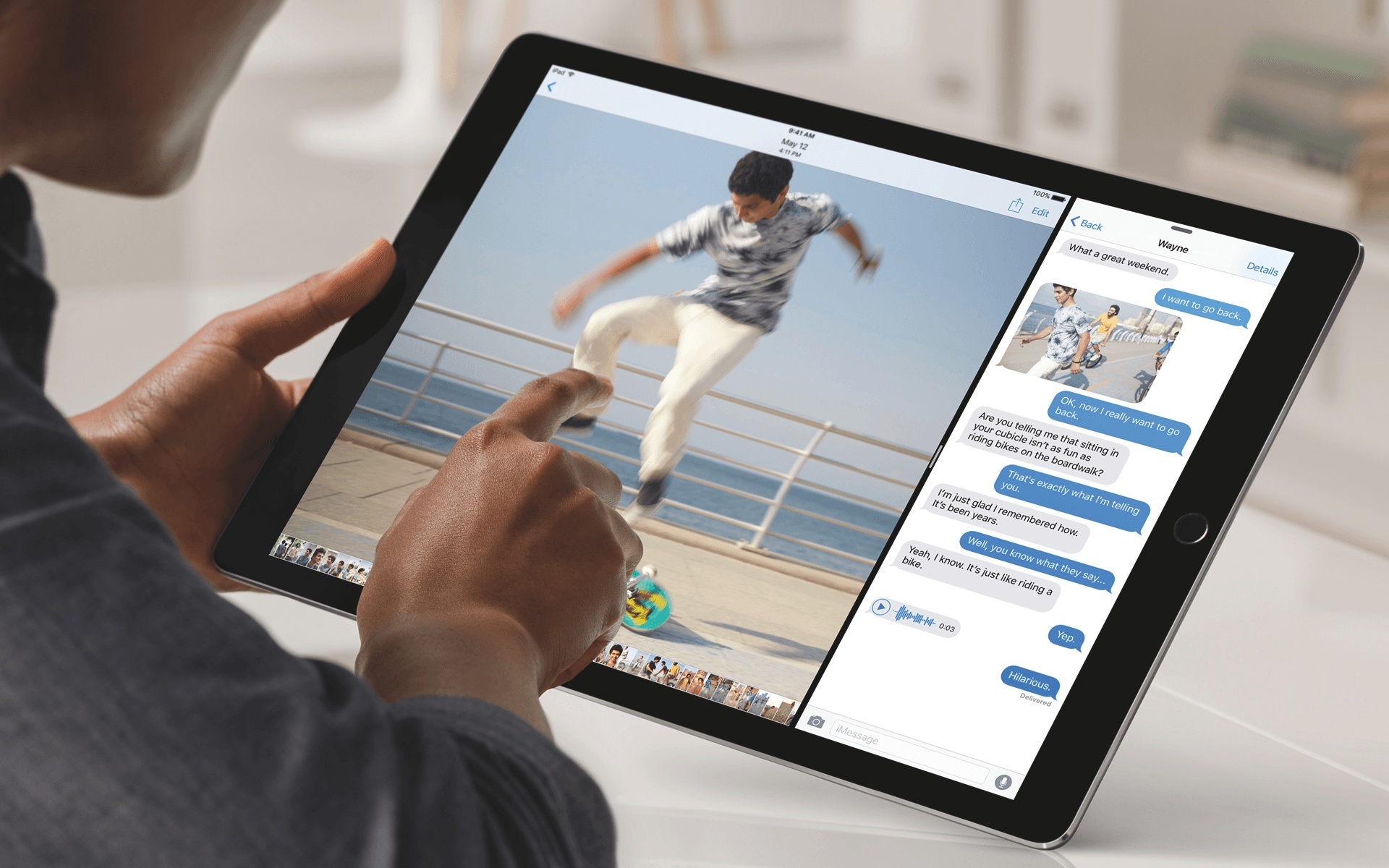
In a press release, Apple has confirmed that the iPad Pro, the company’s new 12.9-inch tablet, will be launching this week. Online orders will begin on Wednesday, November 11, and the iPad Pro will be available at retail stores, select carriers, and authorized resellers later this week.
“The early response to iPad Pro from app developers and our customers has been incredible, and we’re excited to get iPad Pro into the hands of customers around the world this week,” said Philip Schiller, Apple’s senior vice president of Worldwide Marketing. “iPad Pro is the most powerful iPad we’ve ever made, giving users the ability to be even more creative and more productive with the epic 12.9-inch Retina display, powerful 64-bit A9X chip and groundbreaking Apple Pencil and new Smart Keyboard. We can’t wait to see what they do with iPad Pro.”
In the press release, Apple has quoted several developers of iPad apps that will be updated to take advantage of Apple Pencil, a new stylus built specifically for iPad Pro with support for pressure sensitivity, tilt, and high precision.
iPad Pro features a bigger display than the iPad Air 2, a new four speaker audio system, and nearly double the CPU performance and double the graphics performance of previous iPads. You can read more in our original overview from September here.