
Arq: Easily Backup Your Mac to Amazon S3. Review and Giveaway.

As soon as your business grows, so does the need of backing up everything. You can’t be serious about your business if you don’t backup and save important stuff just in case something goes wrong. As soon as MacStories started growing some months ago, I began to look out for good solutions to daily back up my files and various databases, and I was looking for a cloud solution. Sure, there’s Dropbox for that. Really guys? Would you suggest Dropbox for people who need to save files with incremental backups everyday? You know that it costs a lot and that, in the best case, you have to manually drag & drop every folder inside it? (unless you create your folders in /Dropbox from the start). No, that doesn’t work for me. I need something cheap, that runs in the background as soon as I make some changes, it has to be reliable, fast and secure. The unicorn of backups, basically.

Most like every new app I’ve recently discovered, everything happened on Twitter: I don’t remember quite well, but it was some night ago when someone tweeted “this new beta of Arq rocks!”

Today I’m going to talk about Arq from Haystack Software, an application that has already become a fundamental part of my workflow.
Read more


Today: Keep Track of Your Daily Events and Tasks

I use Things, both on my Mac and my iPhone, as my GTD management app of choice. In case you missed the reason why, be sure to read my review. Things is awesome and guess what - it’s fully integrated with OS X. It’s got Address Book integration, it can display the iChat status of team mates, it’s got iCal support. iCal, probably one the default Mac OS X tools I use less. It’s not that I don’t like the functionalities or its purpose, I don’t like the interface and the fact that it’s not a minimal and simple way to get daily notifications. I just want an app that quickly tells me everyday what I have to do, importing stuff from Things.

Meet Today.

Read more


Aperture 3 Meets iPhoto and Takes Photos “Further”

The long awaited 3.0 version of Aperture has been finally announced by Apple and it’s live on the Apple Store page: http://www.apple.com/aperture/

Aperture 3 is a $99 update for current 2.0 users, it comes with 200 new features, a rewritten engine to support 64 bits and some neat additions like Faces and Events, taken from iPhoto. Indeed, the new slogan of Aperture is “Pro performance with iPhoto simplicity”, meaning that - probably - Apple aims both at a professional user base and less demanding users with this 3 update.

Read more


Cartagen and GSS: Geo Style Sheets, Done in HTML5.

HTML5 is finally starting to show its capabilities. We’ve already talked about SublimeVideo and Sketchpad, two beautiful examples of what the future has in store for us. Today’s demo might not be as sexy as the others, but it’s worth a mention nevertheless as it could seriously revolutionize the way we see information on the web. I don’t know how old is this and if the developers are still working on it, but I haven’t found any reference anywhere so I decided to talk about it here.

It’s called Cartagen and it lets you make maps with a simple stylesheet. Let me embed a few quotes from the official website:

“Cartagen (http://cartagen.org) is a vector-based, client-side framework for rendering maps in native HTML 5. Written in JavaScript, it uses the new Canvas element to load mapping data from various sources, including OpenStreetMap.

Maps are styled with Geographic Style Sheets (GSS), a cascading stylesheet specification for geospatial information – a decision which leverages literacy in CSS to make map styling more accessible. However, GSS is a scripting language as well, making Cartagen an ideal framework for mapping.

Cartagen can display maps that change based on live data streams.

It also offers the possibility of rendering OpenStreetMap data which is not currently efficient with tile-based systems - such as authorship and time data. A simple but useful example is that Cartagen can show live OpenStreetMap data – in the sense that viewers see edits occurring in real time, with no rendering load on the server.”

Basically, it’s based on a stylesheet that supports geographical information and renders maps in HTML5. Maps can change according to live streams (news, updates, whatever you can think of) and the user can interact with them. Now, just sit down and let your imagination run wild: huge possibilities, reliability and support for the major desktop and mobile browsers. Very promising, though I know I’ll soon discover something better. That’s the beauty of progress.

Cartagen Wiki

Stylesheet Gallery


Filemailer, The Pros Alternative to Email Attachments

Writing for MacStories, I often send a lot of .zip and photo heavy e-mail attachments to others. Unfortunately, there really isn’t a better way to privately send data (okay, Dropbox), but for those looking to increase their attachment prowess, I’d say it’s time to quit dickin’ around in Gmail and get with the program.

The Filemailer program.

Read more


Polyhedra. Geometric Addiction.

There this game I’ve been playing with during the past weekend that I think you should download right now. I don’t usually play that many games on my iPhone, as I mostly use it as a “productive” device for the stuff I have to do my MacStories like mails, tasks, projects and so on. But, since Canabalt came out some months ago I started buying these simple yet addictive games that are usually packed in weird pixellated graphics.

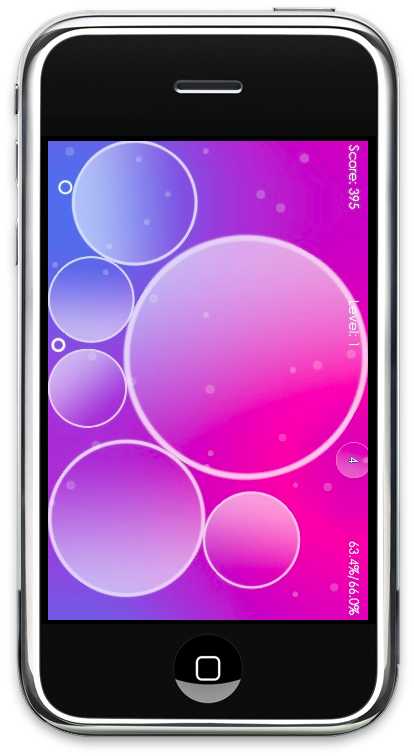
Anyway, this game I discovered is called Polyhedra, and it’s very simple. All you have to do is to fill a percentage of the screen with geometric shapes. To draw shapes, you have to tap and hold your finger on the screen: the longer you hold, the bigger the shape. So where’s the difficulty? First, you can create a limited number of shapes (the number changes for each level). Then, there are enemies (bouncing little balls) that will destroy the shape you’re creating if they touch you. Sounds weird, but it works.

Polyhedra

Polyhedra

The game is all about physics (for enemies and shapes) and gravity, as you can rotate the iPhone in an direction to move the shapes around. Graphics are colorful and fluid, soundtrack is awesome, there are many options to play with.

At $0.99 in the App Store, you should go buy this little gem and become addicted like me. One of the best games I’ve ever played on my iPhone.

See you on the leaderboard.


Postbox Gets a Huge Update for Mac OS X

Link

  • Spotlight integration;
  • Address Book support;

  • iCal;

  • Drag to dock;

  • Safari to Postbox links;

  • iPhoto integration;

  • Dictionary Lookup

Still based on Mozilla’s engine though. An important update anyway, you might want to give it another spin. I did.


Twizzle: Simple, Free Twitter Client for iPhone

According to Wikipedia a new Twitter client for iPhone is released everyday. The average price point is between $0.99 and $1.99, but there are some exception where the Twitter client beast goes out of control and price itself at $2.99. Amongst the most famous Twitter apps for iPhone we should mention Tweetie, Twitterrific, Echofon, Twitbird, Twittelator and Birdfeed.

Then there are free Twitter apps, those apps that usually come with poor feature sets, ugly UIs and screwed up animations.

Today I’ll take a look at Twizzle, an application by Sahil Lavingia (One Week App) that is free and, actually, pretty good.

Read more


Refresh and Restart Finder

Snow Leopard’s Finder is great and fast, but sometimes it just hangs. At least for me, and though I’ve got a Macbook Pro with 4GB Ram, it happens that it should be restarted or “refreshed”.

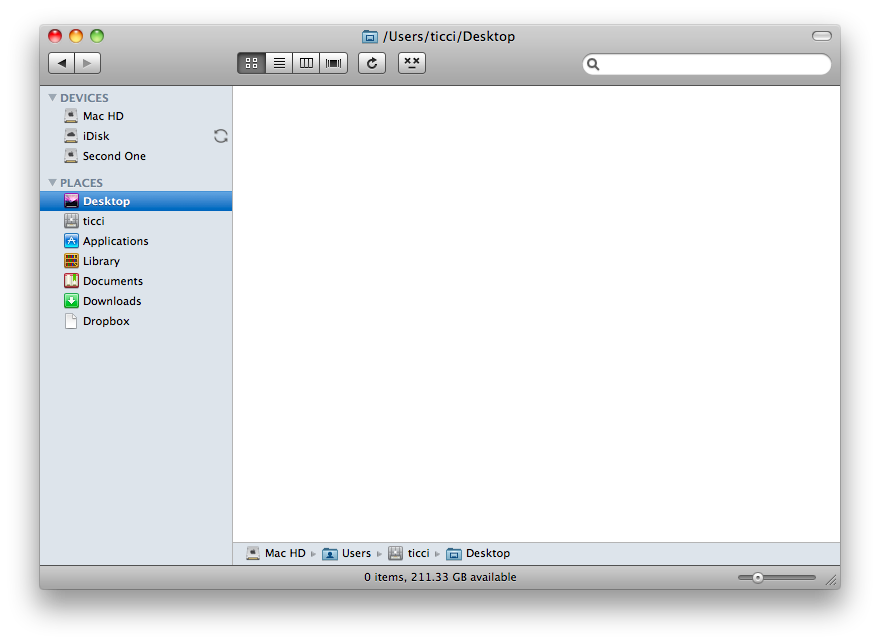
Luckily I’ve found out these two buttons that, once dragged to your Finder toolbar, will let you refresh & restart. I’ve tested them, they work perfectly.

Go download.