Apple Showcases Subscription-based Magazines In The App Store’s Homepage

Since the launch of iTunes subscriptions for apps in February, adoption of the new service from magazine and newspaper publishers has been growing at a somewhat slow rate. Following the controversy that sparkled after launch – which was quickly dismissed by Steve Jobs himself in an (alleged) email that confirmed subscription were meant for “publishing apps” – only a handful of publishers decided to implement the system which, as you may remember, requires publishers to give up a 30% of revenue off every subscription sold in-app, through iTunes. Those who implemented subscriptions in their apps, however, posted some interesting results: Popular Science, for example, sold roughly 10,000 subscriptions in 6 weeks. On the other end of the spectrum, though, many speculated that the highly promoted, long anticipated The Daily – a joint collaboration of Murdoch’s News Corp. and Apple – saw a decline in sales and user engagement, although we (and many others) assume that’s because of some poor editorial choices and the very nature of the app, rather than a flaw in Apple’s system. Overall, iTunes subscriptions seem to be working for those that chose to test them: the problem is trying to convince publishers to test them. And as the iPad keeps selling well and the App Store userbase grows, there’s no doubt Apple wants to get more publishers on board. Perhaps a lot will come by June. We’ll see.

In the meantime, Apple also wants to let iOS users know about subscriptions, and the magazines that allow them to subscribe with just one click, with their iTunes accounts. That’s exactly what they’re doing with their latest App Store homepage refresh: in a new section called “Magazines - Subscribe to your Favorites”, Apple is showcasing apps that are powered by subscriptions. This section includes – you guessed it – The Daily, alongside Bloomberg Businessweek (they’re very “pleased” with Apple’s terms), Popular Science, SPIN Play, Popular Photography, Elle, and Nylon. Seven apps aren’t much, but Apple’s goal is different here: they’re not betting on numbers, they want people to know about their “favorite magazines” that now come with the best way to subscribe to digital content. You can check out the App Store section here.

Of course, there are some big names missing from the list. Businessweek is there, but the Financial Times refused to accept Apple’s subscription terms. The Daily provides fresh, downloadable content on a daily basis, but The New York Times still has to flip the switch on Apple’s in-app subscriptions (but, eventually, they will). And so does the Wall Street Journal, which keeps on relying on embedded browser sessions to let users log in & subscribe.

A new version of iOS is expected to be previewed at the WWDC in June, and publishers will be forced to update their existing iOS applications with Apple’s subscriptions by June 30. If the rumors are true and iOS 5 will really feature a completely new notification system, Apple could come up with some intriguing ways to let magazine apps download content in the background, automatically, all day, and let users know about news and fresh content through the new notifications. I’m just speculating here, but a new OS (with betas during summer, and a planned launch in September) might be a great way to tell publishers that iOS is the platform to invest on. Or, Apple could bundle iOS 5 and the new Xcode 4.1 with new tools for publishers to design and develop magazines and newspapers for the iPad. They did it for advertisers. As it stands now, Apple cares about letting people know that magical subscriptions exist. The next step is tell every publisher that iTunes is the only way to go in the digital newsstand era.
Here’s The Sequel to the Most Minimal iPad Stand

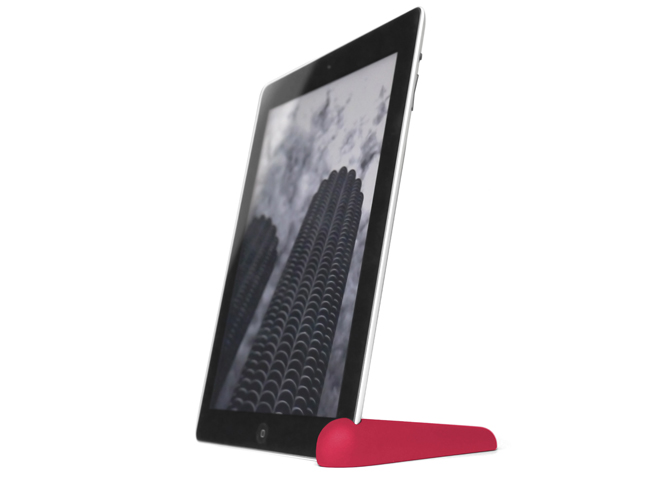
Back in August of last year, we showed you Michiel Cornelissen’s original iPad 1 stand. We called it the “most minimal iPad stand.” Not to outdo himself but he has redesigned the PadFoot for iPad 2. It’s now even lighter and smaller than its predecessor at only 10 grams, and has an increased viewing angle as well. All while being as stable and sturdy as ever.

The new PadFoot clips to the corner of your iPad and securely stands it upright in landscape and portrait modes. Just like other larger and heavier stands, it’s great for tv, movies, and slideshows. It works well for FaceTime calls too. Read more


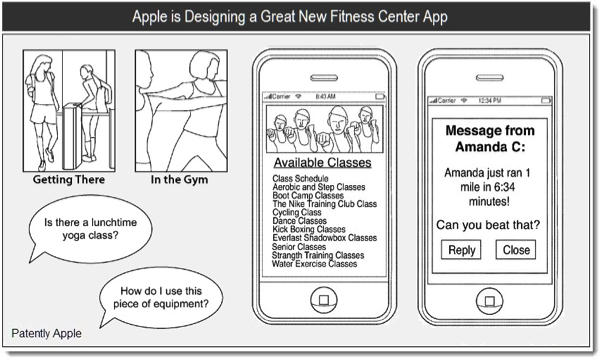
Is Apple Collaborating with Nike to Deliver a Fitness Center App?

Apple & Nike already deliver the Nike + app to iPhone and iPod owners, and they consistently collaborate in improving the experience with a sports sensor and connectivity to cardio equipment. As Apple penetrates the gym with the iPod touch and iPod nano, Apple may take the gym experience a step further by offering a Fitness Center App. Focused on building relationships at the gym (to actually get you off your butt and go have fun), the health culture Apple wants to curate will revolve around being able find local fitness centers, finding classes that are right for you, joining friends, and getting motivated to keep up the hard work.

Read more


Report: Apple Grabs 74% Of Tablet Market

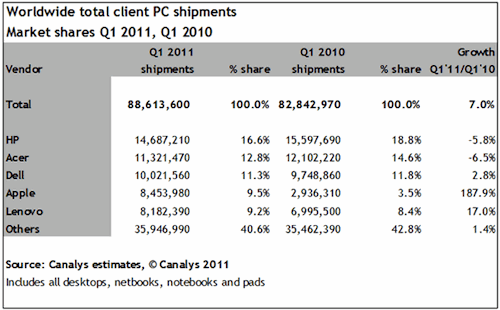
According to a new report by research firm Canalys, in the first quarter of 2011 Apple grabbed 74% of the worldwide tablet market. Canalys is the first firm to include tablets and, more specifically, the iPad in total PC shipments, and as the PC market grew 7% overall in Q1, the research group notes how the most impressive growth was reported by Apple.

Taking into consideration the iPad’s ‘halo effect’ on the company’s other products, Apple has grown considerably in most markets worldwide,’ said Canalys Analyst Tim Coulling. ‘As the iPad 2 and its competitors continue to roll out, we expect pad sales to propel PC market growth for the rest of the year.

Apple continued with its strategy to dominate the pad market, with the iPad or iPad 2 available in 59 markets by the end of Q1. A combination of strong Q4 sales and the announcement of the iPad 2’s launch across major markets at the end of March contributed to Apple’s iPad shipments being down 31% sequentially. The full impact of the iPad 2 launch will not register until subsequent quarters, as Apple gets the product into the hands of consumers.

Apple positioned #4 in worldwide total PC shipments behind HP, Acer and Dell, shipping 8.5 million computers & tablets in Q1, as opposed to 2.9 million Mac shipments in the year-ago quarter. Whilst Dell was the only PC vendor of the three ahead of Apple to post positive growth in the quarter with a 2.8% increase, Apple reported a 187.9% growth with Macs and iPads combined.  Canalys notes tablet shipments reached 6.4 million units in the quarter, with Apple grabbing 74% of the market. In their Q2 2011 earnings call for the quarter that ended on March 26th, Apple posted record revenue of $24.67 billion with 4.69 million iPads and 3.76 million Macs sold. iPad shipments are expected to grow in Apple’s Q3 as suppliers recover from the Japanese disaster and are able to meet demand of tablet components such as LCD displays and RAM.


Our Choice, Proving Push Pop Press Will Revolutionize Digital Publishing

When Co-Founders Mike Matas and Kimon Tsinteris set out to change the world of digital publishing, not many would have guessed that Al Gore would be at the forefront of their first title until Our Choice was demoed as a TED Talk, where the workings and interactions of the first title built using the new platform were revealed. Today, Our Choice is available at an introductory $4.99 on the App Store for the iPhone and the iPad, delivering rich interactive content via a completely custom app built on a native backbone. The Push Pop Press platform is seeking to revolutionize how content is published and made interactive, and my initial impressions with Our Choice can validate that cause. What’s at stake isn’t just the future of the new digital platform, but a complete rethinking of the traditional digital magazine or newspaper. The App Store is flooded with projects traditionally based on Adobe technologies, and while it was a good first attempt, the content we view needs to be intuitive, interactive, but most importantly fluid and un-static. Push Pop Press is the ideal platform to revolutionize how we think of traditional media, and Our Choice is the launch title proving that this new vision for content is a clear winner.

Read more


Instapaper Developer Explains Why Free Version Is “Taking A Vacation”

Instapaper Developer Explains Why Free Version Is “Taking A Vacation”

In an Apple store, it’s nearly impossible to spend less than $30 on anything. Apple’s stance is clear: “This is how much our stuff costs. If you don’t like our prices, that’s fine. We don’t need everyone to buy our stuff.”

That’s roughly the stance I’ve chosen to take. My app costs $5. I understand that not everyone will like my price, and that’s fine. I don’t need every iOS-device owner to buy my app — I’d do quite well even if only 1% of them did.

Instapaper developer Marco Arment has published an interesting article explaining why he removed the free version of Instapaper for iPhone from the App Store, and he’s not planning on making it available again anytime soon. There are thousands of free applications in the App Store: most of them are games from huge companies backed by multi-million investments and funding rounds, some of them are “lite” versions of less popular apps with limited functionalities. For an indie developer like Marco – remember, he left his position at Tumblr to focus on Instapaper – choosing to offer different versions of the same app is a difficult decision: what are the features that need to be exclusive to the paid app? And what’s a customer supposed to think when he only sees the limited feature set of the lite / free version? More importantly, how many App Store users are going to choose the paid app as the first option when a free counterpart is available?

These are risks only developers who truly believe in their work are willing to take. Marco does, and he’s decided to bet on his $5 piece of software because he knows it’s a great product that doesn’t deserve to be crippled by a free version with less features and ads. Go read the full article here.

Permalink

NPD: Verizon iPhone Helping Apple In The March Against Android

Research group NPD released its Mobile Phone Track consumer tracking service for the first quarter of 2011 today, and according to the data gathered by the company the release of the Verizon iPhone helped Apple gaining market share in the U.S. smartphone market at the expense of Google’s Android operating system which, however, in spite of Apple’s growth is still accounting for 50% of smartphone sales in the United States in the quarter. Apple’s mobile phone sales have reached 14% in Q1 outranking RIM, Motorola and HTC, placing the company in the third spot of smartphone sales behind Samsung and LG. NPD claims the Verizon iPhone “solidified” Apple’s position with the top-selling phone in the US – something that doesn’t come as a total surprise considering Verizon Wireless already announced the CDMA iPhone 4 launch was the most successful ever for the company, with 2.2 million activations in 2 months for the “most acquired” smartphone in February.

Apple and Verizon had a very successful launch of the iPhone 4, which allowed the iPhone to expand its market share that was previously held back by its prolonged carrier exclusivity with AT&T,” said Ross Rubin, executive director of industry analysis at NPD. “While some of that growth came at the expense of Android operating system (OS), Android models still accounted for half of all smartphones sold in the quarter.”

According to NPD’s “Mobile Phone Track” consumer tracking service, for the first time a majority (54 percent) of all new mobile-phone handsets purchased by U.S. consumers were smartphones. Driven by increases in smartphone sales in Q1 2011, average selling prices for all mobile phones rose 2 percent over the previous quarter to reach $102; however, average prices for smartphones actually declined by 3 percent (falling to $145).

While Android lost ground for the first time since Q2 2009, a report by Digitimes earlier today about Pegatron’s Q1 results suggested Apple was lowering orders for CDMA iPhone following low sales under expectations. Verizon Wireless announced 2.2M activations, but Apple didn’t disclose numbers behind AT&T and Verizon iPhone sales at the Q2 2011 earnings call.


Screens 1.5 Now Available: Still The Best VNC Client for iOS

When I first reviewed Screens, a universal VNC client for iOS by Edovia, I was impressed by the speed and elegance of the app, which made it super-simple to connect to Windows PCs or Macs on a local network, as well as remote computers powered by a global dynamic hostname. Together with that, Edovia’s Screens proved that a VNC client for iPhone or iPad didn’t need to completely mimic the functionality of a desktop computer: rather than putting a mouse cursor on screen, the app allowed you to turn a computer’s screen into a multi-touch based experience as if it was built for iOS in the first place. With Screens, you don’t move a cursor like in most VNC clients: you touch the computer’s windows and apps. With gorgeous animations, responsive loading times and a free service called Screens Connect to automatically and easily log into a remote machine without having to fiddle with IP addresses and router ports, Screens managed to become the most popular VNC app for iOS, and one of my favorites overall.

Months after the original release, Screens receives today a major update to version 1.5, which I had the pleasure to beta test and play with for the last couple of weeks. Screens 1.5 introduces a lot of optimizations to the underlying VNC engine to make connections faster, more stable and, based on my tests, more responsive with both PCs and Macs. Minor bug fixes and improvements aside, Screens 1.5 fixes an issue that caused a crash when disconnecting from a computer, and enhances responsiveness with several Windows VNC servers. As far as connecting to a remote computer goes, Screens now displays the Screens Connect status in the Settings, so you can instantly know whether your computer is remotely accessible or not. However, connecting to a machine on your local network is as easy as before – Screens automatically recognizes computers with screen sharing enabled, and all you’ll have to do is enter a password and choose a nickname.

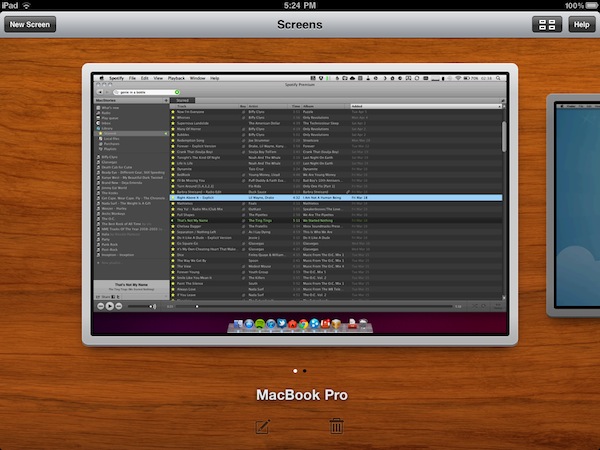
Screens 1.5 also brings a new icon, a revamped UI and a new Grid View on the iPad that will come in handy for those who manage a lot of different computers; if you’re concerned about privacy, Screens now enables you to choose whether or not you want the app to grab a screenshot of your desktop upon disconnecting. If you don’t want to have “real” previews in Screens’ dashboard, a default image will be used. In the Settings, you can also set a computer to open in fullscreen mode, and you can toggle modes (full, partial, off) with a three-finger tap. It works really well.

Screens 1.5 is an important update to a great VNC client for iOS that keeps getting better with lots of options, and a fast engine. The developers didn’t sacrifice usability for options, though, as the app is still very easy to use and provides a simple way to add, modify and delete computers. The update is propagating now in iTunes, and you get the app here at $19.99. Highly recommended. Read more