Apple Overtakes Google And Becomes World’s Most Valuable Brand

A new survey on the value of brands has placed Apple as the world’s most valuable brand, ending Google’s four-year reign at the top of the list. The ‘Brandz’ survey, done by global brands agency Millward Brown, found that the Apple brand is worth an estimated $153 billion, which was an 84% increase from last years survey.

Global brands director of Millward Brown, Peter Walshe, said that Apple’s pointed to a number of factors that has led to Apple’s rapid rise in brand valuation. He said that their meticulous attention detail and presence in corporate environment were two of the reasons that they have behaved differently to other consumer electronics manufacturers and went on to say:

Apple is breaking the rules in terms of its pricing model. It’s doing what luxury brands do, where the higher price the brand is, the more it seems to underpin and reinforce the desire. Obviously, it has to be allied to great products and a great experience, and Apple has nurtured that.

Technology and telecommunications companies generally dominated the list, with Apple (1), Google (2), IBM (3), Microsoft (5), AT&T (7) and China Mobile (9) holding six of the top 10 spots, sharing it with the old-heavyweight brands of Coca-Cola (6) and McDonalds (4). Meanwhile Facebook entered the top 100 at number 35 this year, with a valuation of $19.1 billion.

The survey is done by Millward Brown essentially observing the value that the companies put on their own brands in their earnings reports and analysing it in conjunction with the results of a survey of more than 2 million consumers.

[Via Reuters]


Amazon Cloud Player Now Works with iOS Safari

Back in late March, Amazon launched Cloud Player for the web and Android devices, an online interface that, relying on music uploaded to your Amazon account via Cloud Drive, allowed you to stream music from the cloud via a web browser or the native Android application, built into the OS with direct connection to Amazon’s servers to fetch and stream songs on the go. The service, however, wasn’t working with iOS devices, and it wasn’t a Flash issue: somehow, the website itself didn’t want to cooperate with Mobile Safari on iPhones, iPod touches and iPads. We noted that there was a way to make it work by using an alternative browser like iCab Mobile and changing the app’s user agent, but it was convoluted and far from being a reliable alternative to playing music locally in the iPod app, or from third-party services like MOG and Spotify, which do have native iOS apps. The lack of iOS compatibility for Cloud Player left many wondering whether the company intentionally decided to block the service, betting exclusively on the Android platform – which is the foundation for Amazon’s new app marketplace.

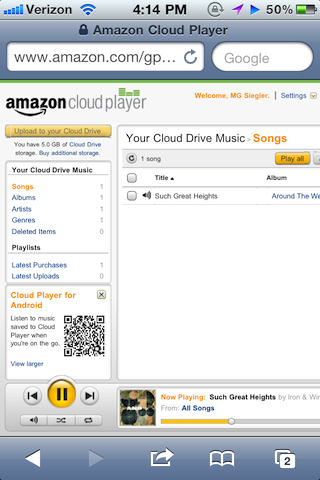
As noted by TechCrunch today, however, Cloud Player seems to be working in the iOS browser now. Songs stream just fine, and they even pause automatically during an incoming phone call or if a Push Notification is received. It’s unclear how Amazon exactly “unlocked” the feature and why it went online so quietly without any major announcement, but my guess is the Cloud Player team simply added a string to allow Mobile Safari to start a QuickTime streaming session within the browser.

You might think this had to due with Flash or another technology that iOS wasn’t compatible with, but it wasn’t. It looked like something else was simply blocking it from working. Well, good news. That’s no longer the case.

If you visit Amazon’s Cloud Player through the Safari web browser on an iOS device, you’ll see that it does in fact now work. You’ll first hit a warning page telling you that your browser is not supported, but just ignore that. Click into the music in your drive and it will begin playing.

MG Siegler notes the implementation is still far from perfect (uploading requires Flash, but you wouldn’t be able to upload files from iOS anyway) and the solution implies listening to music in a regular browser window. Still, it’s a start for Amazon, and it reignites speculation of a native Cloud Player app for iOS coming in the near future. The website, for now, is restricted to US access only.

Rumors in the past months pointed at Apple building a full-featured music streaming service based on iTunes, wrapped inside the upcoming iCloud infrastructure for Mac and iOS devices. There’s little doubt at this point Apple hasn’t at least considered the possibility of letting users upload their music collection or subscribe to an à la carte service for streaming songs off the cloud. With the WWDC roughly a month away, we should know more about Apple’s cloud plans and new music options soon.


Apple Moves From #59 to #4 In Barron’s 500

In its annual Top 500 list of American companies that have generated ”the most revenue growth and cash returns”, Barron’s outlines how Apple has jumped from the 59th position to #4 thanks to strong sales of iPhones, iPads and iPods, as well as revenue coming from the classic line of desktop and portable Macs. And whilst the Barron’s 500 list ”honors companies for past success”, but doesn’t guarantee profitable success, high demand for the recently released iPad 2 (defined “staggering” by Apple COO Tim Cook at the company’s Q2 2011 earnings call) and the updated MacBook Air line (rumored to go under a refresh in a few weeks to feature Thunderbolt and Sandy Bridge processors) seems to suggest that Apple’s 2011 is off to go a very profitable start.

Apple, ranked No. 4 this year, has done all that to perfection. It has generated stellar sales growth and handsome profits from the iPod, iPhone and related products, and its shares have rallied 321%, to 347, since the stock market bottomed in March 2009. Yet the stock, which trades for only 12.2 times next year’s expected earnings, still isn’t richly valued. Other tech stocks, including Western Digital, Research In Motion, Broadcom and EMC, also rank among this year’s top 20.

Last week, Apple ranked 35th in Fortune 500 list of top American companies, surpassing both Microsoft and Boeing, ranked at 38th and 36th, respectively. Ranking #1 in Barron’s 500 is Oshkosh, a truck maker, with packaged food maker J.M. Smucker hitting the #2 spot.


“Inside Apple” Reveals Steve Jobs Anecdotes, Apple’s Little Known Facts

In Adam Lashinsky’s latest feature story on Fortune magazine’s new issue – available now on the iPad at $4.99 as single in-app purchase, and free for Fortune subscribers – the author reveals several unknown anecdotes about the company, internal management, and Steve Jobs. The story is full of interesting details for Apple fans and journalists, as well as little known facts about the personality of the CEO, Steve Jobs.

Lashinsky, for example, tells the story of the 2008 launch of the iPhone 3G and MobileMe, which didn’t go exactly well for Apple. MobileMe – a rebranded version of iTools and the .Mac service – promised to offer continuous web access to mail and calendars, as well as sync options for iPhones and iPod touches. The initial rollout, however, was affected by slow loading times and servers constantly down, which lead to speculation as to whether MobileMe was really ready for public release, with many questioning the premium fee Apple was asking for one-year usage of the service. In Fortune’s story, Lashinsky says Steve Jobs summoned the entire MobileMe team for a meeting at the company’s on-campus Town Hall, accusing everyone of “tarnishing Apple’s reputation.” He told the members of the team they “should hate each other for having let each other down”, and went on to name new executives on the spot to run the MobileMe team. A few excerpts from the article:

Can anyone tell me what MobileMe is supposed to do?” Having received a satisfactory answer, he continues, “So why the f*** doesn’t it do that?

Jobs was also particularly angry about the Wall Street Journal’s Walt Mossberg not liking MobileMe:

Mossberg, our friend, is no longer writing good things about us.

MobileMe went under major design changes in the past years, reliability improved and the service is now rumored to go under a complete facelift by the launch of iOS 5 with a new name, iCloud. Read more


Reeder for Mac Beta Update: New Features, Tweetie-like UI

I had some pretty good words about the first beta of Reeder for Mac that came out last December, but since then it seemed like Silvio Rizzi – the main developer of Reeder – disappeared from our radars releasing minor updates to the iPhone and iPad versions (focused on Readability integration) and extending the expiration date of Reeder for Mac (public beta) by one month at a time. After a few updates following the feedback Rizzi got after the (insanely popular) launch of the beta, the app was left available for download with a few fixes coming out every once in a while. Six months later, it looks like we’re back to the start: a new beta of Reeder for Mac with lots of new features is available (and like the last time, I’ve been testing it for a while), but the app is still nowhere to be seen in the Mac App Store. This time, however, with Reeder for Mac Public Beta 14, we might have an almost-complete and full-featured RSS reader for our desktops that not only looks better than ever, but it’s also packed with features, new gestures, and interface schemes.

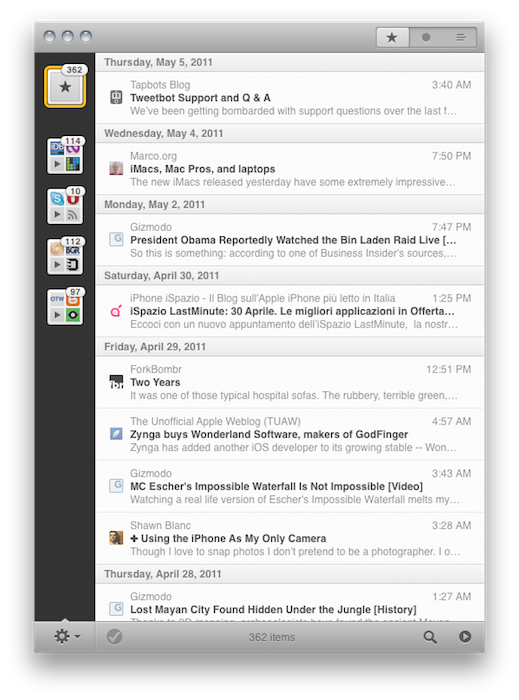
The new beta is available for download here. Without re-reviewing the app all over again (in spite of the additions it still retains 80% of the features seen in the first beta, reviewed here), I’d like to focus on the key areas that Rizzi improved, redesigned and, overall, simply evolved into something new. First off, the app comes with a new optional “minimized layout” that, following a trend started by the original Tweetie for Mac and later re-ignited by other apps like the popular Sparrow email client, places your Google Reader’s source favicons in a narrow sidebar on the left, with unread items in the main panel. The minimized layout, unlike the standard one, doesn’t come with a right panel to read articles: everything happens in a single window, much like Twitter for Mac doesn’t display additional sidebars and popovers when you’re interacting with your timeline. In the new Reeder beta, clicking on a title will open the article (with a neat animation) in the same panel; tap the close button, and the article will bounce back to reveal the main list of feeds again. In this new single-window approach, all the interactions with Google Reader or external services either happen though gestures or keyboard shortcuts – support for both of them has been improved in the new version.

Reeder for Mac retains an iOS-like feel that’s even more visible in today’s beta. The app was accused of being the first iOS app coming to the Mac without considering the nature of the desktop platform; however, as Apple is proving with the Lion developer builds and the latest updates to its flagship applications, it really looks like the future of the Mac will be heavily inspired by iOS. Back to the Mac, as Steve Jobs said, and Rizzi knows this. Reeder for Mac feels like a desktop iOS app more than ever, with support for swipes and pinches to navigate and open / close articles, monochrome icons in the top toolbar to share an article or open it in the browser, and a general feel attached to it that makes Reeder perfect for OS X Lion already, in spite of the OS not being available yet. Whilst the classic reading mode reminds us this is a desktop application meant for RSS power users with lots of features and deep Google Reader integration, the minimized mode and enhanced gesture-based navigation proves, once again, that Reeder is an app with an iOS background that’s coming to a new Mac ecosystem, the one that will start populating our MacBooks and iMacs this summer.

The app is far from finished, though. Whilst Rizzi tells me he’s still planning on making the app available through the Mac App Store, there are some aspects of the app that are not yet completed, such as full subscription management and downloads. However, this new beta confirms that the developer has been busy addressing the issues reported in the first versions: search finally works, and he even implemented a new “appearance” settings panel that will allow you to change Reeder’s color scheme from the much criticized sepia background to something more Mac-like. I love this preference panel: I’m a “standard” user as you can tell from the screenshots in this post, and I appreciate the little touches like the Preferences window fading to let you see the modifications you’re making to the app. Furthermore, the “article list row height” slider enables me to make the app even more minimal with narrower headlines. I quickly skim through hundreds of headlines in my daily news workflow, and I don’t really need to see a three-line preview before deciding to open an entire article. That’s why minimized mode works for me (by the way, you can switch between the two modes at any time by hitting a button in the bottom toolbar).

One thing I’ve always wanted from Reeder for Mac but Rizzi never implemented is the ability to click on a website’s favicon in the upper toolbar to reveal options like “unsubscribe from this source” or “refresh this source only.” Perhaps they’ll come in the final release – which should happen relatively soon at this point, considering the entire app has been rewritten since the original beta and most of the functionalities are working.

Overall, this new beta of Reeder is a terrific improvement over the past version, which was aimed at porting the Reeder experience to OS X, but perhaps lacked the right amount of features that could make it absolutely stand out. With minimized mode, more gestures and an iOS-like approach to news reading, Reeder for Mac leads the way for great things to come. Download the beta here, and check out more screenshots below. Read more



Rovio Nominated for Three Develop Awards

When people spend 200 million minutes playing your game every day, you’d start thinking you’ve done some good to the world of mobile games. Rovio, makers of Angry Birds, have been nominated for three different Develop awards, as noted by TUAW, which include Best Use of a License or IP, Best Indie Studio, and Best Handheld Studio. The Develop awards focus on the best names in the video game and software interaction industry, and Rovio’s inclusion in the nominations doesn’t surprise at all: the last 12 months have been insane for the Finnish company, which saw its game become the most popular in the App Store worldwide and collaborated with Hollywood studios for a spin-off of the series based on animated film Rio.

The Develop Industry Excellence Awards will take place on Wednesday, July 20th, 2011 at the Hilton Brighton Metropole Hotel, UK. The awards and categories include sections like Technical Innovation and Audio Accomplishment, as well as Business Development and Publishing Hero. We’re pretty sure Rovio will manage to bring home some awards this summer – which will also see the release of new Angry Birds games including, perhaps, a real sequel to the original iPhone game.


Conde Nast Will Implement Apple’s Subscriptions Starting Next Week

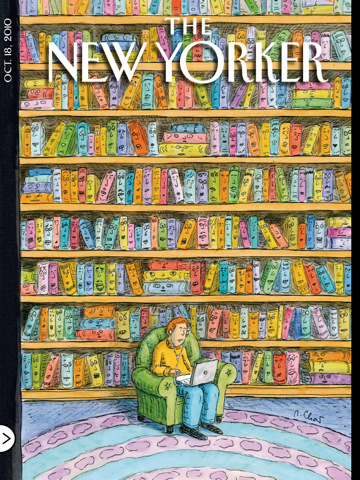
Over the past weeks, several reports pointed to major publishers and publications starting to use Apple’s in-app subscriptions in their magazine and newspaper apps for iPad, quite possibly ahead of the rumored June 30 deadline that will require developers of existing “publishing apps” to implement subscriptions, or get pulled from the App Store. Following the big names from the last weeks – Hearst confirming subscriptions coming with the July issues of magazines like Popular Mechanics and Oprah Magazine or Time Inc. inking a deal with Apple over free access for print subscribers – The New York Post reports Conde Nast, publishers of dozens of magazines also available on the iPad in digital form, will begin relying on in-app subscriptions starting next week with The New Yorker, available on the iPad since last September. The decision to move forward with subscriptions and The New Yorker apparently came after the death of Osama bin Laden, with Conde Nast looking to “capitalize” on the coverage through subscriptions and digital content for iPad.

Conde Nast is very close to a deal to begin selling digital subscriptions via Apple’s iPad.

The New Yorker will become the first publication from the S.I. Newhouse, Jr., empire to be available via subscription on the popular tablet, and it will happen early next week, said a source familiar with the situation.

Conde Nast is also planning on dramatically slashing the prices of single-issue downloads for other iPad magazines like Wired, Golf Digest, Glamour, Vanity Fair, Self, Allure and GQ: the issues will be sold in-app at $1.99, down from the current $4.99 and $3.99 (Glamour). This will keep the prices in line with the current newsstand print editions, and it will also allow Conde Nast to sell annual iPad subscriptions at $19.99. With developers and publishers expected to implement subscriptions before the end of next month, the amount of magazines and newspapers featuring subscriptions will likely increase, allowing Apple to showcase even more in the App Store’s homepage.


Apple Negotiating With Nuance Over Voice Recognition Technology?

A TechCrunch post from late yesterday suggests that Apple and voice recognition company Nuance have been negotiating a deal for months following Apple’s acquisition of Siri. Siri, which Apple acquired last April, developed an iPhone app that was marketed as a “virtual personal assistant” and would listen to audible questions from a user (such as “where can I find parking around here”), and would respond with an answer.

In a previous report, TechCrunch said that they believed the acquisition of Siri would lead to iOS 5 having “assistance technology [that] is said to be deeply integrated into the OS for all the different services offered.” However, Apple has had to renegotiate deals with all the partners of Siri since it acquired them and apparently the one hold out is Nuance. According to TechCrunch’s sources, the negotiations between Apple could be as big as an acquisition or just a partnership.

Apparently an acquisition is unlikely at this stage, likely for a number of reasons mainly surrounding the cost; Nuance is a public company valued at over $6 billion, furthermore much of that value is because of various licensing deals that would likely be stopped if Apple bought Nuance. The other alternative is that Apple partners Nuance and licenses the voice recognition technology; and at this stage it is the more likely option according to TechCrunch’s sources. The hold up is apparently because of Nuance CEO Paul Ricci being a “really hard bargainer”, going as hard as Steve Jobs would in the negotiations and resulting in a standoff between the two companies.

Apple does have alternatives to dealing with Nuance, it could build its own service but this would be fraught with legal issues (Nuance holds many patents) and would take time (that Apple may not want to spend) or it could go with Google, but given the current smartphone battle this seems unlikely. Consequently it seems unlikely that Apple has any good alternative here, particularly given how well the Nuance voice recognition technology works.

With with WWDC rapidly approaching, and iOS 5 fairly likely to make some kind of appearance, one would presume that Apple would be at this stage rushing to finalise a deal with Nuance, particularly if it is a major cornerstone of the iOS 5 experience. One final point made by MG Siegler in the article is that;

And the truth is that Nuance needs Apple too. Not only are they also threatened by Google, but Nuance technology is simply not very meaningful without apps that utilize it like Siri. And many of those apps are appearing guess where: iOS.

[Via TechCrunch]


Giveaway: Transfer Files, Manage Computers, and Log In with LogMeIn Ignition

LogMeIn Ignition for the iPad and iPhone has long been my favorite choice as the app that I use to remotely connect to my desktop and laptop computers when I’m on campus or away from my office. What I really appreciate about LogMeIn Ignition is that setup is super easy (just like with all LogMeIn products), requiring nothing more than a download of their client software that gives you always on, always secure access to your Desktop screen.

Recently, LogMeIn updated their iOS app with the ability to transfer files between machines running LogMeIn’s desktop client, and to your iPad so you can cache files locally if you forgot to push that business report to Dropbox. While we’re impressed with the spaces-like-ability to remotely manage so many machines at once all while transferring files, I’m even more impressed with just how good LogMeIn’s on-screen controls are. Unlike other apps that require lots of fidgeting with touches, taps, and scrolls, I feel LogMeIn has done the best in creating the most user-friendly experience. As the mouse cursor moves in tandem with your finger, you can make taps, double-taps, and pinch actions anywhere on the screen, and LogMeIn will intuitively perform click and right-click actions while zooming windows into focus. Performance remains buttery smooth as well (especially over WiFi), thanks to the ability to fine-tune how the desktop is presented on your 1024x768 display. If you’re helping a customer via one of LogMeIn’s Pro² account (or simply helping a friend with a free account), you can retain the desktop’s screen resolution and simultaneously remove effects and wallpaper; the configuration options are smart, friendly, and unobtrusive.

LogMeIn Ignition doesn’t require a subscription to use for personal use, and only costs $29.99 as a universal app in the App Store. Best experienced on the iPad with the great real estate it offers, you’ll have immediate access to your Windows PCs or Macs on the road at any time. LogMeIn has given us three copies of the app to give away to our readers, which we are incredibly excited to share with you. You’ll find all the rules and details you need after the break.

Read more