Posts in stories

Working with Mavericks After A Year of iPad

I don’t need my Mac as much as I used to.

When I started MacStories in April 2009, I had a late–2008 MacBook Pro and an original iPhone I had bought from the United States and unlocked to make it work in Italy. From 2008 and until the better part of 2012, my MacBook Pro (and then the Air) was my primary computer: it was the device I used to write, browse the web for research and leisure, respond to emails, and do all the other tasks to get work done on a daily basis. Because my Mac was also the only device that could allow me to manage MacStories, I had to bring it with me on trips or longer vacations.

I’ve always been the kind of Mac user who likes to enhance his OS X experience with little scripts, shortcuts, and automation tools to save a few minutes every day and speed up tedious work tasks. I have Keyboard Maestro macros to automatically resize and generate screenshots for my reviews; I have assigned hotkeys to actions that I run frequently; if necessary, I can trigger a Python script or AppleScript-based workflow and have OS X take care of a complex task for me. I fall into the category of OS X power users and I’m fond of the apps and utilities I rely upon. But, in the past year, I’ve found myself using them less and less because I enjoy working from iOS more.

Most of my work activities are related to writing: whether it’s an article, a quick research note, an email, or chatting with my co-workers, I spend a lot of time typing and assembling words in a way that (I hope) makes sense to my readers and colleagues. In the past year – as people who have been following this site know – I have realized that I can be as efficient on my iPhone and iPad as I am on my Mac. I was initially forced into my new iPad-first workflow by frequent hospitalizations and a general inability to use my MacBook Air for long writing sessions; after the initial “What do I do now” moment and annoyances, I’ve come to like iOS – and the iPad – more and more.

I haven’t listened to people who told me I couldn’t work from my iPad. Read more


iPad Air and Retina iPad mini: Our Complete Overview

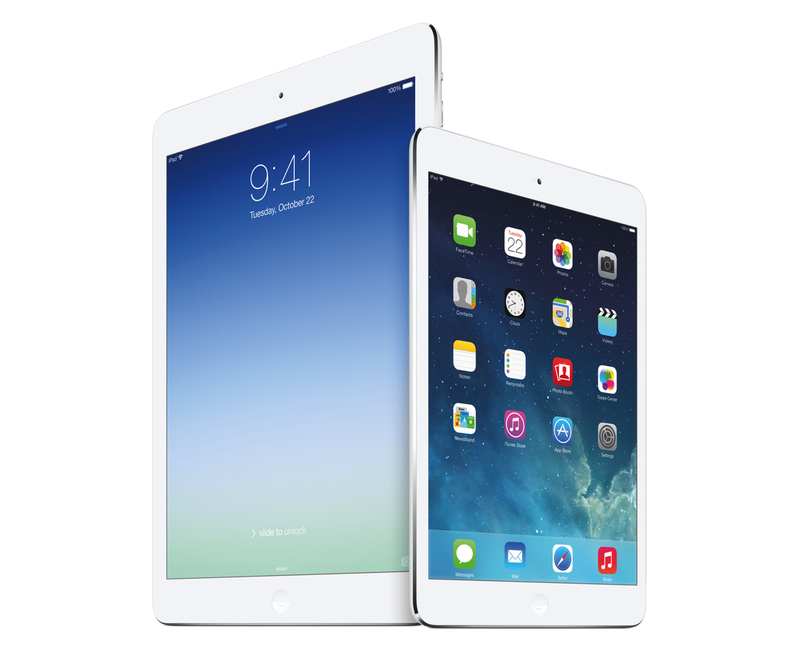
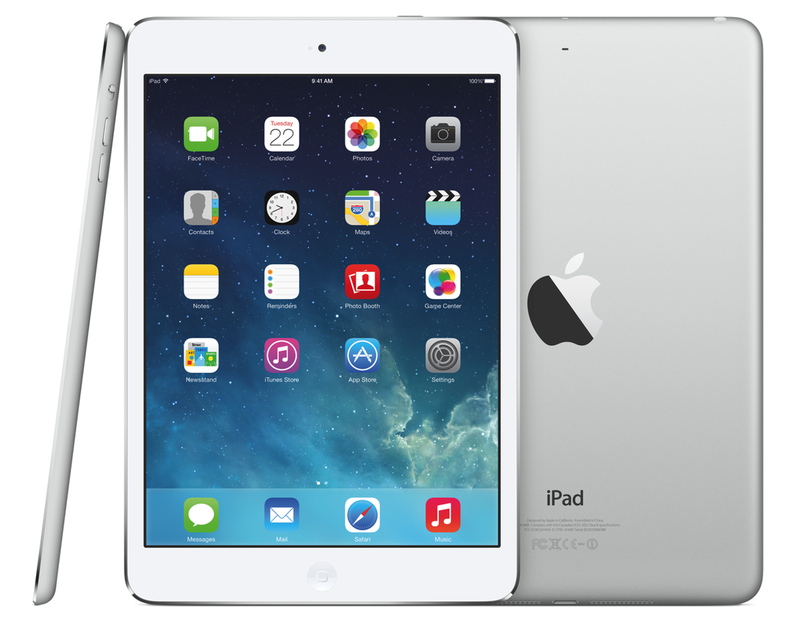
Phil Schiller took the stage today at Apple’s media event at the Yerba Buena Center for the Arts in San Francisco to officially unveil the iPad mini with Retina Display – the long-rumored successor to last year’s iPad mini – and the iPad Air, Apple’s new full-size iPad that replaces the old 4th generation iPad. Read more


Initial Impressions of the iPhone 5s

I chose the Space Gray model over Gold and Silver[1], and I think the gray looks fantastic. The gray is maybe closer to stainless steel in tone, a darker tint than the aluminum finish of the silver model or of today’s MacBooks. The original batch of hands-on photos and renderings don’t do the color justice. I think “gray” downplays its premium look.

This is my first iPhone with the 4-inch Retina display and the difference is tremendous. Upgrading from the now stubby looking iPhone 4s, the 5s feels slim and tall. It’s featherlight, slick, and surprisingly more comfortable than I thought it would be. I haven’t had to think about pulling down the Notification Center or reaching too far to hit a back button.

It’s so light that I ended up purchasing one of Apple’s new leather cases just to give the phone a little extra grip. I do have mixed feelings about the leather case. As far as I can tell, it’s a plastic shell covered in a stiff (but ever so slightly plush) leather. The case doesn’t feel too different from a Smart Cover for the iPad. While it looks supple, it’s not. It’s shaped so that it very tightly snugs the phone. It’s such a tight fit that getting it out is an exercise in patience. I pried the corners back getting the phone halfway out, and used a pencil eraser maneuver the rest of it out through the camera hole, pushing on the glass. To their credit, Apple made a case that doesn’t add much bulk or weight to the iPhone 5s, but it’s not a case you will want to take on or off everyday.

Upon setting up the 5s, you’re presented with the same iCloud setup screens as usual. I opted not to restore a backup from iCloud, instead choosing only to sync other info like contacts and calendars. Afterwards you’re asked to set up Touch ID, the new fingerprint sensor that’s installed underneath the modest Home button. I didn’t think the instructions were clear enough, but I was already familiar with setup thanks to the numerous amount of hands-on videos from popular tech sites. Once activated, it really does work like magic. Other fingers don’t trigger the sensor, and it unlocks almost immediately. I’m still getting used to not swiping and typing in a pin.

Interestingly, the ring around the sensor on the Space Gray iPhone doesn’t match the gray body. Instead it’s jet black, darker than even the slate color on the previous iPhone 5. Unlike the Silver and Gold models, the black Home button does appear more translucent.

I pre-ordered an album on iTunes (just a fingerprint required) and it just worked. The natural next step for Apple would be to use Touch ID for EasyPay purchases. Michael Norton and crew touch on the idea for retail purchases during Episode 72 of The Impromptu.

I’ve taken a few selfies (I’d rather not share those) and the quality of the front facing camera is excellent, much improved from the 4s. The rear facing camera is spectacular: a dimly lit setting (overcast sky and closed blinds) appears slightly warmer and brighter in the photograph with hardly any grain. Photos taken outside are fantastic as usual. It was daylight by the time I walked out of the store, so I have to try out the upgraded flash and low light capabilities in the evening. I can’t say right now, but I’m expecting the 5s to be a very impressive little camera.

I was looking forward to giving the motion sensor a brief spin, but I haven’t noticed the Nike+ Move app in the App Store yet. I don’t know if that was slated to launch today or next week, but I’m looking forward to giving it a test and seeing what impact there is on battery life.

Lastly there’s the performance. It’s blazing fast. Everything is buttery smooth, and parallax scrolling doesn’t feel like something I have to turn off. Just how powerful the A7 chip is will become apparent down the road, as people start noticing how much faster it is to do things like export movies and photos with upgraded apps. The fact that Apple was able to double the processing speed over last year’s model (which was already twice as fast as the 4s) is impressive.


  1. While it’s true that the Space Gray model was the only available color at my carrier’s store, it was what I originally wanted. What I think is interesting is how Apple possibly underestimated interest in the Gold models, since they appear to be both in high demand and in limited supply at Apple Stores.  ↩

Living with iOS 7

iOS 7, released today, is a deep reimagination of Apple’s mobile platform: using familiarity and the need for a reset as catalysts, iOS 7 represents Apple’s attempt to make iOS ready for the future. iOS 7 is, effectively, the epitome of a large company that knows it’s time to get rid of cruft and inconsistencies to bring a new order to a platform that has grown exponentially in the past five years. For developers, iOS 7 brings powerful new tools that will allow for a new generation of more flexible, intelligent, and versatile apps. iOS 7 is not perfect: there are rough spots and some wrong assumptions, but it’s not flawed or, as many will argue in the next few weeks, a “mistake”. It would be extremely silly and shortsighted to judge iOS 7 by the look of its application icons or the gradients Apple has decided to use on some graphics. More than any other Apple product, iOS 7 isn’t just defined but how it looks: iOS 7’s new look is devoted to functionality – to how things work.

It’s difficult for me to offer a comprehensive review of iOS 7 today, because I have only been able to test a fraction of the third-party apps I will use on a daily basis with my iPhone and iPad mini. Mirroring the concept of “design is how it works”, I would say that, for me, iOS isn’t just how Apple’s apps work on it – it’s increasingly become about how apps from third-party developers can take advantage of it.

I have been running iOS 7 on my iPhone 5 since Apple released the first beta in June. I later installed the OS on my iPad mini, and have been working with an iOS 7-only setup ever since. As MacStories readers know, I primarily work from my iOS devices, which helped me get a good idea of how iOS 7 will change the way I write, take photos, respond to emails, listen to music and podcasts, and all the other things that I use iOS for.[1] Fortunately, I had the chance to test a good amount of third-party apps that solidified my thoughts on iOS 7 and the way it impacts my digital life and workflow.

It was also hard to get ahold of fellow iOS 7 users in my town. While I imagine that it would be easier to come across a nerd running an iOS 7 beta at a bar in San Francisco, I didn’t have much luck in Viterbo, Italy. I tested new features like AirDrop – which allows you to share files and information locally with other iOS 7 devices – with my iPhone and iPad, and, in the past week, managed to convince my girlfriend to install iOS 7 on her iPhone.

I needed to provide this context: my livelihood directly depends on iOS and how I can work from my iPhone and iPad without having to use my Mac. Therefore, if you’re looking for a list of new features and smaller details of iOS 7 (and there are many), bookmark this article. My “review” of iOS 7 will focus on my thoughts on the update, how it made my iPhone and iPad better devices, and what I believe iOS’ future will be going forward.
Read more


Should You Buy the iPhone 5c or the iPhone 5s? A Helpful Recommendation Guide

On September 10th, 2013, Apple introduced two new iPhones: iPhone 5c, and iPhone 5s. The iPhone 5c comes in an array of colors, is made of polycarbonate, and is marketed as an everyday fun phone. Apple’s flagship model, the iPhone 5s, is made of premium materials like glass and aluminum, and is presented as a phone that showcases upcoming technologies that will eventually become standard. This guide is designed to help you choose the phone that’s right for you.

If you currently have the iPhone 5, don’t worry. The latest technologies announced with the iPhone 5s will still be there in Apple’s next flagship phone with refinements and mature apps that take advantage of it all. Wait another year if you’re locked into a two year contract.

If you have the iPhone 4S or an earlier model, and you’re near the end of your two year contract, it’s time to upgrade.

While the following advice is specific to those living in the United States, mainly due to pricing and availability, much of the advice is applicable worldwide. Read more


The Invisible Interplay

Traditionally, Apple likes to pride itself upon the tight integration of hardware and software they achieve in their products. As a company that builds devices and creates the software that runs on them, Apple can control fundamental aspects of the user experience such as Siri being based on a dedicated noise-reduction technology and iOS not recognizing accidental touches on the iPad mini’s smaller bezels, as well as subtle details such as OS X stopping a Mac’s fans when Dictation is active or quickly muting an iPad’s volume if you hold the volume button down for a few seconds.

The “interplay” of Apple’s hardware and software is nothing new, but I believe it was more apparent than ever today with the iPhone 5s, iOS 7, the A7 and M7 chips, and Touch ID. Read more


iPhone 5s: Our Complete Overview

At a keynote held today in Cupertino, Apple’s Senior Vice President of Worldwide Marketing Phil Schiller officially introduced the iPhone 5s, the successor to last year’s iPhone 5 and the major new entry in the iPhone line-up. Schiller referred to it as the “most forward-thinking phone anyone has ever made”.

As widely expected, the iPhone 5s has the same industrial design of the iPhone 5, with an anodized aluminum back and diamond cut chamfered edges and glass inlays, 4-inch Retina display, and Lightning connector. However, the iPhone 5s comes with a visible change in the Home button: through a brand new system called Touch ID, a sensor available under the Home button will allow iOS to recognize a user’s fingerprint for authorization and security purposes. Read more


On OmniKeyMaster’s Shutdown

Two weeks ago, The Omni Group announced an app called OmniKeyMaster aimed at letting customers migrate from Mac App Store licenses to standalone ones that supported upgrade pricing:

OmniKeyMaster is a simple app that finds App Store copies of Omni apps installed on your Mac, then generates equivalent licenses from our store – for free. This gives Mac App Store customers access to discounted pricing when upgrading from the Standard edition to Professional, or when upgrading from one major version to the next. Another benefit: since they don’t have to wait in an approval queue, our direct releases sometimes get earlier access to new features and bug fixes. OmniKeyMaster lets App Store customers access those builds, as well.

Today, The Omni Group had to remove the app, presumably after pressure from Apple:

My apologies: I’m afraid we will not be able to offer upgrade pricing to our Mac App Store customers after all. So long as we continue to sell our apps through the Mac App Store, we are not allowed to distribute updates through other channels to apps which were purchased from the App Store.

This is strange, because a number of similar tools (made by other independent developers) already exist on the Internet and they have been letting customers generate standalone licenses for several months. Perhaps Apple just didn’t like that a name such as The Omni Group had found a way to make the process so easy? Was The Omni Group’s tool built in such a way that it broke some Apple rules? Did The Omni Group think OmniKeyMaster would be okay because other solutions existed? Is Apple going after similar solutions as well?

Stephen Hackett argues that The Omni Group should have foreseen this, but that the Mac App Store is, overall, good for most third-party developers:

While The Omni Group is probably big enough to walk away from the Mac App Store, a lot of developers are enjoying a level of success in the Store that they couldn’t enjoy without it. Apple shouldn’t use that to strong-arm developers from trying to workaround the system. That puts both Apple and third-party developers in a pretty crappy spot.

I see both points. The Mac App Store is good for some developers and end customers, but it could be improved in so many ways. Is it a surprise that, after an initial rush to sell apps on the Mac App Store, more and more developers of apps above the $2.99 threshold (read: not games and utilities) have gone back to selling both App Store and “regular” versions?

The Omni Group wanted to do the right thing and offer upgrade pricing for customers who bought an app on the App Store. Apple doesn’t like the idea and leads by example with a new version of Logic Pro sold as a new app, without upgrade pricing. If my assumption is right and Apple is behind OmniKeyMaster’s premature demise – how could they not be? – that’s really sad.

Apple shouldn’t put pressure on developers who tried the Mac App Store model and didn’t like some parts of it. Instead of burying their head in the sand and pretending that developers who want upgrade pricing don’t exist, they should work with those developers to resolve their issues. The App Store launched in January 2011 and these aren’t new problems. If Apple doesn’t really care about upgrade pricing, it seems curious – to me, utterly wrong – that they’re going after a clever tool like OmniKeyMaster.

And if you think that it’s in Apple’s right to shut down OmniKeyMaster1, then I guess it won’t be a surprise if more developers will keep offering standalone versions of their apps in the future, possibly even eschewing the Mac App Store if necessary.

Most people don’t have time to care about these issues, because they like the convenience of the Mac App Store. But I do, and therefore, whenever possible, I try to buy Mac apps from a developer’s website. It’s worth the extra effort.


  1. In the way that OmniKeyMaster worked – as a separate app that wasn’t built into Omni’s App Store apps – I don’t think The Omni Group was violating Apple’s 7.1, 7.2, and 7.15 Mac App Store guidelines in any way. But, based on this tweet by Ken Case, it sounds like Apple has changed its mind. 

Nintendo Vs. Apple Pundits

Yesterday, Nintendo announced a new portable console to play 3DS games that doesn’t actually support the 3DS’ 3D effect, a price cut for the Wii U, and various release dates for its upcoming holiday line-up. Unsurprisingly, several Apple-focused writers and bloggers suggested – again – that Nintendo is doomed; that they should start making games for iOS; and that Apple should just outright buy Nintendo.

I believe this notion – that in order to survive, Nintendo has to start making games for the App Store – shows a profound misunderstanding of how Nintendo works, operates, and, generally, plans its long-term future. I have discussed the topic with Myke last night on The Prompt.

Lukas Mathis has published an excellent post that aptly sums up what is wrong with the new “default narrative” about Nintendo:

Mac users should be familiar with the argument against this reasoning. Fantastic games like Super Mario 3DS Land can only exist because Nintendo makes both the hardware and the software. That game simply could not exist on an iPhone.

But there’s an additional problem with this argument: the premise is completely wrong. Nintendo is actually not doing poorly in the portable market. iPhones have not destroyed the market for portable gaming devices. The 3DS is, in fact, doing very well.

Nintendo and Apple may share some similarities (namely, tight integration of hardware and software), but their execution is profoundly different. Following Nintendo’s history and patterns through the years and just looking at the company’s numbers reveals a different approach and strategy.

Again, from Mathis’ piece:

The hypothesis that Nintendo needs to abandon the hardware market because the iPhone destroyed the market for portable gaming just isn’t consistent with reality.

The idea that Nintendo should make games for iOS is fascinating, easy to grasp and follow, but flawed. Nintendo doesn’t work like Apple. And, more importantly, Nintendo can’t – and doesn’t want to – be Apple. Nintendo is a mix of a toy company and a game company: consoles exist to support Nintendo’s crown jewels – the games and first-party franchises.

Nobody is denying that the Wii U is doing poorly: the console needs more quality first and third-party games, a better marketing message (same for the upcoming 2DS), and a clearer position in the market. But the overall numbers paint a different picture than what some Apple pundits are claiming: the Wii U is only slightly behind the point where the GameCube was at the same point in the console’s lifespan – and Nintendo did manage to turn a profit on the GameCube. The Wii remains the top-selling console of the current generation. The first 130 weeks of sales of the 3DS – as Mathis also notes – are comparable to those of the Nintendo DS – the second (soon first?) best-selling console of all time. Again, to understand this all you need to do is look at Nintendo’s numbers.

Mobile “casual” games are selling millions of copies (in many cases, in-app purchases) today, and Nintendo’s portable game sales are healthy, too. Here’s just one data point: Animal Crossing sold 1.54 million copies in the last quarter (a month ago, it was up to 4.5 million copies sold since its original release). Assuming that Nintendo makes around $30 in average revenue on first-party games, that would make for $46 million in revenue, in a single quarter, on a single game. Want more examples? As of March 2013, Luigi’s Mansion sold 1.22 million copies; Super Mario 3D Land moved 8.19 million copies; Monster Hunter 3 – a third-party, four-year old game – sold 2.10 million copies; also as of March 2013, Mario Kart 7 sold 8.08 million copies. Here’s what Nintendo’s upcoming line-up looks like, and add Pokémon X & Y to that (the series’ DS games, Black & White 1/2, sold 23.05 copies combined as of January-March 2013).

The 2DS is controversial and it may seem to lack any sort of practical sense, but it’s actually basic Nintendo 101 (do these other revisions ring a bell?). Except that, this time, the 2DS is aimed at addressing concerns of 3D games for children and the whole point is to sell the 2DS to kids for the holiday season, possibly alongside a copy of Pokémon.

Nintendo’s strength right now is that, once again, they can revolve around the fulcrum of portable hardware and game sales to sustain their operation, turn a profit, and buy more time to fix the mess that was the Wii U launch. Saying that Nintendo should shut everything down, go home, and start making games for iOS is an easy but flawed solution that just isn’t supported by the facts.