Posts in news

Podcast Rewind: The 2025 MacStories Selects Awards, John’s Journey into Bazzite, Techy Clothes Shopping, and The Best Music of the Year

Enjoy the latest episodes from MacStories’ family of podcasts:

AppStories

This week, Federico and John reveal the winners of the 2025 MacStories Selects Awards, which celebrate the exceptional design, innovation, and creativity of apps across the iPhone, iPad, Mac, and Apple Watch.

On AppStories+, John has some Apple Music discovery tips for Federico, and they reveal the iPhone features they don’t use.

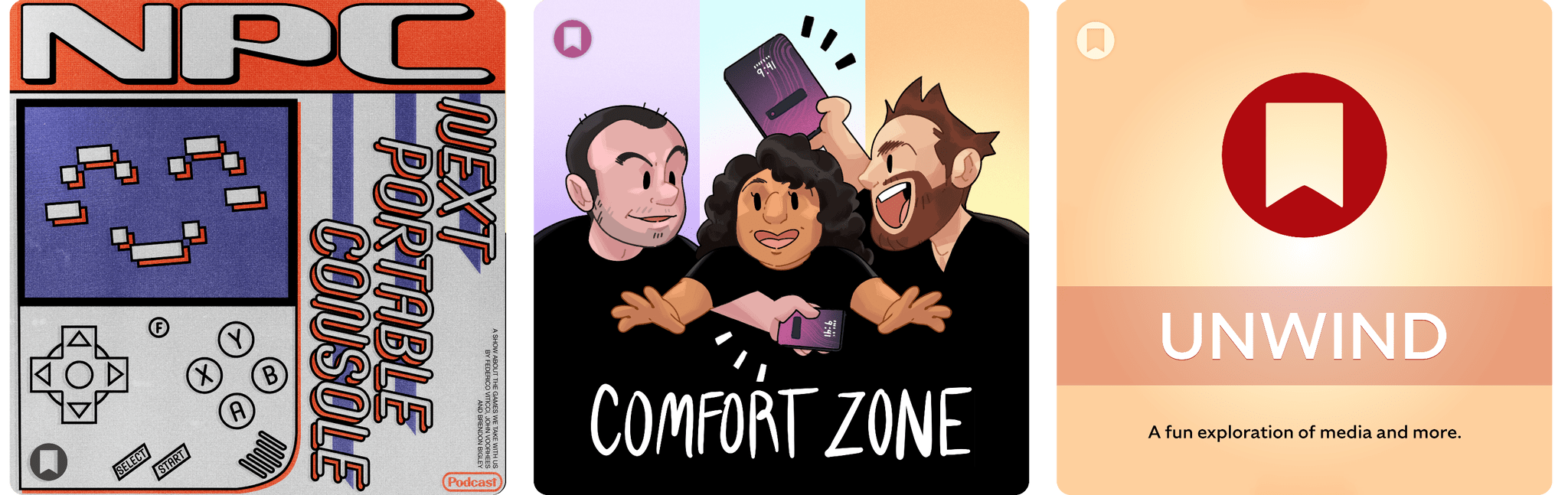
NPC: Next Portable Console

This week, handhelds are shipping for the holidays, AYANEO makes a bold bet on a phone, a new Strix Halo tablet one-ups the ASUS ROG Flow Z13, and John dips a toe in the Bazzite waters.

On NPC XL, Federico jumps into the Bazzite mini PC world, while Brendon is revisiting the iPod on handheld consoles.

Comfort Zone

Chris reflects on a big year of changes, Matt has turned his garage into a mini-factory, and the gang buys clothes, but in a techy way.

On Cozy Zone, we draft fonts…for real this time!

MacStories Unwind

This week, Federico and John close out the year by sharing their favorite music of 2025.

Read more


OpenAI Opens Up ChatGPT App Submissions to Developers

Announced earlier this year at OpenAI’s DevDay, developers may now submit ChatGPT apps for review and publication. OpenAI’s blog post explains that:

Apps extend ChatGPT conversations by bringing in new context and letting users take actions like order groceries, turn an outline into a slide deck, or search for an apartment.

Under the hood, OpenAI is using MCP, Model Context Protocol, which was pioneered by Anthropic late last year and donated to the Agentic AI Foundation last week.

Apps are currently available in the web version of ChatGPT from the sidebar or tools menu and, once connected, can be accessed by @mentioning them. Early participants include Adobe, which preannounced its apps last week, Apple Music, Spotify, Zillow, OpenTable, Figma, Canva, Expedia, Target, AllTrails, Instacart, and others.

I was hoping the Apple Music app would allow me to query my music library directly, but that’s not possible. Instead, it allows ChatGPT to do things like search Apple Music’s full catalog and generate playlists, which is useful but limited.

ChatGPT's Apple Music app lets you create playlists.

ChatGPT’s Apple Music app lets you create playlists.

Currently, there’s no way for developers to complete transactions inside ChatGPT. Instead, sales can be kicked to another app or the web, although OpenAI says it is exploring ways to offer transactions inside ChatGPT. Developers who want to submit an app must follow OpenAI’s app submission guidelines (sound familiar?) and can learn more from a variety of resources that OpenAI has made available.

A playlist generated by ChatGPT from a 40-year-old setlist.

A playlist generated by ChatGPT from a 40-year-old setlist.

I haven’t spent a lot of time with the apps that are available, but despite the lack of access to your library, the Apple Music integration can be useful when combined with ChatGPT’s world knowledge. I asked it to create a playlist of the songs that The Replacements played at a show I saw in 1985, and while I don’t recall the exact setlist, ChatGPT matched what’s on Setlist.fm, a user-maintained wiki of live shows. I could have made this playlist myself, but it was convenient to have ChatGPT do it instead, even if the Apple Music integration is limited to 25-song playlists, which meant that The Replacements’ setlist was split into two playlists.

We’re still in the early days of MCP, and participation by companies will depend on whether they can make incremental sales to users via ChatGPT. Still, there’s clearly potential for apps embedded in chatbots to take off.


Podcast Rewind: Vibe Coded Tools, Reading the Steam Tea Leaves, New Keyboard Layouts, and the Best Videogames of the Year

Enjoy the latest episodes from MacStories’ family of podcasts:

AppStories

This week, Federico and John explain how they go about creating personal productivity tools with the assistance of AI and walk through some of what they have created.

On AppStories+, we talk about our Black Friday tech purchases.

NPC: Next Portable Console

This week, AYANEO goes big – very, very big – and we read the tea leaves from Sean Hollister’s interview of Valve’s Pierre-Loup Griffais.

Then on NPC XL, no one could resist Black Friday, so everyone wound up with a new PC.

Comfort Zone

Chris is making a bunch of changes going into 2026, Niléane has another snazzy audio app update, and everyone navigates the pain of trying to use a new keyboard layout.

In the Cozy Zone, the gang drafted fonts. As you can image, strong opinions were felt.

MacStories Unwind

This week, Federico and John share their favorite videogames of 2025.

Read more


Awake: A Considered, Effective Alarm for Chronic Snoozers

Waking up on time is a quintessential human problem. Over the years, we’ve come up with all kinds of solutions, from ringing analog clocks to flashing lights to motorized digital clocks that roll away from our bedsides as they chime, forcing us to get up and find them to turn them off. But what if there was a way to use a device you already have – your phone – to help you break the habit of snoozing and actually get out of bed when you’re supposed to?

That’s what unorderly, the team behind the day planner app and App Store Awards 2025 finalist Structured, have set out to do with their new alarm app Awake. Built on the newly introduced AlarmKit API, which gives third-party alarm apps the same level of system access as Apple’s Clock app, Awake takes a comprehensive approach to setting alarms that’s meant not only to wake you up but to help you feel more alert and prepared for the day when you do.

If you’ve ever used Structured before, you’re aware of how deeply the unorderly team considers every element of their work, from the color scheme to the fine details of editing events, to make tools that are both elegant and powerful. I’m happy to report that the same level of care is reflected in Awake, both in its design and in the balance of simplicity and customization it offers.

Read more


Adobe Announces Image and PDF Integration with ChatGPT

Source: Adobe.

Source: Adobe.

Adobe announced today that it has teamed up with OpenAI to give ChatGPT users access to Photoshop, Express, and Acrobat from inside the chatbot. The new integration is available starting today at no additional cost to ChatGPT users.

Source: Adobe.

Source: Adobe.

In a press release to Business Wire, Adobe explains that its three apps can be used by ChatGPT users to:

  • Easily edit and uplevel images with Adobe Photoshop: Adjust a specific part of an image, fine tune image settings like brightness, contrast and exposure, and apply creative effects like Glitch and Glow – all while preserving the quality of the image.
  • Create and personalize designs with Adobe Express: Browse Adobe Express’ extensive library of professional designs to find the best one for any moment, fill in the text, replace images, animate designs and iterate on edits – all directly inside the chat and without needing to switch to another app – to create standout content for any occasion.
  • Transform and organize documents with Adobe Acrobat: Edit PDFs directly in the chat, extract text or tables, organize and merge multiple files, compress files and convert them to PDF while keeping formatting and quality intact. Acrobat for ChatGPT also enables people to easily redact sensitive details.
Source: Adobe.

Source: Adobe.

This strikes me as a savvy move by Adobe. Allowing users to request image and PDF edits and design documents with natural language prompts makes its tools more approachable. That could attract new users who later move to an Adobe subscription to get more control over their creations and Adobe’s other offerings.

From OpenAI’s standpoint, this is clearly a response to the consumer-facing Gemini features that Google has begun releasing, which include new image and video generation tools and reportedly caused Sam Altman to declare a “code red” inside the company. I understand the OpenAI freakout. Google has a huge user base and has been doing consumer products far longer than OpenAI, but I can’t say I’ve been very impressed with Gemini 3. Perhaps that’s simply because I don’t care for generative images and video, but these latest moves by Google and OpenAI make it clear that they see them as foundational to consumer-facing AI tools.


Letterboxd Reveals Details of New Video Store Available December 10 on Web, iOS, tvOS, and More

Letterboxd today announced full details of its previously teased Letterboxd Video Store, along with a launch date of December 10. It was also revealed that members will be able to access films on the platform via the existing Letterboxd app on iOS, iPadOS, and tvOS, as well as AirPlay, Chromecast, Android, and web.

Letterboxd claims Video Store is “the next evolution of the platform’s core mission of film discovery”. It builds on the hugely successful community platform, where members can log, rate, and review their film-watching, as well as follow and interact with other members’ reviews and film lists.

Video Store will follow a transactional video-on-demand rental model with no subscriptions, and the company says, “each title has been selected based on genuine member demand, while leaving room for discoveries the community has yet to find”. Pricing will take into account country, film availability, and life cycle. Launch films will be priced between $3.99 and $19.99 in the U.S.

Video Store will launch with just nine films, which seems to indicate how hand-picked the titles are and how difficult they may have been to procure. The initial batch – split across two themed “shelves” with more to come – includes Todd Haynes’s directorial debut, a restored Filipino classic, and a Cannes 2025 award winner.

Regarding the launch, co-founder and CEO Matthew Buchanan said:

We’re incredibly proud of what we and our community have built. We take their lead, and believe that has been integral to Letterboxd’s success. They tell us what’s really happening—a 1980s action film suddenly trending, a festival title from two years ago still being added to watchlists.

Video Store lets us act on that real demand, whether it’s helping a distributor unlock value from a forgotten gem in its vault or giving a filmmaker direct access to the audience they’ve been building on our platform. It’s our way of saying to the industry: let’s harness this interest to get films to the people who want them most.

Despite the very small collection of launch films, this is a big move for Letterboxd, a company that has so far resisted expanding beyond its core, beloved community framework. As a frequent user of the platform, I will be interested to see how they build on this and which films they add going forward.

Letterboxd wants this to be a way to champion filmmakers, find hidden gems, draw films out of vaults, and support the filmmaking ecosystem as a whole. In a time when traditional film studios are being swallowed up by big tech, it’s a refreshing approach to work directly with filmmakers, sales agents, and distributors to make films available to viewers.

What’s also interesting is the technological access to Letterboxd Video Store. Renting these titles will be as easy as opening Letterboxd’s existing app, and having direct access via Apple TV is a big win in my book.

Letterboxd Video Store launches December 10 at Letterboxd.com and in the Letterboxd app for iOS, iPadOS, tvOS, and Android. It will be accessible in the United States, Canada, the United Kingdom, Ireland, France, Spain, Australia, New Zealand, Germany, Austria, Italy, Sweden, Norway, Denmark, Finland, Iceland, the Netherlands, Poland, Portugal, Belgium, Switzerland, Greece, and Cyprus.


Apple’s Fitness+ Comes to New Countries and Gets New Language Support

Source: Apple.

Source: Apple.

On December 15, Apple is expanding Fitness+ to 28 new markets, including Chile, Hong Kong, India, Japan, the Netherlands, Singapore, and Taiwan, which will more than double the number of places with access to the service. The company is also dubbing fitness classes into Spanish, German, and Japanese, with the first two languages coming December 15, and Japanese dubbing coming early next year. K-Pop is being added as a new music genre to the service, too.

The dubbing of fitness classes into Spanish, German, and Japanese sounds like it’s using the same tech found in the Apple Watch’s Workout Buddy feature, which uses a generated voice based on existing instructors’ voices:

To help make Fitness+ even more welcoming to users around the world, the service is introducing digitally dubbed versions of workouts and meditations in Spanish and German, with Japanese dubbing to follow early next year alongside the availability of the service in Japan. The dubbed workouts and meditations feature a generated voice based on the actual voice of each of the 28 Fitness+ trainers.

I’ve been using Workout Buddy ever since watchOS 26 launched, and at least in English, the voices work well.

Last month, Mark Gurman wrote in his newsletter that Fitness+ was under review and might be folded into a broader health service. It may have been the case that the service was under review, but with the expansion into 49 total countries and the addition of new features, it appears that Apple has concluded Fitness is worth keeping as a standalone subscription.


Podcast Rewind: Black Friday Gadgets and This Year’s Best Shows and Movies

Enjoy the latest episodes from MacStories’ family of podcasts:

Comfort Zone

Matt wants to give the AirPods Pro 3 a piece of his mind, Niléane has another old school music app for the Mac, and everyone brings their best Black Friday deals. (Uh, hope you got them already. 😅)

This week’s Cozy Zone is the challenging TineGuessr, where you look at a photo and guess where and when it was taken. Easier said than done, or is the gang going to set a new world record?

MacStories Unwind

This week, Federico and John share their favorite TV shows and movies of 2025.

Read more


Apple Announces That Kate Adams, Its General Counsel, and Lisa Jackson, Head of Environment, Policy, and Social Initiatives, Are Retiring

If you thought Apple’s leadership changes were finished, you’d be wrong. Today, the company announced two more changes.

The first change is to Apple’s General Counsel position, which has been led by Kate Adams since 2017. Adams will step down as general counsel on March 1, 2026 and will be replaced by Jennifer Newstead, Meta’s recent general counsel. Newstead will begin her tenure at Apple at the beginning of 2026 as a senior vice president and report to Tim Cook.

The second change is that Lisa Jackson, Apple’s vice president for Environment, Policy, and Social Initiatives is retiring in late January 2026. Under her leadership, Apple says it has reduced its global greenhouse emissions by 60% in the past ten years. Upon Jackson’s retirement, Government Affairs will be handled by Adams who will be staying at Apple until late 2026 when she plans to retire herself, at which point Government Affairs will become Newstead’s responsibility. The team handling Environmental and Social Initiatives will report to Sabih Khan, Apple’s chief operating officer.

Although Apple doesn’t say so in its press release, it’s pretty clear that a few things are playing out among its executive ranks. First, a large number of them are approaching retirement age, and Apple is transitioning and changing roles internally to account for those who are retiring. Second, the company is dealing with departures like Alan Dye’s and what appears to be the less-than-voluntary retirement of John Giannandrea. Finally, the company is reducing the number of Tim Cook’s direct reports, which is undoubtedly to simplify the transition to a new CEO in the relatively near future.