Posts in news

Podcast Rewind: Steam Controllers on a Boat, Life with the MacBook Neo, North Carolina BBQ, and an Interview with Nate Parrott

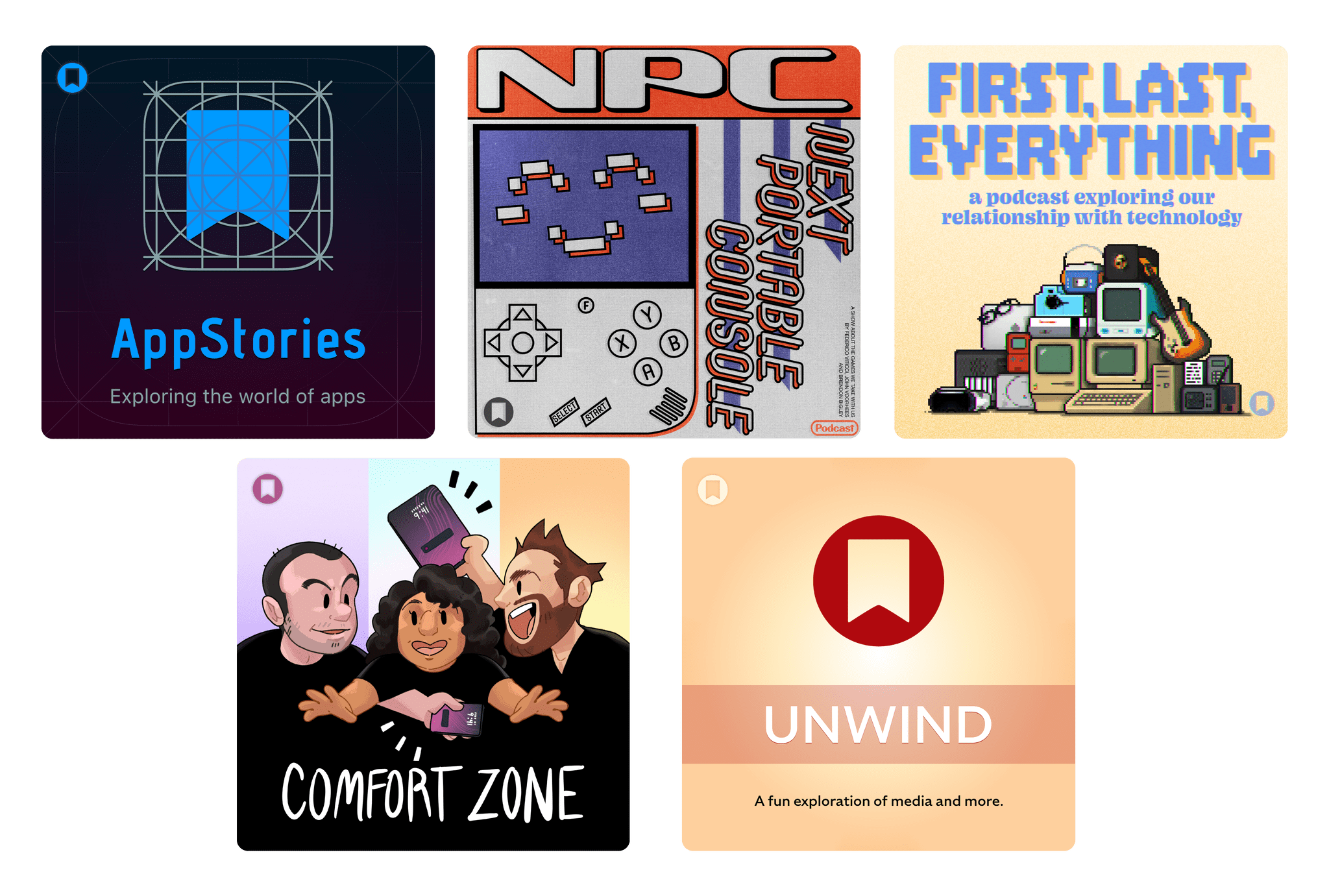
Enjoy the latest episodes from MacStories’ family of podcasts:

AppStories

This week, we draw from Federico’s experience creating the Apple Frames 4 shortcut and CLI to discuss the multiplier effect that AI agents can have in the hands of someone with deep domain expertise.

On AppStories+, we share our AI agent mishaps and horror stories along with additional details on a John’s ongoing HomeKit makeover project.

NPC: Next Portable Console

This week, TrimUI’s slow drip of details on the Brick Pro continues, shipping manifests suggest the Steam Controller may beat the Steam Machine to market, and OnePlus makes a strong bid for weirdest handheld announcement of 2026.

Then on NPC XL, Federico reports on his trip to Romics and the trading card takeover of Italian comic-cons, plus how not to sell a “pristine” Nintendo DS.

First, Last, Everything

Jonathan is joined by Nate Parrott, a designer and coder known for his work as a founding designer at The Browser Company, working on Arc. He also creates playful software and apps that blend utility with whimsy.

Comfort Zone

Chris and Matt are on their own this week and do a deeper dive into the MacBook Neo after a month using it. Do they still love it? Hate it? Probably somewhere in the middle, huh?

On Cozy Zone, the gang tier lists macOS default wallpapers, and you just know someone’s going to have some very wrong opinions.

MacStories Unwind

This week, John schools Federico on the differences between Eastern and Western North Carolina BBQ before they both share several TV show and album picks for the weekend.

Read more


OpenAI Targets Coding and Knowledge Work with Its New GPT-5.5 Model

OpenAI announced GPT-5.5 and GPT-5.5 Pro today, which it says are faster and able to work more autonomously than the company’s previous models. It’s a message that is sure to interest business users whether their goal is accelerating software development or increasing productivity more generally. Some of the areas that OpenAI says GPT-5.5 and GPT-5.5 Pro excel at include:

  • writing and debugging code;
  • analyzing data;
  • conducting web research;
  • creating business documents such as spreadsheets and presentations;
  • using apps; and
  • juggling multiple tools.

In its press release, OpenAI claims that:

The gains are especially strong in agentic coding, computer use, knowledge work, and early scientific research—areas where progress depends on reasoning across context and taking action over time. GPT‑5.5 delivers this step up in intelligence without compromising on speed: larger, more capable models are often slower to serve, but GPT‑5.5 matches GPT‑5.4 per-token latency in real-world serving, while performing at a much higher level of intelligence. It also uses significantly fewer tokens to complete the same Codex tasks, making it more efficient as well as more capable.

I haven’t tried either model yet, but early reactions seem to support OpenAI’s claims that GPT-5.5 understands user intent better, requiring less precise instructions. The company says it is better at using the tools at its disposal, and checking its own work, too. OpenAI says the Pro model takes that up a notch, working faster on more complex tasks, such as programming, research, and document-intensive workflows. Whether the early hype translates into real-world gains that are noticeable in everday work, remains to be seen, but we shouldn’t have long to wait though, since GPT-5.5 is rolling out to users now.

GPT-5.5 is available in ChatGPT and Codex to Plus, Pro, Business, and Enterprise subscribers, and GPT-5.5 Pro is limited to Pro, Business, and Enterprise subscribers in ChatGPT. Neither model is available through OpenAI’s API, but the company says they will be soon.


Apple’s Executive Leadership Transition Announced

Source: Apple.

Source: Apple.

Apple today announced major changes to its executive leadership team. In short, John Ternus will become CEO, Tim Cook will become the Executive Chairman of the company’s board of directors, and Johny Srouji is chief hardware officer effective immediately.

Ternus, who is Apple’s senior vice president of Hardware Engineering, will fill the CEO role beginning on September 1, 2026. Between now and then, Cook will remain CEO and work with Ternus on his transition to CEO. As expected, Cook’s duties as Executive Chairman will include working with policymakers worldwide on behalf of the company. For his part, Srouji will become chief hardware officer effective immediately, taking on Ternus’ previous role with Hardware Engineering, as well as leading the hardware technologies organization.

Tim Cook had this to say of his time as CEO and Ternus’ appointment:

It has been the greatest privilege of my life to be the CEO of Apple and to have been trusted to lead such an extraordinary company. I love Apple with all of my being, and I am so grateful to have had the opportunity to work with a team of such ingenious, innovative, creative, and deeply caring people who have been unwavering in their dedication to enriching the lives of our customers and creating the best products and services in the world. John Ternus has the mind of an engineer, the soul of an innovator, and the heart to lead with integrity and with honor. He is a visionary whose contributions to Apple over 25 years are already too numerous to count, and he is without question the right person to lead Apple into the future. I could not be more confident in his abilities and his character, and I look forward to working closely with him on this transition and in my new role as executive chairman.

And, from John Ternus:

I am profoundly grateful for this opportunity to carry Apple’s mission forward. Having spent almost my entire career at Apple, I have been lucky to have worked under Steve Jobs and to have had Tim Cook as my mentor. It has been a privilege to help shape the products and experiences that have changed so much of how we interact with the world and with one another. I am filled with optimism about what we can achieve in the years to come, and I am so happy to know that the most talented people on earth are here at Apple, determined to be part of something bigger than any one of us. I am humbled to step into this role, and I promise to lead with the values and vision that have come to define this special place for half a century.

Source: Apple.

Source: Apple.

Although Ternus will no longer be running Hardware Engineering, it’s in good hands with Srouji, a pivotal figure in the transition to Apple silicon. As Tim Cook noted:

Johny is one of the most talented people I have ever had the privilege to work with. He has played a singular role in driving Apple’s silicon strategy, and his influence has been felt deeply not just inside the company, but across the industry. He has always led his organization with remarkable deftness and judgment, and time and again, his team has delivered breakthrough innovations that have transformed our products. We are incredibly fortunate to have him as Apple’s chief hardware officer.

Finally, be sure to read Tim Cook’s personal note to the Apple community. Cook is the CEO of one of the largest corporations in world history, but he’s also an individual, and it’s notes like this from Tim Cook the person that make Apple a special company:

This is not goodbye. But at this moment of transition, I wanted to take the opportunity to say thank you. Not on behalf of the company, this time, though there is a wellspring of gratitude for you that overflows inside our walls. But simply on behalf of me. Tim. A person who grew up in a rural place in a different time and, for these magical moments, got to be the CEO of the greatest company in the world. Thank you for the confidence and kindness you’ve shown me. Thank you for saying hi to me on the street and in our stores. Thank you for cheering alongside me when we unveiled a new product or service. Thank you, most of all, for believing in me to lead the company that has always put you at the center of our work. Every day we get up and think about what we can do to make your life a little bit better. And every day, you’ve made mine the best I could have asked for.

2026 is shaping up to be a very big year for Apple and we’re just four months in. Hang on everyone.


Podcast Rewind: Everything Apps, the RG Rotate, Pet Tech, TV Heists, and an Interview with Simon Pittman

Enjoy the latest episodes from MacStories’ family of podcasts:

AppStories

This week, we return to a topic that’s an old favorite: the Everything App in honor of OpenAI’s announcement that they are building a Super App.

On AppStories+, Federico consolidates the tools and services he uses.

NPC: Next Portable Console

This week, the SN Operator is delayed, an Ayn Odin non-drama, a new contender for weirdest handheld of 2026, even more on the RG Rotate, and how we find retro game shops.

On NPC XL, John and Brendon revisit the Ayn Thor six months later to check on how it’s going.

First, Last, Everything

Jonathan is joined by Simon Pittman, the tech and productivity creator behind ‘Better Creating’, known for teaching practical systems, thoughtful workflows, and how best to use tools like Notion and AI.

Comfort Zone

Matt has a new writing app, Niléane is becoming a true audiophile, and everyone tries to find Chris the best pet tech for his soon-to-be new puppy.

On Cozy Zone, the gang tier lists macOS default wallpapers, and you just know someone’s going to have some very wrong opinions.

MacStories Unwind

This week, pets, pints, Hue smart plugs, and a heist TV show.

Read more


OpenAI Unveils Codex “Superapp” Update with Computer Use, Automations, Built-In Browser, and More

Source: OpenAI.

Source: OpenAI.

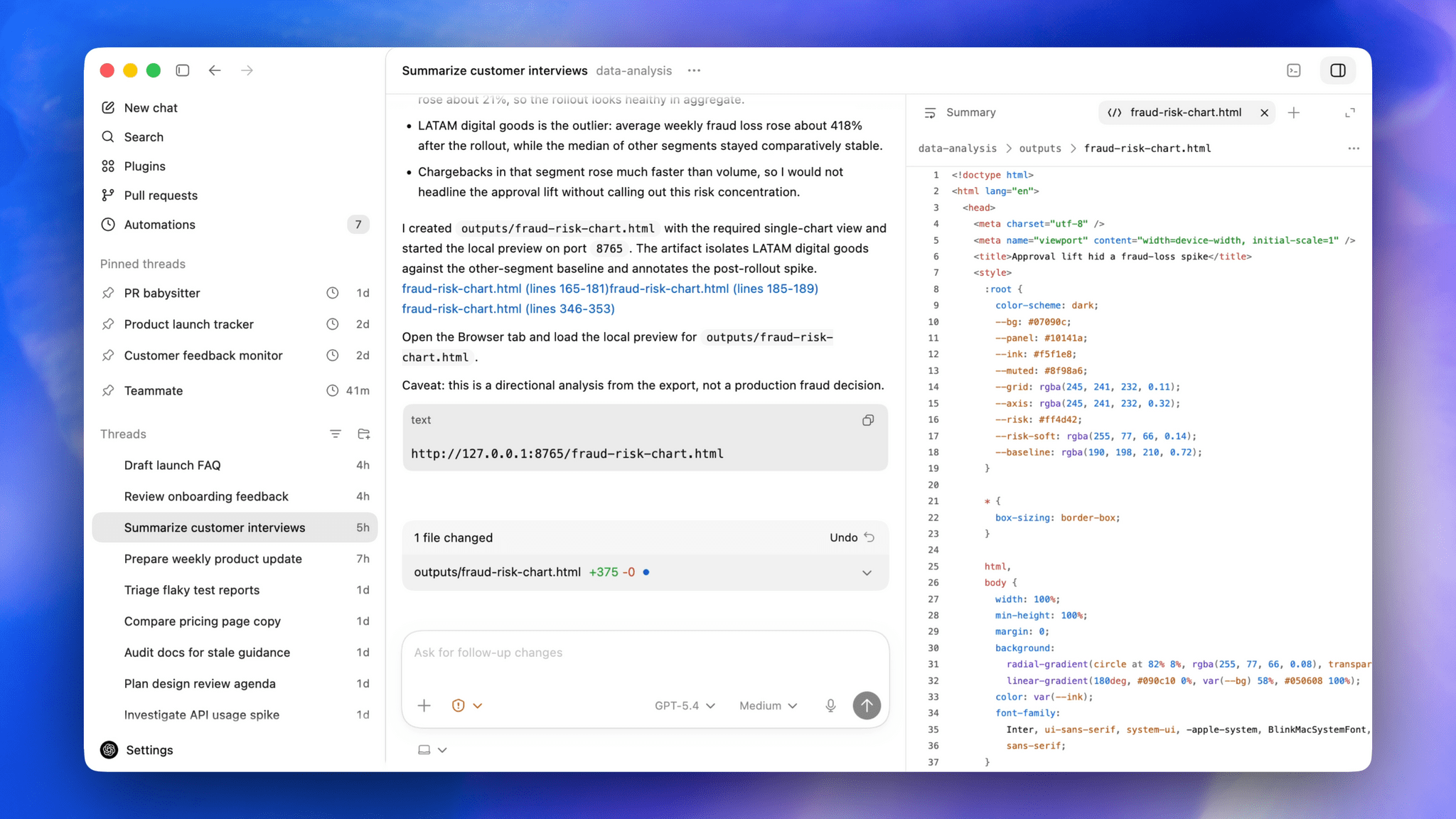
Today, OpenAI introduced a long list of productivity and coding updates to Codex. I haven’t had a chance to try the new features myself yet, but the demo OpenAI gave me was as impressive as the company’s message was clear: Codex isn’t just for coders anymore.

It was just over a week ago that OpenAI raised $122 billion in financing and announced it was shifting its focus to building a superapp that brings the capabilities of its models into a unified experience. It turns out that app is Codex, OpenAI’s app that, until today, was focused primarily on developing software.

However, according to OpenAI, 50% of Codex’s users were already giving it non-coding tasks to complete. Combined with the OS flexibility of a desktop environment, that made Codex the natural place to bring together a wide range of new productivity and coding features.

On the productivity side of things, the update allows Codex to operate your desktop apps, interacting with interface elements and inputting text, for example. We’ve seen computer use from other AI companies before, but one thing that sets Codex apart is its ability to work in your apps in the background so they don’t steal the focus from whatever app you’re already using.

Codex's built-in browser. Source: OpenAI

Codex’s built-in browser. Source: OpenAI

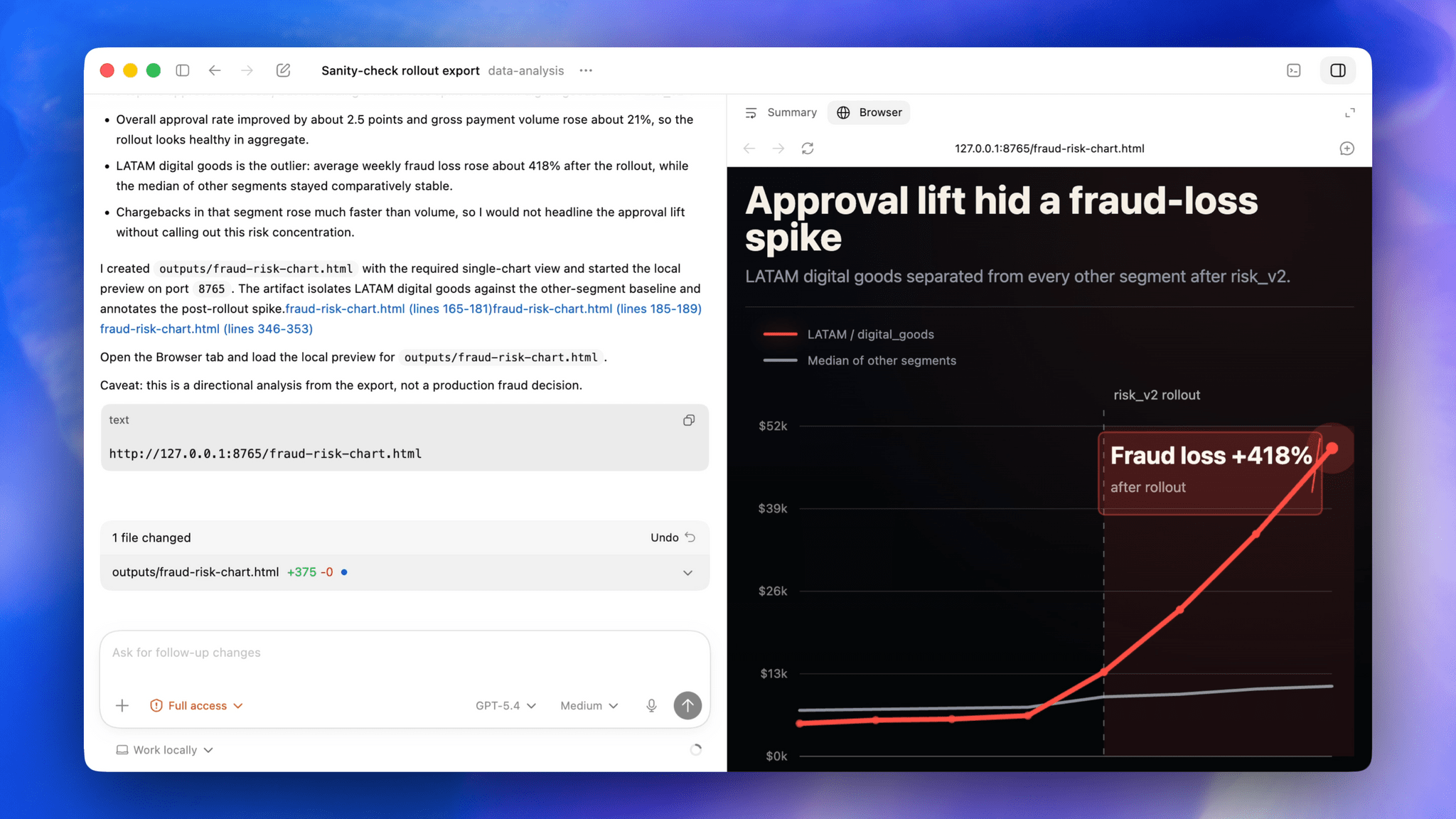
OpenAI has drawn aspects of its Atlas browser into Codex, too. This allows Codex to prototype websites and apps that users can comment on in-line, creating a tight feedback loop for refining designs. Currently, this feature is limited to running sites and apps via a local server setup, but OpenAI says it will be extended to incorporate actions like interacting with the greater Internet, taking screenshots, and stepping through user flows in the future.

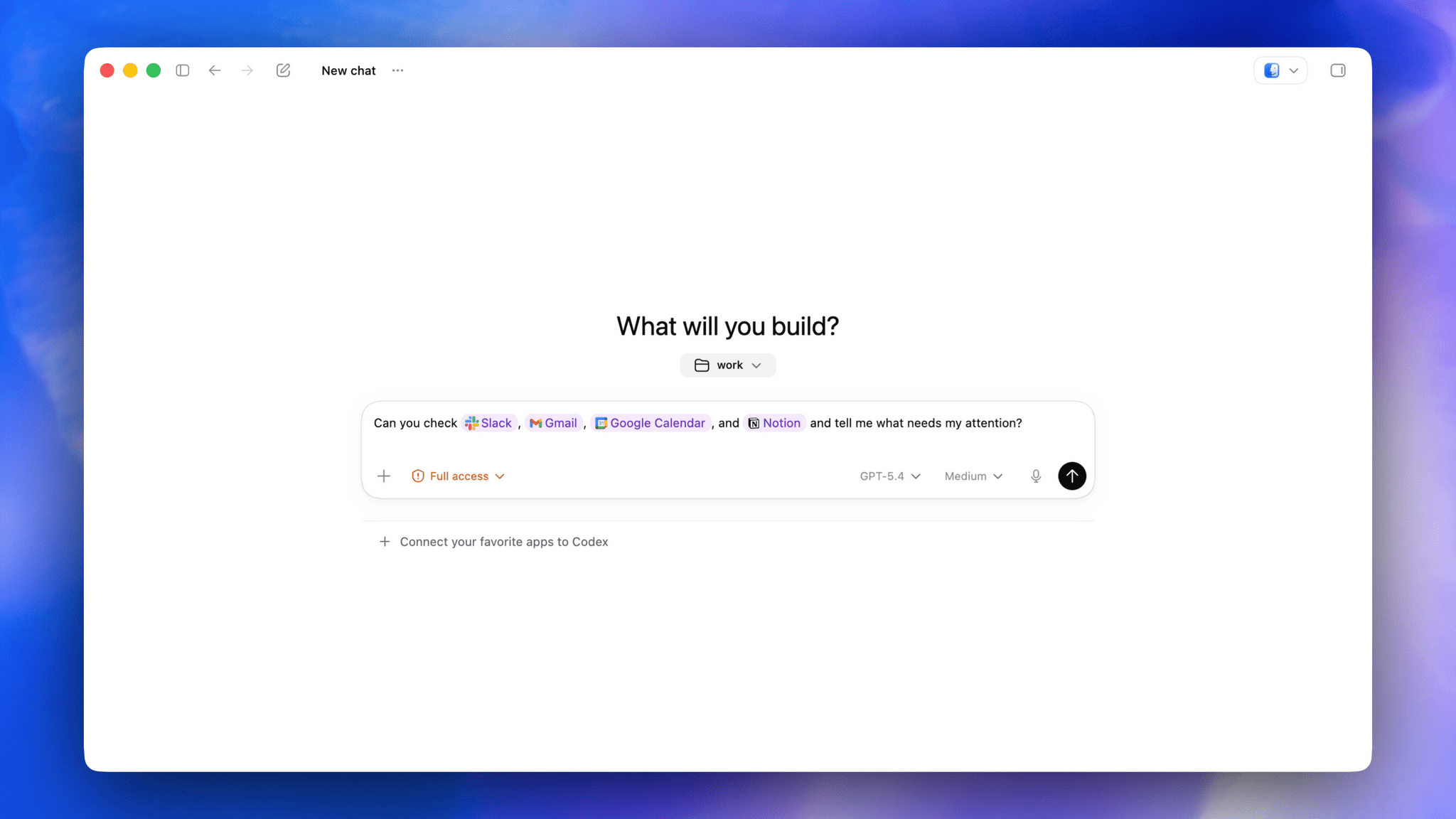
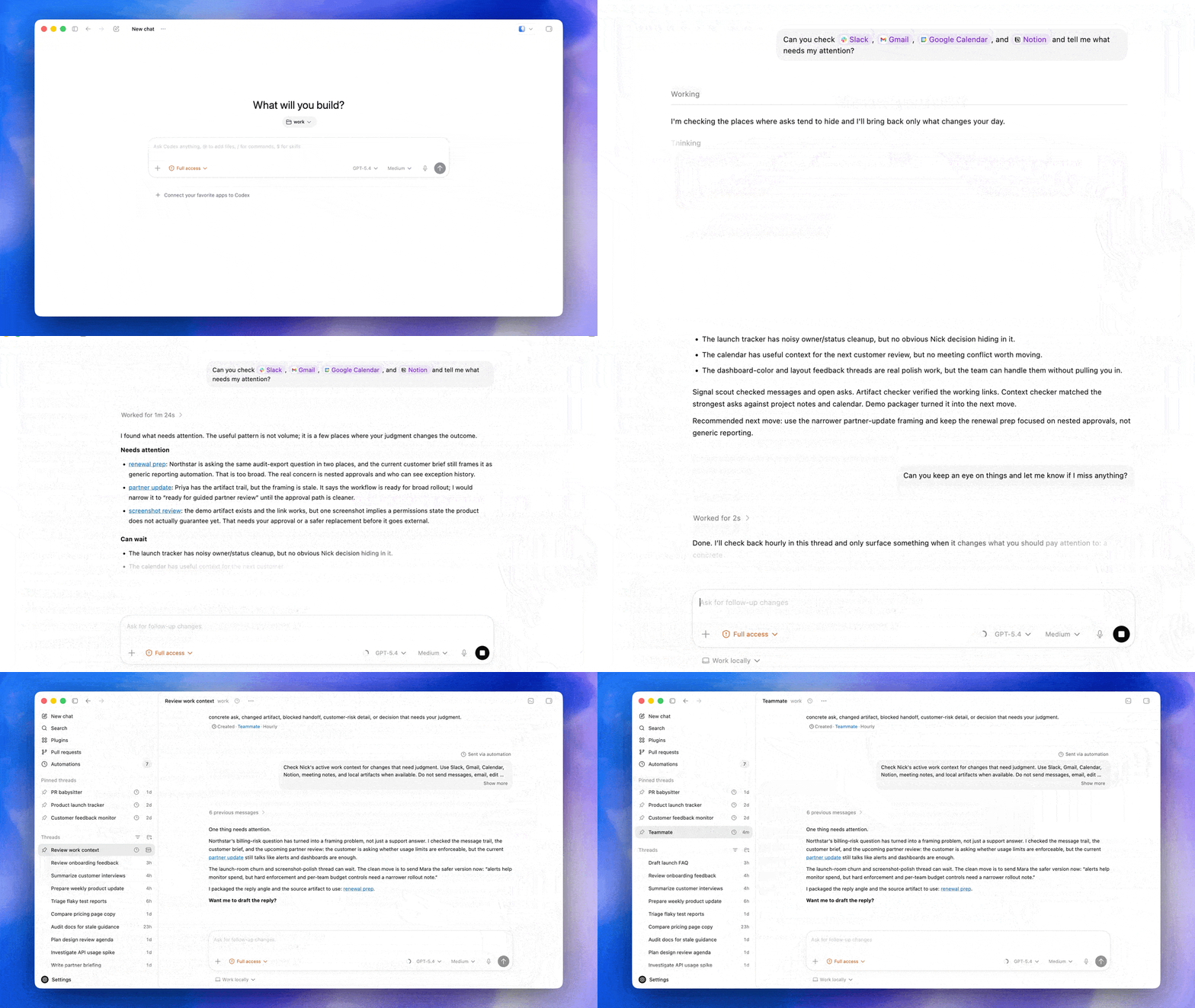
Plugins are taking a big leap forward as well, with over 100 being added to the mix. Like the Claude plugins that Anthropic offers, Codex plugins are composed of a bundle of skills, app integrations, and MCP servers. According to OpenAI, the list includes many popular third-party tools and services like the Microsoft suite, Atlassian Rovo, CodeRabbit, Render, and Superpowers. One of my favorite moments in the Codex demo I saw was a prompt that simply asked, “Can you check Slack, Gmail, Google Calendar, and Notion and tell me what needs my attention?” It’s the sort of query that I think a lot of people can relate to as they start a busy day, and it’s all driven by stacking multiple plugins.

Plugins in action. Source: OpenAI.

Plugins in action. Source: OpenAI.

OpenAI is also testing an enhancement of Codex’s memory feature as a preview that learns from you as you work. Codex will pick up on your preferences, corrections you make, and context from the tasks you give it. This is the sort of feature that is hard to demo, so I don’t have a good sense for it yet, but I expect that over time, its practical utility will become more clear.

One place OpenAI says Codex’s enhanced memory system will help is with new proactive suggestions. As the app learns your preferences and work patterns, it will offer suggestions on what to do next or where to pick up where you left off. Again, how well this will work in practice remains to be seen, but this is exactly the sort of thing that has made OpenClaw so popular. Having an agent that understands your preferences and accesses your messages, files, and other data in a proactive way can be incredibly useful if done well.

Automations. Source: OpenAI.

Automations. Source: OpenAI.

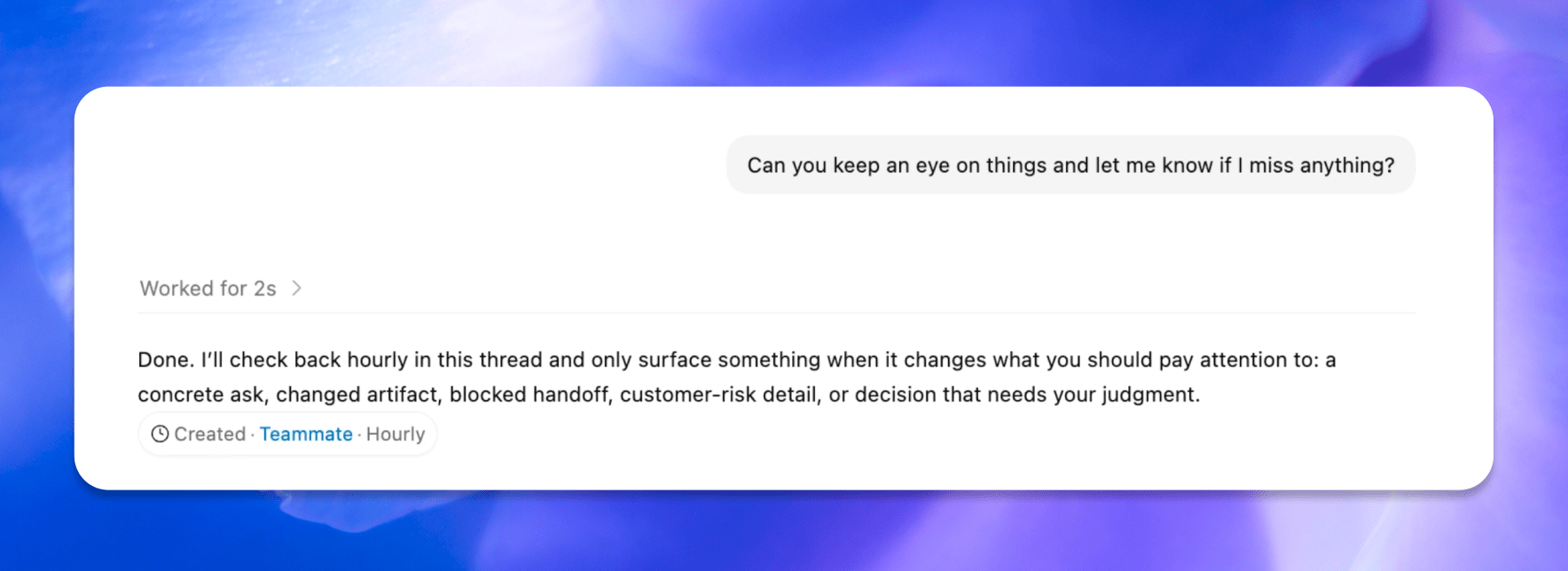
Automations have been expanded, too, allowing Codex to use past threads and schedule tasks over days or weeks. These heartbeat automations stay in the same Codex thread and can be modified by the model itself, allowing it to schedule its own follow-ups – again, very much like OpenClaw.

Also new to Codex is support for gpt-image-1.5 for creating image assets as part of workflows like creating presentations, website mockups, and product concepts.

Developers get new sidebar tools and more. Source: OpenAI

Developers get new sidebar tools and more. Source: OpenAI

Although the focus of today’s update is on productivity, developers haven’t been forgotten. New development features include:

  • Fast frontend iteration using a combination of the in-app browser, computer use, and image generation tools;
  • Multiple terminal tabs;
  • A file sidebar for previewing PDFs, spreadsheets, slides, and other formats;
  • GitHub PR review support, allowing for review of comments inside Codex;
  • A summary pane that tracks plans, sources, and artifacts in a single view; and
  • Remote devbox SSH, an alpha feature for connecting to remote development environments.

That’s a lot, but with more than three million users per week, Codex has proven its popularity well beyond its core coding audience. I’m still skeptical about how much functionality a single app can support, especially when OpenAI addresses the mobile market. I also wonder whether Codex’s productivity and developer tools can coexist without alienating some segment of the app’s users. However, proactive automation of busy work and sifting through mountains of messages and other data is precisely what I’ve wanted from Codex from the start. I’ve seen what it can do when I’m working on a script or app and can’t wait to apply that to my everyday work, too.

Today’s Codex update is available in the desktop app to users with a signed-in ChatGPT account. Computer use is a Mac-only feature at launch (undoubtedly thanks to macOS’s deep accessibility support that was the basis of the same sort of computer use magic we saw in Sky, which was acquired by OpenAI last year), and a rollout of the new features will happen in the EU later. Personalization features like proactive suggestions and the memory enhancements will be coming to Enterprise, Edu, and EU users soon, too.


Google Releases Gemini for Mac

Google released a native Mac app for its Gemini chatbot today.

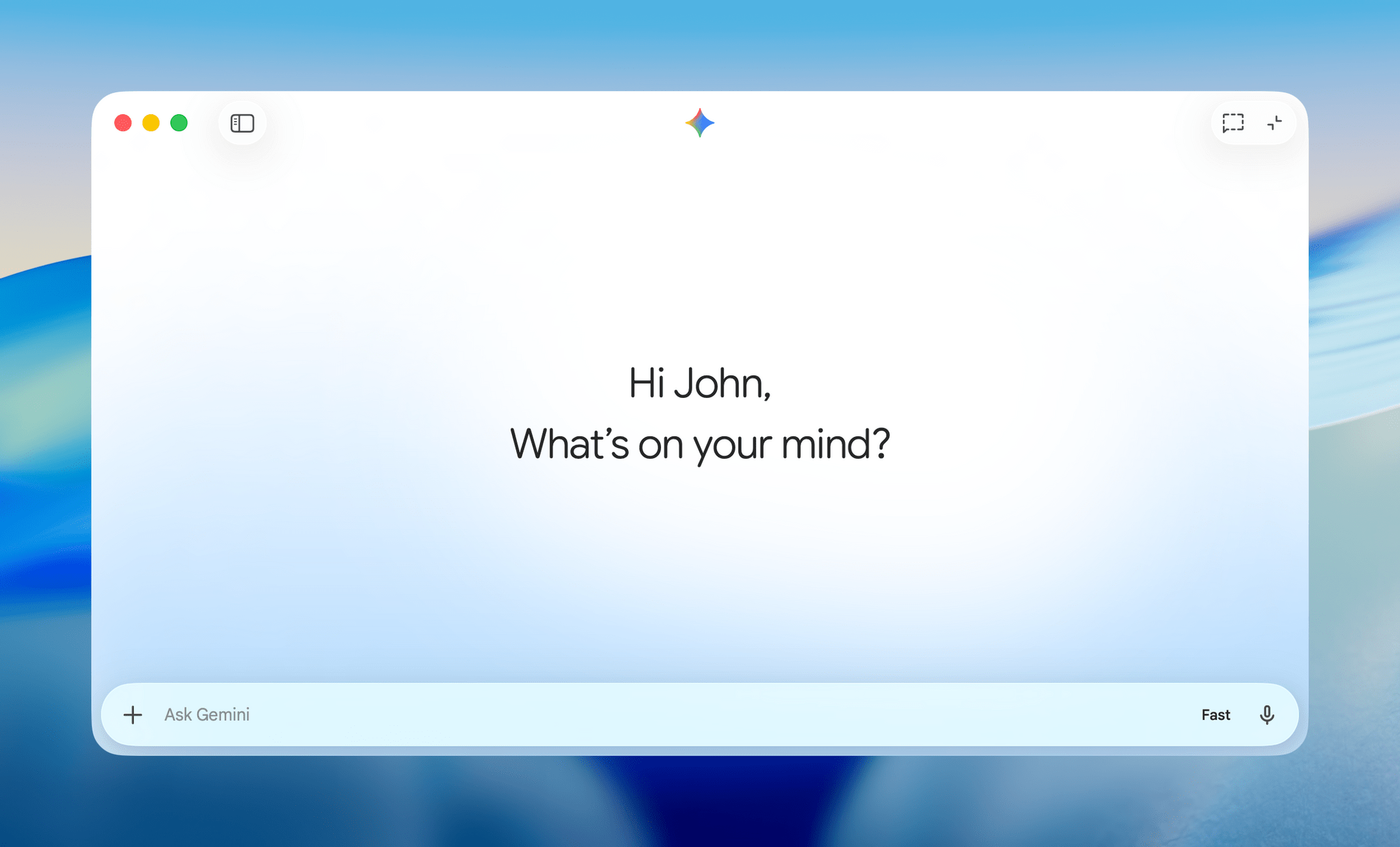
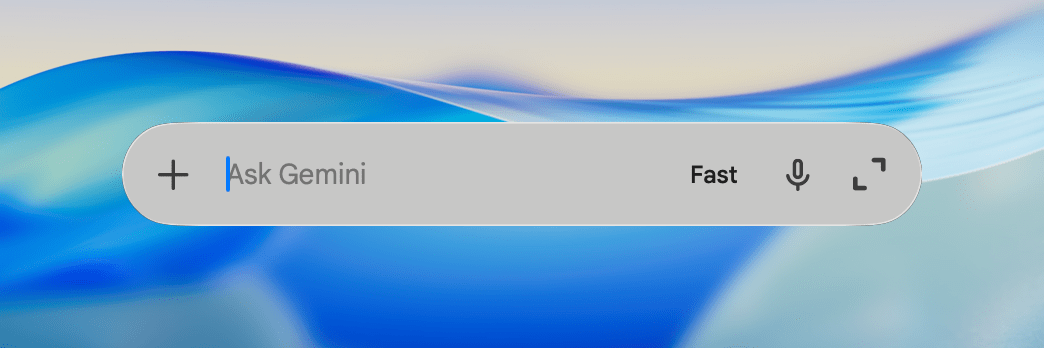
The app, which can be launched from your Applications folder, Dock, the menu bar, or a global hotkey, will be familiar to anyone who has used Gemini in a browser. The chatbot supports Gemini 3 in Fast and Thinking modes, as well as Pro mode, which uses Gemini 3.1 Pro. Gemini can also interact with files, the contents of a window, Google Drive, Photos, and NotebookLM. It’s multimodal, too, with support for the generation of text, images, video, and music. Dig a little deeper into Gemini’s menus and you’ll find support for Canvas, Deep Research, Guided Learning, and Personalized Intelligence.

A Gemini mini window is available from the menu bar and a global hotkey.

A Gemini mini window is available from the menu bar and a global hotkey.

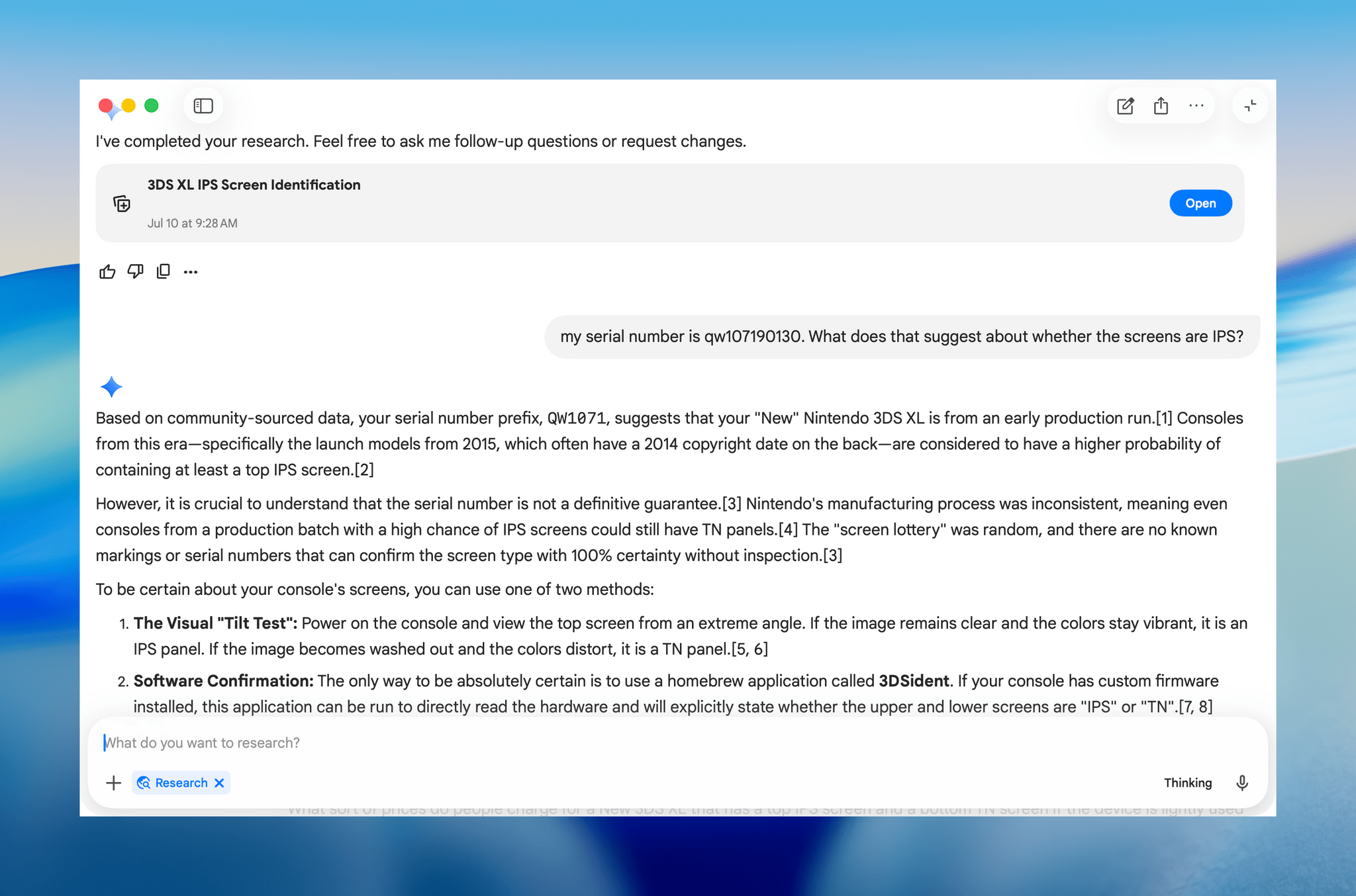
Even though I just downloaded the app a short time ago, my Gemini chat history was immediately available in the app. The history appears in the app’s sidebar along with a search field, My Stuff, which includes things like images and video generated in the past, and access to your account. The app is written in Swift which was a pleasant surprise.

All my past prompts were immediately available in the new Gemini Mac app.

All my past prompts were immediately available in the new Gemini Mac app.

I’ve only just begun testing Gemini for Mac, but I can already tell that it’s a cut above my hand-crafted single-purpose Safari web app solution. All the same tools found on the web are here, but in a native wrapper, which I appreciate. If you use a Mac and Gemini, the new app is well worth giving a try.

Gemini for Mac is available as a free download from Google.


Podcast Rewind: Text Editors, the Pocket Taco, Photo Backups, an Apple Frames Preview, and an Interview with Evan Ratliff

Enjoy the latest episodes from MacStories’ family of podcasts:

AppStories

This week, John and Federico revisit the state of text editors on Apple platforms and how they use them.

On AppStories+, John and Federico dig deeper into their writing workflows and the apps they’re using to write.

NPC: Next Portable Console

This week, Brendon reports back on the hardware he saw at PAX East, John gives the Pocket Taco a try, and with Federico, they cover the latest handheld news.

On NPC XL, Federico shows off the Lenovo Legion Tab Gen 3, and Brendon shares the SuperStation One.

First, Last, Everything

Jonathan is joined by Evan Ratliff, an award-winning investigative journalist, bestselling author, and podcast host, known for his reporting on technology, crime, and online identity.

Comfort Zone

Chris has some new headphones, Matt wants to talk about why development is still complex in the AI age, and everyone tries to find the most clever way to back up their photos.

On Cozy Zone, the game roasts each other’s ten-year-old Home Screens.

MacStories Unwind

This week, Federico has a sneak peak at a big update to his Apple Frames shortcut, and both he and John share a couple of their favorite Apple TV shows.

Read more


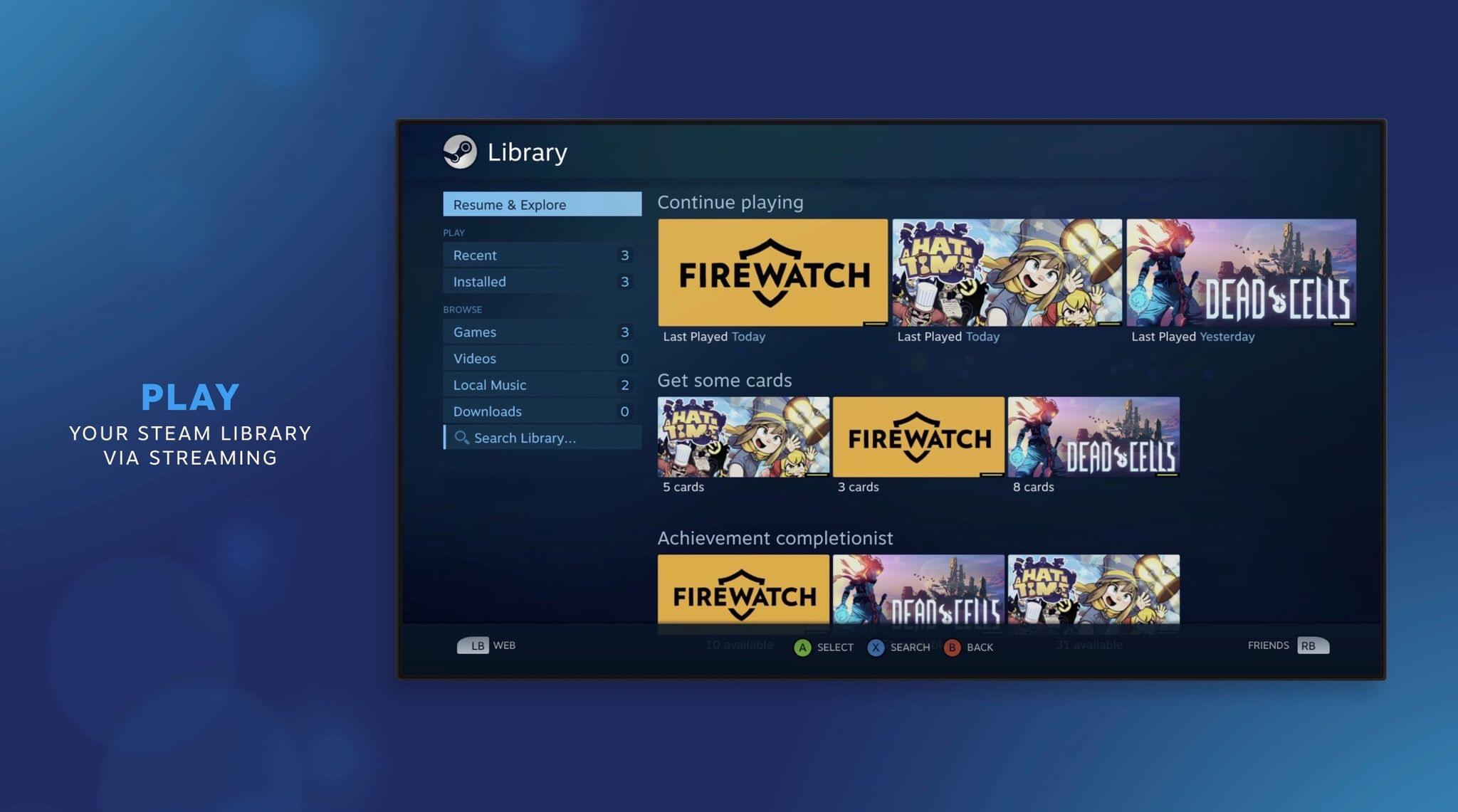
Steam Announces Steam Link for Apple Vision Pro and Releases Beta Version

The gaming ecosystem on visionOS continues to grow, this time with the announcement that Steam Link is coming to the platform. The official app will allow users to wirelessly stream games in 2D from Steam on their local Macs and PCs to their Vision Pros. According to the company, the app can stream games at up to 4K resolution and includes an adjustable, curved panoramic view. A TestFlight beta is now available for those who want to test the app before its public release.

Steam’s stature in the PC gaming market cannot be understated, so opening the platform up to the Vision Pro is a huge boon for gaming on the device. Of course, one would hope to see VR streaming support come with time, but official support even for 2D gaming is a big step.

Between an official Steam client, 4K cloud game streaming from NVIDIA GeForce NOW, console remote play via Portal, local OpenVR game streaming with ALVR, HDMI input over UVC via the Developer Strap, and native titles from Apple Arcade and the App Store, the variety of games available for Vision Pro users to play is getting larger by the day. There’s lots to be excited about in the world of visionOS gaming these days.


Claude Mythos Preview Will Only Secure Part of the Internet

Yesterday, Anthropic announced Claude Mythos Preview, a new general-purpose model that it says is exceptionally good at finding security vulnerabilities in code. In fact, the model is so good that Anthropic has decided not to release Mythos Preview to the general public. Instead, it’s being released to a select group of companies that control OSes and other critical software.

Anthropic found thousands of vulnerabilities across every major OS and web browser with Mythos Preview, but used these three examples to illustrate their severity:

  • Mythos Preview found a 27-year-old vulnerability in OpenBSD—which has a reputation as one of the most security-hardened operating systems in the world and is used to run firewalls and other critical infrastructure. The vulnerability allowed an attacker to remotely crash any machine running the operating system just by connecting to it;
  • It also discovered a 16-year-old vulnerability in FFmpeg—which is used by innumerable pieces of software to encode and decode video—in a line of code that automated testing tools had hit five million times without ever catching the problem;
  • The model autonomously found and chained together several vulnerabilities in the Linux kernel—the software that runs most of the world’s servers—to allow an attacker to escalate from ordinary user access to complete control of the machine.

A lengthy Frontier Red Team report brings the receipts for security researchers with an in-depth look at what Mythos Preview uncovered and the step change that the new model represents over Opus 4.6:

For example, Opus 4.6 turned the vulnerabilities it had found in Mozilla’s Firefox 147 JavaScript engine—all patched in Firefox 148—into JavaScript shell exploits only two times out of several hundred attempts. We re-ran this experiment as a benchmark for Mythos Preview, which developed working exploits 181 times, and achieved register control on 29 more.

As part of a test, Mythos Preview also managed to escape its sandboxed environment, message the researcher conducing the test, and then, outside the parameters of the test, posted about the exploit online.

The idea behind Project Glasswing, whose participants include Amazon Web Services, Anthropic, Apple, Broadcom, Cisco, CrowdStrike, Google, JPMorganChase, the Linux Foundation, Microsoft, NVIDIA, and Palo Alto Networks, is to give them a head start at securing their systems before similar models emerge and are exploited for cyberattacks. If Mythos Preview’s capabilities are as Anthropic makes them out to be, this seems like the right approach. However, I do worry that with time, it could lead to a two-tier Internet where big tech companies operate in relative security thanks to tools like Mythos Preview, while those without access are left to swim with the sharks.