Posts in reviews

Shazam Player Now Available for iPad

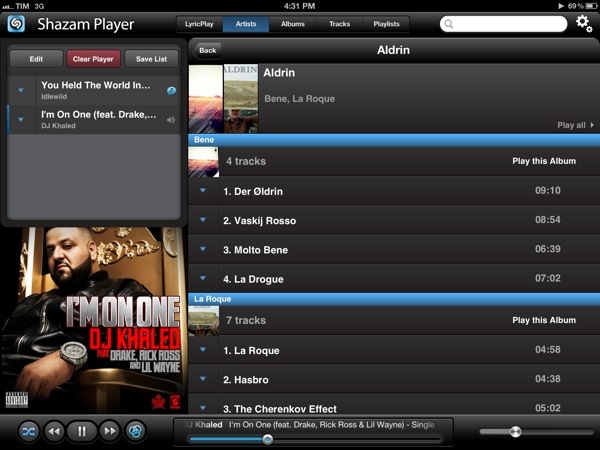
Shazam Player, the app from the creators of popular music recognition utility Shazam, has today reached version 1.5, adding support for the iPad, Retina graphics, and better display of lyrics on screen. Shazam Player, as I outlined in my original review of the iPhone version, provides an alternative view to Apple’s Music app, enhancing your music library with a plethora of sharing and discovery functionalities for artists and albums.

Like its iPhone counterpart, Shazam Player for iPad offers users the ability to create separate playlists from Apple’s Music app and organize songs in “good” and “bad” lists for easy retrieval later. The whole interface has been revised to take advantage of the iPad’s real screen estate, adding a “Player” box on the left side to visualize the songs playing in your queue. These songs can be rearranged for a particular order, and lists can be saved for later or cleared with one tap. You can send single songs or entire albums to the player with a tap or swipe. Tapping on the triangle button next to a song gives you access to a separate popover window containing the same sharing options of the iPhone app: you can share on Facebook and Twitter, check out related YouTube videos, artist information, and activate LyricPlay.

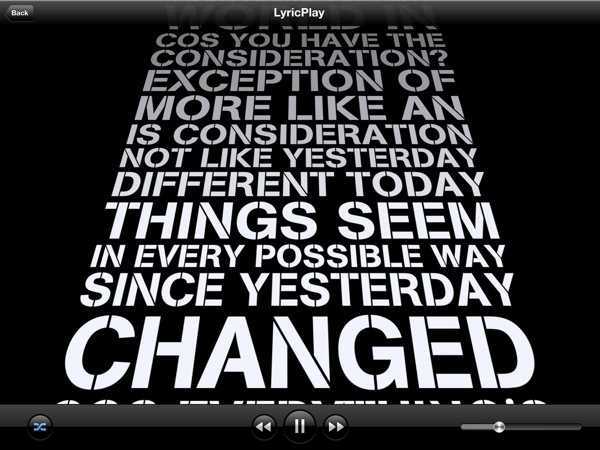
Shazam Player’s standout feature, in fact, is its support for song lyrics visualized on screen through a system Shazam calls LyricPlay. This functionality is only available for tracks that have been “scanned” and matched with Shazam’s servers, and unfortunately I found this new 1.5 version to be mostly hit or miss when it came to, say, matching popular songs from Drake, Oasis, or even The Eagles – all of them available on iTunes and well-known to Shazam (the standard app can fetch song info through the device’s mic). On the iPad, when the feature works, lyrics have been updated for the Retina display and they follow a song’s progression with an animation on screen. Lyrics can now be sent to the Apple TV via AirPlay, and songs that aren’t matched for LyricsPlay usage have also received a new UI for full-screen cover art and music visualizer.

Overall, I still find Shazam Player a solid alternative to the iOS Music app if you’re looking for on-device playlist creation, sharing and queue options, and online lyrics support all in the same package. Keeping in mind that LyricsPlay won’t probably find all your lyrics, you can check out the app for free on the App Store.


Keep An Eye On Your Twitter Followers With Detective

When it comes to research for new subjects to write about, I’m constantly confronted with ones that are at heart too marginal to discuss, but I’m doing it nevertheless, because they have some interesting touch to them. In Apple news, editors know that kind of problem and the question connected to it always sounds like: “Should I post about it or not? Will it be interesting enough?” When it comes to apps and good design, it’s much easier most of the time. Most of the time I can divide UI/UX design in two parts. Either the app works, looks fine and is easy to use or it does not. When I started to test Detective by Notion, I immediately recognized: Oh god, that’s a hard decision; it has got a very nice look but I am not sure about its feature. Is it that good? To go even further, I’m still asking myself if the app has a feature at all. But let’s dive in a bit deeper and you’ll hopefully get my point.

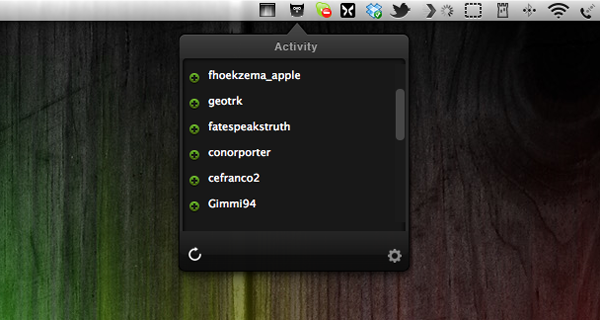
What Detective basically does is list your new Twitter followers and unfollowers in a top-down window from a menu bar icon. That’s it. Yeah, that’s it, really. You’re probably thinking that you could check that by yourself or that perhaps you don’t care at all about who and how many followers you have as long as you can tweet and follow what or whom you want. That’s all understandable, but I thought about it more and came to the conclusion that Detective — and especially its UI design — has got some advantages that may make the use of it legible to some people.

First of all, Twitter doesn’t notify you when people unfollow you at all. Psychologically speaking, that’s a good move, since everyone is more likely to enjoy seeing how he gets more and more famous over time without spending a thought on those who may dislike him (or her). But there are still some serious Twitter users out there, who do still care about their followership, they’re rare but they exist, trust me. They may even like to ask some of them why they stopped following them and what they could do better. For them, Detective could be nice to have. It just serves the need of showing up these people and does that with a polished, gloomy monochrome design only interrupted by the green pluses for new or red minuses for ex-followers, respectively. Apart from the very poorly designed preferences panel — which is in fact offending the rest of the app’s design and looks like it doesn’t belong to the app at all, Detective is minimalist, functional and performs very well.

Which brings us the the second, even more pleasant feature of Detective, at least to me: it’s totally unobtrusive. And I consider that as the main reason for granting this app such a long post. I assume that most of you who are twittering already deactivated the notification mails Twitter sends out if you have a new follower, direct message and so on. Detective on the other hand is faster than those notification mails and its basic approach of notifying you is different. It’s just there, you can check the changes by yourself when you want or you can choose Growl notifications if you’re too lazy to click on the menu bar icon, but even that is still better than those annoying mails which constantly interrupt your workflow and clutter your mail inbox. The rest of the time, when you don’t want to get distracted, Detective is completely invisible (yes, I know, there’s still that icon in the menu bar, but let’s be honest, no one can get distracted by an icon that small).

To me, it is this unobtrusiveness that really makes the app valuable, despite its very limited feature set and purpose. It definitely is an indicator for a knowledge of good design, if a developer is not out to usurpingly bring his work to the foreground just for the sake of making the user aware of it. Unfortunately I consider its price of $2.99 still too high. Although it’s by and large a very decent app, Detective needs way more features (which are promised indeed, but obviously not included in the current version) to justify such an expenditure. Hopefully Notion will keep their promise of implementing stuff like multiple account support or retweet/favorite notifications — because then I could recommend it with no hesitation.


DragonDrop Simplifies OS X Drag & Drop

Ever since Lion’s release last year, I have been looking for ways to improve the system’s support for drag & drop. Lion is so focused on gestures, yet incredibly similar to older versions of OS X when it comes to file management, that I am still surprised the Finder didn’t get new functionalities aimed at increasing our efficiency with working with files on trackpads. A number of utilities have sprung from many users’ need to have a simpler drag & drop, such as Yoink.

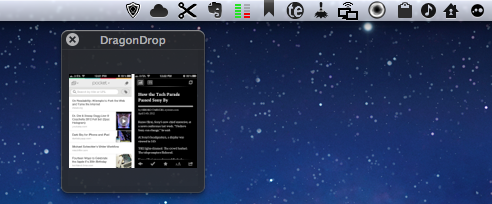
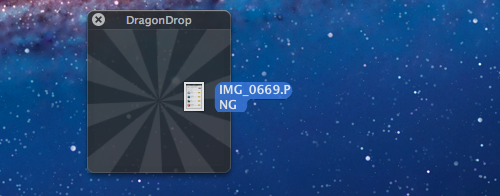
DragonDrop, another take on simplified drag & drop for the OS X Finder, offers a solution that’s somewhat in between the aforementioned Yoink and Quick Look previews. DragonDrop lets you “pause” the drag & drop action by temporarily placing a file – being it an image, text document, webclip, or just about anything OS X can drag & drop (even colors) – in a floating shelf. When you’re ready to “resume”, you can pick up the file and drop it on your destination as it came from the original source.

While this concept is nothing new, DragonDrop provides a unique implementation – a feature that caused the app to take some time to be approved by Apple for sale on the App Store. DragonDrop can be activated by dropping files onto its menubar icon, or by performing a “shake” gesture with your finger while dragging. Apple didn’t like this feature – which is optional in the app’s Preferences – but eventually decided to approve DragonDrop as other Mac App Store apps already modify system functionalities.

Not everyone’s going to like the possibility of bringing up DragonDrop’s shelf with a shake gesture, but I’ve been using it extensively over the past weeks to quickly copy text from webpages and emails (without having to perform a long, precise drag & drop) and folders from the Finder. I like how the shake gesture makes the floating shelf appear next to the mouse cursor, rather than up in the menubar.

At $4.99, DragonDrop is a very focused utility (it also supports cut/copy/paste in the menubar) aimed at enhancing one core functionality of OS X. I recommend it, but if you’re not sure you might need it, there’s a free trial available on the developers’ website.


Read It Later Reborn: Pocket Saves Everything “For Later”

In the past five years, reading on the web has fundamentally changed. Read It Later, the first popular service to pioneer a certain kind of “bookmarking” for web articles, is reborn today as Pocket, and it promises to change the way users think of web content to “save for later”. Most importantly, Pocket wants to address what has become the scarcest resource of web citizens: time.

Read Later

People never had time to check out all the cool stuff that happens on the Internet every day. As blogging platforms started taking off in the past decade, sometime during 2006 some people began to realize they didn’t have time to read every article that was posted online. The digital publishing revolution had already happened, but the explosion of blogging was just starting to produce high-quality, journalistic and well-informed pieces that, due to a simple scarcity of time and intuitive tools, people didn’t have time to read in their entirety. Whilst the act of “bookmarking” something on the Internet goes back to several years ago, the more focused, practical act of “saving an article for later” can actually be traced back in the form of popular consumer software to somewhere in between late 2006 and 2007.

Nate Weiner was one of the first developers (and avid web readers) to understand that the bookmarking systems in place at the time (Delicious, magnolia, or simple browser bookmarks) weren’t cutting it, from a technical and psychological perspective, for those users that just wanted to put off an article for later.

The difference between “bookmarking” and “saving for later” is both practical and conceptual: a regular bookmark is usually archived for good, as bookmarking services place great emphasis on letting users store bookmarks – links to webpages – forever in their accounts. There are some exceptions today, but the underlying philosophy has pretty much stayed the same. The action of “saving an article for later”, on the other hand, takes a more pragmatical approach: an article a user wants to read today or tomorrow isn’t necessarily representative of a webpage he wants to store and archive for eternity. The terminology itself – “for later” – indicates that something is going to happen ”later”. Once an article is read, most users tend to go on with their lives and forget about it. Like I said, it’s different today, and there are some specific use cases in which someone might want to archive articles – but the original concept lives on. People don’t have time to read every web article ever published.

Back in 2007, Nate Weiner set out to create a simple Firefox extension that would allow him to keep articles he found at work (and wanted to “read later”) in a different place than its browser bookmarks. On August 6, 2007, he launched the aptly-named Read It Later, a Firefox extension that did one thing well: it kept articles in a cozy little extension, saved for later. Users could hit a button to quickly save an article, and they could even save multiple browser tabs at once. As the extension started taking off, Nate began adding more features to Read It Later, such as offline support in December 2007.

Meanwhile, Marco Arment, developer at Tumblr, was facing a similar problem himself in 2007. He was constantly coming across news or blog articles he didn’t have time to read at the moment, and he needed something to read while on the bus or waiting in line. Arment discovered that there was no easy way to save links from a computer and access them later from the iPhone – we’re talking mid-2007 here, when the iPhone was getting in the hands of the first millions of customers, and when there was no SDK for developers to build native apps. So Arment decided, as he would later explain, to build just the service for that: Instapaper, a webpage that collected links saved from a bookmarklet, was launched publicly in January 2008. Like Read It Later, Instapaper solved a twofold issue: it allowed users to quickly save articles, and retrieve them later. Unlike Weiner’s app, though, Instapaper saved links in a webpage that could be easily accessed from the iPhone – mobile reading, in fact, seemed to be one of Instapaper’s primary features from the get-go. As Arment’s service became popular, he also went back to the drawing board – or in his case, programming tools – to implement new functionalities for Instapaper. The service’s hallmark feature, a text mode that strips unnecessary content out of web articles, was released in April 2008.

The rest is history. As Apple kept improving its mobile ecosystem with new devices, OS upgrades, and the App Store, Read It Later and Instapaper evolved, and iteratively became two fantastic services that serve millions of users every month. Over the years, we have followed both Instapaper and Read It Later closely at MacStories. Read more


Gemini Lovingly Finds Duplicates Of Your Files

Spring-cleaning is not much fun to do. Especially when talking about cluttered hard drives like mine. We all know with big hard drives comes big responsibility, but let’s be honest, just a few of us are constantly paying heed to delete useless duplicates. This problem can’t be tackled with apps which just provide good functionality — the task of decluttering your computer is that boring, you need great pixels as well to keep up the user’s interest and motivation.

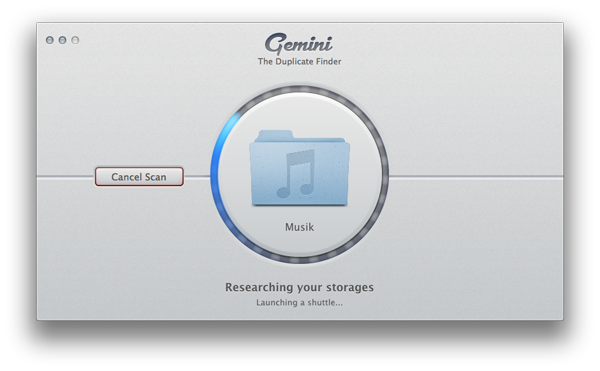
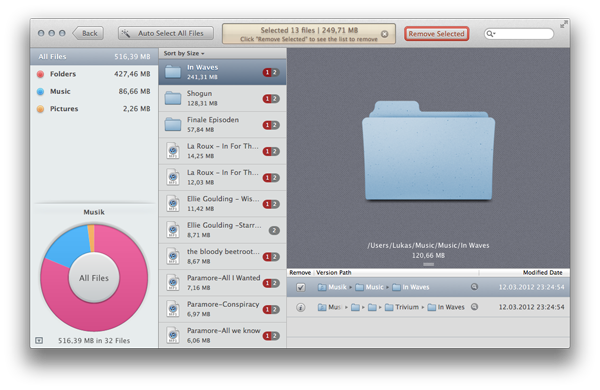
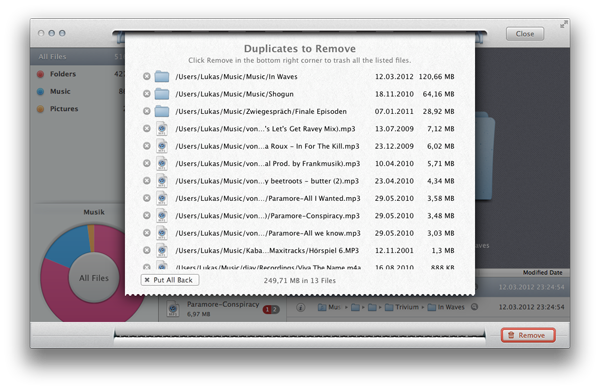
Gemini is the first app I ever saw solving this necessary combination of design and usefulness with ease and bravour. The guys at MacPaw did a great job with it. When firing it up, Gemini is just a input screen on which you can simply drop folders or whole drives to let the app analyze and scan them. Unfortunately, this process takes some time but at least it’s subtitled with entertaining words (e.g.; “I, Gemini, am actually a duplicated file magician”). Afterwards the found duplicates are presented in a Finder-like, slightly modified window. Besides a list with the file names and paths it contains a pie chart showing up the media types of the useless files. The app comes with Quick Look support as well. Browsing your files is very intuitive, and I literally laughed when I saw the animation after finally deleting all my futile used data - it rushes through a virtual paper shredder falling down as shred.

The rest of Gemini’s look has got the same intuitive, almost magical touch to it. The rounded edges, warm colours and simple UI structure immediately appealed to me. It’s modern, minimalist, functional and — most important — it works. The design concept ends exactly where functionality begins, something I like very much. I could not find any unpolished detail in it, maybe the path information shown with the Quick Look preview is implemented a bit improperly, but I am sure that if there’s something you can not polish in order to make it beautiful, then it’s path information, as I think you’ll agree.

Apart from that, Gemini is a pretty good example of how good design can be both intuitive and functional. It really simplifies the process of cleaning up your computer, making it accessible for everyone from laymen to expert. And besides that, the price of $7.99 is more than just inexpensive when it comes to free hard drive space, it’s an excellent value for the money, so purchasing Gemini should be a no-brainer.


The iPad As A GPS Speedometer with Speed

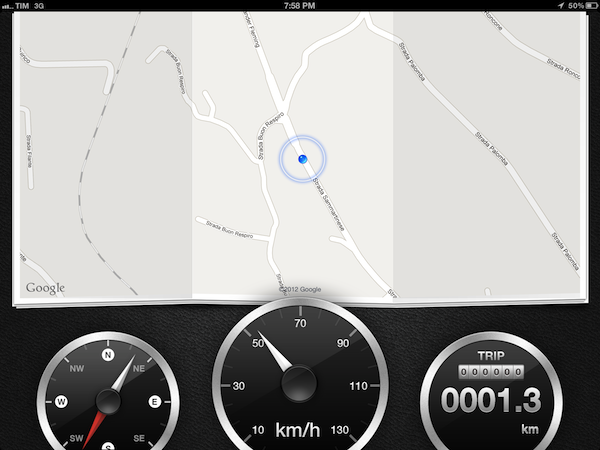
Developed by High Caffeine Content, Speed is one of those apps that wouldn’t have been possible – or at least, nearly as enjoyable – ten years ago. Built for simplicity, elegance, and extreme practicality, Speed is a GPS speedometer that uses the iPad’s location data to tell you how fast you’re traveling. It works with iPads that have GPS available, and it has been designed to take full advantage of the Retina display. With a combination of Google Maps and beautifully represented compass, speedometer, and tripmeter laid out against a lusty black leather texture, Speed won’t replace all the functions of your car’s dashboard, but it also offers a glimpse into the future of car interfaces.

I have always believed that, in the future, car manufacturers and designers would opt for more driver-friendly touch interfaces and displays. Whilst not fully there yet, Speed is a great example of what the basics of this concept may look like a few years from now. A large display, a good-looking interface and menus, touch controls, built-in GPS and data polled directly from Google Maps. More importantly, all packaged into a consumer product that also happens to run an app that looks like a minimal car dashboard. Several car makers have already experimented with modular setups to allow for iOS devices to become a central part of the automobile experience; Speed shows that, with modern technologies, even third-party developers can produce something functional and pleasant.

I actually gave Speed a try in my Polo, driving around Viterbo and up to San Martino al Cimino. Once I switched from mph to kmh (just touch the speedometer), the app started updating my location on the map as I was driving, and it started tracking my speed and trip length. The app is surprisingly fast at detecting changes in speed: I have noticed it takes less than 2 seconds to detect sudden braking or stop. The developers say Speed offers a “a near-accurate representation”, and I can attest that’s absolutely the case here. Even better, because of this slight delay, if you’re keeping a constant speed it’ll seem as if the app really knows how fast you’re driving. The technology and implementation are quite impressive.

Some may deem Speed as a nice demo, but useless. While that’s certainly the case if you’re only looking for a full-time replacement for your car’s dashboard – and honestly, how can you expect an iPad to be 100% ready for that yet? – I think the app is worth checking out for its elegance and solid feature set alone. There are even some settings to adjust to magnetic north, use analog/digital speedometers, and use a speed limiter. On a more practical level, these features and settings make for, say, a pretty sweet solution to monitor trip lengths or check just how fast the local bus driver is traveling. It’d be nice to see the app gaining richer data representations (average speed, mileage history, speed patterns) in a future update.

The opportunity for Post-PC devices to improve existing technologies and appliances is huge. Speed is one of the many examples, and a very well-built one. Get the app here, and check out a video below. Read more


Scanner Pro Combines “Post-PC” and “Paperless” In A Single App

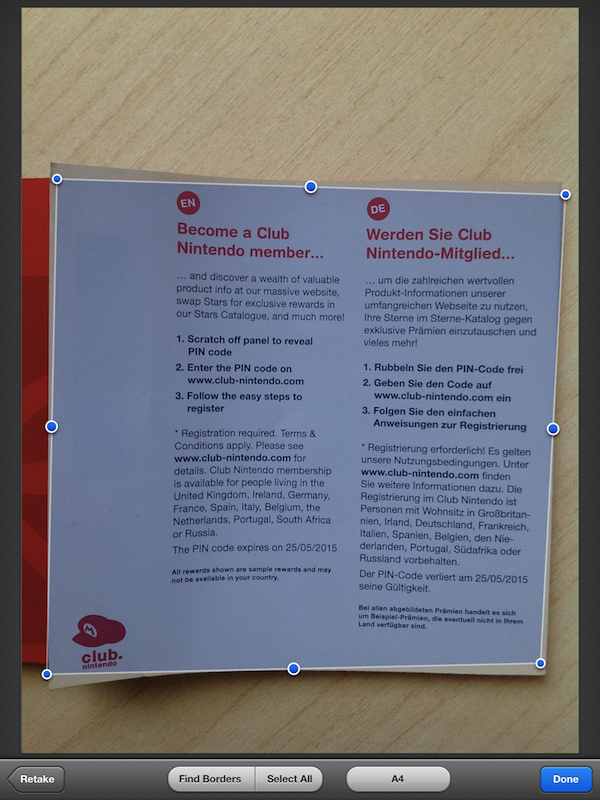
Scanner Pro, a camera-based scanning application for iOS devices by Readdle, has been updated to version 4.0, which adds a number of engine optimizations and new features, as well as support for the iPad. I was able to test the latest update to Scanner Pro, and I’m thoroughly impressed by the degree of independence and reliability Readdle achieved with Scanner Pro 4.0.

Let me explain. Until today, I have exclusively relied on a large, heavy wireless printer/scanner or my portable Doxie Go to scan, manage, and organize documents. In order to achieve a seamless paperless setup that required zero, or at least very minimal effort to be maintained and consistently used, I thought that the Doxie Go would be the solution for all my needs, as it offers a portable and lightweight device that outputs images at great quality in PDF. More often than not, however, the new devices and apps we have available nowadays bring new questions for issues we thought we had already figured out; as I began using the iPad as my primary computer, I realized how the Doxie, albeit well-designed and extremely usable, would still require me to use a computer to import scans, organize them, delete the ones I didn’t like, and upload the rest to Evernote.

I asked myself whether the iPad could even become a scanner. After all, the new iPad got a solid camera update in its latest version, and whilst not on par with the iPhone 4S’ camera, an iPhone 4-like lens – I assumed – could probably be a decent alternative to physical scanners, even the portable ones. The difference was mainly in the software: I wasn’t looking for an iPad accessory to turn the device into a scanner, I was scouting around for great scanner apps that would a) work reliably on the new iPad and Retina display, and b) support various online services, have basic document management features, and an “Open In” menu. Fortunately, Scanner Pro 4.0 by Readdle fits all these requisites, and it does so in a way that allows me to say this is the scanner app to try if you own a new iPad, and plan on going paperless using it. Read more


Everyme Review

Oliver Cameron thinks there’s something special, intriguing, about the address book. As a personal list that smartphone users have curated over several years, one could wonder about the stories, the people, and the interactions that are part of the creation and curation of an address book. But what can software developers do to leverage the data of our address books to redefine the way we get in touch with our closest friends?

Over the years, digital address books have exponentially increased the amount of data associated with names and phone numbers. First came dedicated fields for email addresses and contact pictures; then, when smartphones gained decent networking and data connections, the address book turned into a richer solution to store people’s information, rather than just addresses, and keep it always accessible on multiple devices through the cloud. Either through Gmail, Exchange, iCloud, or something else, it’s very likely that your address book contains names and phone numbers, but also email addresses, Twitter and Facebook usernames, location data, birthdays, family relationships, and various notes. The address book is, in fact, a people database that’s exclusive to each person. There is no address book like each other.

While the composition of an address book differs from user to user, some interactions and relationships are reflected on multiple instances of the address book, and the cloud can sometimes access a portion of these interactions to create lists of people “you may already know”. If I have you in my address book as a “friend”, maybe I also have your email address, and perhaps you have my information on your address book as well. With the right privacy settings, services like Facebook, Twitter, and just about any app with a social component these days allow us to look up friends that are already signed up by simply matching email addresses. This is a way to leverage the information stored in our address books to facilitate the sign up process for new services. They make it easier for us, using the address book we have been curating over the years.

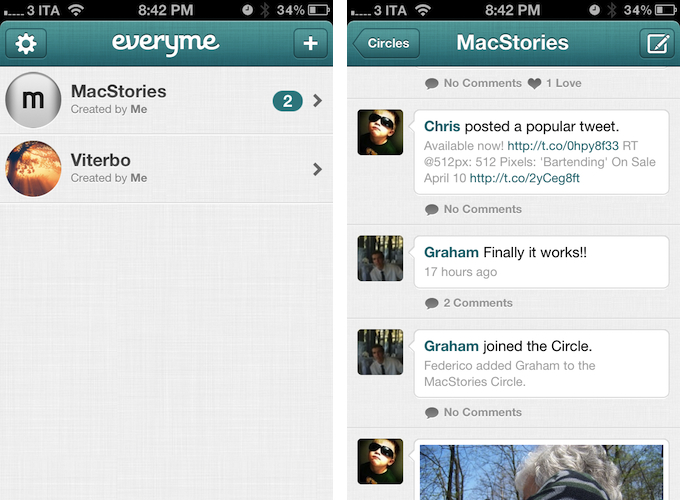
Sometimes, however, people don’t want social apps that force them to share with everyone. Services like Twitter and Google+ are the polar opposites when it comes to determining how users engage with each other: whereas Twitter’s model of following/unfollowing may result overly simplistic to some people, Google’s insistence on Circles has found users confused by the plethora of options Google+ comes with. And then there’s Facebook, which has been experimenting for years with the concept of private groups, albeit they never really took off, and so Facebook preferred implementing deeper privacy settings, rather than forcing people to manage groups and names and lists. But is there a sweet spot between Twitter’s simplicity, Google’s circle management, and Facebook’s wide adoption both on desktop and mobile? Something that can leverage the data from our address books and social networks we’re already using to build a new platform to bring us closer to the people we know “in real life”? That’s what Oliver Cameron and his team are trying to build with Everyme. Read more


Marked 1.4: A Little Something for Everybody

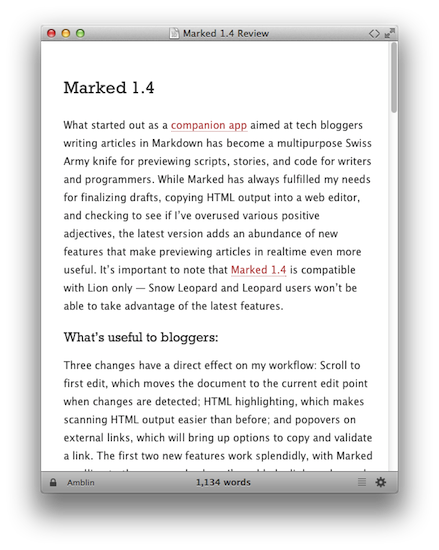
What started out as a companion app aimed at tech bloggers writing articles in Markdown has become a multipurpose Swiss Army knife for previewing scripts, stories, and code for writers and programmers. While Marked has always fulfilled my needs for finalizing drafts, copying HTML output into a web editor, and checking to see if I’ve overused various positive adjectives, the latest version adds an abundance of new features that make previewing articles in realtime even more useful. It’s important to note that Marked 1.4 is compatible with Lion only — Snow Leopard and Leopard users won’t be able to take advantage of the latest features.

What’s useful to bloggers:

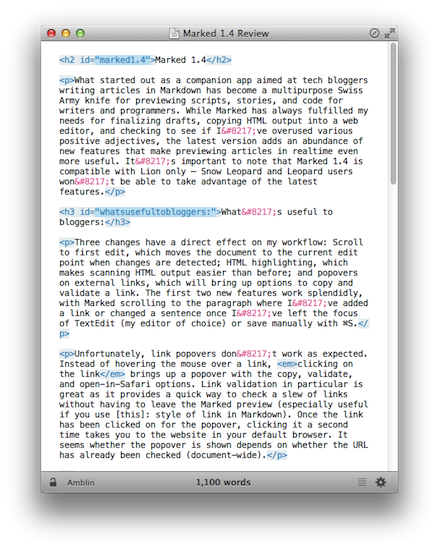
Three changes have a direct effect on my workflow: Scroll to first edit, which moves the document to the current edit point when changes are detected; HTML highlighting, which makes scanning HTML output easier than before; and popovers on external links, which will bring up options to copy and validate a link. The first two new features work splendidly, with Marked scrolling to the paragraph where I’ve added a link or changed a sentence once I’ve left the focus of TextEdit (my editor of choice) or save manually with ⌘S.

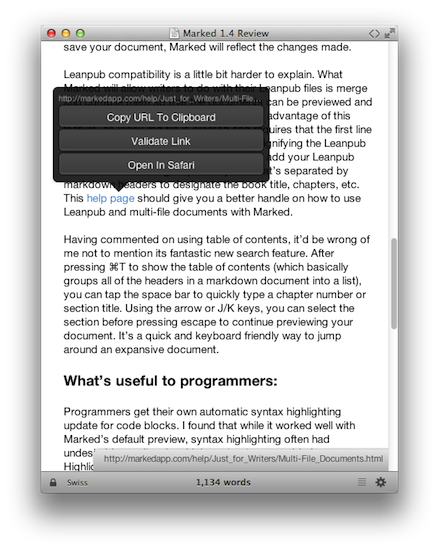
Unfortunately, link popovers don’t work as expected. Instead of hovering the mouse over a link, clicking on the link brings up a popover with the copy, validate, and open-in-Safari options. Link validation in particular is great as it provides a quick way to check a slew of links without having to leave the Marked preview (especially useful if you use [this]: style of link in Markdown). Once the link has been clicked on for the popover, clicking it a second time takes you to the website in your default browser. It seems whether the popover is shown depends on whether the URL has already been checked (document-wide).

A fourth new feature bloggers will love if they’ve written their own Marked styles to match the format of their websites will be per-document styles. Instead of changing the style through the GUI, you can include a brief piece of metadata at the beginning of your document by adding the following: “Marked Style: Your preferred style here” (without quotes). If you create new documents with shortcuts or triggers, you can further automate how it will look in Marked by adding a snippet of metadata — useful when you publish or want to see output for a specific blog. The metadata you add is excluded from the HTML output. HTML output, by the way, has a new toggle in the titlebar.

Lastly, for bloggers concerned about their HTML output, Marked now gives you the option to disable header ID creation. Unless you have a specific need for styling, there’s no reason to have Marked generate an ID per header. I’ve definitely enabled this one.

What’s useful to writers and screenwriters:

Scrivener 2.x projects and Leanpub files are now supported by Marked. Scrivener projects, like .md or .txt files, can simply be dragged into Marked and compiled to provide a live preview of your working content. Pressing ⌘E (open in editor) will take open .scriv files being previewed in Scrivener if you’re reviewing your script and need to make a live change. As you write and save your document, Marked will reflect the changes made.

Leanpub compatibility is a little bit harder to explain. What Marked will allow writers to do with their Leanpub files is merge and compile them so that the documents can be previewed and navigated via a table of contents. To take advantage of this feature, an Index.md file is created and requires that the first line be “frontmatter:” (again without quotes) signifying the Leanpub format. In the Index.md file, you’ll need to add your Leanpub files as sections using a special syntax that’s separated by Markdown headers to designate the book title, chapters, etc. This help page should give you a better handle on how to use Leanpub and multi-file documents with Marked.

Having commented on using table of contents, it’d be wrong of me not to mention its fantastic new search feature. After pressing ⌘T to show the table of contents (which basically groups all of the headers in a Markdown document into a list), you can tap the space bar to quickly type a chapter number or section title. Using the arrow or J/K keys, you can select the section before pressing escape to continue previewing your document. It’s a quick and keyboard friendly way to jump around an expansive document.

What’s useful to programmers:

Programmers get their own automatic syntax highlighting update for code blocks. I found that while it worked well with Marked’s default preview, syntax highlighting often had undesirable results when high contrast was enabled. Highlighting itself is taken care of thanks to highlight.js.

Programmers will also appreciate the ability to create fenced code blocks, which are delimited by tildes or backticks. Languages can be specified, but highlight.js will try to automatically detect one of its 41 supported languages on its own.

For those creating GitHub readmes, the GitHub style has been updated to reflect the most recent changes on the site. In the preferences, a new option has also been added to preserve line breaks in paragraphs, mimicking GitHub’s style if you choose to enable it.

Other changes:

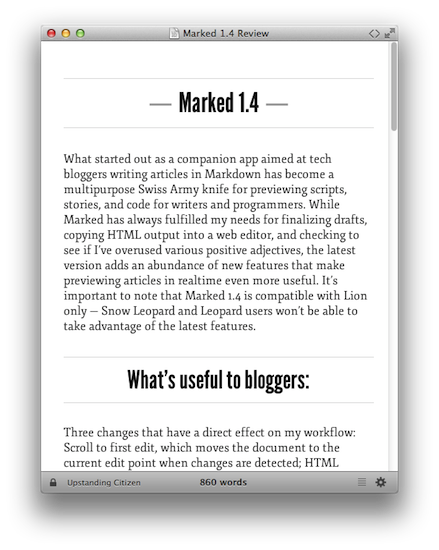
Two new themes have been added to Marked: Amblin and Upstanding Citizen. Amblin, laid-back and traditional, is a polar opposite of Upstanding Citizen’s bold centered headers and condensed paragraphs. Amblin is great for writing cozily late into the night — it’s ousted Swiss for me as far as the default styles go.

The preferences panes are all brand new — options are easy to find and are nicely separated into convenient sections. If you plan on printing documents, you can force page breaks with a break snippet, by using horizontal rulers, or before H1 and H2 headers (this printing section should give you a quick primer on the options you have available).

No longer catering to just mainstream tech reporters, Marked has expanded its role from a nerdy Markdown utility to a polished, multipurpose tool that’s bent on making sure any craftsman of words can output a good looking document. More than just a preview app, Marked is feature rich without being complex, presenting files as you want them while providing numerous ways to do simple things from copying text to getting HTML output of your files. Support for Leanpub and Scrivener only adds usefulness for authors using Macs to produce upcoming books, and screenwriters can look forward to added compatibility with Fountain in the future.

Marked provides a lot in an accessible package, and for only $3.99 it’s a steal for anyone who works with Markdown files and its derivatives. You can check out Marked online and download it from the Mac App Store.