Federico Viticci

10759 posts on MacStories since April 2009

Federico is the founder and Editor-in-Chief of MacStories, where he writes about Apple with a focus on apps, developers, iPad, and iOS productivity. He founded MacStories in April 2009 and has been writing about Apple since. Federico is also the co-host of AppStories, a weekly podcast exploring the world of apps, Unwind, a fun exploration of media and more, and NPC: Next Portable Console, a show about portable gaming and the handheld revolution.

Major Changes at Apple: Scott Forstall Leaving, Jony Ive To Lead Human Interface Across Company

With a press release published a few minutes ago, Apple announced major changes in the structure of the company. The big news is that SVP of iOS Software Scott Forstall will be leaving Apple in 2013, with SVP of Industrial Design Jony Ive taking over to “provide leadership and direction for Human Interface (HI) across the company”. Forstall will stay on as an “advisor” to CEO Tim Cook in the meantime; Forstall joined Apple in 1997 coming from NeXT, and he was later promoted to Senior Vice President in 2003.

Jony Ive will provide leadership and direction for Human Interface (HI) across the company in addition to his role as the leader of Industrial Design. His incredible design aesthetic has been the driving force behind the look and feel of Apple’s products for more than a decade.

But there’s a lot more in Apple’s official statement: essentially, in the coming months Apple will undergo major changes in several aspects of its internal structure, both in terms of executive leadership and teams. Bob Mansfield, who announced his retirement earlier this year but then decided to stay at Apple, will lead a new Technologies group:

Bob Mansfield will lead a new group, Technologies, which combines all of Apple’s wireless teams across the company in one organization, fostering innovation in this area at an even higher level. This organization will also include the semiconductor teams, who have ambitious plans for the future.

Craig Federighi, recently promoted to SVP of Mac Software Engineering, will go on to lead both the iOS and OS X groups:

Craig Federighi will lead both iOS and OS X. Apple has the most advanced mobile and desktop operating systems, and this move brings together the OS teams to make it even easier to deliver the best technology and user experience innovations to both platforms.

Additionally, head of Services Eddy Cue will take over responsibilities for Maps and Siri, and John Browett, Apple’s head of Retail, will be leaving the company as well. Notably, Browett was hired only ten months ago, but he’s been criticized for many of his recent decisions in Apple’s retail operations.

CEO Tim Cook was quotes in the press release:

The amazing products that we’ve introduced in September and October, iPhone 5, iOS 6, iPad mini, iPad, iMac, MacBook Pro, iPod touch, iPod nano and many of our applications, could only have been created at Apple and are the direct result of our relentless focus on tightly integrating world-class hardware, software and services

The focus of the statement is, in fact, a tighter integration of hardware, software, and services. Read more


Netbot 1.1 Adds Push Notifications, Search

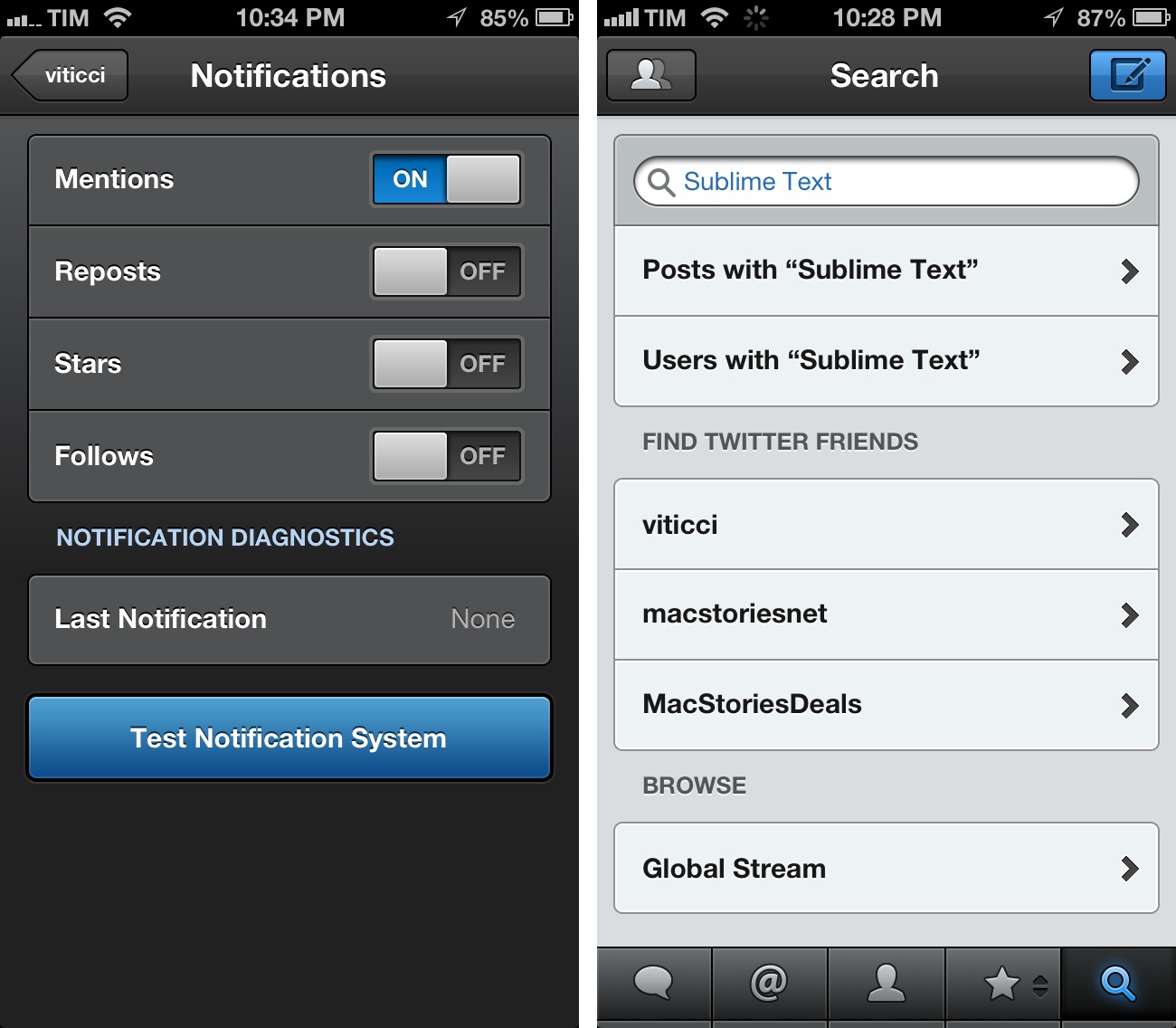
Netbot, Tapbots’ iOS client for App.net, has been updated today to version 1.1, which adds two of the most requested features from the app’s userbase: push notifications and search.

Both features have been created by Tapbots’ developer Paul Haddad on top of App.net’s streaming component of the API. This means that, while Netbot isn’t streaming timelines like Tweetbot yet, it’ll be able to send you notifications for Mentions, Reposts, Stars, and new Follows. Once again, this works just like Tweetbot: head over your account’s Settings and select Notifications to choose which kind of information you’d like to receive. In my tests, Netbot’s push notifications were reliable and fast. Read more


Automatically Convert .iconset to .icns with Drag & Drop

Automatically Convert .iconset to .icns with Drag & Drop

Earlier today I indirectly asked on App.net and Twitter if there was a way to automate the process of converting sets of icons for non-Retina and Retina devices. On its developer documentation, Apple recommends using iconutil and tiffutil to convert application icons and graphic resources, respectively. Once you’ve packaged, for instance, .png files inside an .iconset folder, you should fire up the Terminal, and run the command for the .iconset folder you want to convert. How about automating the process for batch conversion of multiple files?

As it often turns out, if you can think about it, then someone likely already blogged about it. Jono Hunt wrote a drag & drop utility earlier this year to do just that: select multiple .iconset folders, drop them onto the app, receive converted .icns files.

Apple have changed the way you should compile .icns files used for Mac application icons. Instead of using Icon Composer you should now use the “iconutil” Terminal command with .png images contained in folders with the .iconset extension. I created an AppleScript droplet to simplify the process. Just drag the .iconset folder containing your .png files on to the app to easily create a retina ready .icns icon.

Jono has also released versions of the script that work with Alfred and Automator. He also build a counterpart for tiffutil, available for download here.

Permalink

Sublime Text 2 and Markdown: Tips, Tricks, and Links

After a brief stint with TextMate 2, I recently started playing around with Sublime Text 2 for writing, and I thought I’d share the links and tips I’ve collected so far. I use Sublime Text 2 for both writing (in Markdown) and coding (that is, the basics of Python that I’m learning), but the links I’ve collected are primarily Markdown-related, as that’s how I spend most of my time on a computer: writing.

To begin, download Sublime Text 2. Or, download the Dev build, which will get you access to the latest features. Read more


Control OS X Function Keys with Palua

Control OS X Function Keys with Palua

In fiddling around with Sublime Text 2 today, at one point I stumbled upon a command that needed F2 and F3 keys to be executed. I remember I once heard about a Mac app that let you easily toggle between “Function mode” and “Apple mode” for the F keys, so I went to Google, and eventually ended up back on MacStories.

In May 2011, our Cody Fink covered Palua, a menubar utility to do exactly that:

If you are going to be making use of the functions while working in a specific app, Palua for Mac allows you to toggle the function keys on and off so you don’t have to mash the fn key with each command. More interested in getting use out of those function keys than changing the volume? From the menubar or a simple ⌥⌘⇥ (option-command-tab) keystroke, Palua will activate and deactivate the function keys as needed when working in various projects.

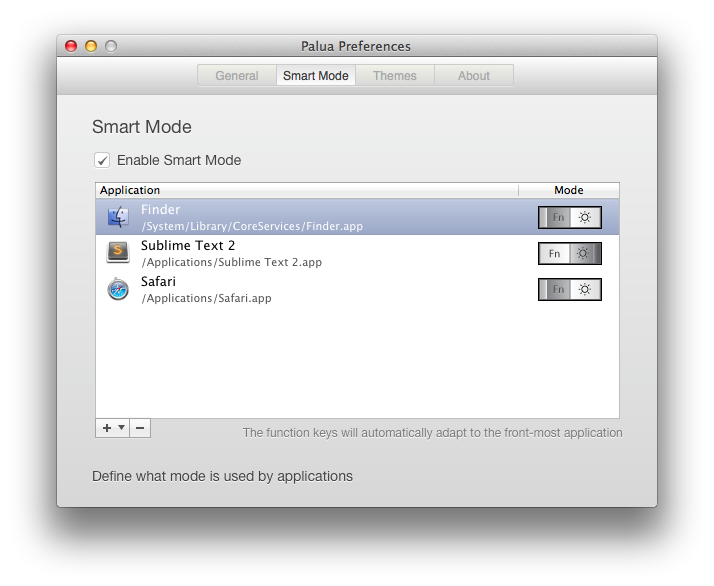
The app has gotten much better since Cody’s original article. Version 3.0 adds an option to rely on Palua automatically by “app mode”, which is what I was looking for. Essentially, you can enable a “Smart Mode” to always use a mode in a specific app. So, for instance, I can default to “Apple mode” in every app, but activate “Function mode” only in Sublime Text. This means I can have my F2 shortcut in Sublime Text by directly hitting the key; in the Finder, Safari, and every other app, “Apple mode” will let me change volume, brightness, and all the other functions associated with those keys.

Palua is another example of a simple utility that does one thing extremely well. It scratches an itch and solves a problem with elegance, a variety of options, and unobtrusiveness. Best of all, it’s only $0.99 on the Mac App Store.

For more information and videos, check out the detailed explanations at Palua’s website.

Permalink

Evernote Teases Major 5.0 Redesign of Mac App

“Remember Everything” platform Evernote has today announced the next version of their Mac client: Evernote 5. With an extensive preview on Evernote’s website, the company has revealed some of the features and design choices behind the complete redesign of the desktop app.

Evernote 5 will primarily focus on improving the way users manage and access their notes, tags, and notebooks. With a new sidebar, users can drag items into the Shortcuts area; user shortcuts are accessible using CMD+1/9 keyboard shortcuts – just like bookmarks in Safari. Advanced users will still be able to “show lists” in the sidebar, but, overall, according to Evernote, the redesign will be focused on making the sidebar more visual, compact, and easier to use. In fact, the new sidebar will also list the five most recent notes for quick access.

Evernote says there are over 100 new features in v5.0. These include a new iPad-like Cards view for notes, improved sharing, a new look for the notes editor, more keyboard shortcuts, new views for tags and notebooks, and more.

Evernote highlights Atlas, a completely new feature to browse notes by location on a visual map.

Atlas is a brand new way to visually explore your notes in Evernote. Evernote helps you remember where you were when you took notes to help you have richer, more vibrant memories. Evernote Atlas reads the location where your notes were created and intelligently presents them to you on Place Cards based upon their proximity to each other.

Evernote 5 will undoubtedly be a major upgrade; hopefully the company won’t take away features from power users in its focus to make the app more accessible for everyone. Furthermore, Evernote says Atlas will work with notes created by Food and Hello, but it’s not clear if and how Evernote plans to better integrate version 5.0 with its ecosystem of apps – namely Skitch and Penultimate, acquired in the past year.

A beta of Evernote 5.0 will be available next week. Check out the feature list over at Evernote’s website, and a first teaser video below. Read more


Improve iOS Screenshots with Status Magic

Status Magic is not a “mainstream” app: you’ll only need it if you care about quality and precision in your iOS screenshots.

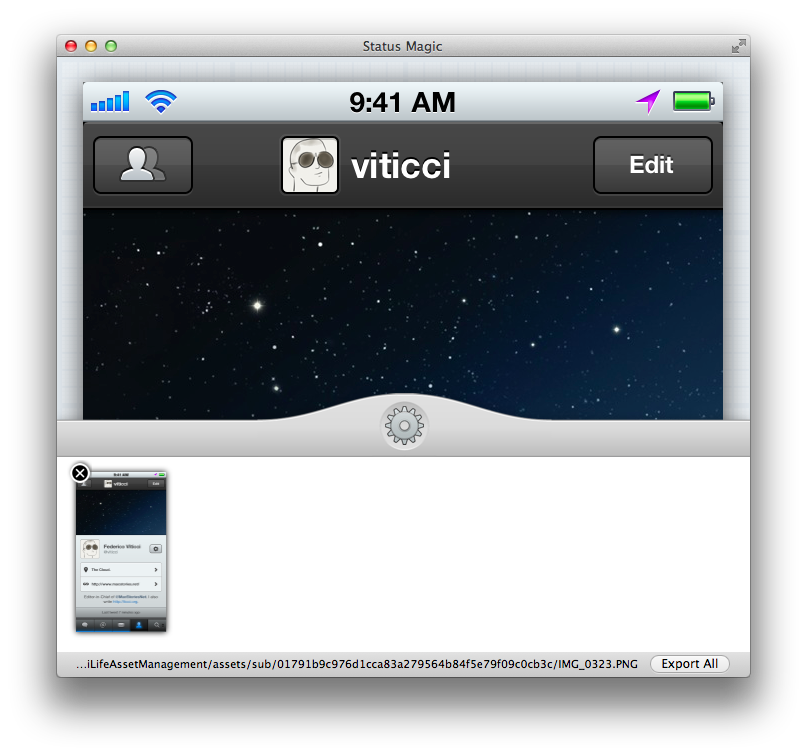
I write about a lot of apps on a daily basis. For these apps, I take screenshots, which, when it comes to iPhone apps, are automatically resized and combined with a Keyboard Maestro macro. But, sometimes, the screenshots I take aren’t perfect, in that the status bar is cluttered with icons or, even worse, showing a red battery indicator. Personally, I think showing a red battery in screenshots is a sign of poor attention to detail and quality. This is where Status Magic comes in.

Status Magic lets you replace the status bar in a screenshot with a clean one in just two clicks. It can apply clean status bars to multiple screenshots at once, and it works with the latest Apple devices such as the iPhone 5 and Retina iPad. Read more


Tweetbot for iPhone 2.6 Adds Custom POIs, Header Images

Tweetbot for iPhone 2.6 Adds Custom POIs, Header Images

Tweetbot 2.6 is out today on the iPhone, and it’s a minor update from the previous 2.5 version. There are, however, two changes I would like to cover.

Tweetbot 2.6 comes with support for Twitter’s new header images for profiles. You’ll have to upload them directly from Twitter’s website – you can’t upload new ones in Tweetbot – but the app will display them nicely in user profiles, just like Tapbots’ other app, Netbot.

Tweetbot 2.6 also lets you create custom POIs for locations. If you think a location is incorrect, or simply would like to customize the location Tweetbot finds, click on the location in the compose screen, and create a custom POI. Be aware that other Tweetbot users will then be able to use the POI, as it’s based on Twitter’s geolocation features and the address of the location.

Tweetbot 2.6 is a minor, but nice update. Get it from the App Store.

Permalink

GTA: Vice City Coming To iOS This Fall

GTA: Vice City Coming To iOS This Fall

As reported by Polygon, Rockstar has announced a special 10th anniversary edition of GTA: Vice City coming “later this fall” to iOS and Android devices.

The touch-controlled ports, which Rockstar says will “[bring] the full experience to mobile devices, featuring native high-resolution graphics and several enhancements unique to the iOS and Android platforms,” will be available “later this fall.” Last year, Rockstar highlighted the 10th anniversary of Grand Theft Auto 3 in the same way, with updated versions for iOS and Android that launched in mid-December.

Originally released on PlayStation 2 in October 2002, Vice City is regarded by many fans of Rockstar as one of the highest points ever touched by the series. With a satirical look at Miami in the 80’s, Vice City went on to become one of the best episodes of GTA thanks to a mix of “open world” gameplay and engaging plot.

Last year, Rockstar brought Vice City’s predecessor, GTA III, to iOS devices, but hasn’t updated the game for the iPhone 5 and Retina iPad yet. Hopefully the port of Vice City will be natively optimized for Apple’s latest devices. According to Rockstar, the game will feature “native high-resolution graphics and several enhancements unique to the iOS and Android platforms”.

Check out the full press release here.

Permalink