John
John
This week, Federico and John celebrate episode 400 by considering what the future will hold for apps 400 more episodes from now.
The DMA Version of iOS Is More Fun Than Vanilla iOS→
Allison Johnson, writing for The Verge on the latest EU-mandated and Apple-designed changes to iOS in Europe:
They’re getting all kinds of stuff because they have cool regulators, not like, regular regulators. Third-party app stores, the ability for browsers to run their own engines, Fortnite_,_ and now the ability to replace lots of default apps? I want it, too! Imagine if Chrome on iOS wasn’t just a rinky dink little Safari emulator! Imagine downloading a new dialer app with a soundboard of fart sounds and setting it as your default! Unfortunately, Apple doesn’t seem interested in sharing these possibilities with everyone.
And:
It’s starting to look like the company sells two different iPhones: one for people in Europe, and one that everyone else can buy. That’s weird, especially since keeping things simple and consistent is sort of Apple’s thing. But the company is so committed to keeping the two separate that it won’t even let you update apps from third-party app stores if you leave the EU for more than a month.
As I wrote on Threads (much to the disbelief of some commentators), I personally feel like the “DMA fork” of iOS is the version of iOS I’ve wanted for the past few years. It’s still iOS, with the tasteful design, vibrant app ecosystem, high-performance animations, and accessibility we’ve come to expect from Apple; at the same time, it’s a more flexible and fun version of iOS predicated upon the assumption that users deserve options to control more aspects of how their expensive pocket computers should work. Or, as I put it: some of the flexibility of Android, but on iOS, sounds like a dream to me.
Apparently, this thought – that people who demand options should have them – really annoys a lot of (generally American) pundits who seemingly consider the European Commission a draconian entity that demands changes out of spite for a particular corporation, rather than a group of elected officials who regulate based on what they believe is best for their constituents and the European market.
That point of view does Apple a disservice: rather than appreciating how Apple is designing these new options and collaborating with regulators, some commentators are just pointing fingers at a foreign governmental body. From my European and Italian perspective, it’s not a good look.
I think that Apple is doing a pretty good job with their ongoing understanding of the DMA. It’s a process, and they’re doing the work. I don’t find the installation of third-party marketplaces as horrible as others have painted it, and I’m excited about the idea of more default apps coming to iOS. Whether you like it or not, this is the world we live in now. A law was passed, and iPhones (and iPads soon) must be made more versatile. As a result, iPhones are more fun for people like me (a clipboard manager! Fortnite!), while very little has changed for those don’t care about new options.
Apple is adapting to this new reality. Perhaps more folks in the Apple community should, too.
 Hardware Ideas Apple Should Steal
The Sound of Apple→
I thoroughly enjoyed this two-part series on the Twenty Thousand Hertz podcast about sound design at Apple and the care that goes into crafting sound effects and alerts that complement the user experience (speaking of the parts of Apple I still love).
I’ll be honest: like many other people these days, I don’t often hear sound effects at all since my iPhone is constantly silenced because I don’t want to bother people around me. However, sound plays an essential role for accessibility reasons and is an entire dimension of software design that is not treated like an afterthought at Apple. I especially appreciated how both episodes went into explaining how particular sounds like Tapbacks, Apple Pay confirmation messages, and alarms were created thanks to members of Apple’s Design team, who participated in both episodes and shared lots of behind-the-scenes details.
I hope we get a third episode about sound design in visionOS eventually. (I listened to both episodes using Castro, which I’m using as my main podcast client again because its queue system is unrivaled.)
The Slow Decline of the Apple “Cult”→
The headline may be a little provocative, but this article by Matt Birchler encapsulates a lot of the feelings I shared on the latest episode of Connected following Apple’s decisions regarding the Patreon iOS app.
Part of this is that Apple is no longer the underdog, they’re the biggest fish in the sea. It’s simply not as fun to root for the most successful consumer company of all time than to root for the upstart that’s trying to disrupt the big guys.
But another part is that despite achieving massive success, Apple continues to make decisions that put it at odds with the community that used to tirelessly advocate for them. They antagonize developers by demanding up to one third of their revenue and block them from doing business the way they want. They make an ad (inadvertently or not) celebrating the destruction of every creative tool that isn’t sold by Apple. They antagonize regulators by exerting their power in ways that impact the entire market. They use a supposedly neutral notarization process to block apps from shipping on alternate app stores in the EU. Most recently they demand 30% of creators’ revenue on Patreon. No single action makes them the bad guy, but put together, they certainly aren’t acting like a company that is trying to make their enthusiast fans happy. In fact, they’re testing them to see how much they can get away with.
And:
And to be super clear, I think the vast majority of folks at Apple are amazing people doing amazing work, especially those in product, design, and development. There’s a reason that I use their products and there’s a reason I care enough to even comment on all this in the first place. The problems all stem from the business end of the company and I don’t know how to convince them that reputation matters. How do we convince them that they need the rebel spark like they used to have? How do we convince them there are more ways to increase their profits than by going after the paltry earnings of creators on Patreon?
It’s a pretty dark place to be when Apple’s biggest, long time fans are hoping that the US government will step in to stop them from doing multiple things that they’re doing today.
I couldn’t have said it better myself. On the latest Connected, I argued that it almost feels like there are two Apples within Apple: the company that designs the hardware products and operating systems I still love using, which I find superior to most alternatives on the market today; and there’s the business entity, which is antagonizing developers, creators, governments, and, in doing so, alienating customers who have been supporting them for years.
I don’t know how to reconcile the two, and I don’t think I’m alone in feeling this way lately.
Developers Getting Access to NFC Transactions via the Secure Element in iOS 18.1→
Earlier today, Apple announced another major new functionality coming to iOS 18.1: the ability for third-party apps to offer NFC transactions via the iPhone’s Secure Element:
Starting with iOS 18.1, developers will be able to offer NFC contactless transactions using the Secure Element from within their own apps on iPhone, separate from Apple Pay and Apple Wallet. Using the new NFC and SE (Secure Element) APIs, developers will be able to offer in-app contactless transactions for in-store payments, car keys, closed-loop transit, corporate badges, student IDs, home keys, hotel keys, merchant loyalty and rewards cards, and event tickets, with government IDs to be supported in the future.
This is coming in iOS 18.1, which will also mark the official debut of Apple Intelligence. Even better, Apple has published extensive documentation on the new APIs, from which I noticed one detail: in addition to overriding the iPhone’s side button double-click with a different app, a third-party app running in the foreground will still be able to initiate its own NFC transactions, even if you set a different default app.
Eligible apps running in the foreground can prevent the system default contactless app from launching and interfering with the NFC transaction.
And:
You can acquire a presentment intent assertion to suppress the default contactless app when the user expresses an active intent to perform an NFC transaction, like choosing a payment or closed-loop transit credential, or activating the presentment UI. You can only invoke the intent assertion capability when your app is in the foreground.
The irony of all this, of course, is that Apple is under regulatory scrutiny in both Europe and the United States regarding the inability for third-party developers to offer alternative wallets and tap-to-pay systems on iPhone. But as it’s becoming apparent lately, it seems there’s no greater project manager for new iOS features than the fear of regulation.
Rethinking Podcast Apps
watchOS 11 Preview
EarPods Rule→
Even though we have a podcast together, I promise I did not talk to my friend Brendon about something I started doing myself last month: using EarPods – yes, the old wired ones – as my “universal earbuds” that can connect to just about anything these days. In any case, Brendon came to the same conclusion:
At the death of my most recent pair of Beats Fit Pro — the left earbud started to emit a loud electrical sound every so often or just disconnect entirely — I decided to give up on them for the time being. I instead bought some wired Apple EarPods which I haven’t used since the final days of the iPod. It’s hard to overstate how much I’ve loved having them with me for the past month.
And:
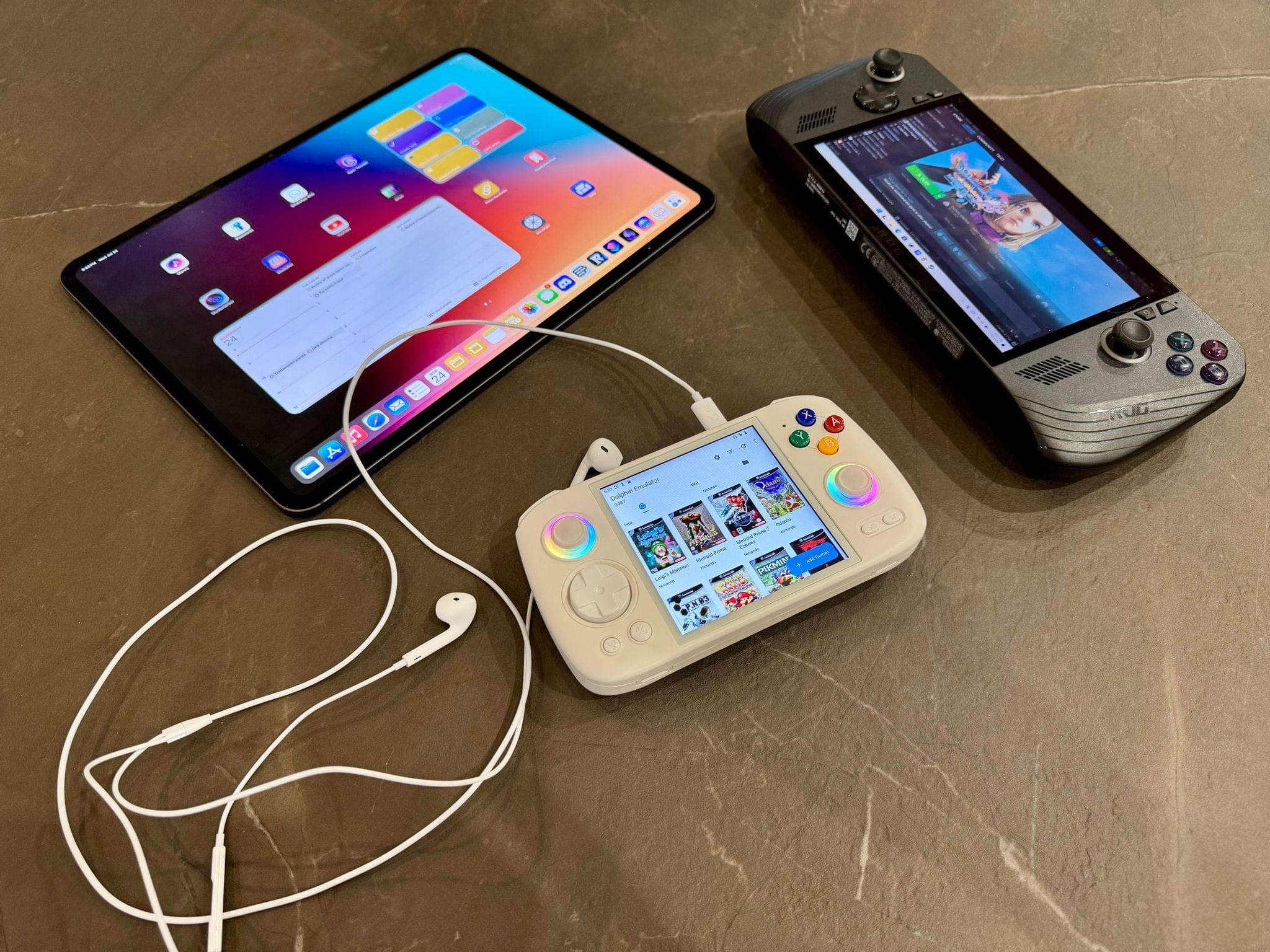
I’m not about to wax poetic about all of the ways using wired headphones in 2024 “changes everything” like a clickbaity YouTube video, but I will say that the proliferation of USB-C on pretty much every device is slowly returning the EarPods to their once-ubiquitous days of the 3.5mm jack. Yes I’m using them on my iPhone when I’m commuting, doing chores around the house, meditating, and what-have-you — but being able to plug them into my gaming devices, laptop, and tablet does in some ways feel like a return to form when it comes to ease of use.
I’m still using AirPods when I want to listen to music or podcasts without bothering my girlfriend at home or when I’m taking the dogs for a walk (although the Meta Ray-Bans have replaced a lot of my AirPods usage outdoors – something I plan to write about soon). A few weeks ago, however, fed up with limitations of Bluetooth multipoint-enabled earbuds, I thought: maybe I should just get Apple’s $20 USB-C EarPods and stop worrying about which wireless earbuds I use with my Apple devices and various gaming handhelds.
I’m here to tell you, like Brendon, that those $20 earbuds still rule. The ubiquity of USB-C means I can use them with my iPhone, iPad, Legion Go, Steam Deck, and even more novel devices such as the RG Cube and ROG Ally X (stay tuned for my thoughts on these on a future episode of NPC). I don’t have to worry about battery life, pairing, or latency. Sure, there’s a wire, and there’s no noise cancelling when using them – but these are my “downtime earbuds” anyway, so I don’t care.
Wireless earbuds – and specifically AirPods – are amazing. But if, like me, you often find yourself playing around with non-Apple devices and wishing you didn’t have to buy separate wireless earbuds for them…Apple’s EarPods are still great, and they’re better than ever thanks to USB-C.