Federico
Fig Fig is a new client for Discourse, the popular service used for discussion boards online. If you’ve ever visited the forum boards of companies like The Omni Group or DEVONtechnologies, you’ve used Discourse. Fig’s goal is to bring a native experience to these discussion boards that you’d usually interact with in Safari. With...
 Mac Utility Grab Bag, Vol. 2
This week on AppStories, Federico and I covered eight iOS and iPadOS utilities that we love. For Club members, I wanted to add five of my favorite Mac utilities to my list. What I love about the apps below is that they each serve a specific need particularly well. I don’t use any...
Apple Q2 2020 Results - $58.3 Billion Revenue

Apple has just published its financial results for Q2 2020. The company posted revenue of $58.3 billion. Apple CEO Tim Cook said:
“Despite COVID-19’s unprecedented global impact, we’re proud to report that Apple grew for the quarter, driven by an all-time record in Services and a quarterly record for Wearables,” said Tim Cook, Apple’s CEO. “In this difficult environment, our users are depending on Apple products in renewed ways to stay connected, informed, creative, and productive. We feel motivated and inspired to not only keep meeting these needs in innovative ways, but to continue giving back to support the global response, from the tens of millions of face masks and custom-built face shields we’ve sent to medical professionals around the world, to the millions we’ve donated to organizations like Global Citizen and America’s Food Fund.”
Estimates and Expectations for Q2 2020 and the Year-Ago Quarter (Q2 2019)
Apple’s revenue guidance for Q2 2020 originally fell between $63.0 billion and $67.0 billion, with gross margin estimated to be between 38.0% and 39.0%, but in a press release issued on February 17, 2020, the company said it expected to miss that guidance due to iPhone supply constraints and lower demand in China resulting from the COVID-19 pandemic.
Going into today’s earnings call, Barron’s said:
The current Wall Street analyst consensus revenue forecast is $54.6 billion, but the estimates vary dramatically, with the low end of the Street range at $45.6 billion. The consensus profit forecast is $2.27 a share, but again, the range is wide, with estimates running from $1.73 to $2.73 a share.
In the year-ago quarter (Q2 2019), Apple earned $58 billion in revenue.
Graphical Visualization
After the break, we’ve compiled a graphical visualization of Apple’s Q1 2020 financial results.
It’s Time for Apple to Tackle iPad Pro External Display Support
Two things have changed in the way I work recently. As I detailed in Issue 221 of MacStories Weekly, the first change was that I started using my iPad Pro side-by-side with my Mac mini. The iPad sits on a Twelve South ParcSlope stand, where it’s easy to access for taking notes, running shortcuts,...
iOS and iPadOS 13.5 Betas Released with COVID-19 Exposure Notification Tools and Face ID Skipping Feature
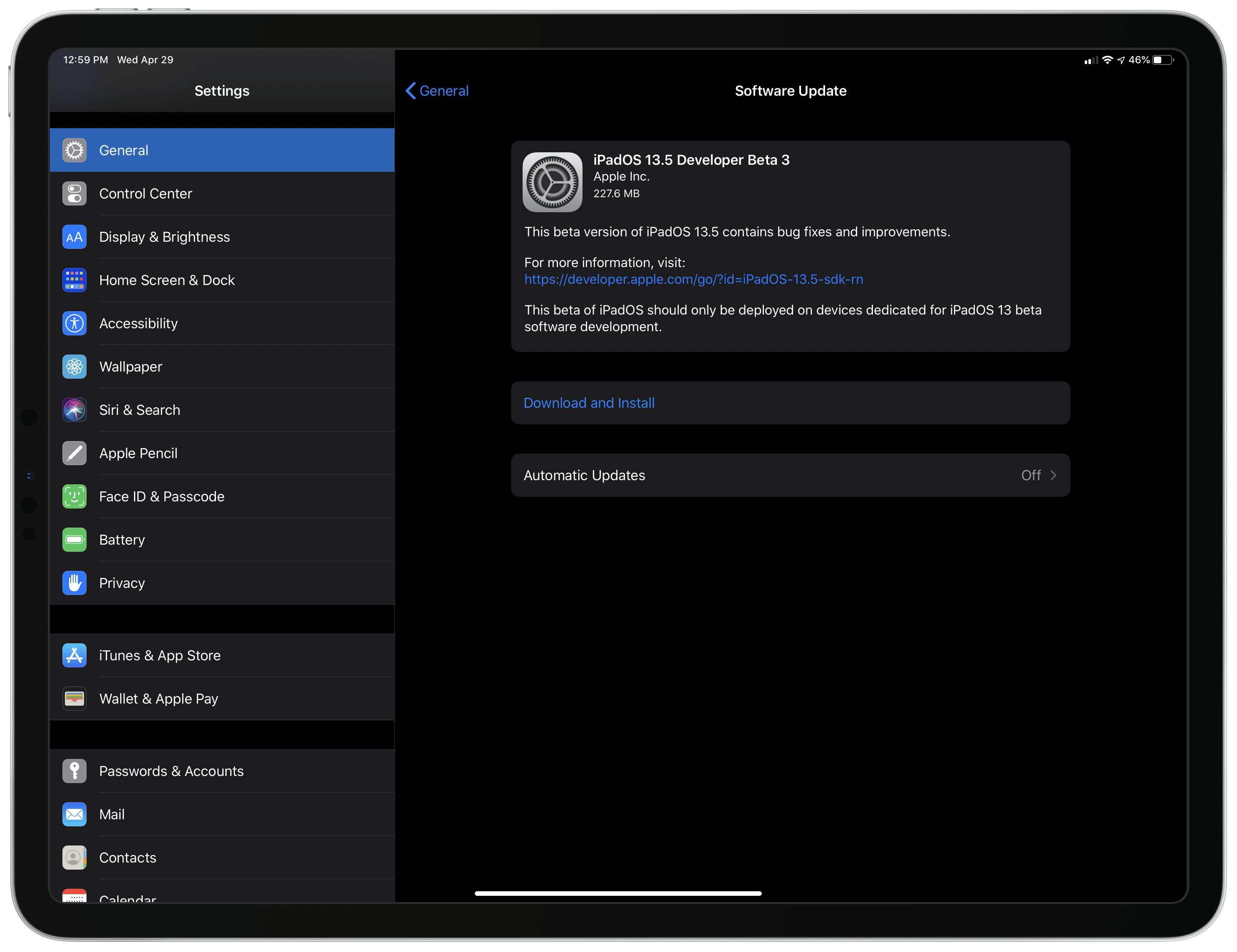
Apple has released version 13.5 Developer Beta 3 for iOS and iPadOS, which includes the COVID-19 exposure notification API that it is developing with Google. A beta of Xcode 11.5 was released alongside the OSes too.
According to a story published by Mark Gurman of Bloomberg:
The tool set is a combination of software updates for iOS and Android, and software development kits to help developers build and test their apps. Apple released an early beta version of its software update that incorporates the technology, iOS 13.5, while Google is rolling out an update via its Google Play app store.
The first phase of the system will let health agencies build apps that allow a person who tests positive for Covid-19 to input their diagnosis. The system will then use Bluetooth technology to learn who the person has come into contact with and then notify those people of a possible exposure.
Additional details and sample code are set to be released by Apple and Google on Friday.
As reported by 9to5Mac, the update to iOS and iPadOS also adds a change to Face ID that detects if you are wearing a face mask, skipping directly to the screen for entering your passcode. It’s a small but useful change that will hopefully help prevent iPhone owners from pulling down face masks in public to unlock their devices.
Due Adds Modern Shortcuts Support with New Reminder Creation Parameters
At some point, I think everyone who manages their work and personal lives in a task manager runs into a clutter problem. With everything from reminders to move my laundry from the washer to the dryer to another to publish our latest MacStories project, it often feels like my list of tasks never gets shorter.
If you’ve ever experienced that feeling yourself, or just want a lightweight way to quickly manage your life, Due is a fantastic option that Federico and I have both covered since it first debuted in the earliest days of the App Store. What I like so much about Due is that by moving short-term, smaller tasks out of my main task manager to it, my primary task manager becomes more focused and easier to use. It’s also so simple to add reminders and timers to Due that I’m far more likely to use the app for ephemeral to-dos, reducing day-to-day mental overhead.
The core functionality of Due has remained the same since Federico’s review of version 2.0 and my review of version 3.0, which are great places to start if you’re unfamiliar with the app. What I said in my review of 3.0 is as true today as ever:
Due is a pro-user implementation of reminders and timers. The app has one of the best quick-entry UIs I’ve used in an app. Picking dates and times is a clunky, laborious process in most apps, but Due gets it right making it simple to add a date and time to a reminder with a combination of natural language recognition and a unique date and time grid.
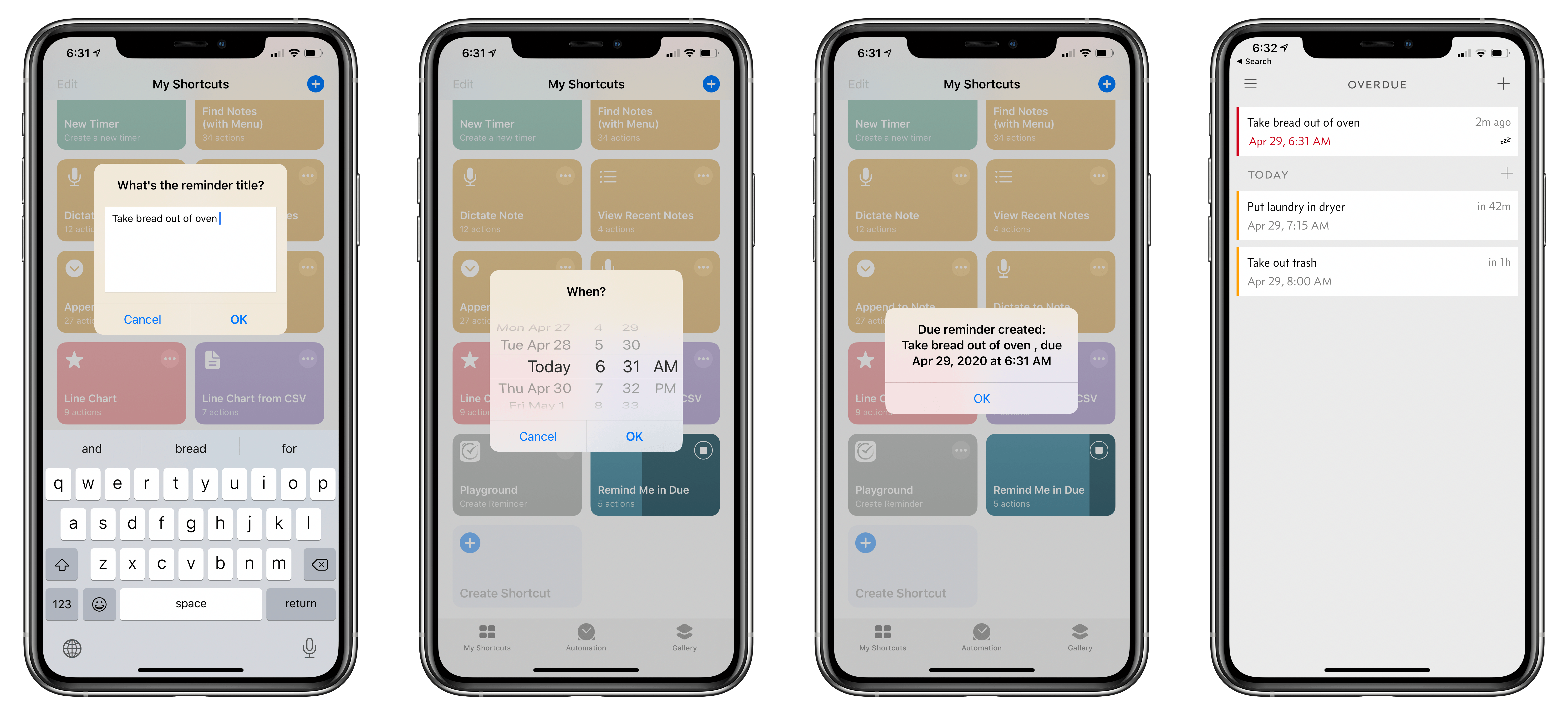
With today’s release of version 20.5 of Due, the app adds updated Shortcuts support complete with actions with parameters, which I expect will make Due an integral component of many users’ shortcuts. The app’s numbering scheme changed earlier this year, too, jumping from version 3 to 20 to indicate the release year.
Introducing MacStories Unwind: A Weekly Podcast Review of Everything MacStories and More
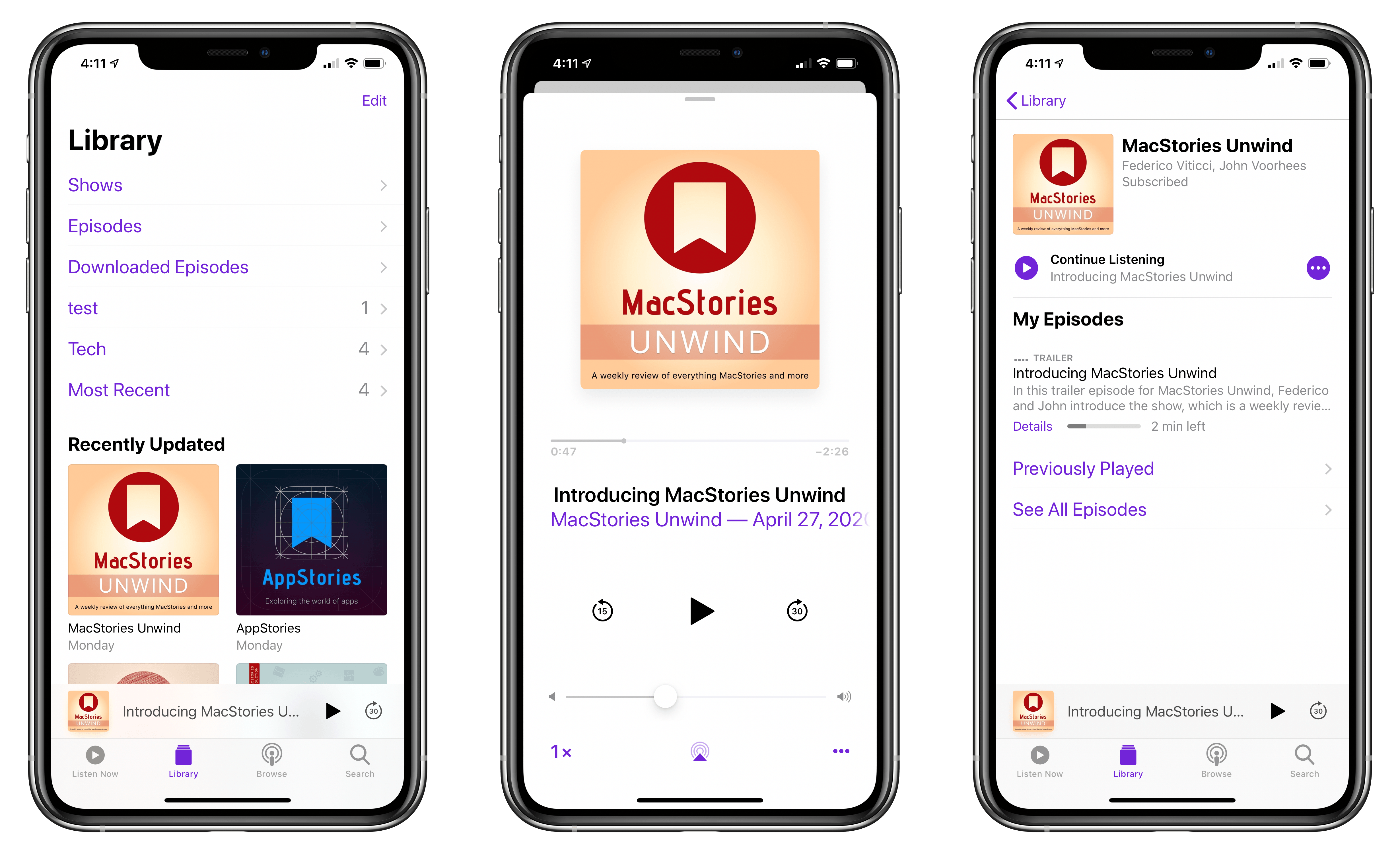
We’re excited to announce Unwind, a new MacStories podcast recapping everything happening at MacStories and more. Every Friday, the new show will run down the stories, reviews, and other posts published on MacStories, the topics covered on AppStories, and what’s new with Club MacStories, plus a couple of media picks for unwinding over the weekend.
You can subscribe to Unwind in all the usual places using the buttons below and listen to the trailer introducing the show right here:







Unwind
We publish a lot every week between the site, our podcasts, and the Club, and we know that sometimes it can be hard to keep up. With Unwind, you’ll get a short, fun guide to everything going on at MacStories, along with links, so it’s easy to jump to what interests you most.
Each week, we’ll also highlight the media we’re enjoying when we take time to unwind ourselves. Every episode will feature a couple of picks including the movies, TV shows, albums, books, articles, and video games we love. Especially with so many readers and listeners stuck at home, now felt like the perfect time to share more of how we spend our downtime.
Of course, we have a new page dedicated to Unwind on MacStories, and you can always access the full catalog of episodes at MacStories.net/tag/unwind.
Helping MacStories’ Sponsors During Uncertain Times
Sponsorships are a big part of what allows us to continue to produce MacStories and each of its properties. We’re fortunate to work with top-notch companies that make terrific products that we’re delighted to promote to readers and listeners.
We plan to offer Unwind as a separately-sponsored podcast like AppStories eventually. However, as we developed Unwind, it didn’t feel appropriate to ask companies already facing uncertainty from the COVID-19 pandemic to take a chance on a new show too. So, for the time being, Unwind will be part of the MacStories homepage sponsorship at no additional cost. Our hope is that including Unwind will help the companies that have been so good to MacStories over the years by providing them with additional exposure.
Working with sponsors to promote products to our readers and listeners in a manner that doesn’t ruin the reading or listening experience and allows us to continue to produce the content you love and the quality you expect has always been of utmost importance to us. To the sponsors with whom we’ve worked in the past and will work with in the future, we hope Unwind adds some value to a MacStories sponsorship that helps make these uncertain times a little less difficult. To our readers and listeners, we hope you enjoy the new show.
– Federico and John