

Over the past six months, I’ve been on a costly quest for a better email solution that started with Superhuman and continued with Shortwave. Both are powerful email services designed to help users process a lot of email quickly, and there’s enough overlap between the two that I thought it would be useful to highlight...
Apple Music Celebrates Its 10th Anniversary with a New Campus, Radio Events, and a Special Playlist

It’s been 10 years since Apple Music launched the summer following Apple’s acquisition of Beats. To mark the anniversary, Apple has made several announcements.
First of all, the company will soon open a 15,000 square foot multi-use campus in Culver City, California. According to Apple’s press release:
…the new studio represents a major milestone in Apple’s continued mission to support artists at every level by giving them the tools, platform, and creative freedom to tell their stories in entirely new ways. More than just a studio in the traditional sense, the new space is a creative campus that reflects a decade of Apple Music’s commitment to high-quality sound, authentic storytelling, and artist-first experiences.
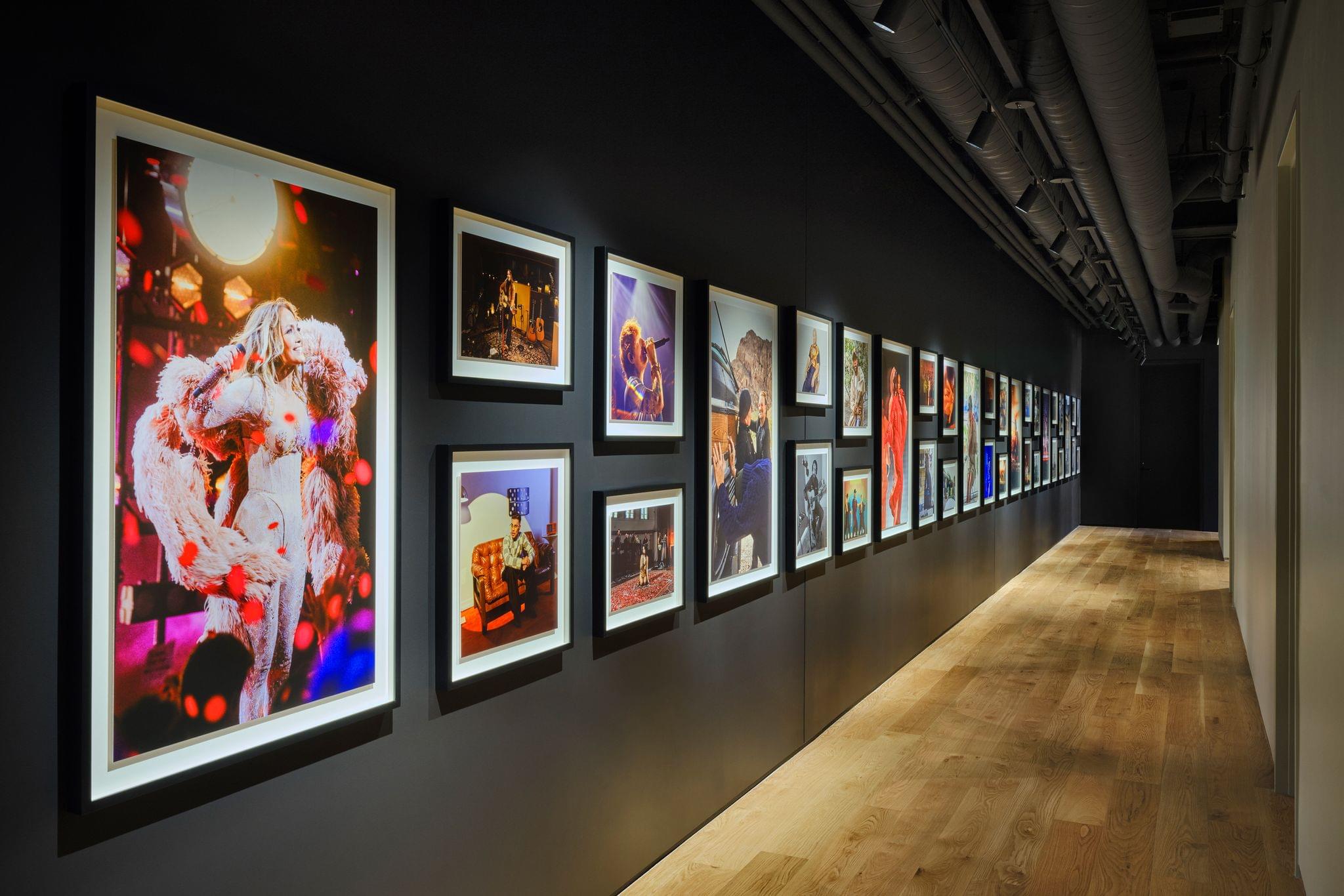
The facility includes two radio studios for Apple Music Radio, with Spatial Audio playback and adaptable configurations to accommodate interviews, performances, and more. Apple has also built a 4,000 square foot soundstage for live performances, multicam recording, events, and screenings. Other spaces are dedicated to Spatial Audio mixing, social media production, and isolation booths for songwriters, podcasters, and interviewers. Apple’s new California studio is designed to anchor its other locations that include New York, Tokyo, Berlin, Paris, and Nashville.
Apple is also celebrating its 10th anniversary with a series of events on Apple Music Radio. “Don’t Be Boring: The Birth of Apple Music Radio with Zane Lowe and Ebro Darden” has concluded, but you can still catch:
- “10 Years of Apple Music” featuring stories of big moments from the past decade which will air today from 8 a.m. to 4 p.m. PST; and
- “Live: 10 Years Of Apple Music” from 4 to 7 p.m. PST, which will be hosted by Lowe and Darden and feature the artists who have been integral to the service.
Apple Music Radio will also be counting down its 500 most streamed songs over the past decade, with 100 songs featured each day, culminating in the top 100 songs, which will stream on July 5th.

Finally, Apple is rolling out individual Replay All Time playlists to its subscribers, which aggregates your most streamed songs from the past 10 years. The playlist hasn’t appeared for me yet, but I know Federico has it, so I expect it will show up for most subscribers soon.
I’ve been a subscriber of Apple Music since day one. While I’ve leveled my fair share of criticisms of the service over that time, it says a lot that I’ve stuck with it for a full decade. There’s always room to improve, but I’m glad I’ve had Apple Music as the soundtrack to my everyday life for so long. Ten years is a big milestone for anything, and judging from where things stand today, Apple Music has a bright future ahead of it.

Access Extra Content and Perks
Founded in 2015, Club MacStories has delivered exclusive content every week for nearly a decade.
What started with weekly and monthly email newsletters has blossomed into a family of memberships designed for every MacStories fan.
Club MacStories: Weekly and monthly newsletters via email and the web that are brimming with apps, tips, automation workflows, longform writing, early access to the MacStories Unwind podcast, periodic giveaways, and more;
Club MacStories+: Everything that Club MacStories offers, plus an active Discord community, advanced search and custom RSS features for exploring the Club’s entire back catalog, bonus columns, and dozens of app discounts;
Club Premier: All of the above and AppStories+, an extended version of our flagship podcast that’s delivered early, ad-free, and in high-bitrate audio.
 Our OS 26 Experiments: iPad Podcasting, Reminders, and More
 Federico
This week, Federico records entirely on his iPad Pro using the new local capture feature in iPadOS 26. He and John discuss how this system feature changes remote podcasting, their experiences and experiments with macOS Tahoe and the new Spotlight, and why both have returned to Apple’s Reminders app—thanks in part to Apple Intelligence and AI automation workflows. Also covered this week: AirPods get better recording quality in the latest beta, MCP integrations with native apps, and early thoughts on Workout Buddy in watchOS 26.
On AppStories+, Federico explores Perplexity’s system-level integrations and publishes from Notes, while John explores a new Focus mode combination thanks to iOS 26.
](https://cdn.macstories.net/banneras-1629219199428.png)
We deliver AppStories+ to subscribers with bonus content, ad-free, and at a high bitrate early every week.
To learn more about an AppStories+ subscription, visit our Plans page, or read the AppStories+ FAQ.
AppStories Episode 443 - Our OS 26 Experiments: iPad Podcasting, Reminders, and More
0:00
29:30
29:30
Migrating Between Task Managers in an AI Computing World
I spent part of this week migrating my task management system from Todoist to Reminders. I did so because I need to live in Reminders to review its updates as part of my macOS Tahoe review this fall, but I was also intrigued by some of the new features of Reminders, which I’ll get into...
Apple Opens Up New App Distribution Options in the EU, Along with New and Updated Fees

To avoid additional fines, Apple is making several new changes to App Store rules in the EU. Today’s changes are a result of an April ruling by the European Commission that levied a €500 million fine against the company and ordered that it “…remove the technical and commercial restrictions on steering and to refrain from perpetuating the non-compliant conduct in the future….”
The changes are complex and wide-ranging, but among the highlights regarding in-app offers are changes that:
- allow developers to communicate and promote offers for digital goods and services in their apps, which can steer users to the web, an alternative app marketplace, or another app either inside their app via a web view or native code, or outside their app;
- permit developers to design these offers themselves, which can include pricing and instructions on how to take advantage of the offers outside the app;
- allow offers to include links to the destination of the developer’s choice; and
- prohibits developers from making offers outside the App Store using Apple’s In-App Purchase or StoreKit External Link Account entitlement for reader apps on the same OS;
- require an informational banner in the App Store that shows it offers external purchases.
Fees have changed for developers offering external purchases, too, and include:
- an initial acquisition fee of 2% is charged for sales made within six months of a user’s first unpaid installation of an app;
- a 5% or 13% store services fee depending on the store services used for any purchases made within 12 months of an app’s download;
- for apps that offer external purchases, a Core Technology Commission (not Fee) of 5% for purchases made within 12 months of installation will be charged;
- the Core Technology Fee still exists, until the end of the year, for apps that don’t use the external purchase APIs if their installations exceed one million installations on a rolling 12-month basis; and
- lower fees for Small Business Program developers.
Note, too, that by January 1, 2026, the Core Technology Fee will be replaced by the Core Technology Commission.
Also, developers in the EU will be able to offer their apps not only through alternative app marketplaces, where were already available, but also their own websites. To sell an app via a website, you have to be an Apple Developer in good standing for two consecutive years, obtain a €1,000,000 standby letter of credit, and have an app that has more than one million First Annual Installs on iOS and/or iPadOS in the prior calendar year. As you would expect, developers selling outside the App Store are responsible for managing the purchase process, taxes, and customer service, and failing to do so could result in the revocation of API access by Apple.
All right, that’s a lot and while I’ve tried to boil it down to the core points, there are a lot of details developers should study carefully and understand before taking the plunge of selling their apps outside the EU App Store. The best place to learn more now is from Apple. Start with the developer announcement, which links to more details about the new rules and relevant legal documents. Apple is also offering 30-minute sessions for EU developers to ask questions and provide feedback.
If you’re wondering what Apple thinks of all this, well, it’s not happy. An unnamed spokesperson told CNBC:
The European Commission is requiring Apple to make a series of additional changes to the App Store. We disagree with this outcome and plan to appeal.
It will be interesting to see how this plays out. The fee structure and rules are complex and will need to be studied closely to evaluate the practical effect of the changes. That said, I’m cautiously optimistic that our readers in the EU will soon have more choice than ever, which I’m glad to see.
Access Extra Content and Perks
Founded in 2015, Club MacStories has delivered exclusive content every week for nearly a decade.
What started with weekly and monthly email newsletters has blossomed into a family of memberships designed for every MacStories fan.
Club MacStories: Weekly and monthly newsletters via email and the web that are brimming with apps, tips, automation workflows, longform writing, early access to the MacStories Unwind podcast, periodic giveaways, and more;
Club MacStories+: Everything that Club MacStories offers, plus an active Discord community, advanced search and custom RSS features for exploring the Club’s entire back catalog, bonus columns, and dozens of app discounts;
Club Premier: All of the above and AppStories+, an extended version of our flagship podcast that’s delivered early, ad-free, and in high-bitrate audio.
An iPad Pickle
This week, Federico and John reflect on where the iPad fits within their workflows after the announcement of iPadOS 26.
Then, on AppStories+, they explore the potential for an Apple automation renaissance built on the features announced at WWDC.
We deliver AppStories+ to subscribers with bonus content, ad-free, and at a high bitrate early every week.
To learn more about an AppStories+ subscription, visit our Plans page, or read the AppStories+ FAQ.
App Debuts
Pixeldrop Pixeldrop is a new iPhone and iPad app for pixelating or redacting sections of an image. I’ve done this for years with Annotable, which is still my go-to, but if you’re looking for a simple and free alternative, Pixeldrop works well. Controller for HomeKit Controller for HomeKit, which is available on the iPhone, iPad,...
Interesting Links
The idea of Google Gemini panicking while playing Pokémon Red is hilarious, but apparently it did, and it hurts the AI’s performance, according to this TechCrunch story. (Link) David Smith spent some time in the WWDC Design Lab talking to Apple designers about where and when to use Liquid Glass elements in his apps, and...
WWDC 2025: The Benefits of Not Trying Too Hard
This year’s WWDC was very different from last year’s. It’s tempting to say it was a return to form, but I don’t think that’s entirely it. What made it so much better is that Apple stopped trying too hard. So much of WWDC 2024 felt off. The perception was that Apple was behind on AI,...