This Week's Sponsor:

Crickets

The first alarm app for families.


Posts tagged with "health"

Chance Miller on the Apple Watch Series 12 and Ultra 4→

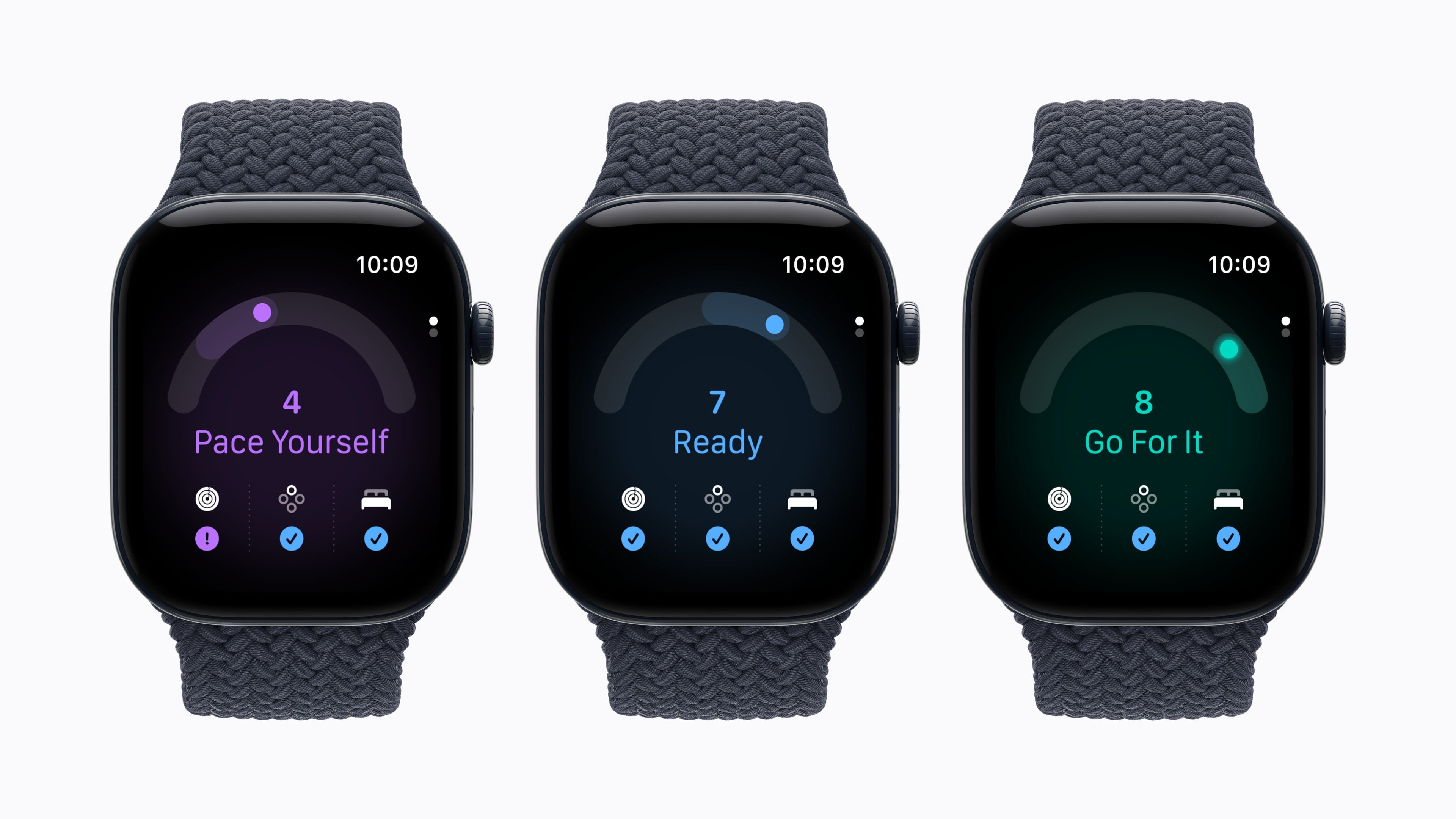
Apple Watch reviews are out and Chance Miller at 9to5Mac has an excellent, in-depth look at both the Series 12 and Ultra 4. One of the things that Chance points out that might not be immediately obvious to many people is that the inclusion of an always-on chip as part of the S11 system on a chip allows Apple to fill meaningful gaps in both Watches’ data collection:

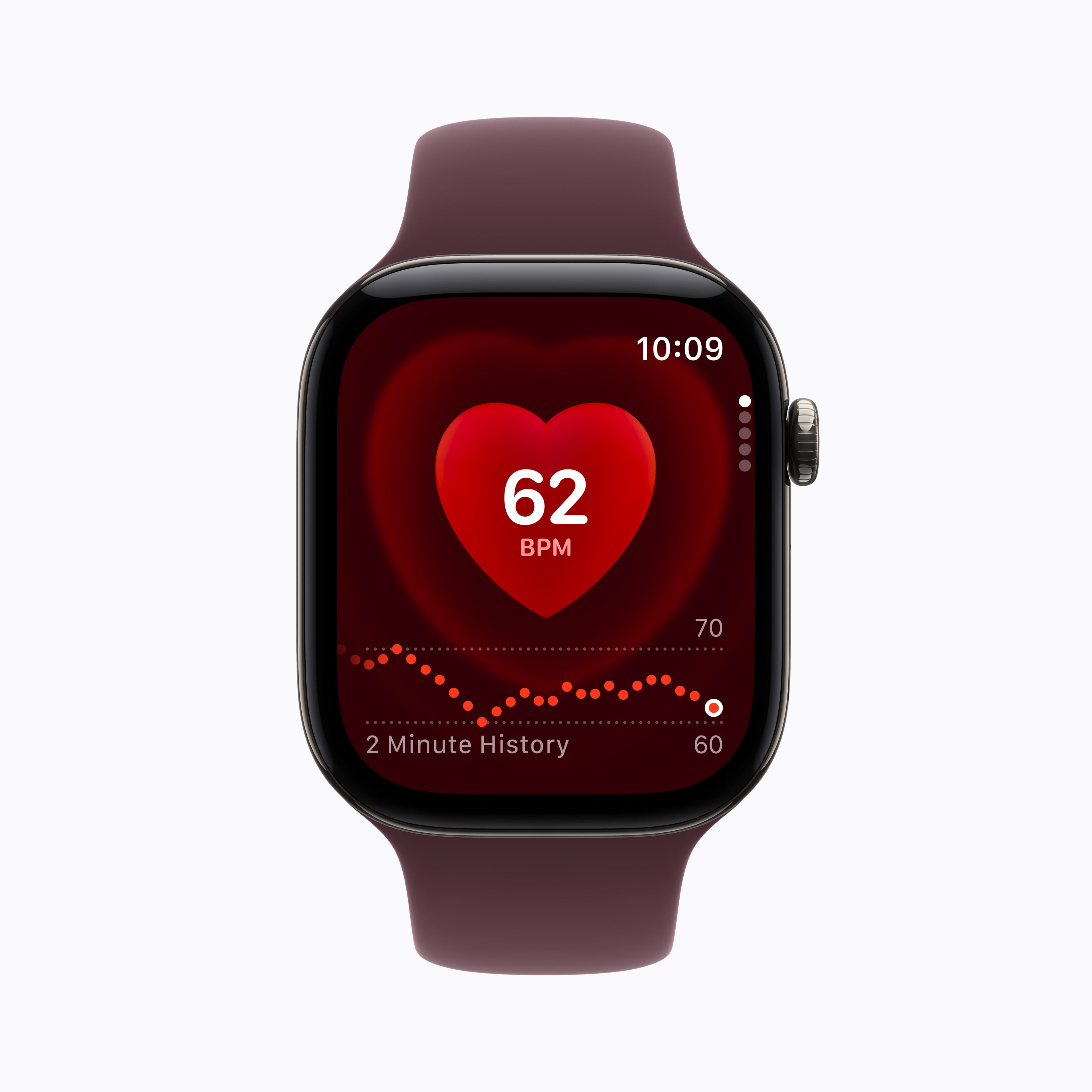
They will capture your heart rate every five seconds, regardless of whether you’re moving or stationary. Having such frequent and accurate heart rate readings unlocks new levels of data and insight.

When measuring your heart rate once every five minutes while stationary, previous Apple Watch models had an inherent blind spot. They either didn’t capture moments where your heart rate increased while not working out, or they captured one or two arbitrary readings somewhere in the middle of those moments.

That always-on component, combined with the Secure Exclave, is what Apple will also use to keep microphone data private and secure for features like Live Rewind and Siri Recap that are coming later this year.

It was these more frequent heart rate and HRV readings, along with the larger, more accurate sensor on the rear of the Apple Watches, that led me to order an Ultra 4. So I was also glad to see this observation from Chance after his first week with the new Watches:

In my one week with the Apple Watch Series 12 and Apple Watch Ultra 4, I’ve found that added data very insightful. I’m learning more about how little things I do throughout the day impact my heart rate. For example, I can visualize the impact of a late afternoon cup of coffee, or the impact of a stressful moment at work.

That’s the sort of feedback that you can act on and the kind of data that I expect developers will be able to use to make even more meaningful apps across the health and wellness spectrum.
Permalink

watchOS 27: The MacStories Review

I haven’t been this excited about an Apple Watch in a long time. Last week, Apple introduced the Apple Watch Series 12 and Apple Watch Ultra 4, which will be available at the end of the week. The new Watches feature the S11 chip, which enables a bunch of new features, some of which won’t debut until later this year. At the same time, Apple is dropping support for more Watches than usual.

What we’re witnessing is a reboot of the Apple Watch and watchOS forced by advances in AI. The Apple Watch and its OS found their niche years ago, freeing us from pulling out our iPhones for notifications, tracking our health and fitness, and enabling the occasional Siri request. It was a good and comfortable spot for what by all accounts has been one of the most successful wearables to date, but watchOS also felt stuck in a rut.

Every year we got a few new workout types, a new watch face, and a few other features, but the OS didn’t advance much. What’s different this year is that watchOS 27 is breaking with slower hardware and looking forward to the substantially more powerful S11 chip, which will allow the Apple Watch to expand into all-new areas.

What this transition also means is that there is not just one set of features to track in watchOS 27 this year but three:

  • those that arrive today for anyone with a compatible Apple Watch,
  • those that arrive at the end of the week that are exclusive to the new Apple Watch Series 12 and Ultra 4, and
  • those that are coming later this year.

That makes this more than just a review. It’s also a preview of things to come and a roadmap for where the Apple Watch is heading.

There’s more than usual to cover this year, so let’s dive in and check it out.

Read more


Apple Watch Series 12 and Apple Watch Ultra 4: The MacStories Overview

Source: Apple.

Source: Apple.

At today’s Surprise and Shine event, Apple introduced the new Apple Watch Series 12 and Apple Watch Ultra 4. Both models build on the devices’ existing designs, adding new health and fitness features as well as what Apple calls Audio Intelligence. The star of the Apple Watch show that powers those features on both models is the brand-new S11 chip. Let’s dig into the details of what the new chip and improved sensors means to both models.

Apple Watch Series 12

The Series 12 takes a heart reat measurement every five seconds. Source: Apple.

The Series 12 takes a heart reat measurement every five seconds. Source: Apple.

The new Apple Watch Series 12 comes in 42 and 46mm sizes and is equipped with the new S11 chip. Apple says that enables the device to take sixty times the heart rate measurements and 24x HRV readings compared to the Series 11 Watch. More heart rate measurements and HRV readings mean more accurate and meaningful readings; in fact, better than any other wearable on the market, according to Apple. Apple says step tracking is more accurate, too.

The Series 12 has improved sensors, too. There’s a larger, more power-efficient green LED array for measuring your heart rate every five seconds and a Secure Exclave for processing audio privately and securely. On the outside, the Series 12 features Ceramic Shield 2, making it tougher than the Series 11. The case is now IP6X rated for dust and can be used to six meters of depth. Plus, the battery is rated to last 24 hours during normal use and a 15-minute charge will power it sufficiently to last 12 hours.

Read more


Pedometer++ 8: Glimmers of an Apple Wrist Renaissance

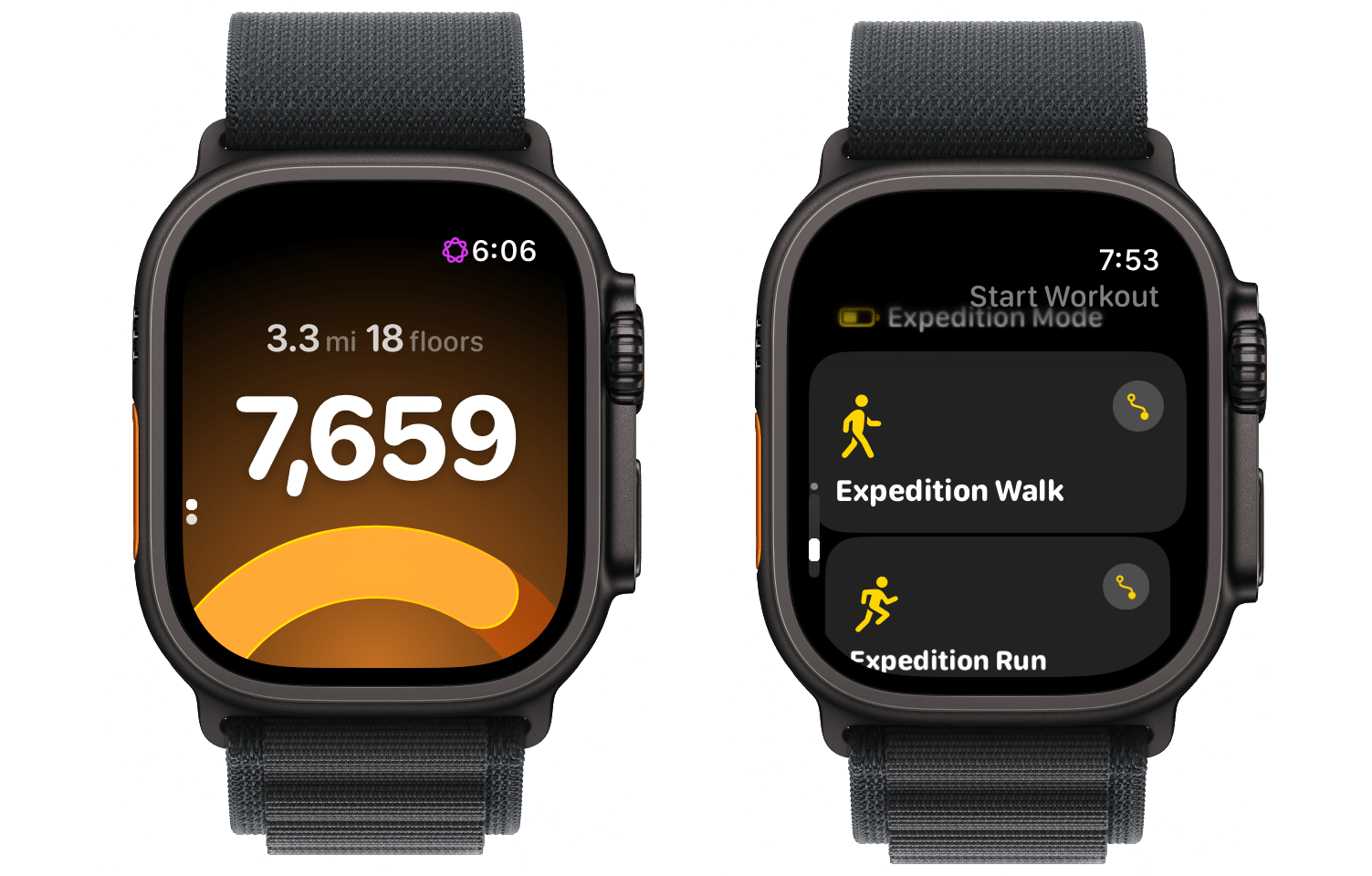
Today, when you mention David Smith’s name, most people probably think of Widgetsmith, his runaway success that caught fire on TikTok and is still going strong today. But for me, Pedometer++ is what comes to mind first. Still a couple of years away from releasing my own apps or writing at MacStories, I was fascinated by the dynamics that made the app a success when it debuted in 2013. Part of that success was how quickly David got it onto the App Store in the wake of the iPhone 5s and its M7 coprocessor that made step counting possible.

It didn’t hurt that Pedometer++’s initial release was also free (and the core features still are), but the app’s elegant, simple design played a big part, too. Pedometer++ appealed to a wide audience who appreciated its focus and frequent updates that systematically took it from basic step counting to badges, confetti, workouts, maps, and more. It’s a great example of a developer who jumped on a new hardware feature quickly with a focused initial release and then relentlessly iterated year after year without sacrificing what made that first version a favorite of so many people.

Today’s 8.0 release is focused first and foremost on the Apple Watch, which is the other aspect of so many of David’s apps that I appreciate. Few people know the ins and outs – and frustrations – of watchOS (née WatchKit) development like David does. But despite the platform’s rudimentary beginnings, David has stuck with it, making the best watch version of Pedometer++ that was possible with each turn of the SDK and, later, OS. That’s as true with version 8.0 of the app as it has ever been.

Read more


Moods Faster: Effortless Mood Tracking

I’ve said over and over that the most important feature of any habit tracker is being able to get in and out of the app quickly. For some developers, that doesn’t always come naturally. After all, doesn’t every developer want their customers to use their app more than others? Sure they do, but it’s not always the right instinct.

That’s something Nick Leith has understood for a long time. Leith is the developer of Remind Me Faster, a companion app for Apple Reminders that accelerates task entry. I’ve moved in and out of Reminders annually for my macOS reviews and every time, the first app I download after the move-in is Remind Me Faster because it makes using Reminders much easier.

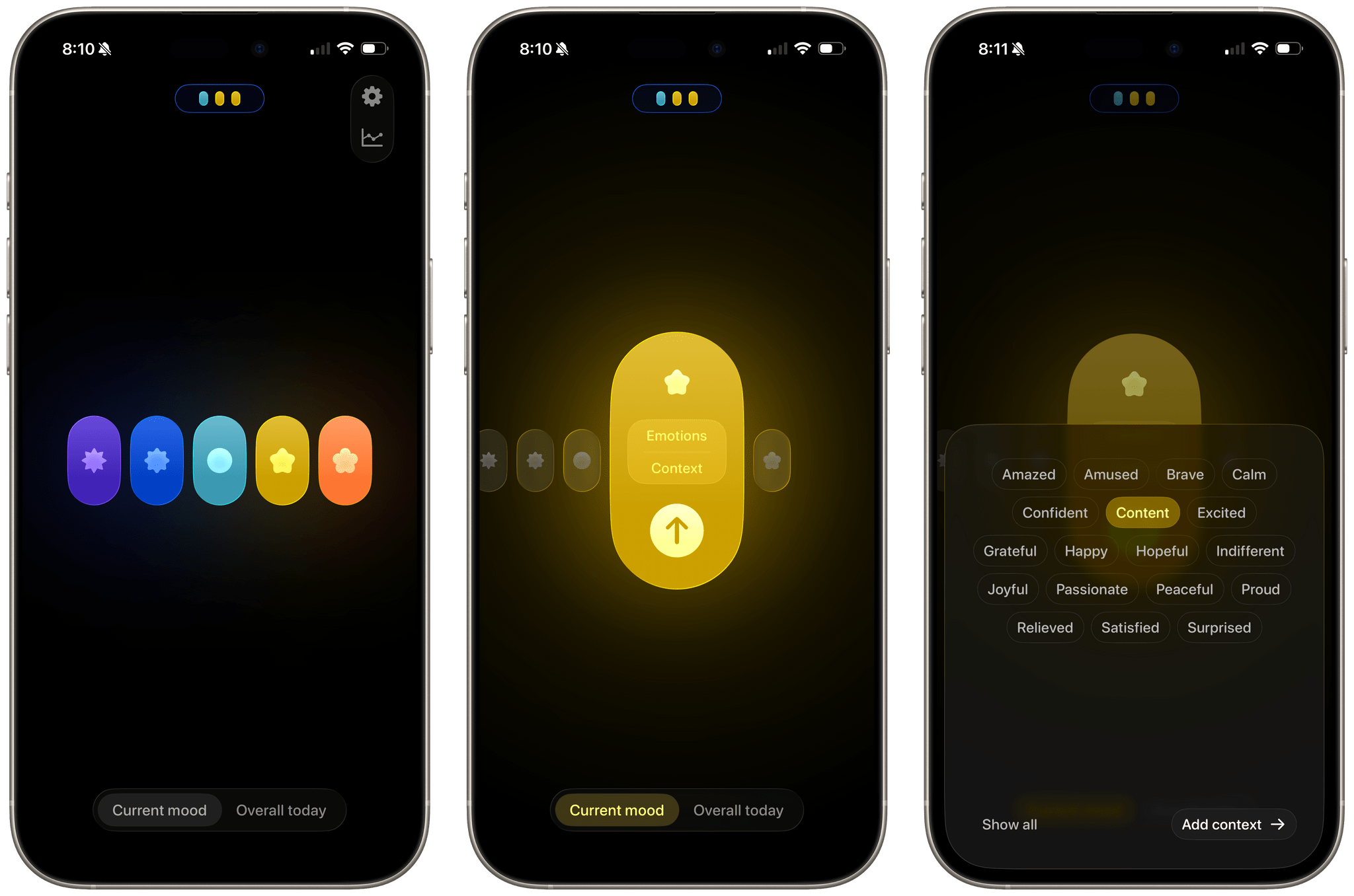
Leith has been thinking about how to make data entry simple and fast for years thanks to that app, and it shows with his brand new app, Moods Faster (Get it? Moods Faster -> Move Faster). Okay, you probably didn’t need that nudge, but I like the name. It’s fun.

Read more


Awake: A Considered, Effective Alarm for Chronic Snoozers

Waking up on time is a quintessential human problem. Over the years, we’ve come up with all kinds of solutions, from ringing analog clocks to flashing lights to motorized digital clocks that roll away from our bedsides as they chime, forcing us to get up and find them to turn them off. But what if there was a way to use a device you already have – your phone – to help you break the habit of snoozing and actually get out of bed when you’re supposed to?

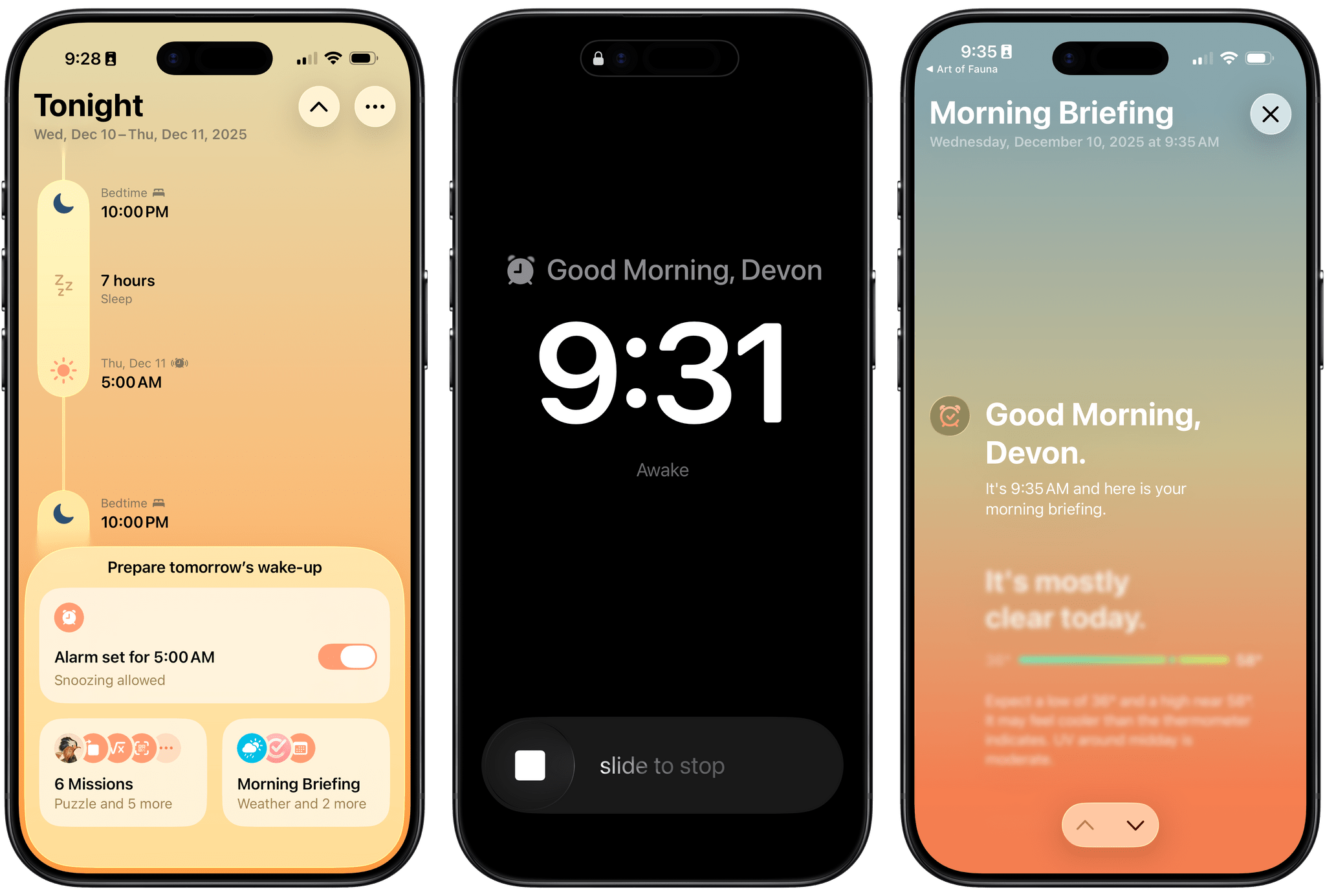
That’s what unorderly, the team behind the day planner app and App Store Awards 2025 finalist Structured, have set out to do with their new alarm app Awake. Built on the newly introduced AlarmKit API, which gives third-party alarm apps the same level of system access as Apple’s Clock app, Awake takes a comprehensive approach to setting alarms that’s meant not only to wake you up but to help you feel more alert and prepared for the day when you do.

If you’ve ever used Structured before, you’re aware of how deeply the unorderly team considers every element of their work, from the color scheme to the fine details of editing events, to make tools that are both elegant and powerful. I’m happy to report that the same level of care is reflected in Awake, both in its design and in the balance of simplicity and customization it offers.

Read more


Activas: Modern Design with a Sprinkling of AI

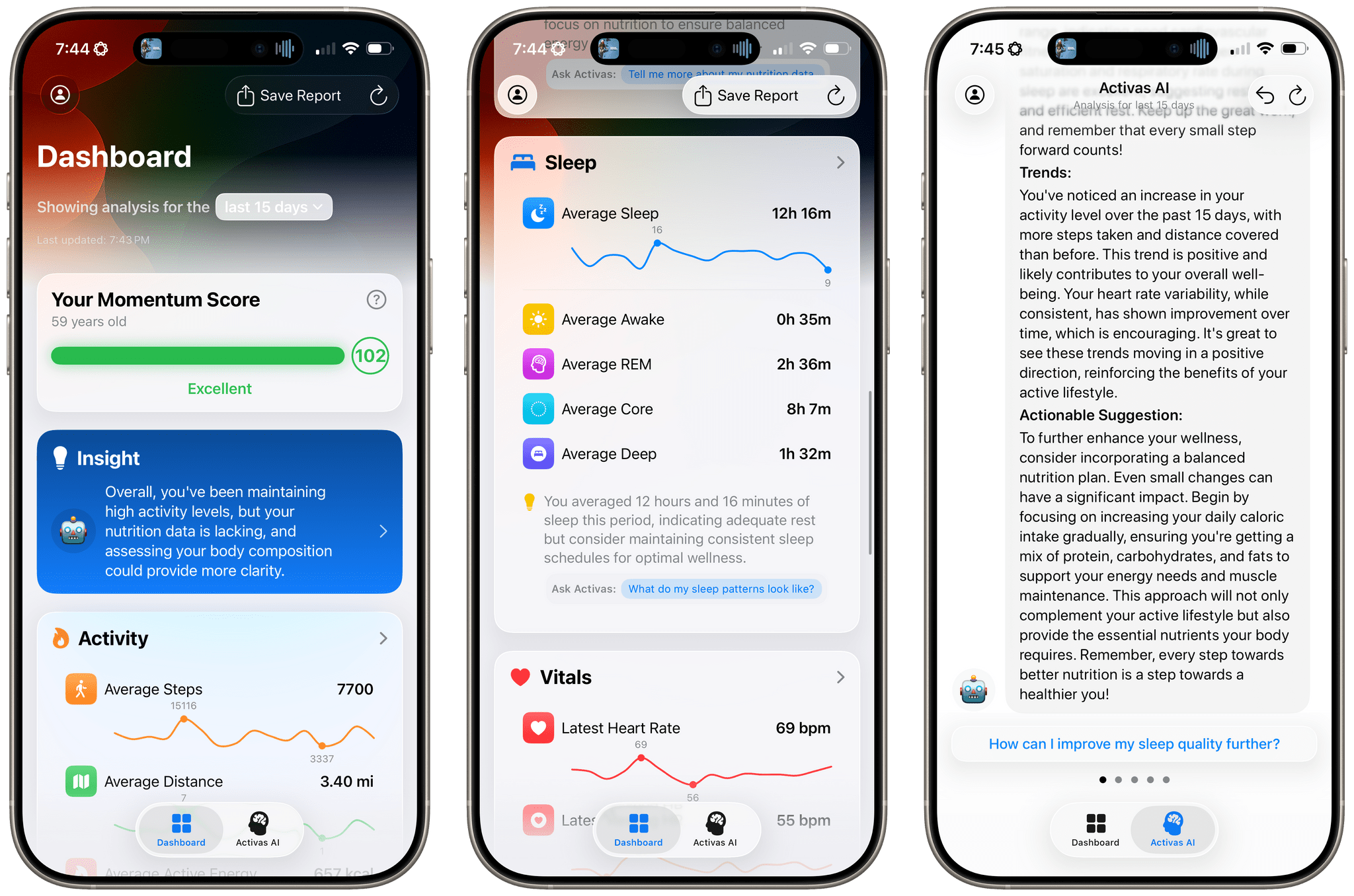
Activas is a new health and wellness tracker for the iPhone and iPad from developer Brian Hough, who built it from the ground up with Apple Intelligence and Liquid Glass in mind. The app serves as a dashboard that brings together information from the Health app in a colorful and easy-to-understand way, using progressive disclosure to avoid overwhelming users with data. It’s a fantastic example of modern design that marries form and function to elevate the user experience.

The app has just two tabs that adopt iOS 26’s Liquid Glass design without sacrificing legibility. The default view is the Dashboard, which can display your recent health and wellness metrics for the last 7, 15, or 30 days. At the top of the Dashboard is a Momentum Score that’s calculated based on a composite of step count, sleep, resting heart rate, and BMI targets, plus your calorie goal. Unlike many similar apps, Activas links to research supporting its targets, which I appreciate. The Momentum Score and a handful of additional stats can also be tracked using one of the app’s Home Screen widgets.

The Momentum Score is followed by an AI-generated insight about your metrics. Because I haven’t been tracking my calories or weight recently, the app suggested I should. That’s followed by overviews of Activity, Nutrition, Sleep, Vitals, and Body Measurement. Each of these sections appears as a SwiftUI-style card that includes graphs showing recent trends, an insight about your metrics, and a suggested question that you can ask the Activas AI with a tap. Sections can be turned on and off and reordered in the app’s settings, too.

The Dashboard’s design is superb. By collecting individual measurements in groups of related statistics and providing a takeaway about each section, the app allows users to get a quick, understandable overview of where they’re succeeding and what needs work.

Read more


Finding the Best Sleep Tracker→

Earlier this year, Andrej Karpathy wrote an in-depth analysis of four sleep tracking methods that Federico recently recommended I read. I’m glad he did, Karpathy, an AI researcher who has worked at OpenAI and Tesla, took the kind of nerdy, data-driven approach that I love.

Over the course of two months, Karpathy plotted sleep tracking results from:

Karpathy got the best results from the Whoop band and Oura ring, but just as interesting were how the data correlated to how he felt after a good night’s sleep:

…my sleep scores correlate strongly with the quality of work I am able to do that day. When my score is low, I lack agency, I lack courage, I lack creativity, I’m simply tired. When my sleep score is high, I can power through anything. On my best days, I can sit down and work through 14 hours and barely notice the passage of time. It’s not subtle.

I recommend reading the entire post for all the details of how each tracking method compared on variety of metrics. I’ve long been intrigued by the Whoop band and Oura ring as a companion to the Apple Watch. There’s overlap between the devices, but Karpathy has planted a seed in my brain that may lead to my own multi-device experiments.

Permalink