Apple’s M1-based Macs will start to be delivered to users next week and are capable of running iPhone and iPad apps natively. In an App Store story and developer documentation, Apple has explained how that will work.
iPhone and iPad apps will be available on the Mac App Store by default, although developers can opt out of offering their apps there. A developer might not want to make their iPhone or iPad app available on the Mac App Store for a variety of reasons. For example:
Some apps available on Mac may not function as they normally would on iPhone or iPad. For example, features that rely on hardware unique to iPhone or iPad—such as a gyroscope or a screen that supports complex Multi-Touch gestures—may not work on Mac. In some cases such a feature may be central to the app’s functionality, while in others the app may be usable without it.
Developers who want to offer their iPhone and iPad apps on the Mac App Store don’t have to do anything to make them work on the Mac. However, Apple is asking developers to consider adopting things like keyboard support, multitasking, and Auto-Layout, which will add Mac keyboard and window resizing support, for example.
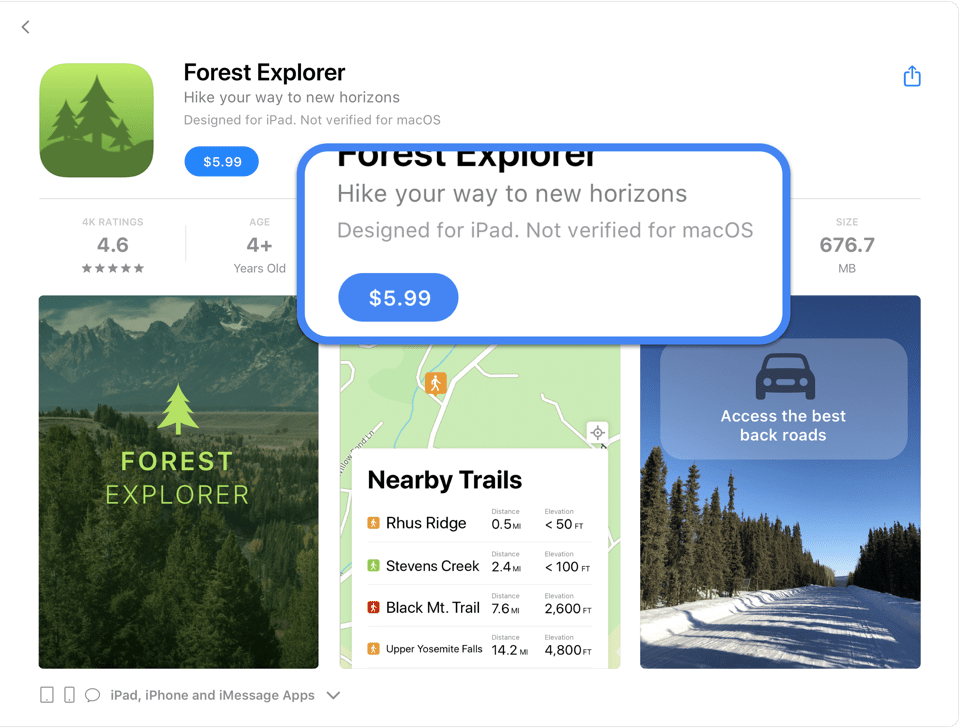
Apple is also encouraging developers to verify that their iPhone and iPad apps work on the M1 Macs. Apps built for iOS and iPadOS will be labeled as ‘Designed for iPhone’ and ‘Designed for iPad,’ so users can identify them, and if an app hasn’t been verified by its developer yet, it will also be labeled as ‘Not verified for macOS.’
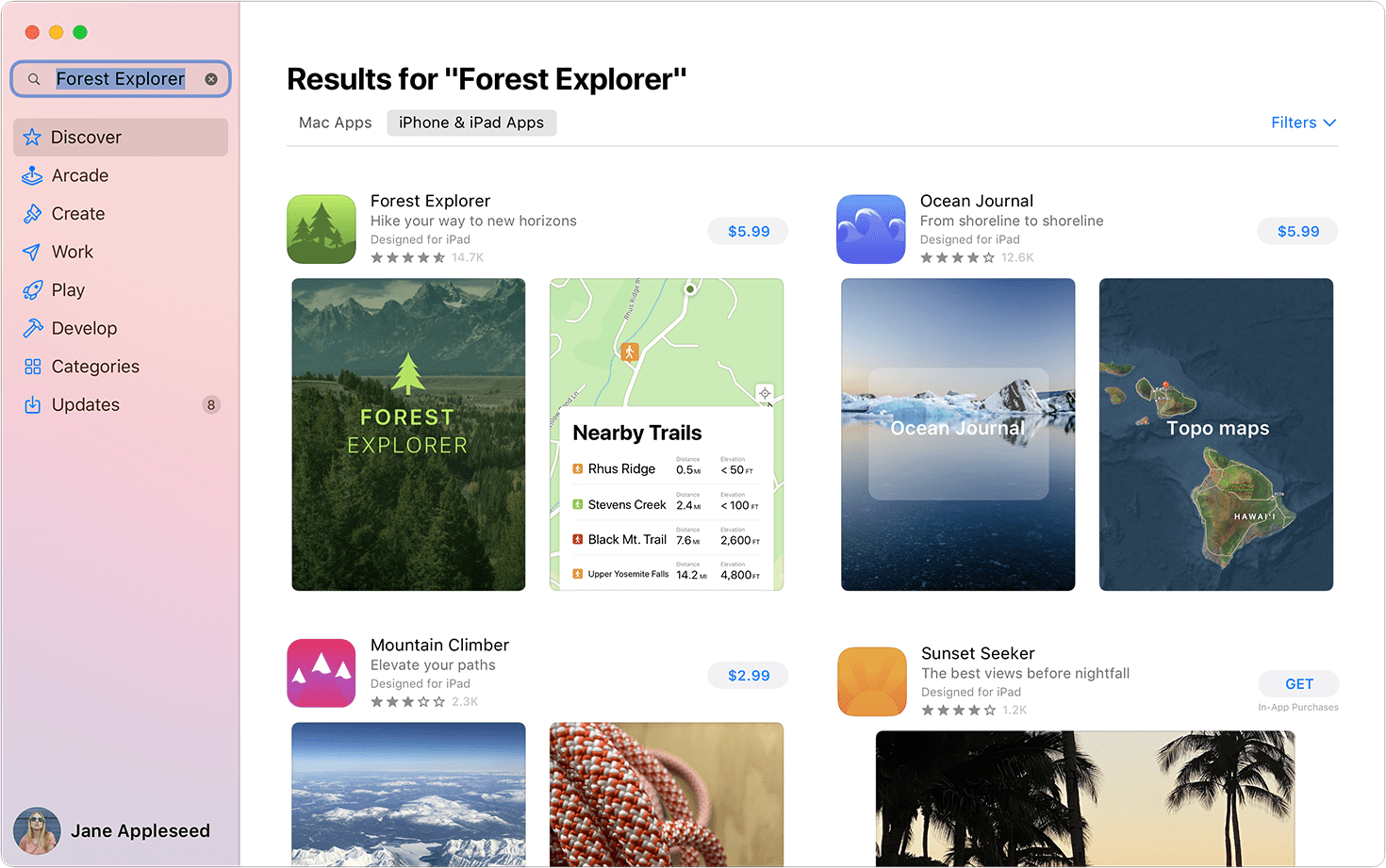
Search results will feature a toggle that separates Mac apps from iPhone and iPad apps. Source: Apple.
Apple’s developer documentation notes that iPhone and iPad apps can be found on the Mac App Store,
by browsing curated selections and charts, or by searching and clicking the “iPhone & iPad Apps” toggle at the top of search results.
The toggle strikes me as a good way to handle search results to help ensure that users understand which version of an app they are downloading. Also, developers who offer their iPhone or iPad app on the Mac App Store can later replace it with a macOS version, which will be delivered to users as an update to the app. However, if developers already offer a Mac app as part of a universal purchase, they cannot later offer an iPhone or iPad app instead.
It will be interesting to see how many apps opt out of the Mac App Store. There are many reasons why a developer might not participate, but I expect those that do will verify their apps relatively quickly to provide users with the confidence to try their app on a new M1 Mac.