Withings Announces ‘Home’ Smart HD Camera with HomeKit Support

Withings, makers of popular smart devices such as the Smart Body Analyzer and Pulse activity tracker, announced Home earlier today. Featuring a variety of environmental sensors with field capture of 135 degrees and HD recording up to 1080p, Withings Home will allow users to monitor their home from an iPhone or iPad through a dedicated app, optionally using the Home device as a 2-way video calling solution.

Compatible with iOS 7 and above and carrying support for Bluetooth Low Energy, Withings Home will be capable of detecting motion and alerting users through push notifications sent to the free Monitor app for iOS. According to Withings, Home will recognize different types of activities such as pets moving or a crying child; each time a “noteworthy event” is registered by the camera, a 5-second video and a photo are saved for two days in a user’s Home Diary, where they can be downloaded or kept in the cloud for a longer period of time by purchasing a subscription plan.

In addition to a VOC sensor to measure indoor air quality, Withings confirmed that Home will support HomeKit, a new framework in iOS 8 to access and control smart accessories in a user’s home. Announced at WWDC 2014, HomeKit will let apps discover HomeKit-enabled devices, configure them, and assign them to groups (like “Living room” or “Kitchen”); HomeKit devices will also benefit from Siri integration and a unified API for developers to interact with. Withings Home will also work with IFTTT’s existing Withings channel, which lets Withings products communicate with web services and apps that feature IFTTT integration.

Home will retail at $219.95 and is launching “soon” according to Withings. You can watch a promo video below.

Read more


Apple to Live Stream September 9 Event

Earlier today, Apple announced that they will live-stream the special media event the company is holding on September 9th in Cupertino, California. From the webpage:

Live video from our special event will be right here. And so will a whole lot more.

In an article also published today, The New York Times reports that Apple will – as rumored – introduce two larger iPhones and a smartwatch next week. According to the article, the “watch” will have a flexible display and carry fitness and health-related functionalities with iOS integration through Handoff and other wireless features; because of the larger screens, the new iPhones’ software should have a “special” one handed mode.

Last, Sachin Patel recorded (via 9to5Mac) a video using a drone to show the structure that Apple has built in front of the Flint Center in Cupertino for next week’s event. You can watch it below.

Permalink

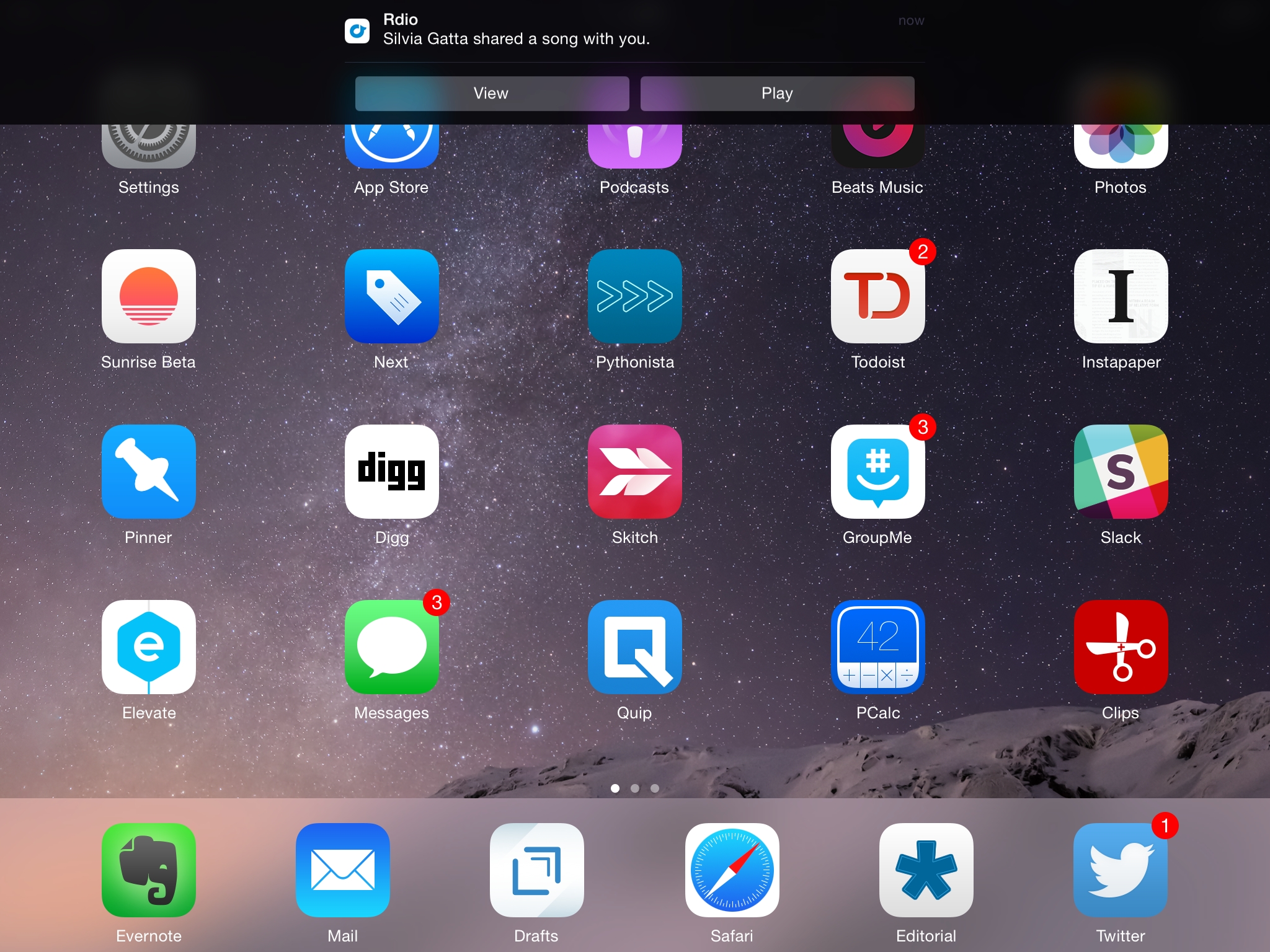
Rdio Focuses on Freemium Model, Updates Apps with New Design

In the face of growing competition in the streaming music market, Rdio, a four-year-old service that charges for online subscriptions, has moved into a new phase with abundant free music — as well as free music’s ever-present companion, advertising.

“What we’ve learned collectively over the last few years,” said Anthony Bay, Rdio’s chief executive, “is that the most successful models are freemium models.”

As The New York Times reports today, Rdio has done well over the past few years, but it is clear that other competitors (most notably Spotify) have been doing far better by placing a strong focus on a freemium business model. As a result, today’s updates to Rdio aren’t much of a surprise to me, but I’m glad they have also taken the time to once again refine the design of their apps.

For those curious, the free version of Rdio will be available in 20 countries initially and will allow unlimited access to stations. Rdio Unlimited will unlock the ability to play albums and playlists, as well as remove ads for $9.99.

Rdio’s move is a result of a deal with the radio network Cumulus Media that was announced a year ago, in which Cumulus was granted an equity stake of at least 15 percent in Rdio’s parent company, Pulser Media, in exchange for providing content and promotional services that Cumulus says are worth $75 million over five years.

The new design is not a major departure from their existing designs, but rather a welcome refinement. For example the new apps get rid of the confusing to distinguish ‘Heavy Rotation’ and ‘Top Charts’ sections and are instead replaced with a far more understandable section called ‘Trending’. There is also a new ‘Browse’ section which has curated Rdio stations into various categories including ‘Top Stations’, ‘Aussie Hits’, ‘Alternative’ and ‘Fitness’.

The other big new feature isn’t actually available yet, but there will also be a ‘Home’ tab which promises to be “an evolving feed of personalized music stories that surfaces the best of Rdio in a single destination”. It’ll be built from what you listen to, your friends listening activity, recommendations from Rdio, and other factors. On the whole it seems like a more advanced music discovery tool than the currently available ‘Recommendations’ page, which is mostly based on your music listening habits.


Discovering Sunrise

“On a paper calendar, what you see is what you put in. We believe that over time, you’re going to put less and less stuff yourself – it’s just going to come automatically.”

Since launching Sunrise in February 2013, Pierre Valade, former UX designer at Foursquare, had a busy year. Started as an iPhone app aimed at reinventing digital calendars and how people manage their schedules, Sunrise quickly gained 250,000 users, added support for Exchange calendars, and expanded to the web, iPad, OS X, and Android. Valade and his team listened to Sunrise’s userbase and added better invitation management and Google Maps previews, but, more importantly, they had to deal with a data breach that forced them to switch to a new token-based authentication for iCloud. More recently, Sunrise launched native app integrations, building on the founders’ vision of a calendar that extends beyond events with a developer platform to let anyone to build services connected to Sunrise.

Valade wants digital omnipresence and modern features to be key elements of Sunrise, which is still a free app with over $8 million raised in funding thus far. And today, with the launch of version 2.5 on the App Store, Valade is hoping that new functionalities such as search, push for Google Calendar, and integration with Todoist will continue to offer the value that, according to his plan, should make Sunrise an app people can’t work without.

Read more


App Store Review Guidelines Updated to Consider New iOS 8 Features

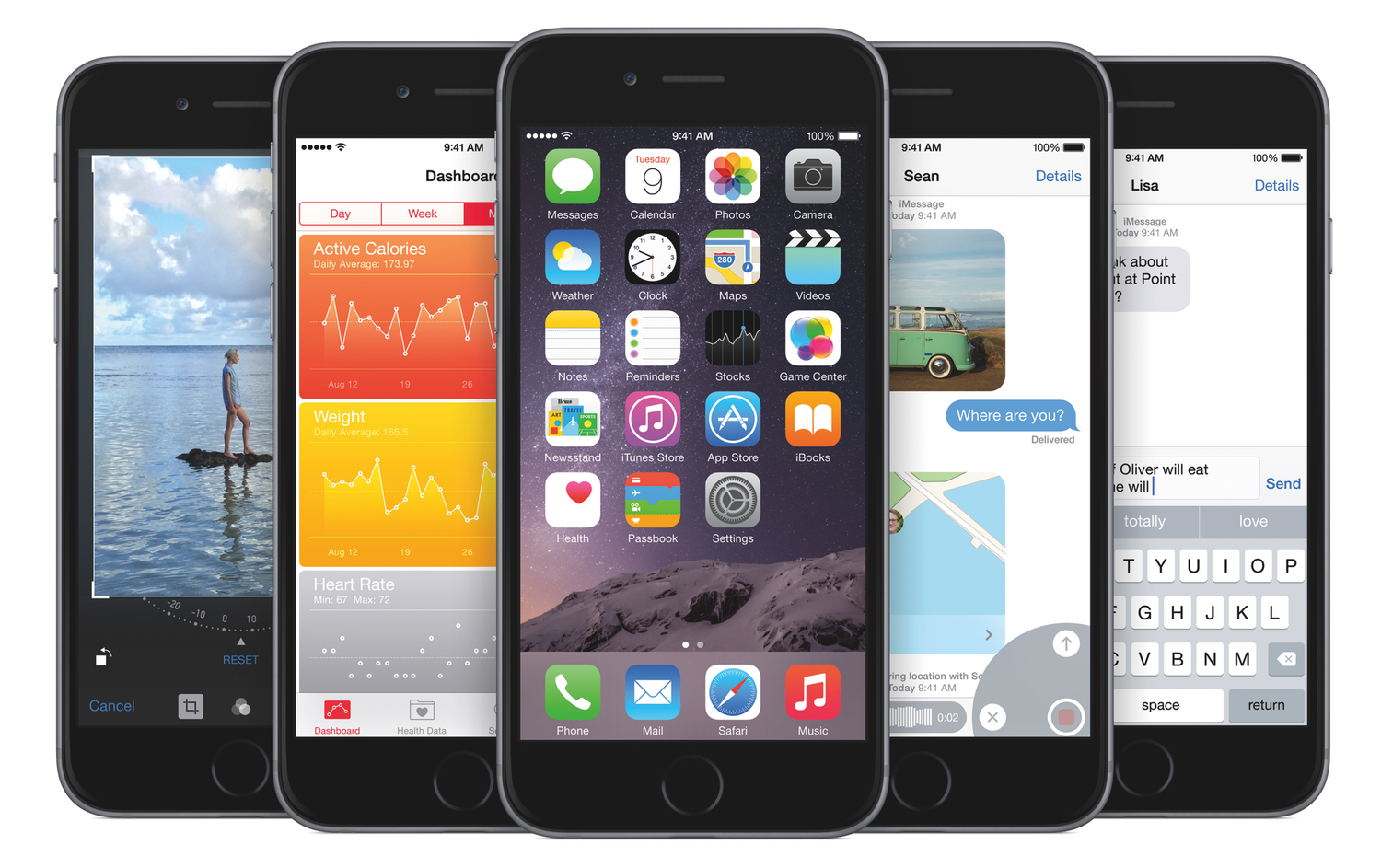
To take into account of new iOS 8 and Yosemite features including app extensions, HealthKit, HomeKit and TestFlight, Apple has this week updated their App Store Review Guidelines for developers. The bulk of the new features are covered in the new guidelines in sections 25 to 28.

Whilst the new guidelines cover everything from requiring keyboard extensions to provide a number keyboard type and prohibiting HealthKit apps from writing false or inaccurate data, a majority of the new rules focus heavily on protecting the privacy of users. For example, keyboard extensions and apps using HealthKit or HomeKit must provide a privacy policy, apps using HealthKit or HomeKit cannot use data for advertising or marketing purposes and any apps using the HealthKit framework cannot store any health data in iCloud.

Furthermore, Apple has slightly changed one of its introduction dot-points to specifically warn developers not to create “plain creepy” apps.

We have over a million Apps in the App Store. If your App doesn’t do something useful, unique or provide some form of lasting entertainment, or if your app is plain creepy, it may not be accepted.

Permalink

IFTTT Introducing Paid Features “Soon”

Reported last week, IFTTT has raised $30 million in funding. In the NYT article covering the news, Mike Isaac included a mention of paid features coming soon to the service:

The company also plans to soon introduce its first revenue streams, and will offer a paid version of its product for users who want to connect different accounts to the service. A social media manager for a company, for example, could connect multiple Twitter accounts to IFTTT and set up recipes specific to each account.

IFTTT has become a service that I rely upon for tasks that would waste several minutes every day. I archive my tweets in Evernote, receive notifications in Launch Center Pro, and save my sleep and weight logs using IFTTT. Paid accounts have been on the roadmap for years now, and I hope that what they’re planning will generate enough revenue to be sustainable. It’d be a sad geek world without IFTTT.

Permalink

PARC Scientist Larry Tesler Recalls Jobs’ Famous Xerox Visits

Larry Tesler, one of the Xerox PARC scientists that gave the first demoes of the graphical user interface to Steve Jobs, recalls Apple’s original visits to PARC and Jobs’ reactions to what he saw.

Fortune writes:

This six-minute excerpt is part of a 100-minute panel discussion hosted by Paul Freiberger at San Jose’s Churchill Club in November 2011. It’s one of hundreds of tributes to Jobs’ legacy recorded in the weeks after his death, which may explain why I missed it the first time around and why fewer than 40,000 people in the world know about it.

You can watch the full video here.

Permalink

Automatic: Your Smart Driving Assistant on Your Smart Phone [Sponsor]

Automatic is a smart driving assistant that plugs into your car’s data port and lets you connect your smartphone (either iPhone or Android) with your car. By  talking to your car’s onboard computer and using your smartphone’s GPS and data plan to upgrade your car’s capabilities, Automatic will allow you to easily diagnose your engine light, never forget where you parked your car, and save hundreds of dollars on gas.

Automatic learns your driving habits and gives you suggestions through subtle audio cues to drive smarter and stop wasting gas. Thanks to a map view available on your phone, Automatic can display a trip timeline after every driving session, showing you how you’re doing with a Drive Score; the app can even track local gas prices and tell you how much you’re spending.

In case of engine problems, Automatic can decipher what the “check engine” light means and show you a description of the issue with a possible solution. And thanks to a feature called Crash Alert, Automatic can detect many types of serious crashes and automatically alert local authorities as well as your loved ones when you can’t.

Automatic is currently available in the US for iPhone and Android devices, with a 45-day return policy and free shipping in 2 business days. Automatic retails at $99.95 with no subscription fees.

MacStories readers can go to automatic.com/macstories to get 20% off and buy Automatic at just $80. For more information, check out Automatic’s website.

Our thanks to Automatic for sponsoring MacStories this week.


Common App Rejections

As noted by AppFigures on Twitter, Apple has posted a new webpage detailing common app rejections during the review process for the App Store.

Before you develop your app, it’s important to become familiar with the technical, content, and design criteria that we use to review all apps. We’ve highlighted some of the most common issues that cause apps to get rejected to help you better prepare your apps before submitting them for review.

At the bottom of the page, Apple lists the top reasons for app rejections in a seven-day period ending August 28, 2014.

Unsurprisingly, apps that exhibited bugs/crashes and that did not comply with the developer agreement were rejected, but the list also contains mentions of “less than very good” interfaces, apps with “screenshots not relevant to the App Store”, and apps with “icons similar to other apps”. All these are common traits of many apps that have been approved, not rejected.

Check out Apple’s new webpage here.

Permalink