
“Mac Developers Are Laughing at the Mac App Store Guidelines”

“Mac Developers Are Laughing at the Mac App Store Guidelines”

Jonathan Rentzsch:

Studying the details of Apple’s current implementation, it becomes clear Apple crafted the Mac App Store policies primarily with its own interests in mind, not of its customers and certainly not its developers.

My fellow Mac developers are laughing at the Mac App Store guidelines. They’re reporting that apps they’ve been shipping for years — a number of them Apple Design Award-winning — would be rejected from the Mac App Store. These are proven apps, beloved by their users. The current guidelines are clearly out-of-touch.

Maybe not just its own interests in mind, but there’s no doubt Apple has something to fix here. Does the 90-day timeframe sound like a “let’s gather feedback before the thing goes live” strategy to anyone else? How long before revised guidelines?

Permalink

The History of Trainyard

The History of Trainyard

I tried a variety of mini-marketing escapades, including spending $50 on AdMob, $50 on Project Wonderful (Axe Cop, specifically), and $50 on Google Adwords. None of that worked. $50 is almost too tiny an amount to spend, but it became immediately obvious that any ad campaign within my budget would have no effect on sales whatsoever.

I should add that I definitely wasn’t disheartened. I knew it would take time, and that I had a great game that would eventually be successful. I just really wasn’t sure how to get there, but that was part of the adventure.

Great story, and congrats.

Permalink

Apple Showcasing “Special Education” Apps In The App Store

Every week Apple launches a new custom section in the App Store for iPhone and iPad. This week Apple is featuring “Special Education” apps, and more than 60 different applications are listed in the section. Apps such as Things from Cultured Code, Sign 4 Me, Dragon Dictation and Color Identifier are included. It’s surely one of the most populated app sections Apple launched to date.

Special Education is available here. Read more


A Tale Of Two Mac App Stores

In our previous Mac App Store coverage we focused on how, among other things, it will be very likely that Apple won’t allow the release of “trials” and “demos” in the new Store for Mac. As Mac developers also noticed and wrote in blog posts, it’s unknown at this point whether Apple will introduce new rules for volume licensing, educational discounts and other purchase systems Mac developers have been using for years on their websites.

The fears and doubts of Mac developers are worth our consideration as Apple has a huge deal on its hands, and nobody wants to see Apple “screw up” with an App Store on the Mac. So let’s just consider this: what if Apple doesn’t change the rules and understands that the Mac is ultimately different from iOS when it comes to customer experience? What if the first version of the Mac App Store that will roll out in January will be a simple “copy” of the one seen on iOS? In that case, there’s a chance for developers’ websites to stay in the game and become the real alternative to the Mac App Store, and not a “system from the past” headed to disappear. Read more


Apple Confirms Macs Won’t Come with Flash Pre-Installed In The Future

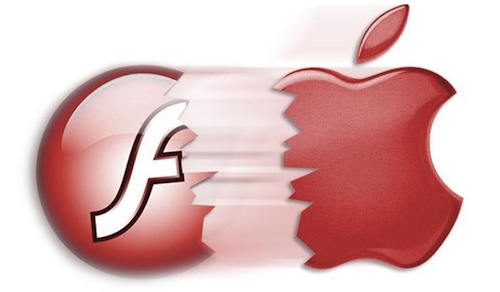
So, about the new MacBook Airs shipping without Flash pre-installed: Apple PR just confirmed to Engadget that the same will happen with other Macs in the future, in order to allow customers to go download the most recent version of Flash on Adobe’s website on their own.

We’re happy to continue to support Flash on the Mac, and the best way for users to always have the most up to date and secure version is to download it directly from Adobe.

Simple answer. Of course Apple cares about its customers and computers running software up to date, but there’s clearly more than ” the best way for users” in this story. By keeping Macs Flash-free out of the box, Apple wants users to lack the need of installing Flash, as the web is slowly moving to a broader HTML5 adoption.

Perhaps this won’t happen in a matter of a few months, but that’s a first step.


MacStories’ Weekly Game: Circuloid

[We thought it was about time to start our own feature of games worth a mention on MacStories. Even though MS is not exactly a game-focused publication, some games for iOS are just too good and addictive to not cover them. So there you have it, MacStories’ Weekly Game.]

Circuloid is a recently-released game for iPad by Polish developers Macoscope (the same guys who developed the Nozbe apps) which sports great graphics, interesting control methods, lots of levels and a great old-style difficulty. Circuloid is a classic Arkanoid / brick-breaker style game where you have to well, destroy bricks on screen. What impressed me, though, and convinced me to feature the app on MS is the extreme attention to the iPad’ unique features the developers put into this game. Read more


Should Apple Allow Installation of iOS Apps From Other Sources?

The Mac App Store won’t be the only way to install apps on a Mac. As Steve Jobs confirmed at the “Back to the Mac” event, the Mac App Store will be the best way to discover and install apps, but not the only one. You’ll still be able to purchase apps directly from developers’ websites and run installers or .DMG files just fine. Can you imagine what could ever happen if Apple turned the Mac into an App Store-only “closed” system with no possibility to download software from other sources? After 20 years of regular installations?

So in a matter of a few months you’ll be able to install apps on your Mac in two different ways, and one of them will likely take over the other one in a very short period of time. If Apple understands the natural differences of the Mac from iOS and consequently adjusts the Review Guidelines in a way that developers won’t be forced to water down their apps, the Mac App Store will be huge. Both for users and devs.

Should Apple do the same on iOS? Read more


Apple’s North Carolina Data Center: 1 Million Square Feet?

Interesting tidbit from John Paczkowski at Digital Daily this morning: according to his sources, Apple is considering doubling the size of the massive data center they’re building in Maiden, North Carolina, thus bringing it to 1 million square feet.

Steve Jobs says the MacBook Air is the future of the MacBook and the future of the notebook as well. But if that’s to be the case, the machine — and Apple’s ecosystem — needs to evolve a bit more to appeal to that strata of user tethered to the high capacity hard drives that the Air has summarily dispatched.

This being Apple we’re talking about, that evolution is likely already well underway and perhaps — perhaps — being engineered at the company’s massive new North Carolina data center. With its 500,000 square feet of data center space (currently, sources tell me that Apple is considering doubling that) that facility has been built for something. And what better use to put it to than the cloud services that might completely eliminate the need for high capacity hard drives and give the Air storage to match its performance characteristics.

Read more