This Week's Sponsor:

SoundSource

New Year, New Audio Setup: SoundSource 6 from Rogue Amoeba


Posts in Linked


What Google Photos Could Do Next

Mat Honan, writing for BuzzFeed, interviewed Anil Sabharwal, vice president of Photos at Google, on the future of the service. It sounds like they’re thinking of more ways to let artificial intelligence make photo management and sharing smarter:

Google refers to these auto-generated moments as “creations.” According to Sabharwal, the company has made 1.6 billion of them in the past year and has big plans to do more. “I think there’s a really great opportunity to mix the machine learning and creations together,” he said. “One [creation] we love is the concept of ‘rediscover this day’ — where we present to our users meaningful moments on a particular date in previous years. Rather than ‘here’s what happened a year ago,’ it’s here’s a set of photos from the last time you were with these people, or the last time you were at this restaurant.”

Sabharwal also said Photos might become smarter about the albums and movies it creates by giving them a stronger perspective and point of view. It might, for example, automatically select a wedding shot in which you and your partner are looking at each other for the hero shot in an anniversary album.

The success of Google Photos doesn’t surprise me. Unlike other Google products, it’s focused, updated often, and it distills the best of Google (machine learning at scale, speed, online backup) down to a clear, user-friendly product. I think it’s the best consumer service they’ve launched in years.

Permalink

Comparing Siri and Alexa

Rene Ritchie at iMore, in an article titled “Siri vs. Alexa is hilarious to people outside the U.S.”:

Imagine if, on a weekly basis, you saw or heard “Xinghua” being compared to Siri. But “Xinghua” was available only in China and only to people who spoke Mandarin. How meaningful would those comparisons really be to you in the U.S.? That’s about as meaningful as headlines comparing Amazon’s virtual assistant, Alexa to Apple’s Siri are to the vast majority of the world’s population.

Right now Alexa is solving only for people in America who speak English. That’s an incredibly small subset of what Siri, which just recently added Hebrew and several other languages in several other reasons, solves for.

With all due respect to Rene, I think this is a disingenuous way of defending Siri from the comparisons to the Amazon Echo’s Alexa.

It is, of course, a fair complaint that the Amazon Echo is not available in countries outside the United States, and that it can only understand US English.1 But I do not think it is legitimate to imply that the Echo’s geographic and lingual limitations somehow undermines the advances that the Echo offers in other areas such as its integrations with services which is seeing it receive praise from all-corners of the industry in recent months.

A large part of the praise of the Amazon Echo is because in 18 months it has gone from a product that didn’t exist, into one that many in the US find incredibly useful. Also significant is that in those 18 months it has evolved rapidly, adding great new features that make it even more useful. That is why people are comparing it to Siri, which launched in 2011 and has undoubtedly improved, but at a much slower pace and in less substantial ways (multi-lingual support aside).

I’m an Australian and I don’t think this Siri vs Alexa debate is “laughably US-centric”, I think it’s important, even if I can’t personally use Alexa. Just last week, Google announced that it will be releasing a very similar product later this year, and credited Amazon for their pioneering work with the Echo. I am certain Apple has taken similar notice of Amazon’s (seemingly successful) efforts with the Echo, and if Apple acts on those observations, then everyone with access to Siri will benefit.

So I’m not laughing, I’m grateful, if a little envious that my friends in the US are (yet again) getting a taste of the future before me. But I know it’ll reach me soon enough, whether it’s via Apple, Google, Amazon, or even Microsoft.


  1. I regularly make these kinds of observations/complaints about various products and services. Two years ago I even spent days researching and putting together this extensive examination of just how far ahead Apple was in terms of the availability of media content in countries around the world, so I understand this frustration very well. ↩︎
Permalink

Canvas, Episode 11: Travelling with iOS

With summer - and WWDC - coming up, Fraser and Federico bring you advice on the equipment, apps and tweaks for your iOS devices that you need when travelling with your iOS devices.

The the travel bags are opened to reveal the essentials within. Fraser and Federico share their favourite travel accessories, techniques for getting online abroad and their preferred iOS settings tweaks and Apple Watch complications for having fun and staying safe abroad.

This week’s Canvas is all about traveling. We share our favorite gear, best practices, and tips for using iOS devices and apps when you’re on vacation. You can listen here.

Sponsored by:

  • Airtable: Organise anything you can imagine.
Permalink

The Similarity of Differences

Seth Clifford:

Apple and Google, in the eyes of the general public and many tech bloggers, have been at war for many years, and in vague terms, both companies sell fancy mobile phones. But the implications of those businesses are so far beyond the face value of what we see. And what I’ve realized is that they aren’t zero-sum or mutually exclusive. What I’ve come to understand is that the more the two companies seem to have been battling, the more the individual directions of each company become unassailably concrete.

Different directions toward the same destination. But I would also add fundamentally different cultures and focus. This is what makes observing both companies so fun these days.

Permalink

Lookmark for Apps

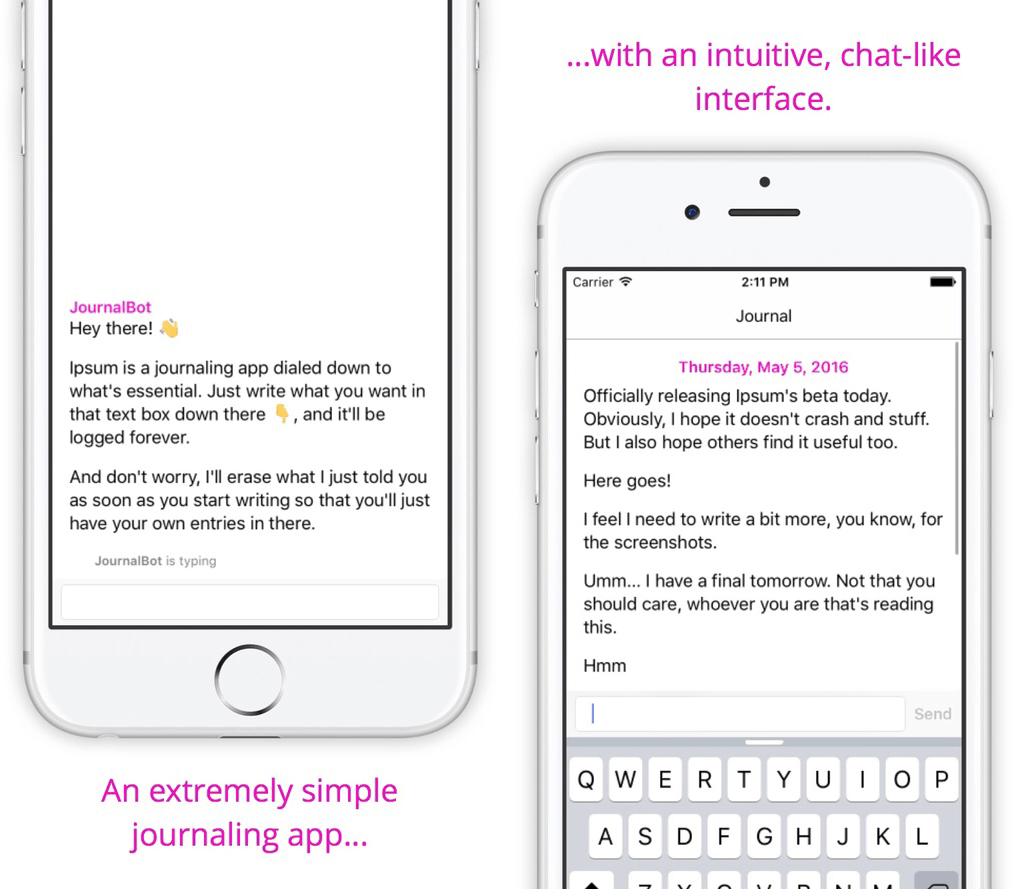
Lookmark is a great utility by Claes Jacobsson to bookmark apps for later and download them when you can. Today’s 2.0 update to Lookmark, which I’ve been testing over the past few days, adds the ability to bookmark any iTunes content and a solid extension that can add bookmarks directly from Safari.

It’s quite impressive: if you try it on a website that mentions apps like MacStories, the extension will scan links on the webpage and you’ll get a popup at the bottom to save apps for later.

Also new today: a Price Watch subscription service to be alerted of price changes for bookmarked apps. That’s going to come in handy for @MacStoriesDeals.

Permalink


Apple, Siri, and VocalIQ

Brian Roemmele makes some interesting points on VocalIQ, a speech/deep learning startup that Apple acquired last year (via Nick Heer):

It is not a secret that Siri has not kept up the pace that just about all of us expected, including some of the Siri team. The passion that Steve had seemed to have been waning deep inside of Apple and the results were Dag and Adam Cheyer moved on and formed Five Six Labs ( A play on V IV in Roman numerals) and Viv.

Tom Gruber, one of the original team members and the chief scientist that created Siri technology, stayed on and continued his work. During most of 2016 and 2017 we will begin to see the results of this work. I call it Siri2 and am very certain Apple will call it something else.

Roemmele has been following all this for a long time, and he adds:

If Apple utilizes just a small subset of the technology developed by VocalIQ, we will see a far more advanced Siri. However I am quite certain the amazing work of Tom Gruber will also be utilized. Additionally the amazing technology from Emollient, Perception and a number of unannounced and future Apple acquistions will also become a big part of Apple’s AI future.

Between these acquisitions and reports that Apple is indeed preparing a Siri API for developers, it sounds like we should expect some notable announcements at WWDC.

See also: this fascinating talk by VocalIQ CEO and founder Blaise Thomson from last June on machine learning applied to voice interactions.

Permalink

Apple Denied Key Exemption for Retail Stores in India

Bloomberg reports that Apple has been denied a key exemption that will likely scuttle Apple’s plans in the short term to open official Apple Retail Stores in India:

India’s finance minister has ratified a decision that Apple Inc. must meet local sourcing rules to open its own stores, according to people familiar with the matter, dealing what may be a fatal blow to the iPhone maker’s effort to open retail outlets in the country.

Minister Arun Jaitley decided to support the decision by India’s Foreign Investment Promotion Board that Apple will have to procure 30 percent of components locally if it wants to sell through its own retail stores, said the people, asking not to be identified because the matter is private. The company makes most of its products in China and doesn’t currently meet that criteria.

It comes after another government panel had recommended, in late April, that Apple be granted the exemption. But more significantly, today’s move comes after Tim Cook visited India in his first official trip to the country as CEO of Apple.

The decision by India’s finance minister may not be the last word, as Indian Prime Minister Narendra Modi could theoretically intervene. During Cook’s trip to India he met with Prime Minister Modi and Apple’s retail plans were reportedly discussed, as was Modi’s “Made in India” program which encourages foreign companies to manufacture in India. In public comments during the week Cook suggested that Apple was looking to establish a facility in India that would refurbish old iPhones for resale in India, but had no plans for other manufacturing at this stage.

If you’re interested in reading more about Cook’s week-long tour of India and China (which occurred last week), I wrote about the context of the trip as well as providing a timeline of what actually happened.

Permalink