Posts in Linked

AppStories, Episode 24 – Our Favorite iOS 11 Apps, Part 1

On this week’s episode of AppStories, we give an update on the iOS 11 review and anniversary activities at MacStories and Club MacStories then talk about some of our favorite new apps and updates that show off the new capabilities of iOS 11.

Sponsored by:

  • Balance - A wallet for all the worlds currencies and tokens.
  • Readdle – Redefining productivity.
Permalink

App Camp for Girls 2017 Compendium App Released

Following the completion of its summer camps this year, App Camp for Girls has launched a new app featuring work done by 2017 camp participants. This year’s app includes a set of 14 quizzes and choose your own adventure games. The app’s release notes describe how the app came to life:

In one week, [camp] participants brainstorm ideas, design icons and interface, build their quizzes in Xcode, and make their own swag. Each session culminates in a fun pitch session with a panel of investors and entrepreneurs, where the young developers get to show off their work.

If you’re interested in learning more about this organization, Federico and John hosted the co-founders of App Camp for Girls, Jean MacDonald and Grey Osten, on an episode of AppStories earlier this year.

At a $0.99 purchase price, the App Camp Compendium 2017 app is a small, but simple way to show support for the work App Camp for Girls is doing.

Permalink

Why There Are No Standalone Apple Watch Podcast Players

With watchOS 4 and the Series 3 Apple Watch, Apple has made several improvements to how the Watch handles music, untethering listeners from their iPhones. Apple Music subscribers can sync their My Favorites Mix, My Chill Mix, My New Music Mix and the Heavy Rotation section of Music to their watches, for example. In October, Apple will expand users’ options on the Watch by adding Apple Music streaming for subscribers. However, there’s a glaring omission in Apple’s iPhone-free audio strategy: podcasts.

There is no good way to listen to podcasts on an Apple Watch without bringing along an iPhone. As Marco Arment, the maker of Overcast, details on Marco.org,

The Apple Watch desperately needs standalone podcast playback, especially with the LTE-equipped Series 3, which was designed specifically for exercising without an iPhone.

Believe me, I’ve tried. But limitations in watchOS 4 make it impossible to deliver standalone podcast playback with the basic functionality and quality that people expect.

Arment’s article walks through each of several technical challenges in detail, the biggest being syncing progress between a Watch and an iPhone. The post outlines the minimum changes to the watchOS APIs that Arment believes are necessary to build a viable standalone podcast player for the Watch as well as detailing more ambitious changes to Apple’s APIs that would be nice to have.

During the watchOS 4 beta period, I began running without my iPhone. I enjoyed listening to the music synced overnight to my Watch, but it was a taste of untethered freedom that only made me want a standalone podcast player more. Audio playback and syncing undoubtedly pose battery life issues and other challenges, but with the advancements in the Series 3 hardware, I hope we see corresponding API changes that will allow Arment and others to build iPhone-free podcast players.

Permalink

Apple’s Quest to Transform Photography

John Paczkowski of BuzzFeed conducted a fascinating interview with Apple’s Senior Vice President of Worldwide Marketing Phil Schiller and Johnnie Manzari of Apple’s Human Interface Team about the iPhone’s camera. Much of the discussion is focused on the new Portrait Lighting feature available in the 8 Plus and X. As Paczkowski explains,

The camera’s effects don’t rely on filters. They’re the result of Apple’s new dual camera system working in concert with machine learning to sense a scene, map it for depth, and then change lighting contours over the subject. It’s all done in real time, and you can even preview the results thanks to the company’s enormously powerful new A11 Bionic chip. The result, when applied to Apple scale, has the power to be transformative for modern photography, with millions of amateur shots suddenly professionalized.

Manzari described the extensive process that went into creating Portrait Lighting:

“We spent a lot of time shining light on people and moving them around — a lot of time,” Manzari says. “We had some engineers trying to understand the contours of a face and how we could apply lighting to them through software, and we had other silicon engineers just working to make the process super-fast. We really did a lot of work.”

BuzzFeed’s article is worth a close read because it’s about more than just the camera in Apple’s new and upcoming iPhones. The behind-the-scenes peek at the development process of the many functions that the iPhone’s camera serves is the best example of one of Apple’s biggest competitive advantages: the fusion of hardware and software.

Permalink

AppStories, Episode 23 – The Apps Behind Federico’s iOS 11 Review

On this week’s episode of AppStories, we lift the curtain on some of the special events at MacStories and Club MacStories surrounding the release of iOS 11, discuss the removal of the App Store from iTunes on macOS, and dive into the apps Federico used to plan, research, write, and produce his iOS 11 review.

Sponsored by:

Permalink


Connected, Episode 160: Things Have Taken a Turn

Federico’s iOS 11 review is done. Stephen has an announcement. Myke makes a confession about his Apple TV remote.

On this week’s special episode of Connected, we discuss the making of my iOS 11 review with a focus on Myke’s process for the audiobook. You can listen here.

Sponsored by:

  • Squarespace: Make your next move. Enter offer code WORLD at checkout to get 10% off your first purchase.
  • Freshbooks: Online invoicing made easy.
  • Bombfell: Find the right clothes for you. Get $25 off your first purchase.
Permalink

Craig Federighi Answers Face ID Questions

In a telephone interview with Matthew Panzarino of TechCrunch, Apple’s Senior Vice President of Software Engineering, Craig Federighi, answered many of the questions that have arisen about Face ID since the September 12th keynote event. Federighi went into depth on how Apple trained Face ID and how it works in practice. Regarding the training,

“Phil [Schiller] mentioned that we’d gathered a billion images and that we’d done data gathering around the globe to make sure that we had broad geographic and ethnic data sets. Both for testing and validation for great recognition rates,” says Federighi. “That wasn’t just something you could go pull of the internet.”

That data was collected worldwide from subjects who consented to having their faces scanned.

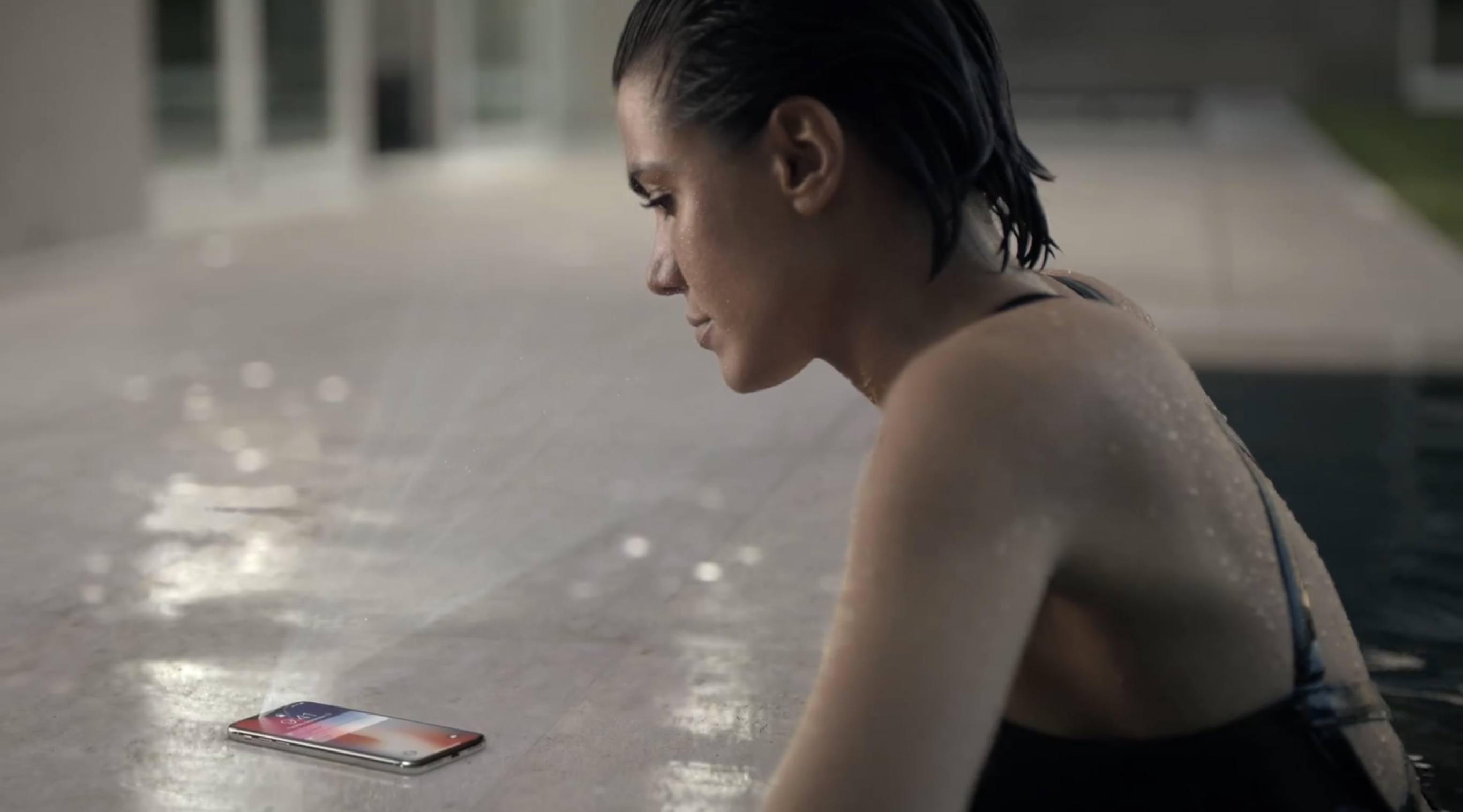
Federighi explained that Apple retains a copy of the depth map data from those scans but does not collect user data to further train its model. Instead, Face ID works on-device only to recognize users. The computational power necessary for that process is supplied by the new A11 Bionic CPU and the data is crunched and stored in the redesigned Secure Enclave.

The process of disabling Face ID differs from the five presses of the power button required on older iPhones. Federighi said,

“On older phones the sequence was to click 5 times [on the power button] but on newer phones like iPhone 8 and iPhone X, if you grip the side buttons on either side and hold them a little while – we’ll take you to the power down [screen]. But that also has the effect of disabling Face ID,” says Federighi. “So, if you were in a case where the thief was asking to hand over your phone – you can just reach into your pocket, squeeze it, and it will disable Face ID. It will do the same thing on iPhone 8 to disable Touch ID.”

In many respects, the approach Apple has taken with Face ID is very close to that taken with Touch ID. User data is stored in the Secure Enclave, and biometric processing happens on your iOS device, not in the cloud. If you have concerns about Face ID’s security, Panzarino’s article is an excellent place to start. Federighi says that closer to the introduction of the iPhone X, Apple will release an in-depth white paper on Face ID security with even more details.

Permalink

Apple’s Bionic Advantage

Mashable interviewed Apple’s Senior Vice President of Worldwide Marketing Phil Schiller and Senior Vice President of Hardware Technologies Johny Srouji about Apple new A11 Bionic CPU, which powers the iPhone 8, 8 Plus, and X.

“This is something we started 10 years ago, designing our own silicon because that’s the best way to truly customize something that’s uniquely optimized for Apple hardware and software,” said Srouji.

For Apple, silicon development is an intrinsic part of the iPhone creation process. “It’s not just something you drop in or build around,” said Schiller.

It’s a strategy that has paid off for Apple by giving it more control over the full hardware/software stack and enabling the company to squeeze more performance and energy efficiency out of the tiny chips that power iOS devices. At the same time though, it’s an approach that requires Apple to make big bets far in the future:

Srouji told me that when Apple architects silicon, they start by looking three years out, which means the A11 Bionic was under development when Apple was shipping the iPhone 6 and its A8 chip. Back then we weren’t even talking about AI and machine learning at a mobile level and, yet, Srouji said, “The neural engine embed, it’s a bet we made three years ahead.”

Apple’s tight control over hardware and the software that runs on it isn’t new. It’s one of the cornerstones of the company’s success. What’s remarkable though, is the microscopic level to which Apple has taken the approach. As author Lance Ulanoff points out, the images of chips that Phil Schiller displayed onscreen during the September 12th keynote to illustrate new and improved iPhone technologies weren’t different chips. They were different areas on the same chip – one with leaked Geekbench scores that put it on par with the silicon inside the 2017 13-inch MacBook Pro. That’s extraordinary and likely to be a key advantage that Apple will have over competitors for years to come.

Permalink