Graham Spencer

917 posts on MacStories since January 2011

Former MacStories contributor.


iPhone 4S To Go Into Production In August, Apple Reducing iPhone 4 Shipments

Two reports out of DigiTimes today reveal that the next generation iPhone, which they call the iPhone 4S, won’t have LTE capability and will go into production in August. DigiTimes claim that the iPhone 4S was originally planned to be LTE capable but was recently scrapped after it was revealed that Qualcomm was facing problems in producing the chips in large enough quantities for the iPhone.

Instead, LTE capability will likely make its way into the following (sixth generation) iPhone in 2012. A number of carriers, including three top Chinese telecommunication companies will be disappointed after expressing interest in selling an LTE capable iPhone. Despite this, China Mobile, which will have 27 million users by the end of this year, is expected to reach an agreement with Apple to sell the iPhone 4S when it is expected to launch in September this year.

With plans to begin production of the iPhone 4S in August, and nearly 2 million iPhone 4s in inventory according to sources, Apple has reportedly lowered its expected shipment volumes for the iPhone 4 (for Q2 2011) to 17.5-18 million units, a reduction of about 2 million units. Around 2 million are expected to be the CDMA version whilst around 16 million 3G models. Apple is however expecting shipments of iPad 2s to increase substantially from 7-8 million units to 10-10.5 million units in Q2, 2011.

The iPhone 4S will reportedly include 3G and CDMA chips from Qualcomm, a rear 8MP camera from OmniVision Technologies and Largan Precision to produce image sensors and the lens. Prior rumors had suggested that this years iPhone would feature some slight design modifications and the support for HSPA+ because of the lack of readiness of 4G chips as DigiTimes is today reporting. It was also rumored that it would also contain an 8MP camera, but from Sony, not OmniVision and Largan Precision.

[Via DigiTimes (1) (2)]


Survey Reveals How Consumers Use Their iPad

When the iPad went on sale just over a year ago, many were unsure of what people would use it for and the uncertainty has largely continued to today, where it is still a little vague as to how a tablet fits into people’s lives. Yesterday however, Business Insider published some fascinating data on a whole range of questions that surround the iPad and how it is used. The data was collated after Business Insider issued an extensive survey, on a wide variety of issues and questions, to more than 850 people.

Their survey revealed that for about 70% of respondents, there was only 1 iPad in their household and only about 23% has 2 in the one household – less than 7% had 3 or more iPads in their household. Nearly 40% had downloaded between 20 and 50 apps, whilst 30% had downloaded more than 50 apps – with few paying for more than 20 of those apps and only 6% paying for none. Below are some of the other more interesting results but jump over to The Atlantic for all the results.

  • 87.4% did not even consider an Android tablet before buying an iPad and 90% would not consider a BlackBerry PlayBook or HP TouchPad
  • The number of people with WiFi-only or the 3G iPad is fairly evenly split (52% to 48%)
  • Only 49% subscribe to a monthly 3G data plan (of those who have a 3G iPad)
  • 40% use the iPad as their primary computer
  • The most cited reasons for use of the iPad are; web browsing (35%), using social or communication apps (22%), watching video (12%), playing games (12%) and using all other apps (20%)
  • For consuming news, 38% would use the iPad’s web browser, 34% would use a news site’s app and 28% would use an aggregator like Reeder or Flipboard.
  • 72% read e-books on the iPad, mostly on iBooks but Kindle is a close second

Lodsys Responds to iOS Developers Over Patent Infringement Notices

Last Friday there was news that a number of independent developers for the iPhone and iPad had received legal warnings that they were violating patents that Lodsys owned. Suffice to say it sparked an outcry from developers, users and commentators; few had anything nice to say of Lodsys. Well today they have responded to a number of criticisms on their website in a series of Q&A posts. The key patent in question was that of Dan Abelow who sold his portfolio of patents to Lodsys back in 2004.

Its first response was in regards to the fairly frequented notion that Lodsys is a “parasite, troll, should die etc.”, they respond to this in saying that they are just like any other company who sells a product or service – they try to “get value for the assets it owns”. They write in the post “threats and irrationality don’t help.  In particular, the death threats are seriously uncool.”

As for the question of the patents being “too broad”, Lodsys notes how easy it is too look back in hindsight, saying “of course this is how everyone is going to do it”. In response to patent licensing being unethical and similar questions, they say that it seeks an economic return to sell their patent assets, completely legal and furthermore citing the notion that patent licensing encourages future invention.

As for why they directly contacted developers and not Apple, they say it is because Apple (as well as Microsoft and Google) has already licensed the patents in question. They claim that they cannot provide the third party developers with the rights to the patent, and Apple hasn’t approached Lodsys for the purpose of attaining an eco-system-wide license for the patents. They say their goal is not to prevent developers from using the technology, rather that it is to popularize it and charge a relatively small license for it.

They claim in multiple areas that they specialise in efficiently selling rights to patents, they say that by having a consistent price model it also means independent developers aren’t unfairly disadvantaged.

As for how much developers will need to pay, Lodsys clarifies that the in-app purchasing mechanism for example would cost a developer 0.575% of their US revenue over the period the technology was implemented until the patent expires. It gives an example of an app that earns US$1 million in one year would pay US$5,750.

[Via TheNextWeb]

You can read all of Lodsys’ responses on their blog.


Flipboard Blocked By The Great Firewall Of China

It appears that the Chinese government yesterday blocked Flipboard, meaning the app, which is available on the App Store in China, is largely unusable from within China. Flipboad’s CEO, Mike McCue, made the revelation on Twitter yesterday and said in follow-up tweets; “Lots of folks in China had been using us happily until now” and “Guess we had unwittingly poked a hole in their wall which has now been shut down… Presumably unless we block Facebook and Twitter ourselves in China”

The block impacts on Flipboard’s Amazon servers, which are required for users to aggregate their content from various sources, effectively this means that services such as Google Reader, Instragram and Flickr are all blocked from Flipboard users in China. Facebook and Twitter, which were already blocked by the Chinese government, had previously been accessible to some users who used a VPN service, but this latest move has blocked Facebook and Twitter completely from the app.

[Via @mmccue]


iOS 5 Voice Recognition Interface Conceptualized

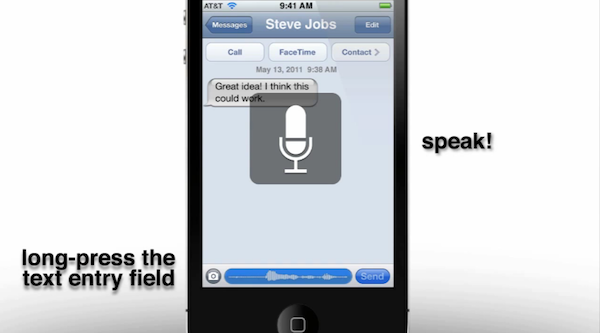
With far improved voice recognition expected to make its way into iOS 5, the next questions is how Apple will implement it. Well one person, Jan-Michael Cart, has thought of how it might be possible to implement and put together a well-thought out video demonstrating the concept (after the break).

There are number of aspects to the voice recognition he conceptualizes, starting with the notion that it can be used to navigate the entire user interface and is triggered by holding down the home button – much like how Voice Control currently works. Yet instead of bumping you to a whole new screen like Voice Control does, the status-bar will turn blue and serve as a visual guide as to when to speak and telling you how it interpreted what you said.

That’s a fairly straightforward extension of what iOS currently does, what is more intriguing is Jan-Michaels concept of how any text-field can have voice input. All you would have to do is press and hold the text-field and again the status bar turns blue and you speak. For somewhere like notes or mail (which don’t have a text-field but rather an area for a block of text) you would double tab to open the copy and past bar but which would also now have a microphone icon – pressing it would start voice dictation.

As would be reasonably expected, Jan-Michael also believes that APIs would be offered to developers to use voice-recognition and shows how the Facebook app would be an easy candidate for voice recognition support. Make sure to jump the break to watch the video by Jan-Michael, and if you like it, I would highly recommend checking out his YouTube page which has some other iOS 5 concepts including faster app switching using gestures and how widgets could be implemented.

Read more


Guinness World Records Awarded To The iPhone 4, App Store and iOS Games

The iPhone 4, the iOS App Store and a number of iOS games have been honoured with Guiness World Record awards. The iPhone 4 was named the fastest-selling portable gaming system following a first day sales figure of 1.5 million units when it was released on June 24 last year – far exceeding the previous holder of the title, the Nintendo DS which sold 500,000 units over a week in 2004.

“The release of the iPhone has not just changed the mobile industry, but the video game world too,”Gaz Deaves, Guinness World Records’ gaming editor, said in a statement. “With the never-ending App Store selection and an intuitive device, Apple has created a gigantic new space for itself in the casual games genre that literally brings entertainment to users wherever they may be.”

Apple’s App Store has also been awarded the Guinness World Record for being the most popular application marketplace following more than 6.5 billion downloads since its launch in July 2008. The App Store is also the largest downloadable video game store, which had as of September last year, roughly 37,000 games. This figure far exceeds other downloadable game services such as Steam, which offers around 1,110 games, the Xbox Live Indie Arcade, which has 1,300, and the Wii Virtual Console, which offers around 580 games. The final award gong given to the App Store was for having the largest launch line-up of any gaming system – with 145 games that were available on July 10th, 2008.

Several iOS games also received awards including the infamous Angry Birds which received an award for being at the top of the paid apps list in the most countries after selling more than 6.5 million copies since being released in December 2009. Plants vs. Zombies was awarded for being the fastest-selling iPhone/iPod strategy game with more than 300,000 paid downloads in just nine days. It also received an award for being the highest-grossing strategy game in the App Store – generating about $1 million for its developer, PopCap, in just over a week. Lastly, the Tap Tap Revenge game series was awarded the most popular game series in the App Store after more than 15 million downloads since launching July 2008.

[Via LA Times]


Microsoft, HTC, Nokia File Complaints Over Apple’s “App Store” Trademark

Several technology company heavyweights including Microsoft, HTC, Nokia and Sony Ericsson this week filed formal complaints against Apple’s attempt at getting the terms “App Store” and “Appstore” trademarked. In their complaints they formally ask the Community Trade Mark office in Europe for a declaration of invalidity, claiming that the terms are far too generic.

In a statement, a Microsoft spokesperson said that Apple’s application was an “unsupportable claim of exclusivity” and noted that the terms “App Store” and “Appstore” are like “toy store” or “book store” – a generic tem “that should continue to be available for everyone to use for stores that sell apps.”

Microsoft has also heavily invested in a legal battle started in 2008 when Apple first attempted to trademark the term “App Store” with the US Patent and Trademark Office. That dispute is ongoing and both sides have hired linguists in their legal battle.

Furthermore Apple sued Amazon in March this year, in Amazon’s response to the trademark suit they used a quote from Steve Jobs to further illustrate that even he, as Apple’s CEO was using the term “app store” as a generic term to describe online stores that sell apps:

So there will be at least four app stores on Android, which customers must search among to find the app they want and developers will need to work with to distribute their apps and get paid. This is going to be a mess for both users and developers. Contrast this with Apple’s integrated App Store, which offers users the easiest-to-use largest app store in the world, preloaded on every iPhone

[AllThingsD via CNet]


Bellevue Apple Store’s Relocation Pokes Fun At Microsoft Store

The retail shopping store war between Microsoft and Apple at Bellevue Square in Washington is heating up again with Apple’s plans to relocate its store. You may recall that the Bellevue Microsoft Store was built just a few doors down from the Apple Store that had existed for some time prior. Well now, Apple will be moving its store to a larger retail space on the second floor, but what is really interesting is where on the second floor it will be.

Yep, that’s right – directly opposite and above the Microsoft store. Just to make sure that those leaving the Microsoft retail store will be able to see the huge Apple store above them. I suspect that although increasing the store space from 4,600 square feet is the main goal of this move, Apple couldn’t resist taking a nice jab at Microsoft after they opened up shop so close to their original store. What better way to do that than let Apple customers look down upon Microsoft customers on the floor below and vice versa!

Apple’s move should be completed by the end of the year, probably by holiday shopping season.

[Via TUAW]


iPad Cannibalization Of PC Market Slows

The iPad’s cannibalization of the PC market may have slowed if the latest NPD market research report is any sign of things to come. The report found that new purchasers of the iPad are less likely to have foregone purchasing a PC than the early adopters of the iPad. It found that of those who had purchased the iPad over the holiday season, 12% would have decided against a PC purchase when they bought an iPad. This is a 2% drop from the 14% of those decided against a PC amongst those who had owned their iPad for 6 months or more.

Netbooks were saved the most, with iPad cannibalization falling by 50%, which actually led the netbook market to grow by 21% between September 2010 and March 2011. NPD also believes that the slowing of PC sales over the past couple of months has more to do with Windows 7 than the iPad:

The explosion of computer sales when Windows 7 launched, as well as the huge increase in netbook sales at that time, are much more to blame for weak consumer PC sales growth than the iPad

The report contradicts what analysts were calling the “iPad effect” in the first quarter of 2011 when US PC sales fell 10.7%. In fact at least one analyst, including Katy Huberty of Morgan Stanley, revised her 2011 PC shipments down after predicting a tablet cannibalization rate of 29% - which is nearly 3 times what this NPD report says was the rate when it surveyed customers in March.

[Via AppleInsider]