


It’s Cyber Monday! Many of the Black Friday deals are still active, so we’ve kept them in today’s post. Here are today’s @MacStoriesDeals on iOS, Mac, and Mac App Store apps that are on sale for a limited time, so get them before they end!
#MacStoriesDeals - Cyber Monday
Kickstarter: LandingZone is the Docking Station you Need for the MacBook Air
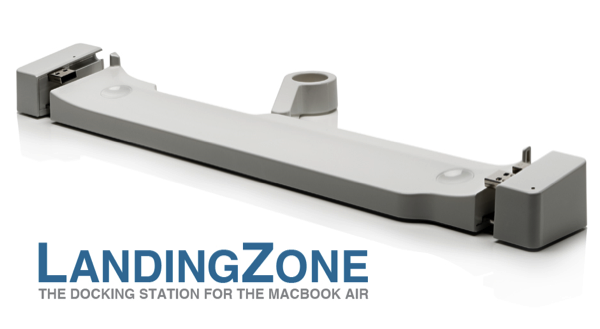
Everybody loves their MacBook Airs until they have to connect their Apple Thunderbolt Displays or external monitors, no thanks to the required connections on opposite sides of the chassis. I find it funny Apple would launch a MacBook that requires one to stretch the ATD cable around both sides of a laptop. Surely someone would come along and fix it.
InfiniWing’s LandingZone is a docking station for the MacBook Air thas aims to practically solve the hassle of connecting multiple cords and cables as you sit down at your desk. LandingZone adds two additional USB ports to the Air, includes an ethernet port and Mini DisplayPort for connecting to office equipment, has a port compatible with Kensington Locks, and includes a housing to secure your MagSafe adapter for charging the MacBook Air while it’s seated (power is still supplied via Apple’s MagSafe Power Adapter). As cables are routed out the back, you’ll have a cleaner desk to work on and more ports to connect USB drives, wired keyboards, and other peripherals to.
LandingZone is brilliantly simple, featuring a latch mechanism that clamps the hub to the required ports on either side of the MacBook. As the video on Kickstarter (which is one of the best Kickstarter videos I’ve seen to date) will show off, you simply lock and unlock the MacBook Air with an elegant lever at the backside. LandingZone is everything you’d likely want in a docking station without the bulk of traditional laptop docks. It’s small, smartly designed, and looks good.
NeXT: The Hardware→
NeXT: The Hardware

In 1988, NeXT showed off prototype hardware and started shipping “beta” hardware — and software — the next year. The first machines didn’t ship until almost a year later. When approached about the delays, Steve Jobs replied: Late? This computer is five years ahead of its time!
Steven Hackett at 512 Pixels continues his mini-series on NeXT Computer with The Hardware, highlighting the important details in NeXT’s desktop offerings and design cues that are evident in the Apple of today.
Site note: I still can’t get past how elegantly modern the NeXT Cube is. Nobody would guess that it’s something out of the late 80s. I’d tell you it’s way more than just five years ahead of its time.
Apple Removes iPad App With Monthly Gaming Subscriptions
In a surprising turn of events, Bloomberg reported that Apple has pulled the highly publicized app recently debuted by Big Fish Games. The iPad app integrated a new model of game distribution that was set to usher in a new era of iOS gaming. Apple had approved the app and made it available on November 18th, only to swiftly remove it days later.
Apps being pulled from the App Store with little or no explanation is not uncommon but the circumstances leading up to this app’s removal are different from previous situations. Big Fish Games founder Paul Thelen said that his company had worked vigorously with Apple’s team to make sure all requirements were met to properly implement monthly subscriptions. When all the prerequisites were met, Apple had given the company permission to release the app on the iTunes App Store.
“It was officially approved,” Thelen said. Apple had even seen the app’s press release before it went out earlier today, he said
Apple was apparently going to take the standard 30% from the monthly subscription fees making the deal mutually beneficial for both parties involved. Removing the app without communicating with Big Fish Games points to the possibility of a miscommunication or a misinterpretation of the how the game actually worked causing Apple to quickly back out on the agreement. The business model that was designed for digital periodicals will apparently stay that way for the time being but Thelen seems determined to follow up with Apple and hopefully get some answers as to why the app was pulled.
Dousing the Kindle Fire with Fire (And Cooling Down)
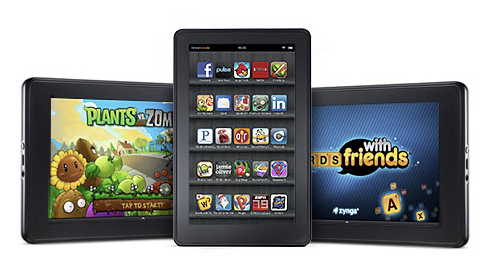
I don’t doubt that the Kindle Fire’s usability matches its bargain bin price tag. David Pogue was pretty clear when he said, “You feel that $200 price tag with every swipe of your finger.” Reviews, ranging from forgiving to absolutely scathing, are mixed. On one hand, you have Andy Inhatko who loves the crisp text and the reading experience on the smaller, 7” display. On the other hand, the founder of Instapaper finds the reading experience to be absolutely awful. TUAW and GigaOM both posted comparative guides for consumers on the fence about which tablet to buy, straddling the line that the Kindle Fire is good enough because of its price-point. There is a common consensus:
- The Kindle feels good in the hand thanks to its small form factor and rubberized texture.
- The 7” display is impressive.
- Amazon’s digital content can be easily purchased thanks to excellent store integration.
- OS responsiveness varies, but overall is OK in comparison with higher-end tablets.
- The Silk browser doesn’t perform akin to Amazon’s claims. It is as fast or slower than other mobile browsers.
- The price is really the winner here.
Where the reviews differentiate is with the experience of actually consuming content, which is likely what consumers want to do with a tablet integrated with Amazon’s ecosystem. Ben Brooks writes that the Kindle Fire’s three main experiences, which are reading, watching video, and web browsing, are simply poor in comparison to its polished rivals (the iPad). Erick Schonfeld on the other hand writes the exact opposite, even giving the Kindle Fire’s often lauded browser a pass. From what I’ve seen, the big tech press has been giving the Kindle mostly fair but favorable reviews, with independent writers chomping down on the lack of a polished experience.
The iPad’s Next LCD Panels could be Supplied from Sharp
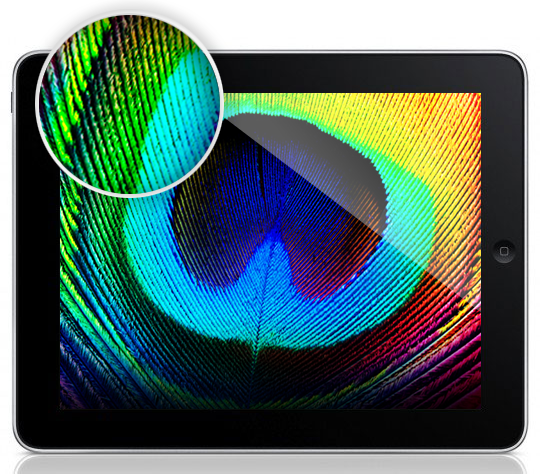
Between quality control issues at LG Display that were finally reported as resolved in September, and the ongoing patent litigations between Apple and Samsung, Sharp could become the next display vendor for Apple’s iPads.
When the iPad 2 launched in March, Apple quickly turned to Samsung and Chimei Innnolux as customers complained of light leakage around the bezel of LG-based displays. For much of the year, a combination of quality control issues and late shipments had Apple turning to these other manufacturers to pick up the slack. At the end of August, LG Display finally shipped its due quota of four million panels. The iPad 2 didn’t begin shipping on time until after July. While LG Display expects supply shipments to return to normal, the failures of LG Display to correct its manufacturing issues on time and the untrustworthiness of Samsung would have Apple looking for alternatives. Sharp could be the premium candidate for future iPad displays, such as next year’s rumored Retina Display for the iPad 3.
According the Wall Street Journal, Sharp has reported they’ll begin mass-producing smaller displays at the Kameyama No. 2 plant in Mie Prefecture by the end of the year, a plant previously used solely for the production of TV panels. WSJ reports that Sharp already supplies displays for Apple’s iPhones, and that they could become the premier supplier next year with the introduction of newer models. Apple’s alleged investments in Sharp’s panel manufacturing facilities in Japan lend some additional credence to this claim.
Samsung Chief Operating Officer and President Lee Jae-yong said in October he had discussions with Apple Chief Executive Tim Cook about extending Samsung’s deal to supply parts to Apple through 2013-2014.
Component deals in a competitive market, however, may keep Samsung in the loop. With proof of manufacturing capability and the technology already in place, Samsung is still a critical component of Apple’s supply chain. At the end of the fourth fiscal quarter in September, Apple reported 11.1 million iPads sold compared to 4.2 million iPads sold just a year ago.
[via WSJ]
Apple’s One-Day Shopping Event is Here

Black Friday is here and the deals are pouring in. Apple has announced this year’s Black Friday one-day shopping event. They have dropped their prices on Macs, iPads, iPods, and a pluthera of accessories. If you were looking to do some post-Thanksgiving shopping then look no further because Apple has some great deals today.
Apple Shares the Fun With New iPod touch Commercial
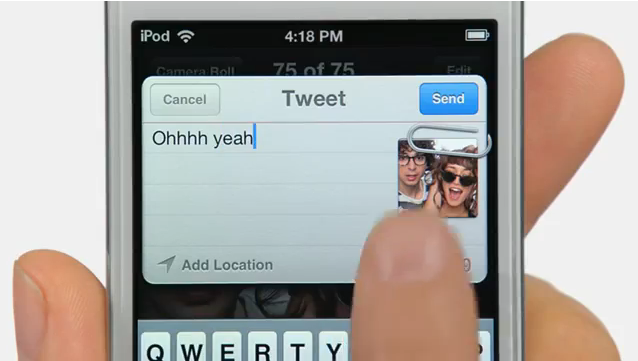
With the white iPod touch announced, it’s about time Apple time showed off their shiny new “phone without the phone”, giving the likes of Game Center, FaceTime, and iMessage well deserved close-ups in a brand new shell. Picture perfect in every frame, the new white iPod touch will be a hot gift for anyone who wants to stay connected with their friends with free iMessaging or take advantage of all the great apps that iOS has to offer. Thin and lightweight with a respectable video camera for quick home movies, I certainly miss its portability and thinness now that I have an iPhone. Share the fun this holiday season with an iPod touch, too-tight jeans, and a catchy tune that’ll have you dancing and bobbing in your office chair. Apple’s latest commercial can enjoyed on YouTube, or past the break!
[via Macgasm]
MacStories Interviews: Ryan Rigney
 MacStories Interviews was a series of interviews with well-known developers, bloggers, journalists and geeks that we published late last year. We’ve revived the format to interview Ryan Rigney, author of Buttonless, a new book about iOS games that is launching on December 13th. We’ll have a full review of the book when it is released, but in the meantime we thought it would be interesting to hear more from the author himself.
MacStories: Hey Ryan! Could you introduce yourself to the readers who haven’t heard about you or haven’t read any of your work before?
Sure! I’m a freelance writer who has written for a number of gaming outlets, most notably GamePro, PC Gamer, and Gamasutra. I’ve mostly written about iOS gaming, but I’m also a big console gamer so I’ve done a good bit of writing about those types of games as well. Just this week GamePro published my review of Minecraft!
MacStories: So tell us a bit more about your new book, Buttonless. What made you decide you wanted to write this book?
Over the past few years I’ve been so focused on iOS and written so much about iOS games that it’s become something of an obsession. I’ve reviewed hundreds of iPhone and iPad games, interviewed scores of developers, and purchased far too many apps. I pretty much came to the realization that I possessed enough experience and knowledge to write a book, and then began brainstorming ideas. It took a while for me to figure out that I wanted to put so much of the focus on “the stories behind the games,” though.
MacStories: Did you find it difficult finding a publisher willing to help you write this book given it is such a new industry that may appear very “niche”?
Actually, A K Peters/CRC Press was the first publisher I approached. In my pitch, I shared with them a bunch of numbers that I had stumbled across––how many hundreds of millions of iOS devices are out there, and how many people are buying these games. The truth is, it’s really not a niche. iOS gaming is now the most popular form of portable gaming, and it’s only getting bigger. Maybe if I had tried to write a book about 3DS games, the publisher would have needed more convincing haha!