

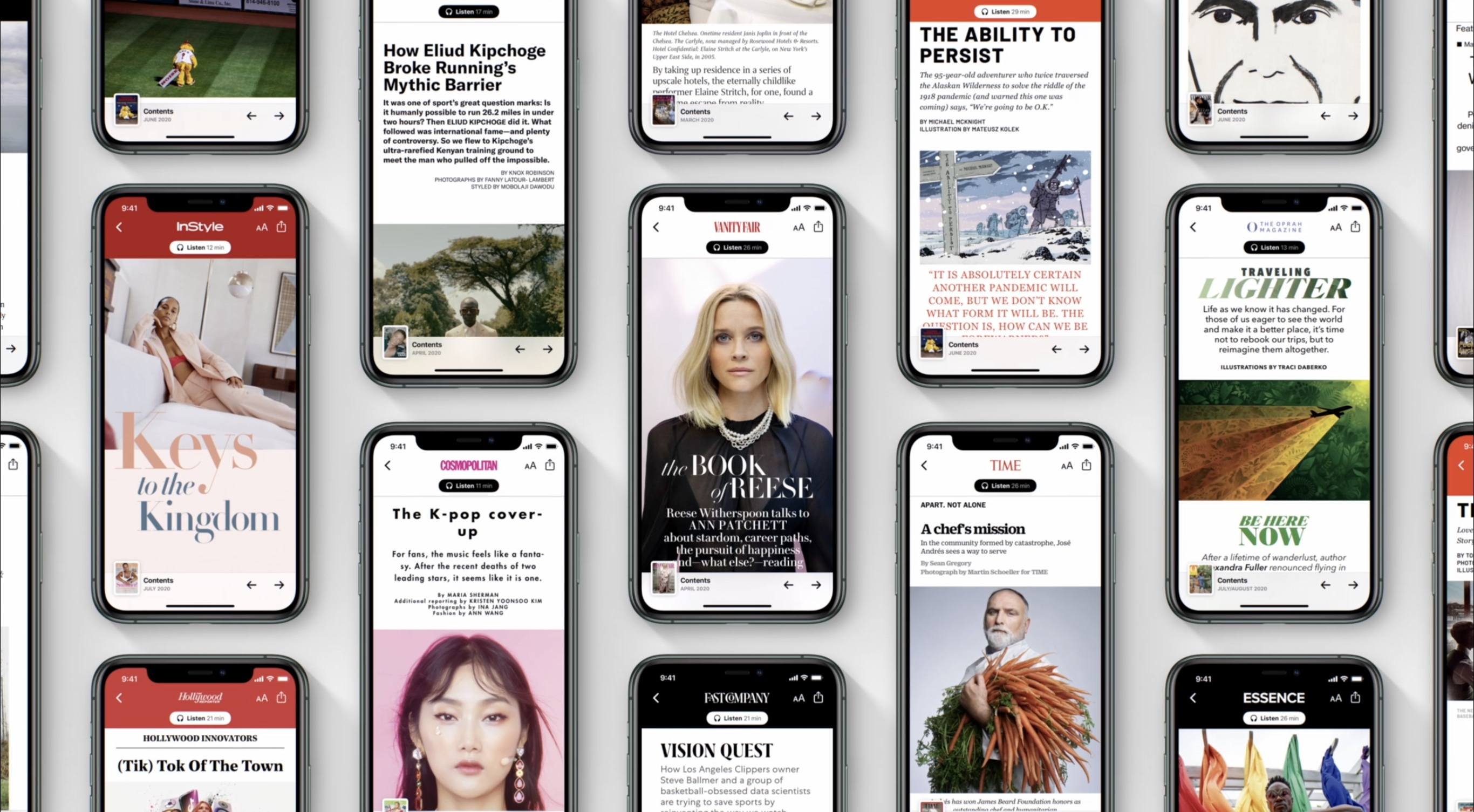
Today Apple announced big enhancements to its Apple News offerings paired with the launch of iOS 13.6. Apple News is entering the world of audio through two main products: a daily news program called Apple News Today, which is available free to all users, as well as premium audio versions of News+ stories which are exclusive to paying News+ subscribers. iOS 13.6 also introduces curated local news experiences to Apple News in a handful of regions, and brings initial support for the digital car key feature first announced at WWDC.
Ulysses 20 Review: New Dashboard Featuring Advanced Grammar and Style Check, Outline, and Much More
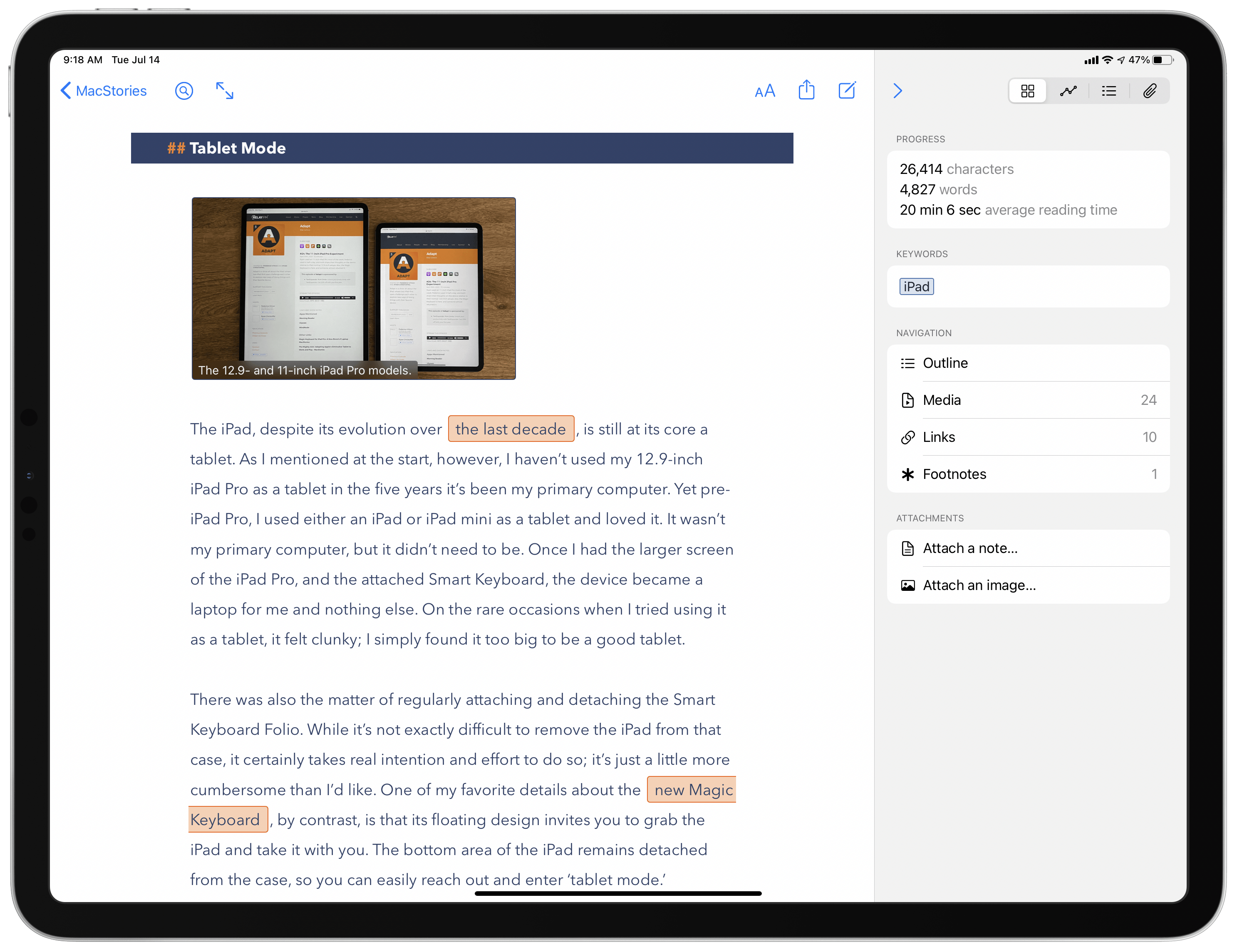
One of the promises regularly made by apps transitioning to a subscription model is that they’ll be able to deliver more regular, incremental updates rather than going untouched for extended periods of time, and they can also focus on adding functionality that existing users will appreciate rather than needing to build something entirely different to attract a new target market. Ulysses has been a subscription app for nearly three years already, and I believe it’s one of the apps doing the best job of delivering on both of those fronts.
A quick search on MacStories will show that I’ve covered Ulysses a lot, in part because it’s my primary Markdown editor, but also because there are consistently several updates per year that stand out as noteworthy and meriting a fresh review. Today’s version 20 is no exception, introducing an advanced grammar and style check ‘revision mode’ on the Mac (coming soon to iPad and iPhone) and a new dashboard view across all platforms. Both enhancements leave what was already great about Ulysses alone, while offering valuable new utility for writers sure to delight existing users and perhaps even draw a flock of new ones.
 Book Track
The evolution of iOS app design over the years is a peculiar thing. Long-time iPhone users will rightly point to iOS 7 as the biggest single shift in OS and app design, but it’s remarkable how the platform’s design has continually changed since then, just in much smaller chunks. For several years following iOS...
Deciphering Apple’s Gaming Plans
One of my many outstanding questions from WWDC involves Apple’s strategy and plans in the gaming space. Past experience has shown that it’s foolish to put much hope in Apple’s gaming ambitions because they usually come up short of what users hope for. I’m choosing to pursue this foolishness today, though, because several interesting signs...
Josh Ginter’s First Impressions Review of HEY→
Despite all the drama surrounding the App Store launch of HEY, the new email service from Basecamp, I never got around to actually trying out the service for myself. As a result, I was excited to see today that Josh Ginter at The Sweet Setup had published an in-depth first impressions review following a couple weeks of use. In short, he loves it:
To say this is a glowing first impressions review would be an understatement — in just two short weeks, HEY has shown itself to be the most revolutionary app or service I’ve ever tried.
While I may not be alone, I also know many folks who feel otherwise.
Which makes a lot of sense, I think. Email is one of the oldest digital technologies and it’s worked a specific way for a very, very long time. There will be some deeply engrained email habits out there, and old habits die very, very hard.
I also recognize that HEY likely works for a specific type of emailer. HEY appears to thrive with a multitude of daily email and may feel out of place for someone who has either worked out their email workflow, someone who incessantly unsubscribes from anything unworthy, or someone who relies on other forms of communication to get their stuff done each day.
I found Ginter’s review an excellent primer on HEY’s unique approach to email. If you love in-depth app reviews – and I hope you do – and have been wondering why some people are calling HEY the next Gmail, I highly recommend Ginter’s piece.
Apple Debuts Web Portal for Apple Card Management
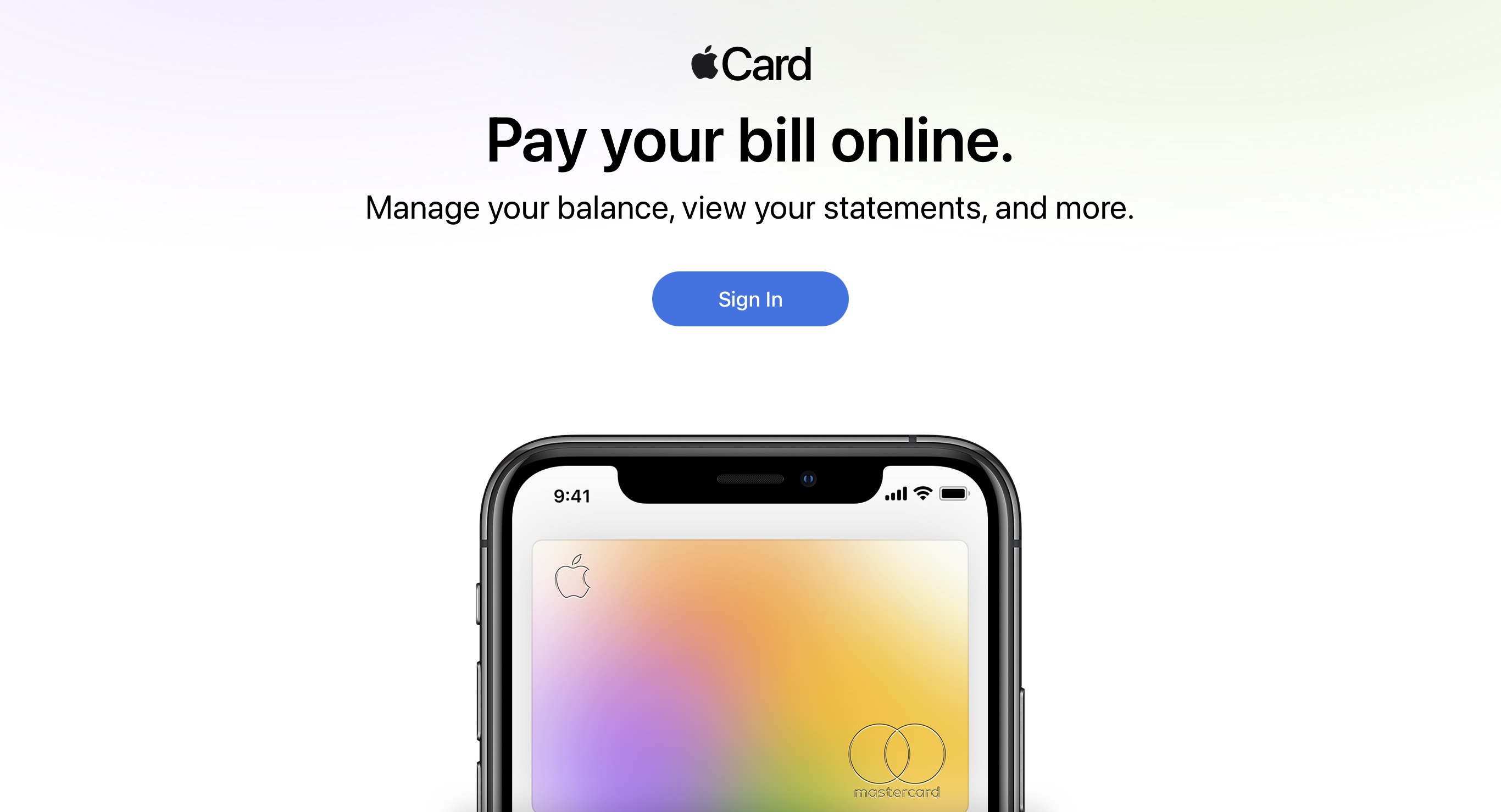
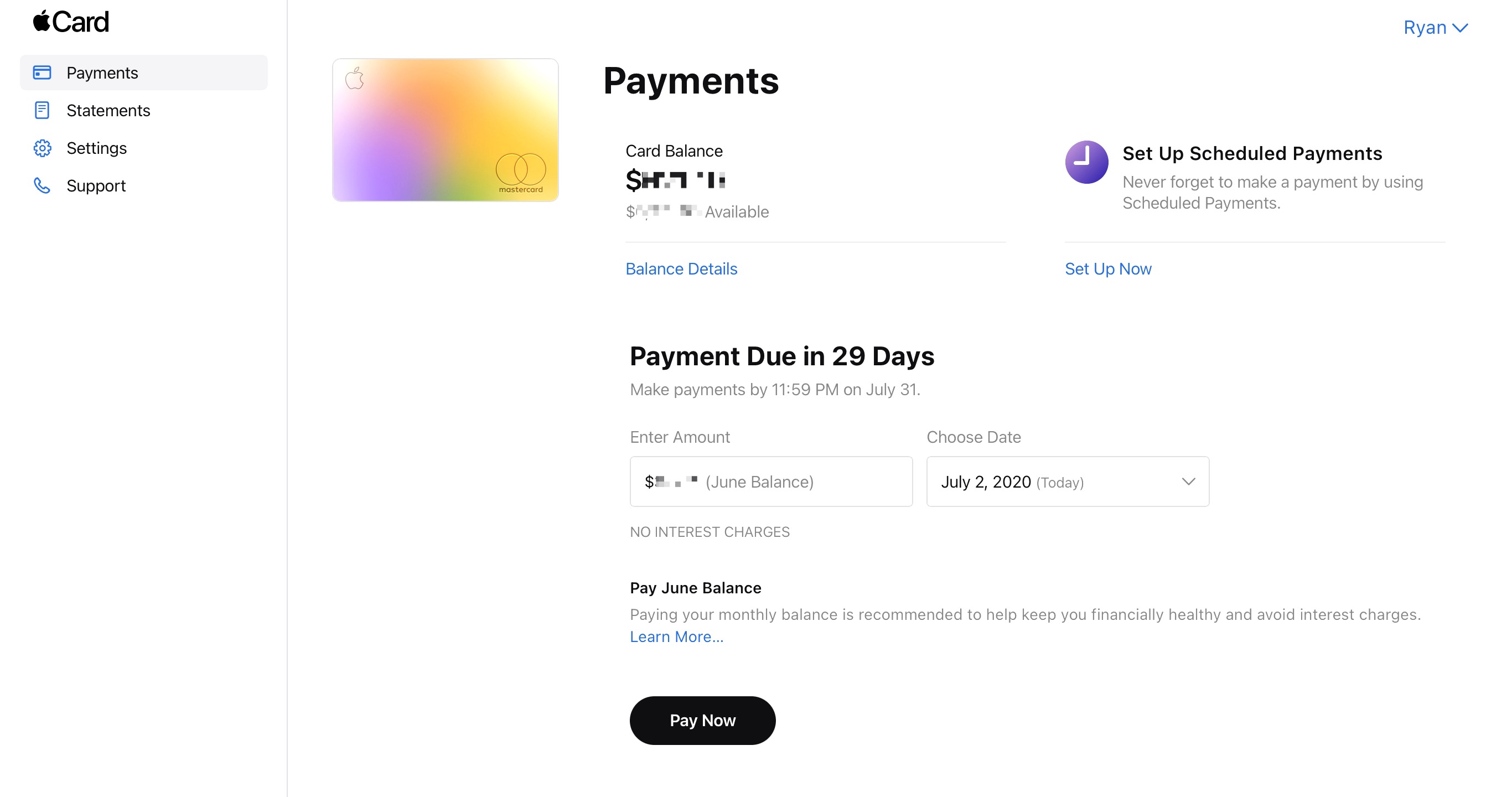
Apple Card users can now view their entire transaction history, make payments, and more from card.apple.com.
Launched today, the new web portal for Apple Card users addresses a concern prospective users voiced when Apple Card first launched: how do I manage my credit card if I lose my iPhone (and/or iPad)? That should no longer be an issue, since Apple’s website now enables users to:
- Check their Apple Card balance
- Make payments, including setting up scheduled payments
- Download PDF statements of monthly activity
- View information about their Apple Card Monthly Installments
- Set up and remove bank accounts
The timing of this new web portal coincides nicely with a special promotion Apple just started, which offers new Apple Card users a $50 credit to use toward Apple services. Just a couple weeks ago, Apple Card also gained special 0% financing options for a host of Apple products, including Macs, iPads, AirPods, and more.
I’ve been an Apple Card user since the beginning and love it. While I don’t expect to use the web interface on a regular basis, it’s a great option for people who need it, and I’m happy to see Apple continue to make the product more appealing.
Connected Trio Host Interview with Members of Apple’s iPad Team→
Federico, Stephen, and Myke had a special surprise on this week’s episode of Connected, their podcast about Apple, technology, and general shenanigans. Episode 301, titled We Should Be Developers, features an interview with Apple’s Jenny Chen, who works on the Apple Pencil team, and Stephen Tonna, who works in iPad product marketing.
The interview covers the new Scribble feature in iPadOS 14 and other Apple Pencil enhancements, the philosophy behind iPad app design, including the new sidebars and dropdown menus of iPadOS 14, and also how the iPad’s versatility of input methods needs to be kept in mind by app developers.
There are a ton of great insights into how Apple’s team thinks about the iPad and approaches its evolution. If you’re an iPad user, you won’t want to miss it.
Summer App Transitions
I’m constantly testing a lot of different apps, but the process of actually switching my main drivers to something new is often determined more by Apple’s software schedule than by the releases I try all throughout the year. Certainly there are times when a new app debuts, or an existing app adds significant new...
Apple News Loses The New York Times→
Kellen Browning and Jack Nicas, writing for The New York Times:
The New York Times said on Monday that it was exiting its partnership with Apple News, as news organizations struggle to compete with large tech companies for readers’ attention and dollars.
Starting on Monday, Times stories were no longer appearing alongside other publications’ articles in the curated Apple News feed available on Apple devices.
The Times is one of the first media organizations to pull out of Apple News. The Times, which has made adding new subscribers a key business goal, said that Apple had given it little in the way of direct relationships with readers and little control over the business. It said it hoped to instead drive readers directly to its own website and mobile app so that it could “fund quality journalism.”
This is a major loss for Apple. According to an Apple statement in the piece, the publication “only offered Apple News a few stories a day,” but losing access to the most prestigious newspaper in the US is nonetheless a bad look.
Apple News readers will doubtless still have plenty of quality journalism options to choose from, yet perhaps the most significant problem for the company is that this move may inspire other partners to follow suit. Apple’s 125 million monthly News readers are a formidable audience, and few publishers have near the clout of The New York Times and thus can’t necessarily afford to take similar risks. However, Apple News has long held a reputation – fair or not – for failing to be very profitable for most publications, so this move could indeed spark a larger exodus if Apple doesn’t work hard to keep its partners happy.