
The Story Behind Half-Life’s Canceled Mac Port Managing Your Mac Menu Bar: A Roundup of My Favorite Bartender Alternatives European Commission Preliminarily Finds That Apple Has Violated the Digital Markets Act iPadOS 18 Adds Support for Formatting External Drives Podcasts The Latest from Magic Rays of Light, Comfort Zone, and MacStories Unwind The Latest from...
 In This Issue
This week, Jonathan reviews Seasons, a subscription-focused streaming video tracker, John shares a Tot and Things-focused scratchpad workflow, plus the usual Links, App Debuts, the latest happenings in the Club MacStories+ Discord community, a recap of MacStories articles, and a preview of next week’s episodes of AppStories and Magic Rays of Light....
Up Next on MacStories Podcasts
Next week on AppStories, Federico and John introduce Tip Jar, an audio cornucopia of top app tips. Next week onMagic Rays of Light, Sigmund and Devon highlight Apple Original film Fancy Dance starring Lily Gladstone, share their thoughts on the third season of Acapulco, and recap thrilling sci-fi series Dark Matter....
Sofa: Be More Intentional with Your Downtime [Sponsor]
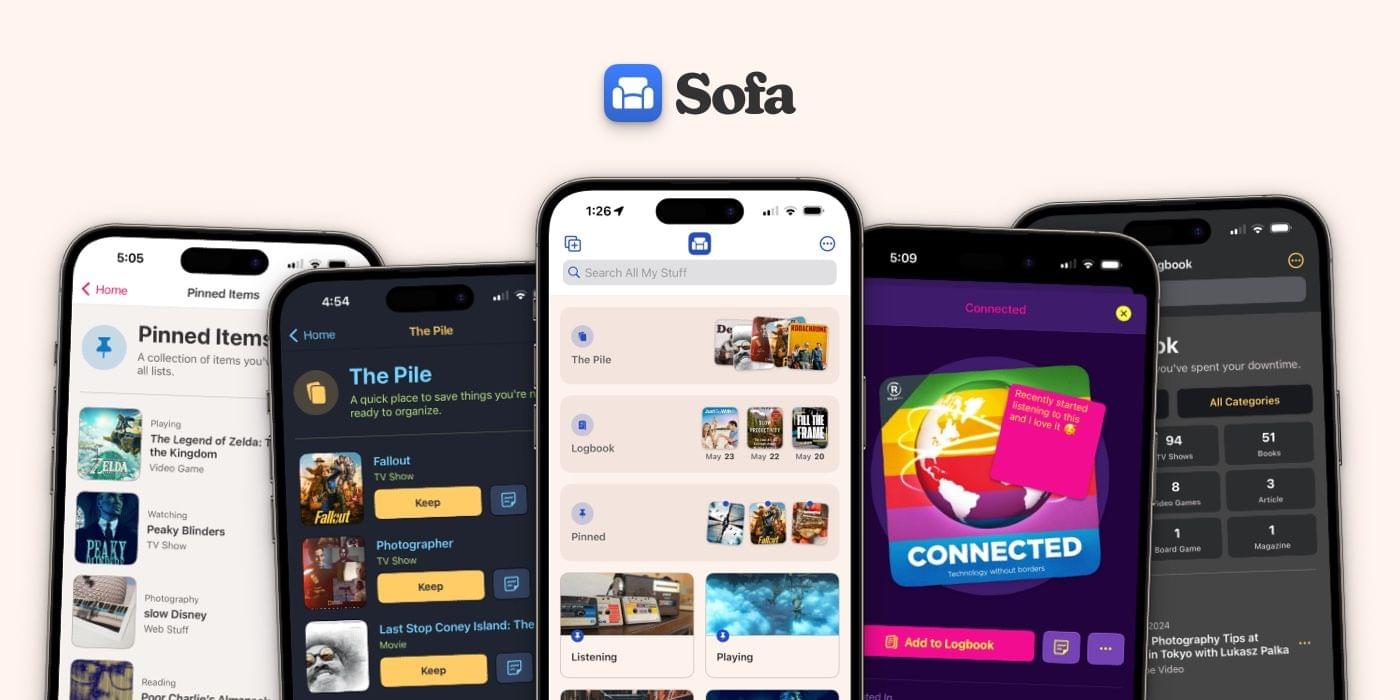
Your time is precious. So, instead of spinning your wheels as you look for the next thing to watch, read, play, or do, try Sofa for iPhone, iPad, and soon, the Vision Pro. It lets you be more intentional with your downtime by creating organized lists as you discover new things to try.
Most apps are designed for work. Sofa’s different. It’s built for play, with a focus on making the most of your free time. It’s more organized than a list in Notes, with just enough structure combined with extensive customization options to make it your own.
You can track anything you want in Sofa: apps, books, movies, TV shows, podcasts, YouTube videos, websites, travel ideas, restaurants, and more. The app includes over 100 themes, Shortcuts support, Smart Lists, user-defined ingredients, and more. It’s the sort of flexibility, from the lists you make to how the app looks, feels, and works, that you won’t find anywhere else.
Most of Sofa, including unlimited lists, syncing via iCloud, tracking your activity, and automating with Shortcuts is completely free. But, with a Super Sofa subscription, you can add custom ingredients, Smart Lists, item and list pinning, sticky notes, and more.
So, download Sofa today for free, and be sure to take advantage of a limited-time deal just for MacStories readers, who can get 40% off their first year of a Super Sofa subscription by going to sofahq.com/macstories.
Our thanks to Sofa for sponsoring MacStories this week.
In This Issue
Federico explains how to link to Mail messages with Shortcuts, Jonathan reveals how to get some features of Apple’s upcoming operating system updates now, John reviews Logitech’s Keys-To-Go 2 keyboard, Devon shares two ways he’s using the Collections app day-to-day, plus the usual Links, App Debuts, the latest happenings in the Club MacStories+ Discord community,...
Previously, On MacStories
Stories Apple Says It Won’t Ship Major New OS Features in the EU This Fall Due to DMA Uncertainty Final Cut Pro 2 for iPad and Final Cut Camera Released Wired Confirms Perplexity Is Bypassing Efforts by Websites to Block Its Web Crawler Retro Videogame Streaming Service Antstream To Launch on the App Store Next...
Up Next On MacStories Podcasts
Next week on AppStories, Federico and John revisit what they want in their ideal email app. Next week onMagic Rays of Light, Sigmund and Devon highlight new Apple Original bilingual comedy series Land of Women and recap The Big Cigar....
Up Next On MacStories Podcasts
Next week on AppStories, Federico and John cover additional OS updates coming this fall and reflect on Apple’s use of web content to train its large language models. Next week onMagic Rays of Light, Sigmund and Devon share early hands-on impressions of tvOS 18, highlight Apple Original drama series Presumed Innocent, and recap the...
In This Issue
Jonathan shares which WWDC announcements surprised him most, John comes down from Hype Mountain, Federico breaks down the winners and losers of iOS and iPadOS 18, plus the usual Links, App Debuts, the latest happenings in the Club MacStories+ Discord community, a recap of MacStories articles, and a preview of next week’s episodes of AppStories...