Graham Spencer

968 posts on MacStories since January 2011

Former MacStories contributor.

Apple Maps Used “Three Times As Often As Its Next Leading Competitor”

In an article from Associated Press, Anick Jesdanun gets a comment from Apple regarding the popularity of Apple Maps:

Apple says its mapping service is now used more than three times as often as its next leading competitor on iPhones and iPads, with more than 5 billion map-related requests each week. Research firm comScore says Apple has a modest lead over Google on iPhones in the U.S., though comScore measures how many people use a service in a given month rather than how often.

“We are fast learners and we are fast at fixing things,” said Greg “Joz” Joswiak, an Apple vice president who oversees product marketing for iPhones and related services. “We learned the maps business incredibly fast.”

It’s abundantly clear that Apple Maps has improved significantly in just three years, but at least in my experience, it still has a way to go before it is up to the standard of Google Maps, globally.

Which is why I thought it was odd that Apple would publicly reveal, in an almost boastful manner, that Apple Maps is used “more than three times as often as its next leading competitor” (read: Google Maps). At first glance that sounds impressive, but Apple Maps has been automatically installed on every single iOS device since 2012. If someone wants to use Google Maps they need to actively take steps to find it, install it, and avoid using Apple Maps when tapping address links or using Siri.

I wonder what the statistics are for some of Apple’s other default, automatically installed, apps? How many people use Safari, or Apple Mail or Apple Calendars rather than the “next leading competitor”? I would put money on those other default apps being way more than just three times as popular as the third party alternatives.

https://twitter.com/zkahn94/status/674081643141988353
Permalink

Google Calendar and Inbox Add Reminders

Vijay Umapathy, writing for the Official Gmail Blog:

Our calendars should help us make the most of our time — scheduling meetings at work, remembering brunch with friends, and keeping track of all our other commitments. But often our to-do list is elsewhere, separate from the Calendar that organizes our day, and we end up overcommitted or miss something important because we forgot to check our list.
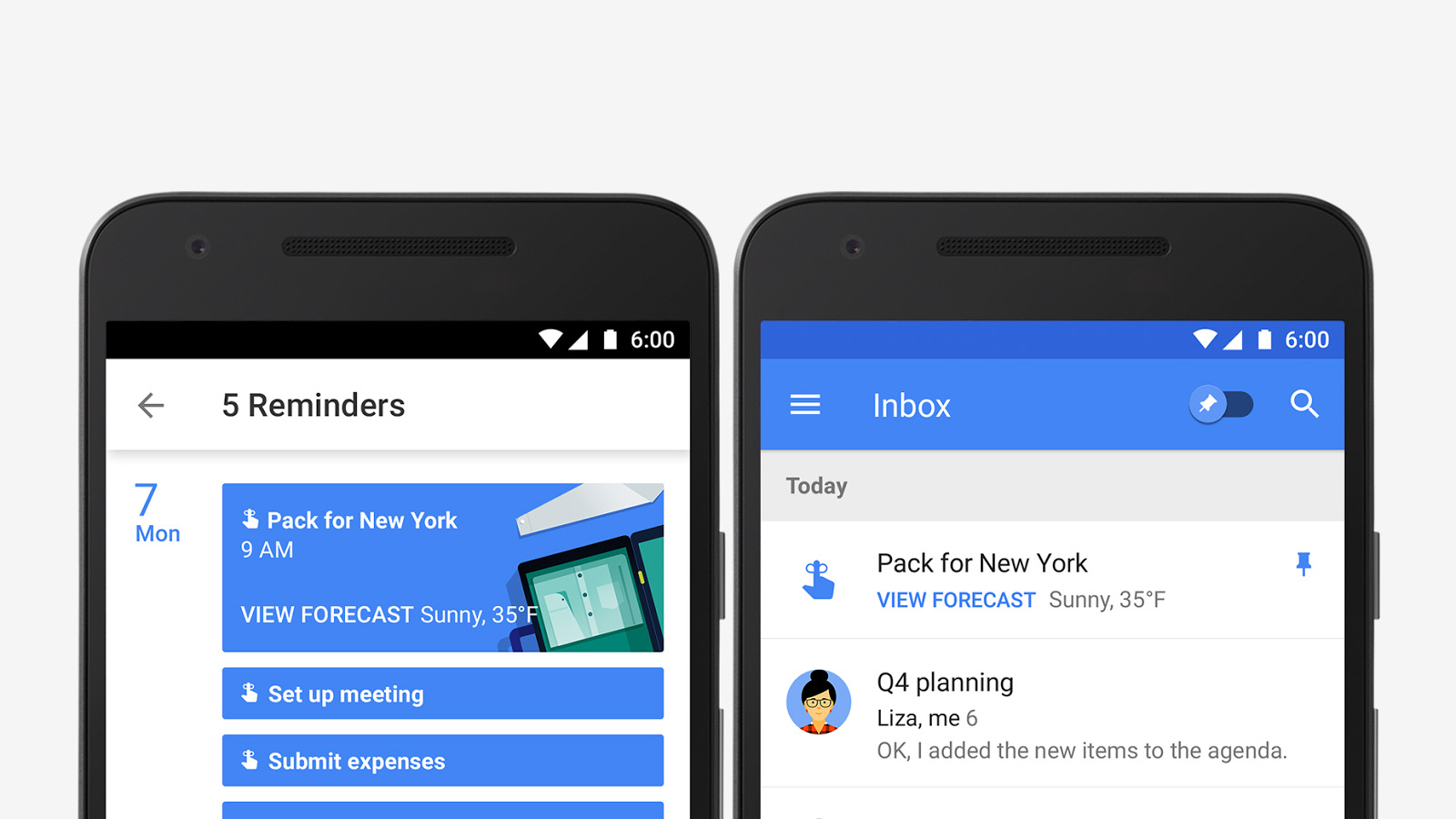
Now there’s a single way to manage your day: starting this week, you can create Reminders in Google Calendar to keep track of your to-dos alongside your scheduled events.

Reminders aren’t just kept in Google Calendar either, they will also be accessible from the Google Inbox, Google Keep and Google Now apps - and they’ll be coming to the web in the future. For those of you invested in the Google ecosystem, and just need a simple way to remember about tasks you need to do, this new Reminders feature from Google may be a perfect fit.

Permalink

Apple Raises iTunes Match and Apple Music Library Matching Limits to 100,000 Tracks

MacRumors reported over the weekend that Apple Music and iTunes Match libraries can now manage libraries with up to 100,000 tracks:

Over the past couple of days, MacRumors has received several reports from users who have been able to upload music libraries of greater than 25,000 tracks to iTunes Match or Apple Music’s similar scan-and-match feature, and Macworld’s iTunes expert Kirk McElhearn has also noted a number of reports on his personal blog.

Update 12:08 PM, December 6: Eddy Cue has confirmed to MacRumors that Apple has indeed “started rolling out support for 100k libraries.”

It has taken some time, and longer than expected, but those of you with iTunes Match or Apple Music and large music libraries can now upload up to 100,000 tracks to the services, up from the previous limit of 25,000. Eddy Cue, Apple’s Senior Vice President of Internet Software and Services, first mentioned on Twitter in late June that Apple was working to “get to 100k [tracks] for iOS 9”. Apple missed that deadline, but Cue subsequently told MacRumors that Apple was working on it and that he expected it would be released “before the end of the year” - and indeed it now has.

Permalink

SiriMote: Use Your Siri Remote with Your Mac

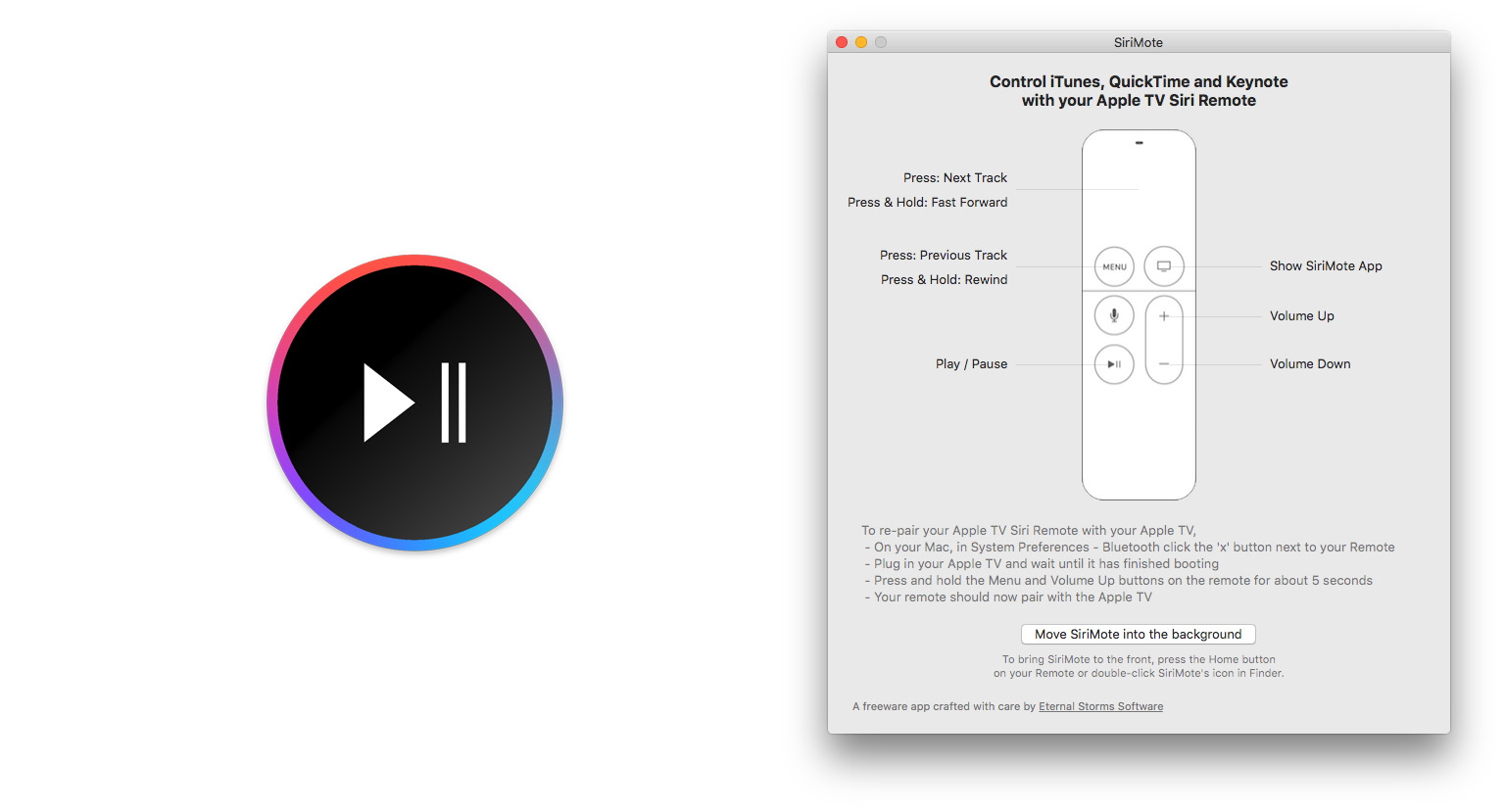
Back when I owned a 2008 MacBook and the second-generation Apple TV, I remember occasionally using the Apple TV remote with my Mac. Back then most of Apple’s laptop’s (including mine) came with a built-in infrared (IR) receiver and the functions of the Apple TV remote automatically worked with iTunes and some other Mac apps. But since then, IR receivers have gone the way of the DVD drive and, chances are, your Mac doesn’t have one. The Siri Remote for the Apple TV does still use IR for certain functions, but most of its communications are now done via Bluetooth 4.0.

But if you’d like to use your Siri Remote with your Mac, you can with SiriMote. It’s a free app from Eternal Storms Software, which also makes Yoink and Transloader, amongst other apps.

SiriMote works by pairing the Siri Remote to any Mac that supports Bluetooth 4.0 and is running OS X El Capitan. To pair the Siri Remote you’ll need to turn off your Apple TV, press the Menu and Volume Up buttons on the Siri Remote for a few seconds and pair it from OS X’s Bluetooth settings, located in System Preferences. There’s no doubt it is a bit fiddly to set up, but once it’s set up, it works great. SiriMote works by translating buttons on the Siri Remote into buttons from a keyboard (specifically, the media keys). Because it is simply emulating the standard media keys, SiriMote works with iTunes, Keynote, QuickTime, VLC and other apps that work with the Mac media keys.

Unfortunately, for now at least, the touch surface of the Siri Remote can’t be used by SiriMote. The only exception is that clicking the touch surface will emulate the Next Track media key, or Fast Forward if you hold it down. That means swiping and tapping won’t do anything when connected to your Mac.

I doubt I’ll use SiriMote regularly, but if I ever need to run a Keynote presentation from my MacBook Air, I know that I can turn my Siri Remote into one of those fancy “clickers” in less than a minute. As a free app, I can easily recommend SiriMote to any Siri Remote owner, you may not have a use for it today, but you never know what tomorrow might require.

Learn more and download SiriMote.


Thoughts on the Inevitable Demise of the 3.5mm Audio Jack on the iPhone

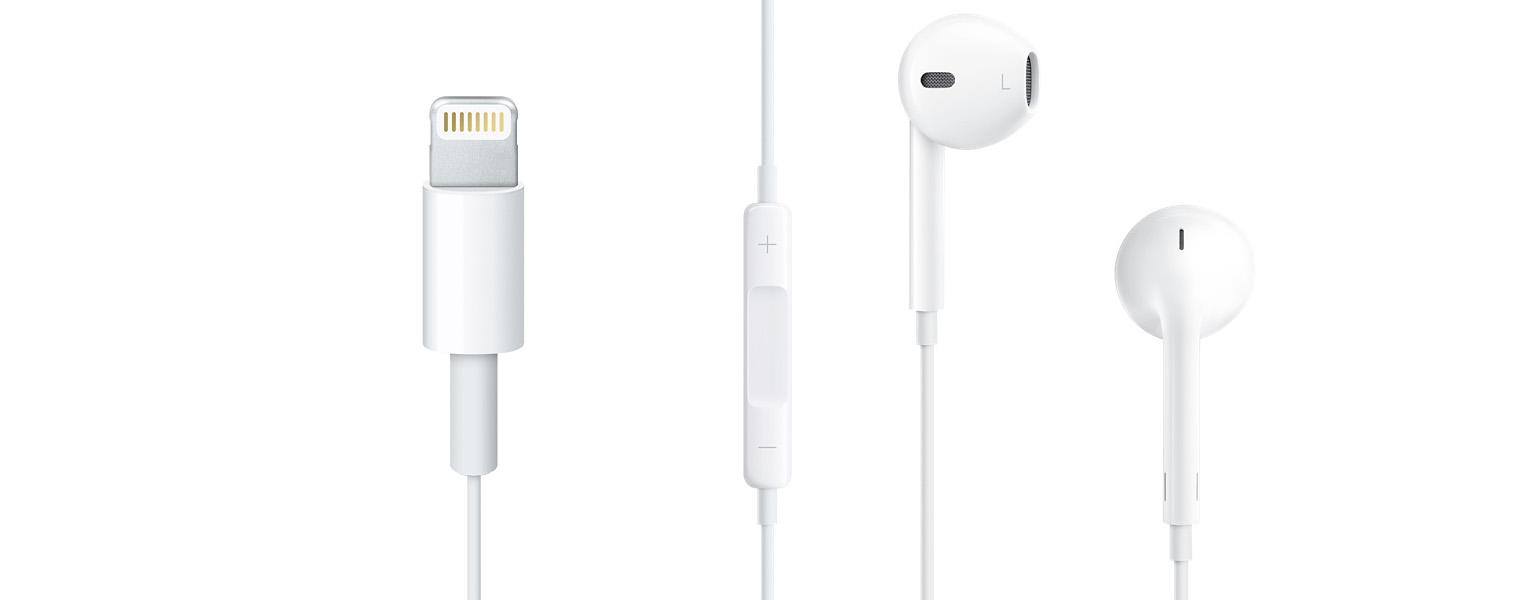
There are once again rumors that Apple is going to remove the 3.5mm audio jack from the next iPhone, this time courtesy of a report from Japanese website Macotakara. The Macotakara report goes on to suggest that audio output on the iPhone 7 will be handled via the Lightning connector and Bluetooth, and that the EarPod included with every iPhone will be upgraded and use the Lightning connector.

It’s too early to tell whether Apple really will get rid of the 3.5mm audio jack on the iPhone 7 next year, but I think the real question is when will they get rid of it, not if they get rid of it. In my eyes, it’s either going to happen in 2016 with the iPhone 7 or 2018 with the iPhone 8. I will be amazed, probably dumbfounded, if we get to 2020 and our phones still have the same 3.5mm audio jack. Although Macotakara implied that the reason for removing the audio jack is to make the iPhone thinner, I think the more likely reason is a combination of making it thinner, but also freeing up the volume of space that is occupied by the audio jack internally. Every extra cubic millimeter that they can stuff a battery into is no doubt important (and one of the reasons the Lightning port is so much smaller than the older 30-pin connector).

Given the premise that I think Apple will (at some point) ditch the audio jack, the next question is how they can possibly achieve that with the smallest adverse impact on customers, which should surely be the top priority. The easiest answer, is of course, not to do it. The iPod touch is already just 6.1mm, compared to the iPhone 6 which is 6.9mm, and the iPhone 6s is 7.1mm (thicker because of the addition of 3D Touch). You’ll note that despite being an entire millimeter thinner than the iPhone 6s, it still has an audio jack — as does the iPod nano which is just 5.4 mm thick. So there’s a question as to whether 2016 is really the year that Apple should remove the audio jack — maybe they can hold out a few more years.

But for the sake of argument, let’s say that Apple wants to remove the audio jack from the next iPhone and that they’ve already decided to do this. Yes, it will be a painful transition, but I also think that there’s a lot that Apple can do to ease the transition.

Read more


Q&A

Question: I know that you’re using iPad Pro now, but you probably did test lot of keyboards for iPad Air 2. Currently I’m using Logitech Type+ and I’m happy with it. The only con is that it’s not backlit keyboard. Did you test any backlit keyboard for iPad Air 2? Something for serious typist? Something...


Reeder 3 for iOS Now Available, Adds Support for iOS 9 Split View, Safari View Controller, 3D Touch

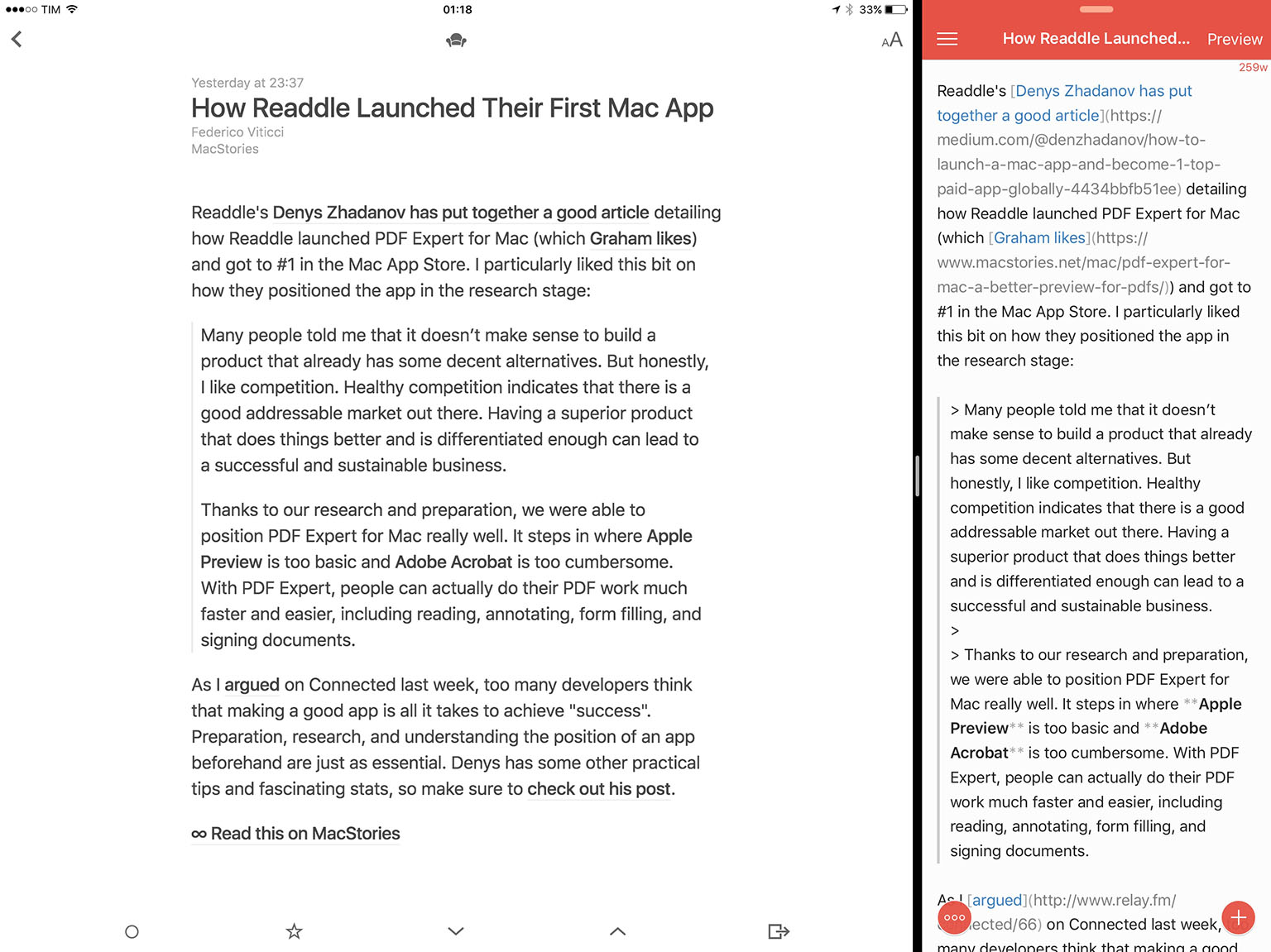
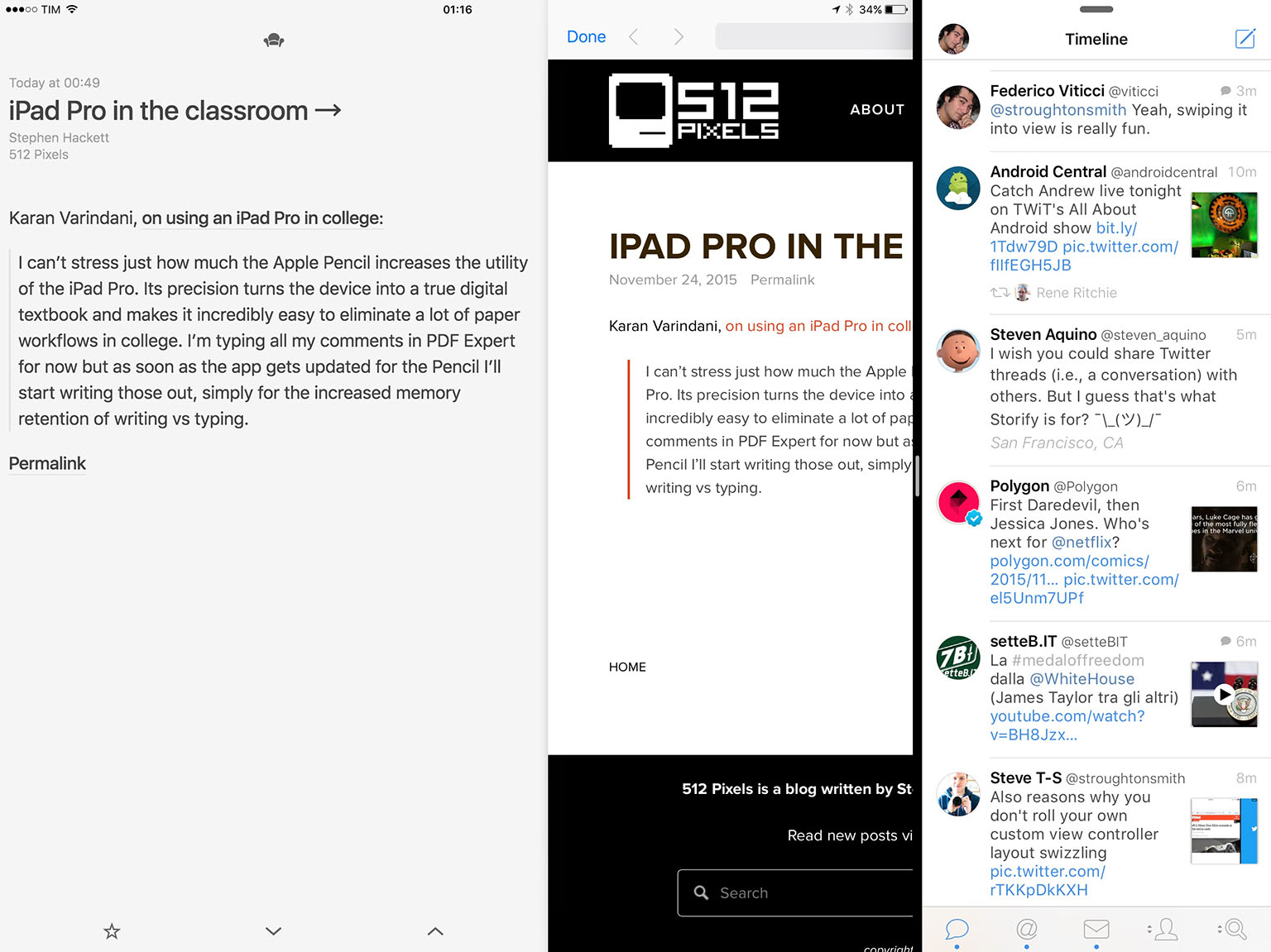
Reeder 3 for iOS has just been released today as a free update for existing customers. The new version brings support for iOS 9 Split View, support for the new iPad Pro and 3D Touch capability on the iPhone 6s, amongst a number of feature improvements. Split View support enables you to use Reeder side-by-side with another app, on compatible iPads. Whilst 3D Touch support is currently limited to previewing articles when in the article list - it isn’t yet able to preview links in articles or preview article lists for a particular RSS feed.

Reeder 3 also adds support for the Safari View Controller, an iOS 9 feature which brings the native Safari experience to third party apps. For those familiar with Reeder you’ll be well aware that a key aspect of its design is the use of a number of sliding panes for your feed list, article list, the actual article itself and finally the ‘view in browser’ option. You’ll be glad to know that Reeder implements Safari View Controller in a way that fits within Reeder’s existing design and user interface. So just as you would before, you can swipe left on an article and Safari View Controller will slide in, not pop-up. Dismissing the Safari View Controller can also be done by swiping right from the left edge of your screen.

Some of the other features in Reeder 3 include the ability to add Instapaper as a sync service, options to adjust the font size for the list of articles, and additional UI tweaks throughout the app.

Reeder 3 for iOS is available as a free update for existing customers, and is $4.99 on the App Store for new customers.


Beamer 3 Launches with New User Interface, Google Chromecast Support

Following a two month public beta period, Beamer 3 was released earlier this month. Beamer, a favorite of the MacStories team, is a Mac app that allows you to easily stream video (in almost any format) to your Apple TV via AirPlay. In Beamer 3, streaming support has expanded beyond AirPlay and it can now stream to Google Chromecast.

The user interface has also been redesigned in Beamer 3, and now fits in better with OS X Yosemite and El Capitan. The new UI isn’t just prettier, it’s also more useful because it provides easier access to audio track and subtitle controls. Another new feature enables you to skip to the next video in your Beamer queue by double clicking the play button the Apple Remote. All of the new features are listed here.

Beamer 3 is available for $19.99 for new customers, and existing Beamer customers can “pay what you want” to upgrade to Beamer 3. Beamer 3 requires OS X Yosemite or El Capitan.


Square Announces New Square Reader for Apple Pay, Contactless & Chip Cards

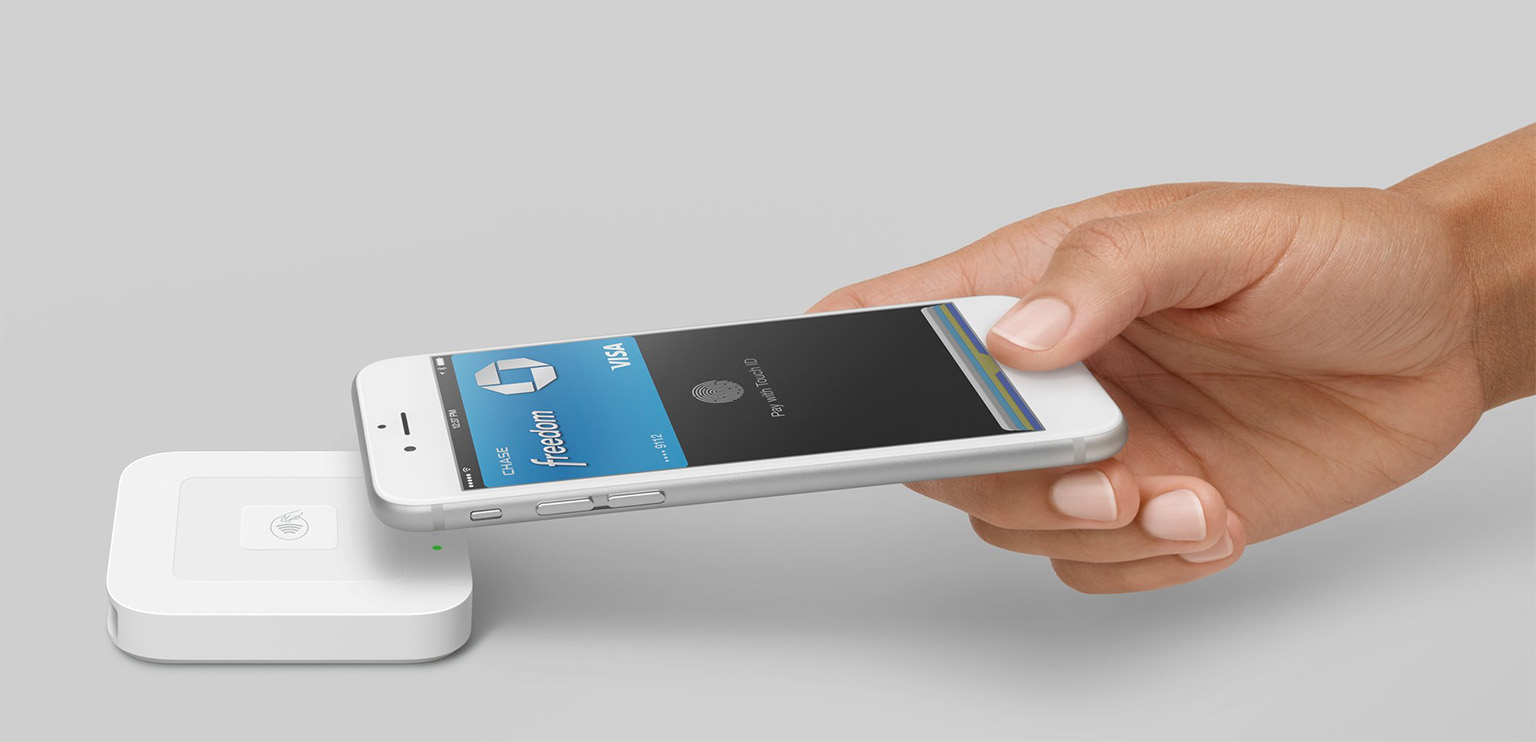
Square yesterday announced a new Square Reader, designed to work with contactless payment services such as Apple Pay, as well as “chip and PIN” EMV cards. The new contactless Square Reader can be reserved from today for $49.

The new contactless Square Reader is a pocket sized square puck (naturally), which can be used wirelessly with the Square app on an iOS or Android device. For customers with an EMV card, there’s also a slot on one of the sides of the the new Square Reader to insert the card’s chip into the device.

For now at least, Square’s mobile payment processing for small businesses is limited to the United States, Canada and Japan. The launch of this new contactless Square Reader may help boost Square’s international expansion efforts, particularly in countries such as the UK and Australia, where EMV cards are more widely adopted.