Ryan Christoffel

984 posts on MacStories since November 2016

Ryan is an editor for MacStories and co-hosts the [Adapt](https://www.relay.fm/adapt) podcast on Relay FM. He most commonly works and plays on his iPad Pro and bears no regrets about moving on from the Mac. He and his wife live in New York City.


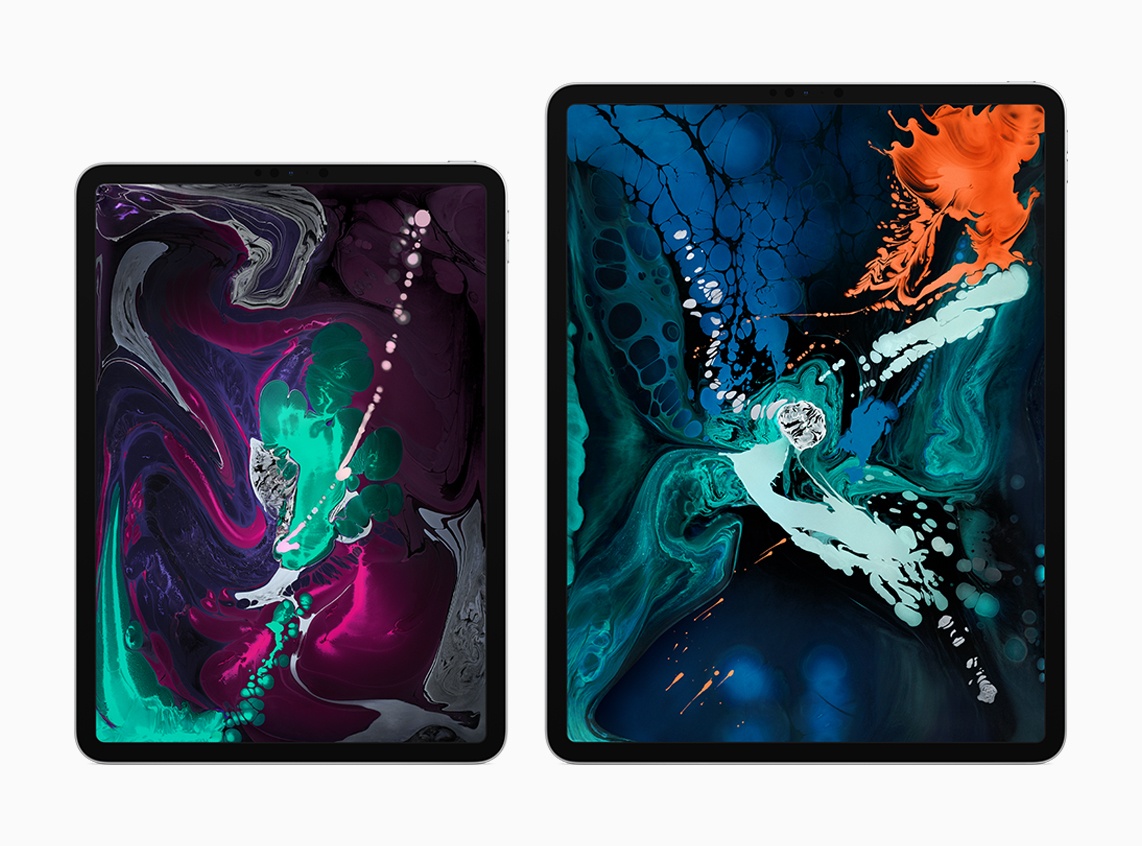
The New 12.9- and 11-inch iPad Pros: The MacStories Overview

Today during its keynote event in Brooklyn, Apple took the wraps off the most radical change to iPad hardware since the first iPad Pro launched in late 2015. The new 12.9-inch and 11-inch iPad Pro models represent the iPad’s ‘iPhone X moment,’ bringing drastic changes to Apple’s tablet platform aimed at making the iPad an even more valuable tool for creation and productivity. While many of these iPad Pro changes are directly inspired by Apple’s iPhone efforts over the last 12 months, some represent new innovations entirely.

“The new iPad Pro is a huge step forward for powerful, creative, mobile computing; it has an all-new thinner design, speeds through projects with the super-fast A12X Bionic chip and unlocks with a glance using Face ID in any orientation — while you’re sitting or standing, with iPad Pro on your desk or lap, with the new Smart Keyboard Folio and new Apple Pencil,” said Philip Schiller, Apple’s senior vice president of Worldwide Marketing. “There has never been a mobile device anything like the new iPad Pro; it has a gorgeous edge-to-edge Liquid Retina display that curves into the corners, breakthrough performance that outperforms most laptops, Face ID, support for the new Smart Keyboard Folio and new Apple Pencil, advanced new cameras and sensors for the best AR experiences ever in any device, a high-speed USB-C connector, louder speakers, faster wireless and more, all packed into a thinner device that has all-day battery life and is 25 percent smaller in volume.”

Read more


The Journalists and Processes That Drive Apple News

Today Jack Nicas of The New York Times published a first-of-its-kind in-depth look behind the curtain of how the Apple News journalistic team operates. The piece highlights Apple’s distinct handling of the news, where human curation is a larger driving factor than at other major tech companies. Nicas writes:

Apple has waded into the messy world of news with a service that is read regularly by roughly 90 million people. But while Google, Facebook and Twitter have come under intense scrutiny for their disproportionate — and sometimes harmful — influence over the spread of information, Apple has so far avoided controversy. One big reason is that while its Silicon Valley peers rely on machines and algorithms to pick headlines, Apple uses humans like Ms. Kern.

The former journalist has quietly become one of the most powerful figures in English-language media. The stories she and her deputies select for Apple News regularly receive more than a million visits each.

Lauren Kern, the editor in chief of Apple News, heads a staff of journalists that span the globe. One of their chief responsibilities is selecting each day’s top stories for the app.

Ms. Kern leads roughly 30 former journalists in Sydney, London, New York and Silicon Valley. They spend their days consuming news across the internet, fielding 100 to 200 pitches a day from publishers, and debating which stories get the top spots.

Ultimately, they select five stories to lead the app, with the top two also displayed in a prominent window to the left of the iPhone home screen. They also curate a magazine-style section of feature stories. The lineup typically shifts five or more times a day, depending on the news.

Read more


Twitter Testing Reply Buttons, Presence Indicators, Ice Breakers, and More

In an interesting move that highlights Twitter’s recent efforts to develop its product more openly, soliciting feedback from its user base, the company invited The Verge’s Casey Newton to a meeting where it shared details on a handful of new features it’s working on.

A new design that more clearly indicates how to reply to tweets was one project in the works. Current prototypes resemble the sort of UI found on Facebook and Instagram, with a reply button indented underneath tweets. Related to that change, and in another modeling of other popular social networks, the UI for threads is being worked on to better resemble a conversation rather than a string of individual tweets.

One of my favorite ideas from those shared with The Verge was something Twitter calls “ice breakers.” Newton writes:

Another feature Twitter is considering is a twist on the pinned tweet designed to promote conversations. The company showed me a design that would let you pin an “ice breaker” to the top of your profile to let people know you wanted to talk about something specific. The company’s design director, Mike Kruzeniski, told me it could help Twitter users channel their followers’ enthusiasm into discussions they wanted to have — whether it be about a new project, a current event, or some other item of interest.

The current implementation of pinned tweets is fine, but I love the idea of conversation starter tweets that can be changed up over time as users’ interests and desires for connection change.

Finally, presence indicators and status indicators are two similar features that would, respectively, let the world know when you’re online and ready for conversation, and share a status within your status such as “at WWDC19.” While I’m generally not a fan of presence indicators, according to Newton Twitter’s will be entirely optional, which I appreciate. If the feature were used sparingly enough, it could be a replacement for the standard AMA (“ask me anything”) tweets that are common when a user is free and open for conversation. Most likely though, Twitter will activate presence indicators by default for all users, making that specific use case doubtful.

None of these changes are set in stone, so be sure to make your voice heard if you feel strongly about any of them. As Twitter’s Sara Haider told Newton:

“Coming up with a product in a silo and dumping it on people is not going to work,” she said. “Some people are going to love it. Some people are going to hate it. We want to understand what people’s feedback is, and then tweak and iterate on the product.”

Permalink