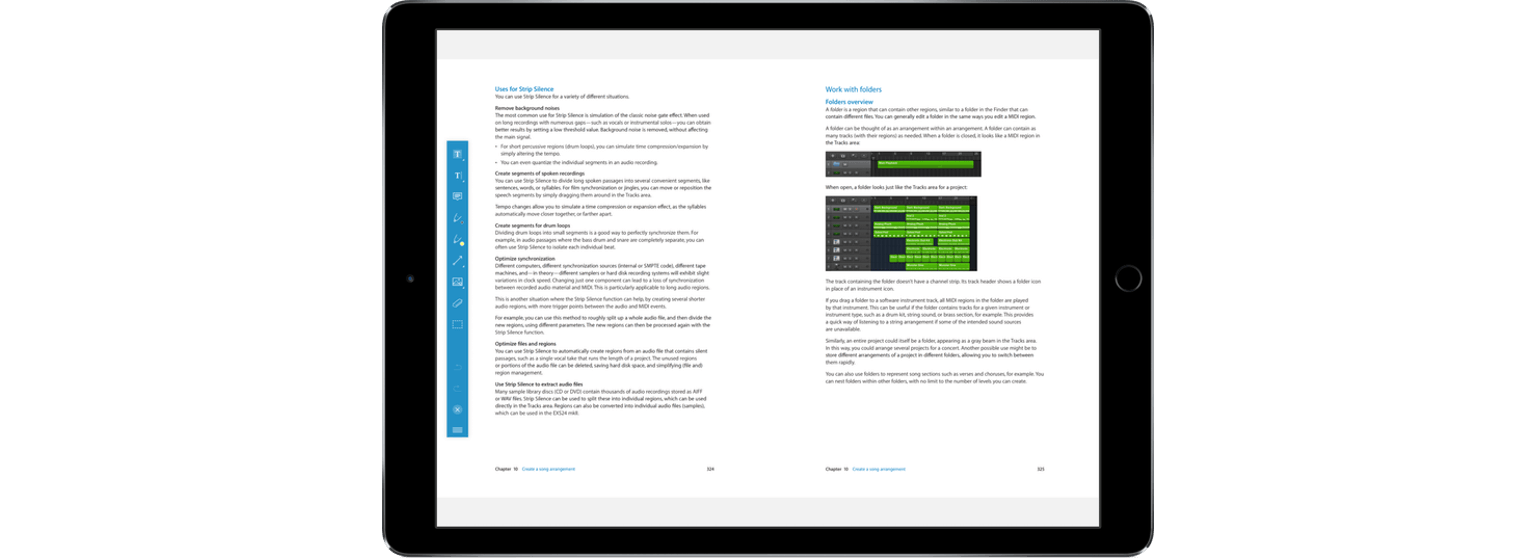
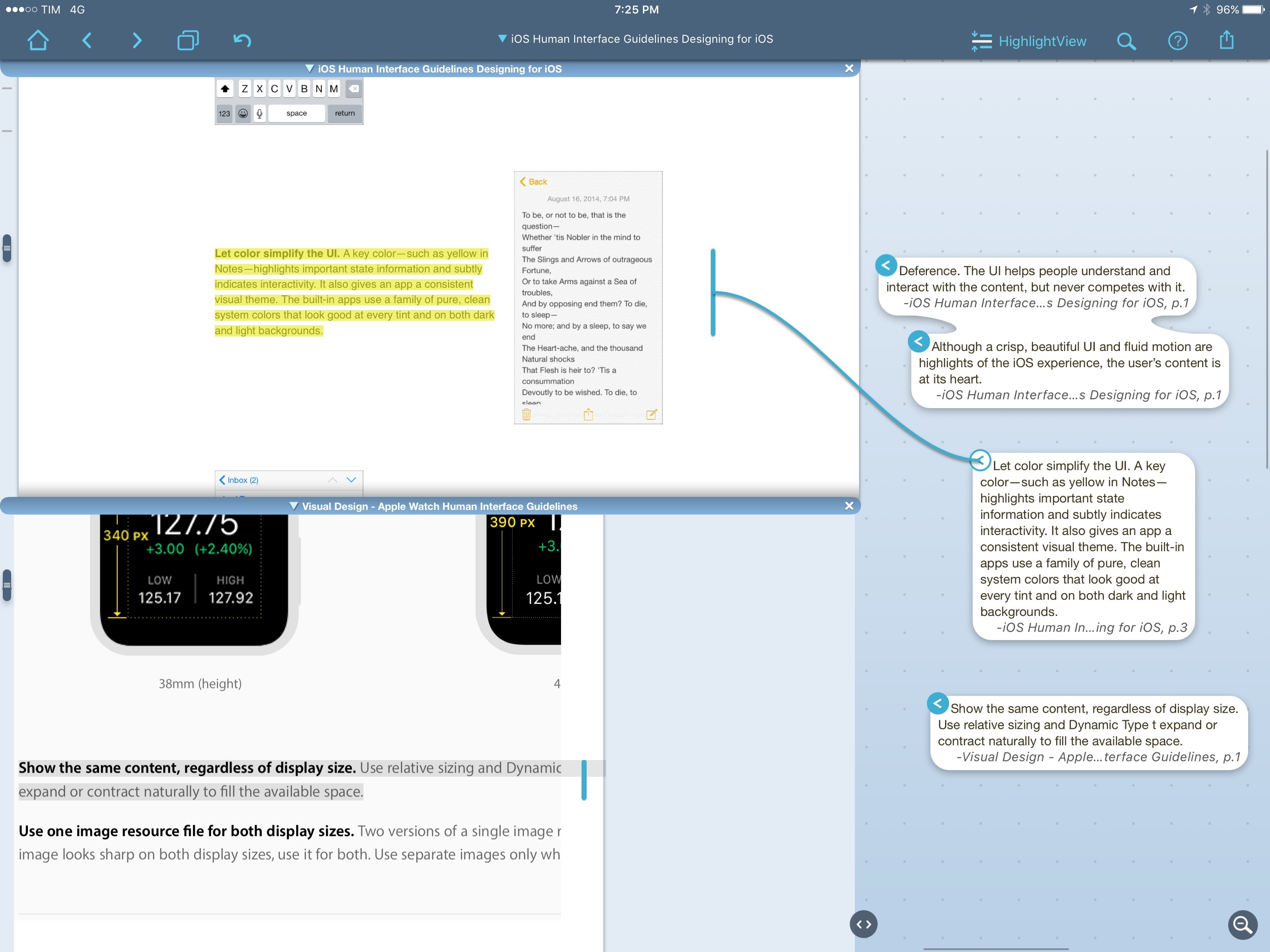
ReaddleDocs 3, the latest version of the popular document viewer and file manager for the iPad was released a few days ago and it packs a bunch of new features and improvements. The app is a little odd in some ways, because at its core it is trying to recreate the file system on an iPad — something that Apple has tried its very best to stay away from with iOS. But in reality, if you’ve wanted to be productive on an iPad you’re inevitably going to need some sort of file system, because whilst iCloud is beginning to help with document and app sync, it isn’t all that helpful for syncing between apps.

As a result, I use a few other ‘cloud’ services to keep all my documents in sync and available everywhere. The primary one I use is SugarSync, but I also use Dropbox (primarily for collaboration) and occasionally Google Docs. This allows me to use any of the computers I have at home, where I will have all my documents ready and available – I can even edit them and see those edits synced across to the other computers where I could access that same file the next morning with all the edits included.

But how do I deal with documents on the iPad? It’s been a bit of a complicated issue since the iPad was first released, and initially I was just emailing any documents I needed on my iPad to myself and then opening that email up on the iPad – but this was messy, complicated and required advanced ‘knowledge’ to send that file before you could see it on the iPad. Eventually I realised I had to find a better way to solve this, and that’s where SugarSync and Dropbox come in. Both these services (and a multitude of others) slowly began to be supported by various apps for the iPad and iPhone, hooking straight into the services. This was a far better way to open files on the iPad – but the apps felt very rough around the edges.

In recent months I’ve been using iFiles on the iPad and iPhone, it’s been pretty great and it was certainly the best app I had used to date for viewing documents from my Dropbox folder and SugarSync services. Then about a month after I started using iFiles, I came across PDF Expert. Primarily I was using it for PDF annotation, but I noticed it was also a pretty great file viewer, particularly because it would also integrate right into Dropbox and SugarSync. So over the past few months I’ve been using PDF Expert for most of my document viewing needs and occasionally opening iFiles.

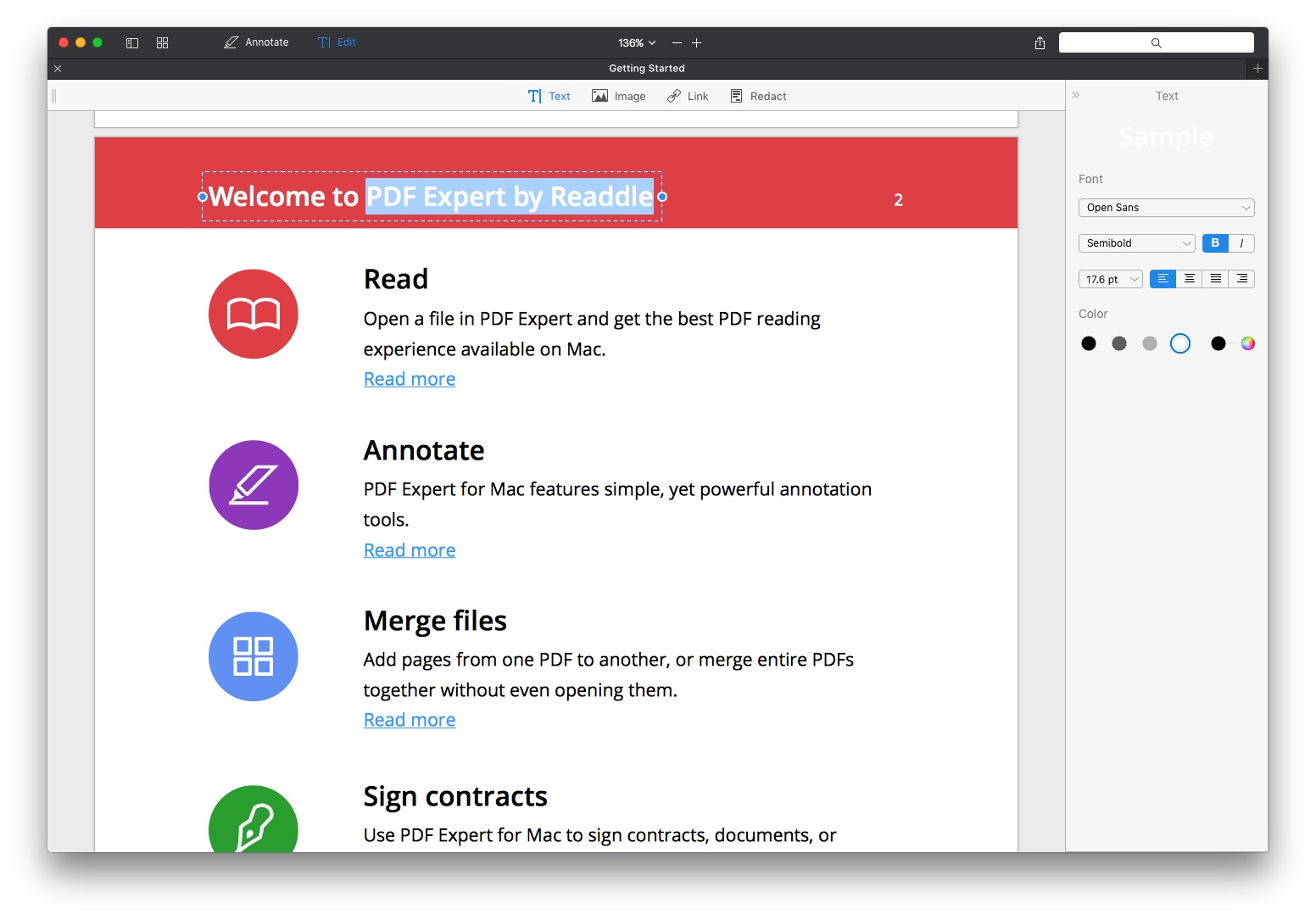
When looking at it simply, PDF Expert and ReaddleDocs 3 are nearly identical — they share very similar user interfaces and are close in functionality too. Where they differentiate is mainly in price (PDF Expert is nearly twice as much) and in annotation abilities (it is far better in PDF Expert). So before I go into too much detail, if you want to do a lot of PDF annotation on the iPad, PDF Expert is what you should purchase (even if you want to use it as a document viewer, because it is also good at that). In all other cases my recommendation is for ReaddleDocs 3, particularly if you want to do some file management – it is virtually identical and also has some annotation capabilities.

Jump the break to continue reading my review of ReaddleDocs 3.

(more…)

Oct
17
2011

Adobe today released its popular Adobe Reader PDF reading application for iOS devices; the software, available for free on the App Store, runs natively on the iPhone and iPad as a universal app. Back in August, Adobe released CreatePDF for iOS, a utility to turn a variety of documents into Reader-compatible PDF files that preserved quality and accessibility standards with the inclusion of links, images, and footnotes. With the release of Adobe Reader today, Adobe is giving iOS users two tools to create and properly read PDF documents, respectively.

Adobe says that Reader for iOS works with several PDF document types, including PDF Portfolios, password-protected PDF documents and Adobe LiveCycle rights-managed PDF files. Upon first launch, the app opens a document view with a Getting Started.pdf file ready to be viewed to get familiar with the app’s UI and controls. A scrubber bar along the bottom lets you quickly skim through pages, which can be displayed “continuously” in the reading view, or through a single-page visualization that will let you scroll horizontally between pages. You can pinch or double-tap to zoom, and rendering performances on zoomed documents seemed fairly decent on my iPhone 4. In PDF documents, text can be selected and copied to the clipboard, or you can search using the icon in the upper toolbar; a bookmarks icon in the bottom bar enables you to quickly navigate the sections of a document. One nice touch of Adobe Reader are “tap zones”, which in Single Page mode let you jump back and forward by tapping on the left and right edges of a document.

PDF files can be emailed using Adobe Reader, opened with another app using the “Open In” menu, or printed through Apple’s AirPrint. According to Adobe, Reader for iOS is capable of viewing PDF Portfolios, PDF Packages, annotations and drawing markups as well as reading text annotations like sticky notes. In my tests, performances with a 350-page PDF document were similar to Apple’s iBooks, which can also preview PDFs. iBooks was slightly faster at page animations and rendering text while zooming on a document — the app has indeed been recently updated with bug fixes and performance improvements.

If you need to preview specific PDF documents that might have some compatibility issues with iBooks, Adobe Reader on iOS might be a good choice. You can download the app for free on the App Store.

Automatically Saving PDFs (And Clipboard) to Evernote Using Keyboard Maestro

Over the weekend, I posted my initial impressions on Keyboard Maestro, a fantastic assistant for your Mac that will help making your OS X workflow faster, and personalized. Today Brett Kelly at Nerd Gap shares a tip to automate the process of virtually printing a PDF from Mail.app to Evernote:

Clicking this menu option will render whatever the current thing is as a PDF and shove it into Evernote. This Keyboard Maestro recipe automates the following steps that make up this process:

- Click “File” then “Print” in the current application menu

- Click the “PDF” button at the bottom left of the Print dialog

- Type “Save PDF to Evernote” to select the appropriate option (this is the only way I could do this with some certainty that it would work, though there were other options)

- Type Return

The Keyboard Maestro macro above works with any Mac app that supports the Print… menu, although, for some reason, Google Chrome Canary returns an error at the “Click PDF button” action. Safari, Mail, Sparrow — they can all print to Evernote using Keyboard Maestro.

Alternatively, if you don’t want to save PDFs to Evernote, you can set up this macro to quickly create a new note using Evernote’s helper (the menubar icon), paste without style, and close the window. It’ll take less than a second to perform through Keyboard Maestro, and it’s a nice way to quickly get your latest clipboard entry onto Evernote as plain text.

You’ll need to set title and tags later, as this only pastes the clipboard in the note’s body.

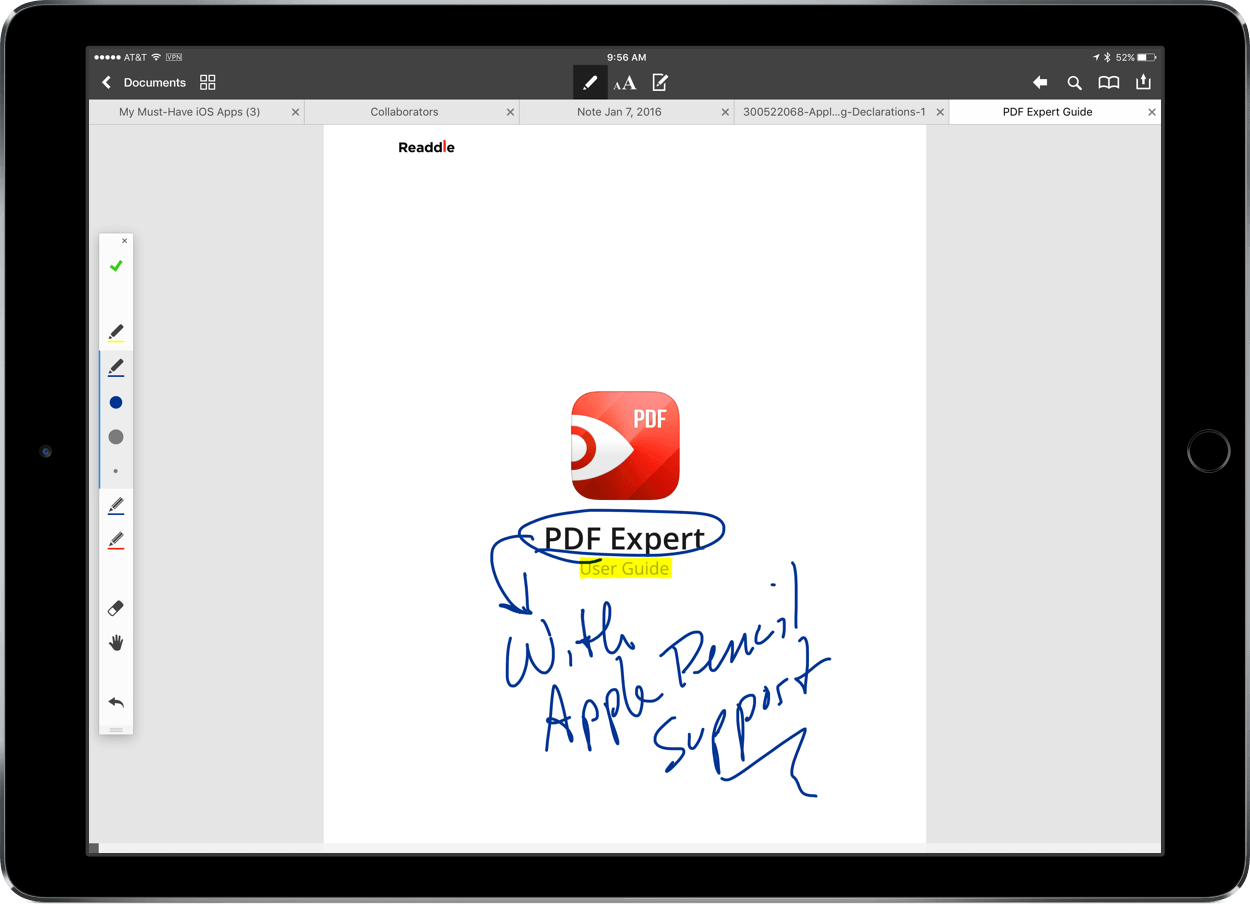
PDF Expert by Readdle is my favorite app to collect, read, and annotate PDF documents on the iPad, and thanks to a series of updates in the past months it’s also become a solid alternative to iBooks on the iPhone, not to mention support for signatures and text notes. With the major 3.0 update released today, free for existing iPad customers, Readdle has completely revamped the user interface of PDF Expert, adding a new toolbar for annotations, notes, drawing shapes on screen and highlighters, as well as a “page manager” to act on single pages within a document, copy them, export them, and move them with drag & drop.

The new toolbar in PDF Expert for iPad is easily dismissible with a tap on the “x” button, so you won’t have to look at it all the time while you’re reading a document. Similarly, a single tap on the edit icon in the upper toolbar (the one that contains navigation buttons, the new Recents menu, search, bookmarks, and sharing options) will display the annotation toolbar again. You can manually highlight text or use the automated tools for highlights, underlines and strikethroughs; you can add shapes, notes, your signatures, and choose from a variety of free-hand highlighters with different colors. Changes can be reverted at any time, and I haven’t noticed any visible slowdown when navigating annotated documents with hundreds of pages.

The new toolbar is clean and unobtrusive, but it gets better with the new Page Manager. With a tap on the pages button, you can switch to a bird’s eye view of all your document’s pages with live previews (that is, thumbnails include annotations and highlights). You can add a blank page between existing pages, select one and move it around — even select multiple ones, rearrange them, rotate them, email them, and extract them as a new document in PDF Expert’s main section. Live previews update fast on the iPad 2, and the “extract” function is undoubtedly useful if you need to focus on specific pages of a document.

PDF Expert 3.0 is a great update that improves both design and usability, whilst adding some other “little gems” you can check out in the app’s built-in update guide. PDF Expert for iPad is available at $9.99 on the App Store. (more…)

Aug
29
2011

Earlier today Adobe added another application to its iOS portfolio with the release of CreatePDF for iOS, a $9.99 universal app aimed at letting users easily create PDFs on their iPhones or iPads. According to Adobe, “CreatePDF brings the same high-quality PDF creation as Adobe Acrobat” to iOS devices, with PDF documents that look “exactly” like the original files they were generated from; the app uses Adobe’s online services for performance and quality, creating PDFs that preserve quality and accessibility standards with the inclusion of links, images, footnotes, and more.

The app supports the following formats:

  • MS Word (docx, doc), Excel(xlsx, xls), PowerPoint (pptx, ppt)
  • Adobe Illustrator (ai), Photoshop (psd) and InDesign (indd)
  • Images – JPEG, BMP, PNG, GIF, TIFF
  • RTF, Text and WordPerfect
  • OpenOffice and StarOffice documents

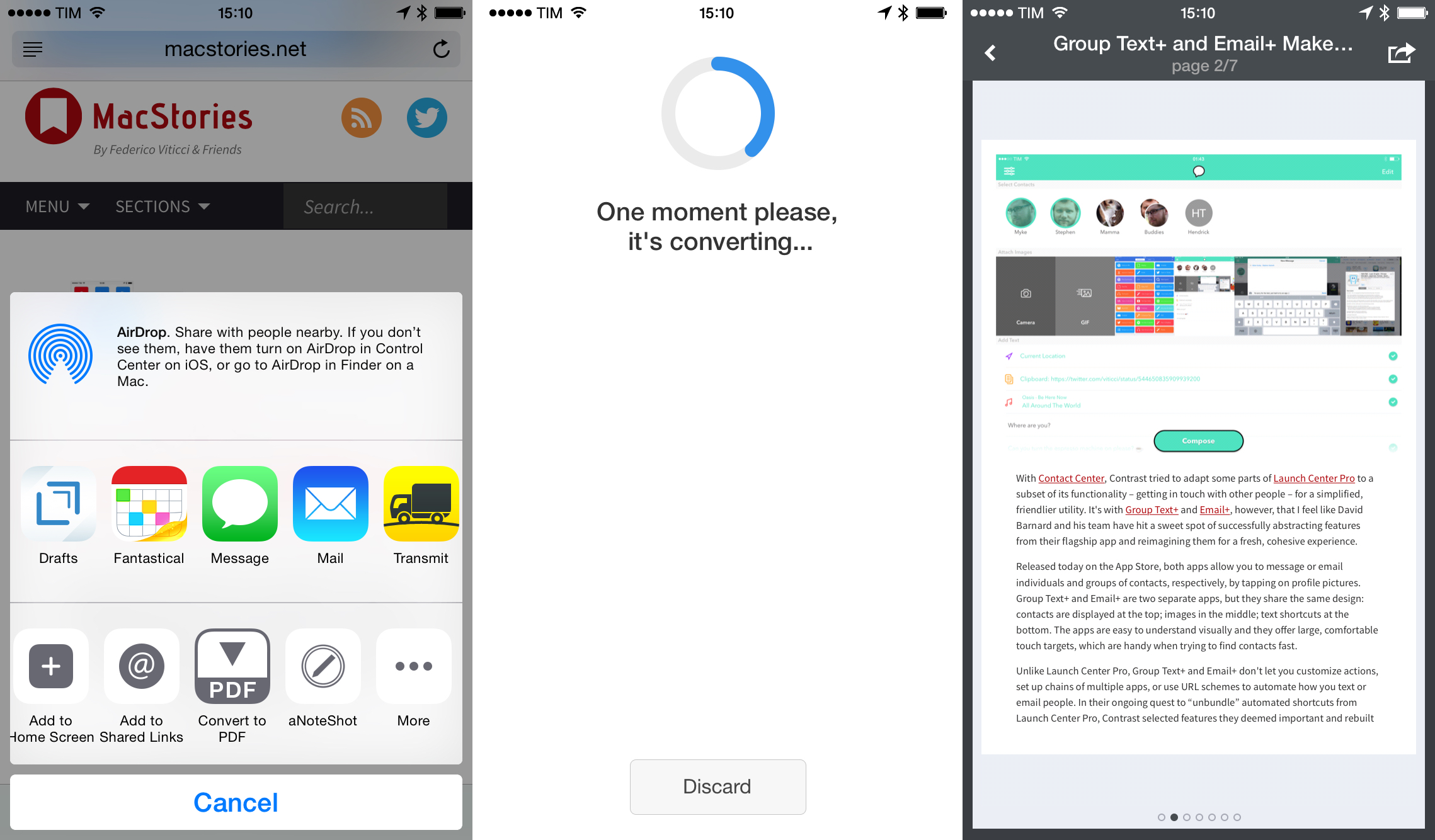
CreatePDF works through iOS’s default “Open In…” menu, which allows third party apps to communicate with each other by sending documents to other applications that support specific file types, such as PDF, .doc, or plain text. For instance, the feature was recently introduced in the Omni Group’s OmniOutliner, letting the app export outlines as plain text or OPML to other iOS software installed on device. CreatePDF registers as an app capable of opening (and converting) the file types listed above, and in my first tests it’s proven to be a fast and reliable solution to convert plain text documents, images and PSDs to the PDF format. From any app that supports sending files, you can choose CreatePDF from the “Open In…” menu, and wait for the app to finish the conversion process to PDF. For reference, the app took a few minutes to convert a 12 MB PSD to PDF, with good results. Similarly, a .docx document forwarded to me via email and sent from the iPad’s Mail app to CreatePDF took less than 30 seconds to become a PDF.

CreatePDF looks like a solid solution to convert files to PDFs, although I wouldn’t mind having more sharing options inside the app itself. Currently, CreatePDF can only “open in” other apps, send via email, or print. It’d be nice to have, say, direct Dropbox integration or more online exporting options in the future. The $9.99 price tag might be a little steep for the average iOS users, but quality of converted documents looked superior to me than other apps I tried in the past, and support for Illustrator, Photoshop and InDesign documents is also very welcome.

You can get CreatePDF at $9.99 on the App Store. (more…)

Jul
15
2011

Apple has just released iOS 4.3.4 in iTunes. The new firmware should be available now if you check for updates, and it is supposed to fix an issue that allows jailbreaking an iOS 4.3.3 device through a PDF vulnerability. Apple describes the technical fixes in a  support document:

Impact: Viewing a maliciously crafted PDF file may lead to an unexpected application termination or arbitrary code execution

Description: A buffer overflow exists in FreeType’s handling of TrueType fonts. Viewing a maliciously crafted PDF file may lead to an unexpected application termination or arbitrary code execution.

Users who have jailbroken their devices using JailbreakMe will obviously need to stay away from the update if they want to keep Cydia and other installed jailbreak tweaks — Apple had already confirmed a fix was coming to patch the PDF security hole that could allow for other malicious exploits, not necessarily related to jailbreak.

Here are the direct links for iOS 4.3.4:

Apple has also released iOS 4.2.9 for the Verizon iPhone, which you can download here.

iOS comes with a fast and elegant built-in PDF viewer (in fact, the latest JailbreakMe 3.0 is largely based upon a security hole in the PDF display engine), but unlike Mac OS X the options to convert documents into new PDF files are limited. PDF Converter, a new app by Readdle (the makers of PDF Expert and Terra web browser, among others), aims at providing an easy to use yet powerful solution to turn almost anything on your iPad (webpages, documents, clipboard contents, even photos) into new PDF documents to save locally or send to an external physical or virtual printer.

Released earlier today at $6.99 on the App Store, PDF Converter runs as an iPad-only application for now. The interface resembles Readdle’s previous works for the iPhone and iPad — namely ReaddleDocs and PDF Expert — with a narrow sidebar on the left side of the screen allowing to switch between the different types of content you can convert to PDF. The app supports PDF creation off clipboard contents, Address Book contacts, photos, webpages and just about any document that can be sent to third-party apps using iOS’ native “Open In” menu. By opening a document into PDF Converter, in fact, the app will take care of turning it into a properly formatted PDF document that keeps pagination and line breaks (as well as layout and graphics) intact, while making the doc’s text entirely selectable as you would expect from a PDF. Unlike ReaddleDocs and PDF Expert the app doesn’t come with direct iDisk and Dropbox access, but the developers recommend you use the “Open In” menu in those apps if you wish to get documents into PDF Converter.

In my tests, I’ve found PDF Converter to perform reliably with a variety of content and clipboard contents sent from iOS apps to Readdle’s utility. The built-in Address Book integration will allow you to print out contacts in a simple plain-text layout with all available fields (email, phone, address), but more importantly full clipboard integration means you’ll be able to, say, copy a web address from Safari into your system’s clipboard, launch PDF Converter and have the webpage you just visited available as a PDF you can print, email, or open into another app (you can’t rename PDF files in the current version of the app, but Readdle says that’s coming with an update soon). Furthermore, the developers have enabled a unique URI shortcut system for PDF Converter that will let you send a webpage from Safari to the app by simply adding “pdf” (without quotes) before the http:// string of a webpage, in the address bar. Change a URL to “pdfhttp://”, wait a few seconds, and the webpage will become a new document in PDF Converter. I tried this by saving MacStories’ and Brooks Review’s homepages as new docs in PDF Converter, and then I sent them off to a virtual printer on my Mac using the amazing Printopia desktop printing tool. Not only did the PDF transfer just fine, unlike other solutions to generate PDFs off webpages, PDF Converter’s engine kept the layout of both sites exactly the way I’m used to see it in Safari. For offline reading and webpage archiving (perhaps paired with Evernote on the Mac, or other apps like Yojimbo and DEVONthink), this is very useful.

At $6.99, with PDF Converter you get a powerful tool to create new PDFs on your iPad, and share them with other apps that support document interaction with iOS’ built-in features. The price may be a little steep and the app definitely isn’t for everyone — it’s a rather niche software that, however, addresses a common complaint with elegance, and good interoperability with Readdle’s other PDF app, PDF Expert. (more…)

Following the release of @comex’s latest jailbreak tool yesterday, JailbreakMe 3.0, many wondered how long it would take for Apple to take action and patch the security hole that allows special PDF documents opened through Mobile Safari to give admin privileges to code hidden inside them. The method, discovered and developed by comex, enables JailbreakMe to install Cydia on devices running iOS 4.3 and above with a simple click, making it the easiest jailbreak ever developed for a variety of devices including the iPad 2. The exploit works on various versions of iOS after 4.3, but the iPad 2 is only being targeted on iOS 4.3.3. As a preliminary version of the exploit leaked online before the official jailbreak was released, comex had already warned users that Apple would soon issue a software update to patch the vulnerability.

The Associated Press reports [via The Next Web] Apple Inc. spokeswoman Bethan Lloyd has confirmed the company is aware of the issue and is developing a fix that will be available via Software Update. A group of German researchers took a look at comex’s exploit yesterday, and warned Apple that any maliciously crafted PDF could take advantage of the Safari hole to install code on a device without a user’s consent.

Apple Inc. spokeswoman Bethan Lloyd said Thursday the company is “aware of this reported issue and developing a fix that will be available to customers in an upcoming software update.”

She declined to specify when the update would be available.

In the past, Apple closed another PDF vulnerability that allowed the installation of Cydia through JailbreakMe 2.0 in roughly a week. Whilst Cydia developers are relying on an exploit that could also be used by malware creators, they’re also taking the necessary steps to prevent the vulnerability from working again after the jailbreak is done and Cydia is installed. In fact, they have released a “PDF Patcher” tool that, once installed from Cydia, will make the exploit used to jailbreak a device unusable. For this reason, Apple will soon issue a software update to officially close the hole, but it’s very likely that several users who don’t want to lose their jailbreaks, yet want to stay secure, will install the unofficial patcher from Cydia.

GoodReader, the popular file manager and document previewer for iOS, received an update last night in its iPad version that, reaching version 3.6, adds support for enterprise-class encryption for files and documents, alongside many other features and bug fixes aimed at improving the performances and stability of the app.

Encryption in the new GoodReader for iPad is based on Apple’s implementation of data protection (introduced with iOS 4.2) that requires a passcode to unlock an iOS device. To put it simply, whilst Apple’s passcode feature is responsible for encrypting and decrypting files as soon as a device is locked / unlocked, GoodReader can apply an additional security measure in the form of app-specific password and documents’ passwords. GoodReader doesn’t encrypt data — iOS’ encryption functionalities do that — but with this update the app integrates Apple’s advanced security with its own restricted access features in a single package. So while iOS will do all the work of encrypting your files when a device is locked (and until it stays so, not even a jailbreak can decrypt those files with direct access to the filesystem), GoodReader now takes full advantage of iOS’ capabilities to protect your documents and folders in case of a stolen or lost iPad (the iPhone version hasn’t been updated to version 3.6 yet).

On the server side of things, GoodReader 3.6 features better support for all online services like iDisk and Dropbox, more stable SugarSync connections and faster SFTP downloads. In case you haven’t tried the app, GoodReader is a pretty sweet way to gain access to files stored in the cloud, download them locally, and edit them.

The biggest new feature of 3.6, however, is the improved support for PDF annotations. GoodReader for iPad now offers an option to “flatten annotations”, meaning that all the drawings and annotations you take on a document — like a PDF — can be flattened into the main body of the file and previewed by Apple’s own iOS apps like Mail, Safari or iBooks. Previously, annotations were only visible in desktop apps like Preview and Acrobat Reader as iOS can’t read by default the annotations’ metadata. GoodReader now offers a workaround to save a flattened copy that’s nothing but the original file with all annotations applied within a page. You can send these annotated documents to other apps with the Open In menu, or share them via email with anyone (GoodReader will even ask you if you want to flatten a document upon hitting the share button — just to make sure).

Last, GoodReader 3.6 can stream videos to an Apple TV in your room thanks to AirPlay support, which requires iOS 4.3 or later. GoodReader might not have the most elegant interface design seen on iOS, but it sure is packed with features, and it’s an app that keeps getting better and more powerful on each release. Get it in the App Store at $4.99.