Apple’s CEO, Tim Cook, today met with China Mobile’s Chairman, Xi Guohua, after earlier an earlier meeting this week with China’s Minister for Industry and Information Technology, Miao Wei. Today’s meeting with China Mobile is notable because the Chinese carrier is the world’s largest mobile phone operator with roughly 700 million subscribers and does not yet offer the iPhone to its customers.

China Mobile said in a statement that Tim Cook and Xi Guohua “discussed matters of cooperation” but declined to go into specifics due to a confidentiality agreement that was signed by both parties. Apple has been negotiating with China Mobile over carrying the iPhone since at least May last year, but the two have struggled to come to an agreement over the terms of revenue sharing.

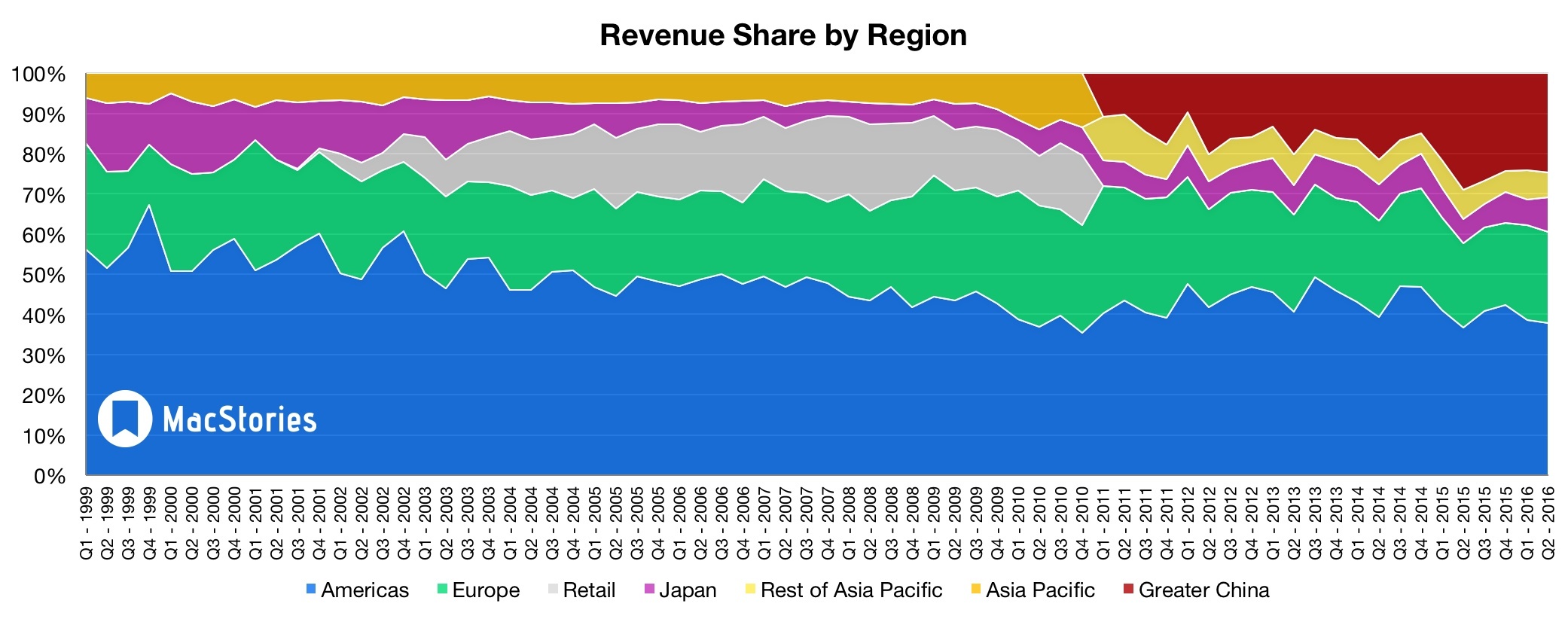
Tuesday’s meeting with the Chinese Minister for Industry and Information Technology saw the two chat about innovation, China’s IT industry and the mobile industry. Yesterday, Tim Cook and Phil Schiller were spotted visiting an official Apple reseller in Beijing. Whilst today Tim Cook gave an in-depth interview to Sina Technology News where he said Apple expects China to soon become their largest market. In noting this, Cook also unsurprisingly revealed that Apple will be expanding its retail presence in China from 11 stores to more than 25 (no time frame is specified, but presumably in 2013).

[Sources: Reuters, AllThingsD, TUAW]

Apple has just announced that they’ve sold over two million iPhone 5s in China since it launched three days ago on Friday, December 14th. That compares to the more than five million that were sold in the first weekend of the iPhone 5′s availability back in October (where it was available in nine countries).

“Customer response to iPhone 5 in China has been incredible, setting a new record with the best first weekend sales ever in China,” said Tim Cook, Apple’s CEO. “China is a very important market for us and customers there cannot wait to get their hands on Apple products.”

Apple has also re-iterated that the iPhone 5 will be available in more than 100 countries by the end of December, which Apple says will be “the fastest iPhone rollout ever”.

(more…)

Apple has just issued a brief press release to announce that the new iPad will finally launch in China on Friday, July 20th. The recommended retail prices of the new iPad in China will match the current US prices at $499, $599 and $699 for the WiFi version (16 GB, 32 GB and 64 GB respectively) and $629, $729 and $829 for the WiFi + Cellular models (16 GB, 32 GB and 64 GB respectively). Meanwhile, from today the iPad 2 is available for $399.

Customers will be able to purchase the new iPad in China from the Apple Online Store, select Apple Authorized Resellers and by reservation from Apple retail stores. The reservation process will run daily between 9am and 12pm and begin on Thursday, July 19 and allows a customer to reserve an iPad for pick up the following day.

Apple® today announced the new iPad®, the third generation of its category defining mobile device, will arrive in China on Friday, July 20. The new iPad features a stunning new Retina™ display, Apple’s new A5X chip with quad-core graphics and a 5 megapixel iSight® camera with advanced optics for capturing amazing photos and 1080p HD video. The new iPad still delivers the same all-day 10 hour battery life* while remaining amazingly thin and light.

Tim Cook Visits Foxconn in China

Bloomberg reports on a visit by Apple CEO Tim Cook to Foxconn’s plant in Zhengzhou, China, where iPhones and iPads are made, among other devices.

Cook’s trip to Zhengzhou followed a meeting with Beijing Mayor Guo Jinlong on March 26 and with Chinese Vice Premier Li Keqiang on March 27. Apple’s Wu said earlier those meetings were “great,” without providing details on their content.

Vice Premier Li told Cook Chinese authorities will make an effort to strengthen intellectual rights, but also asked for more attention in caring for workers in Chinese factories. Apple recently found itself in the middle of a debate surrounding working conditions in China — a debate spurred by false allegations by performer Mike Daisey, and a series of investigative reports by The New York Times. In February, the Fair Labor Association began an inspection of Apple’s suppliers.

Feb
3
2012

There is an assumption currently making the rounds that the workers laboring in Chinese factories under terrible conditions are a direct result of Apple’s actions. Some people almost seem to think that Apple is literally enslaving people to work on its products. Needless to say, this is not true.

The fact is that these workers have a choice, albeit a limited one, about where to work. And they are working at factories like Foxconn —which, I remind you, is a wholly separate entity from Apple— because they are better than the alternatives: no job at all, or a job that pays far worse with even harsher conditions.

Think about that. As bad as the stories that we’ve heard about working there are —and make no mistake, they are horrid and no one should have to work under such conditions— the fact that Foxconn has a six-month waiting list of people hoping to become employees seems to suggest that they are still much better than any other opportunity these workers have available.

Given all that, is Apple being ethical by working with a company like Foxconn? A company that, for all its problems, still provides a significantly better alternative to the people clamoring to be hired? I would argue yes.

If Apple were to abandon their involvement with Foxconn and other abusive Chinese suppliers like these boycotts are calling for, what would happen to these workers? The boycotters apparently believe that they would be set free to find safe, well-paid work elsewhere. But if working at Foxconn was already one of the best opportunities they had, that outcome seems unlikely at best.

In reality, they would likely be forced to take a job at another factory with even worse pay and worse conditions. Or perhaps have no choice but to perform peasant work for a fraction of the money they were earning before. Worst case, they may not even be able to find another job at all.

If the goal of a boycott is to assuage the guilt of first-world citizens for buying Apple products made under harsh conditions, Apple leaving China would certainly accomplish that. But if the goal is to make things better for the workers themselves, the only realistic option I can see is for Apple to continue what they’re doing: work with these companies, demand better conditions, conduct audits, and have the workers paid as well as possible for people in their position. 1

Yes, the conditions these workers labor under are terrible. They may have no better choices in their economy, but that doesn’t mean what’s happening there is okay. If first-world companies are going to continue to do business with China and Chinese companies, the only ethical thing for these companies to do is demand continual improvement. And we too should demand as much of those companies whose products we buy.

But the fact remains that as of now, these people will be exploited no matter what we do. Ceasing to provide them better employment opportunities will not help them. Quite the opposite: it will only leave them subject to even worse alternatives. Given that, I believe the best thing we can do is support companies that are taking responsibility for improving conditions and wages for the people that make their products. And right now, the company that is taking the most responsibility…is Apple.


  1. Unfortunately I’m not sure how legally or economically feasible it is for Apple to reduce their margins and pass along the profits to the workers directly even if they wanted to. But if it is, they should be doing so as much as possible.

With a press release, Apple announced that its latest iPhone model, the iPhone 4S, will be available in China and 21 additional countries on Friday, January 13. Making it the fastest iPhone rollout to date, the iPhone 4S will be available in over 90 countries by next week; Apple targeted a launch in 70 countries by the end of 2011.

Customer response to our products in China has been off the charts,” said Tim Cook, Apple’s CEO. “With the launch in China next week, iPhone 4S will be available in over 90 countries making this our fastest iPhone rollout ever.

On January 13, the iPhone 4S will become available in: Anguilla, Antigua and Barbuda, Bolivia, Botswana, British Virgin Islands, Cameroon, Cayman Islands, Central African Republic, China, Dominica, Dominican Republic, Ecuador, Grenada, Guam, Guinea Conakry, Ivory Coast, Jamaica, Kenya, Madagascar, Mali, Mauritius, Niger, Senegal, St. Vincent and The Grenadines, Trinidad and Tobago, Turks and Caicos and Uganda.

Since its introduction in October, the iPhone 4S has seen a steady rollout to meet Apple’s expectations of availability in 70 countries by the end of 2011. Just as U.S. carriers were reportedly struggling to meet the 4S’ demand and Apple launched an initiative to reserve a model for in-store pickup, the device launched in Hong Kong and South Korea, several countries in Europe and India. At the same time, Apple began selling unlocked iPhone 4S units in the United States, and confirmed they were “very pleased” with the initial demand for the device.

In October, it was reported the 4S sold 4 million units in its first weekend. Apple hasn’t disclosed new numbers since, but the company is expected to reveal financial results for the past quarter on January 24, where they’ll likely give out new pieces of information regarding the 4S’ performances in different markets. As a side note, Apple’s press release doesn’t include any details on the carrier(s) that will support the 4S in China, which has been an ongoing source of speculation among rumor sites and Apple watchers in the past few months due to China Unicom’s (the country’s second largest carrier) reported interest in the 4S.

The Wall Street Journal is today reporting that the 3G models of the iPad 2 may eventually be launching in China after the Chinese ‘Telecommunication Equipment Certification Center’ approved the device. Although a specific launch date is not yet known and China Unicom declined to comment to the Wall Street Journal.

Based on the information contained in the Wall Street Journal report, the model (A1396), is the same as the US model that went on sale in March. Those in China have been able to purchase the WiFi models of the iPad 2 since it launched on May 6th but the 3G models were forced to go through additional regulatory approvals.

According to China’s Telecommunication Equipment Certification Center, a device by Apple with third-generation high-speed wireless data capabilities was issued the network access license needed for the company to begin official sales in China. The device, listed under model number “A1396,” is compatible with the 3G standard WCDMA, and would work with the cellular network operated by Apple’s local iPhone partner, China Unicom (Hong Kong) Ltd.

Interestingly, the 3G versions of the iPad 2 mysteriously appeared yesterday, and promptly disappeared, from the official Apple website. Penn Olson managed to take a screenshot of the page which details prices starting at 4,688 RMB for the 16 GB version, 5,488 RMB for the 32 GB version and 6,288 RMB for the 64 GB version – all of which had estimated shipping times of 2-3 weeks.

Meanwhile in Hong Kong, Apple has confirmed that they will be officially opening this quarter, with Engadget China claiming a September 24th date. The store is located in the International Finance Center’s IFC mall and is currently covered up in large, striking red banners with the slogan “The new center of Central”.

[Via MacRumors]

An explosion in a Foxconn facility in Chengdu, China, that killed 2 and injured at least 16 earlier today is currently under investigation from Apple and Foxconn, as well as local officials. The blast, reported by several news outlets this afternoon, took place in the factory where Foxconn makes iPads for Apple, the WSJ said. In Fried at All Things Digital posted an official statement from an Apple spokesperson:

We are deeply saddened by the tragedy at Foxconn’s plant in Chengdu, and our hearts go out to the victims and their families,” Apple said in a statement provided to All Things D. “We are working closely with Foxconn to understand what caused this terrible event.

Whilst speculation is running wild as to whether the damages to the facility will affect the iPad’s production chain, our thoughts and prayers go the victims of this terrible tragedy.

Reuters reports China Telecom, the smallest mobile operator in the country with 17.84 million 3G subscribers as of April 2011, is “in touch” with Apple to get the CDMA version of the iPhone, currently only sold by Verizon Wireless in the United States.

China Telecom Corp Ltd, the smallest of the country’s three wireless carriers, has contacted Apple Inc to introduce the popular iPhone based on CDMA (code division multiple access) technology, Chairman Wang Xiaochu said on Friday.

“We’re not denying that we’re in touch with iPhone (Apple), but I cannot comment on the progress,” Wang told reporters after a shareholders’ meeting.

As the exclusive agreement between Apple and China Unicom, the largest carrier in China, expires later this year, China Telecom is looking forward to revamp its CDMA infrastructure to be able to offer the CDMA iPhone to its subscribers. No additional details have been provided by Reuters in the report, though a rumor posted back in January suggested Apple was on track to ship the CDMA iPhone 4 to China, Japan and Korea during 2011, with international carriers getting a version of the device produced by Pegatron, with Foxconn remaining the sole supplier for the CDMA iPhone to Verizon Wireless in the US. The release of the CDMA iPhone in more countries would certainly help Apple address more market segments and subscriber bases.